图生视频

Search documents
以AI为墨,绘中秋新韵 ——2025全球AIGC数字创作盛宴启幕
Yang Shi Wang· 2025-09-27 05:49
Core Viewpoint - The "AI National Tide Mid-Autumn Night 2025" global work collection event has officially launched, aiming to integrate AI technology with traditional Chinese culture to create a unique cultural and technological celebration [1][3] Group 1: Event Overview - The event is hosted by CCTV.com, with exclusive technical support from Hailuo AI, and collaboration with professional institutions such as WTA Production Studio, AIMWISE, and Saga.AI [1] - The goal is to promote the creative transformation and innovative development of the Mid-Autumn Festival through cutting-edge AIGC technology, presenting a celebration that showcases the intersection of technology and culture [1][3] Group 2: Creative Themes - Two core creative themes are established: "Moon Palace Wonderland: Recreating Myths" and "Human Fireworks: Digital Nostalgia" [3] - Participants are encouraged to utilize advanced technologies such as text-to-image, image-to-video, AI animation, and AI music generation to modernize and diversify classic mythological elements like Chang'e, the Jade Rabbit, the Moon Palace, and osmanthus trees [3] Group 3: Innovation and Cultural Expression - Creators are invited to break traditional frameworks by incorporating innovative elements such as cyberpunk, national tide aesthetics, and metaverse concepts into their works, aiming to produce digital art that retains the essence of traditional culture while being filled with futuristic imagination [3] - The event also welcomes creators to express modern sentiments related to the Mid-Autumn Festival, such as reunion, longing, and blessings, using AI technology to capture and convey contemporary emotional memories [3] Group 4: Call to Action - The initiative encourages global AI creators to actively participate, aiming to showcase the charm of Chinese culture and the strength of AI technology during the Mid-Autumn Festival [3] - The event emphasizes the importance of creativity in making this Mid-Autumn Festival more vibrant and engaging through innovative contributions [3]


电商猛推AI工具:平台不着急商业化,商家观望算账
Bei Jing Shang Bao· 2025-08-03 09:30
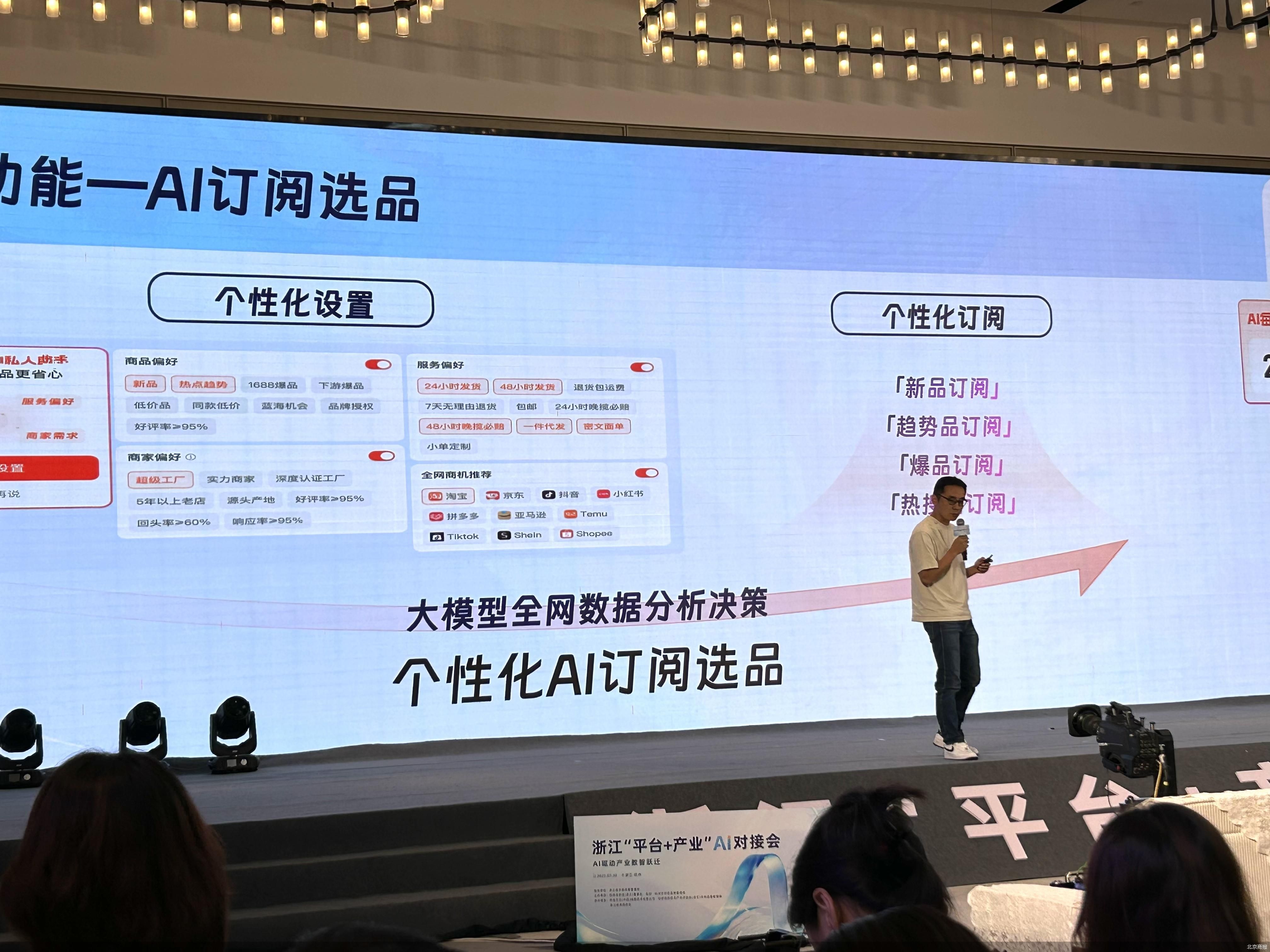
Core Insights - E-commerce platforms are increasingly investing in AI tools to enhance product selection, design, and customer service, with companies like 1688 and ZhiDeMai Technology updating their AI offerings [1][4] - Small and medium-sized enterprises (SMEs) utilizing AI have reported significant productivity improvements, with some achieving a revenue increase to 5 million yuan per employee and creating products with a gross margin of 92% [1][4] - Despite the potential benefits, SMEs face challenges in AI adoption, including high understanding costs, time for widespread implementation, and insufficient cost-effectiveness [1][6] Group 1: AI Implementation in E-commerce - Current AI applications by merchants are primarily basic, focusing on tasks like image generation and data insights, with more complex integrations requiring additional time [1][6] - Platforms like 1688 have iterated their products to lower barriers for SMEs, but the primary need remains cost reduction and efficiency improvement [1][7] - The consensus in the industry is that AI tools must be further tailored to specific scenarios and personalized to achieve true scalability [1][9] Group 2: Case Study of Successful AI Utilization - Liu Shiqi, general manager of Tiwantans Trading Co., leveraged AI to grow his slipper business to an annual revenue of 40 million yuan, successfully selling a "ugly slipper" for $145 with a profit margin of $50 [4][5] - His strategy involved using AI for product selection based on market trends, significantly reducing the product development cycle from 1-1.5 months to less than a week [4][5] - Liu emphasized the importance of innovation over imitation, focusing on creating unique products that meet new market demands [5] Group 3: E-commerce Platforms' AI Tools - Major e-commerce platforms are developing AI products to enhance merchant efficiency in areas like product selection, marketing, and customer service [6][8] - For instance, Taobao's "Image to Video" tool automates the creation of promotional videos, while JD's Yanxi model analyzes product features and user preferences [6][8] - 1688's digital human product has evolved to assist merchants in optimizing product images and participating in marketing activities, resulting in a 150% improvement in business outcomes for SMEs using the tool [7][8] Group 4: Future of AI in E-commerce - The current focus for e-commerce platforms is on acquiring customers rather than immediate commercialization of AI products [9] - There is a recognition that AI tools need to adapt to various industry scenarios and user needs to achieve widespread application [9] - The integration of AI into the e-commerce search process is being prioritized to enhance user experience, with improvements in search accuracy from 88% to 94.5% [8][9]
史上最长“618” AI促进电商全流程“智变” 能否激发新消费动力?
Yang Guang Wang· 2025-06-19 08:11
Core Insights - The 618 shopping festival this year has set a record with a 39-day duration, featuring simplified promotional rules and the integration of AI tools to enhance efficiency and reduce costs for merchants [1][2] Group 1: Event Highlights - The 618 event has transitioned from complex discount structures to more straightforward promotional methods, such as direct price reductions and lower thresholds for consumer vouchers [1] - Major platforms like Taobao, JD, and Douyin have adopted direct discount and subsidy models to attract consumers [1][2] - Consumers are increasingly focused on product quality, cost-effectiveness, and after-sales service rather than being swayed by complicated discount schemes [2] Group 2: AI Integration - AI technology has emerged as a crucial tool for e-commerce during the promotional period, reshaping the entire process from product selection to customer service and logistics [3][4] - Platforms are utilizing AI to create personalized shopping experiences, such as generating custom product lists and enhancing marketing materials [4] - Despite challenges in AI's application, such as understanding complex queries, its potential in e-commerce is significant, promising a new ecosystem driven by technology and data interconnectivity [5][6] Group 3: Future Implications - The integration of AI is expected to redefine the value distribution logic within the e-commerce industry, moving from a focus on traffic competition to a phase of technological symbiosis [5][6] - Chinese brands are encouraged to leverage AI to better understand local consumer needs, positioning themselves for success in the intelligent transformation of the market [6]


深度|淘天失速
券商中国· 2025-06-09 13:13
Core Viewpoint - The article discusses the competitive landscape of the e-commerce sector in China, focusing on Alibaba's Taotian Group and its declining performance compared to rivals like JD.com and Pinduoduo. It highlights the challenges faced by Alibaba in maintaining its market share and profitability amidst increasing competition and changing consumer behavior [3][5][8]. Group 1: Competitive Landscape - Taotian Group is not only a key revenue driver for Alibaba but also faces significant challenges as its growth lags behind Alibaba International and Alibaba Cloud [3][5]. - The retail battle intensifies with JD.com aggressively entering the food delivery market, prompting Taotian to collaborate with Ele.me to compete [4][37]. - Alibaba's market share has been declining, from 51.3% in 2021 to an estimated 36.2% by 2026, while Pinduoduo and JD.com have gained ground [21][25]. Group 2: Financial Performance - In the fiscal year 2025, Alibaba's revenue reached 99.63 billion yuan, with a growth rate of 5.9%, falling short of the 1 trillion yuan target [10][18]. - Taotian Group contributed 44.98 billion yuan in revenue, accounting for 45% of Alibaba's total, but this represents a 1% decrease year-on-year [12]. - The revenue growth of Taotian Group was only 3%, significantly lower than the double-digit growth rates of Alibaba International and Alibaba Cloud [13][15]. Group 3: Strategic Initiatives - Alibaba plans to invest 380 billion yuan over the next three years in AI and cloud computing to address traffic concerns and enhance user experience [31][35]. - The upcoming "618" shopping festival is seen as a critical opportunity to assess the performance of the new leadership under Jiang Fan, who took charge of Alibaba's e-commerce division [3][40]. - Taotian Group has implemented changes to its merchant operating rules to improve monetization rates, which have been lower than competitors [27][30]. Group 4: Market Dynamics - The rise of live-streaming e-commerce has significantly impacted Taotian's market share, with platforms like Douyin and Kuaishou capturing a larger audience [22][24]. - The competition is expected to continue intensifying, with Alibaba's Taotian Group needing to stabilize its market position while managing costs associated with aggressive promotional strategies [26][40].



今年的618:即时零售成刚需,AI重塑供应链,人本零售定未来
Zheng Quan Zhi Xing· 2025-06-05 06:51
Core Insights - The 618 shopping festival is evolving with new players like Meituan joining, indicating a need for fresh energy in a market that has become more rational and competitive [1] - Instant retail has transformed from an optional convenience to a baseline expectation for consumers, with major e-commerce platforms increasing investments in this area [2] - AI technology is increasingly integrated into the e-commerce supply chain, enhancing efficiency and enabling new marketing tools for merchants [4][5] - Consumer decision-making is shifting towards a balance of rational cost-benefit analysis and emotional value, indicating a deeper engagement with brands [7] - The "trade-in" policy and the activation of lower-tier markets are driving new growth opportunities for e-commerce platforms [8][10] - The competition landscape is evolving, focusing on customer experience, emotional resonance, and effective management of existing assets [11] Group 1: Instant Retail - Instant retail has become a critical component of consumer experience, with platforms like Meituan and JD.com enhancing their delivery capabilities [2] - Major platforms are launching features like "1-hour delivery" to meet consumer demands for speed and convenience [2] Group 2: AI Integration - AI tools are being deployed across the e-commerce chain, with Alibaba and JD.com offering new AI-driven marketing solutions to help merchants reduce costs and improve efficiency [4][5] - The introduction of AI-generated video content is significantly reducing production costs and time for merchants [5] Group 3: Consumer Behavior - Consumers are increasingly acting as "calculators," seeking maximum value while also being influenced by emotional factors such as brand stories and sustainability [7] - The rise of niche brands that resonate emotionally with consumers indicates a shift in purchasing motivations [7] Group 4: Market Growth Drivers - The "trade-in" policy is being leveraged by platforms to stimulate demand for durable goods, with significant subsidies being offered [8][10] - Lower-tier markets are showing strong purchasing power, prompting brands to refine their strategies to cater to these consumers [10] Group 5: Competitive Landscape - The focus of competition is shifting from price wars to enhancing fulfillment experiences and emotional connections with consumers [11] - Companies must develop sharper consumer insights and more flexible supply chains to thrive in this evolving market [11]
5.15犀牛财经晚报:阿里第四财季营收2364.5亿元 高瓴减持百济神州
Xi Niu Cai Jing· 2025-05-15 10:37
Regulatory Actions - The China Securities Regulatory Commission (CSRC) plans to conduct on-site inspections or supervision of 87 companies intending to go public in 2024, focusing on key areas such as issuance, information disclosure, mergers and acquisitions, and delisting [1] - The CSRC aims to combat fraudulent issuance, financial fraud, and market manipulation, emphasizing the importance of maintaining market integrity and protecting investors' rights [1] - The CSRC has imposed fines totaling 3.27 million yuan and 1.15 million yuan on companies like Gaodexin and Huadao Biological for submitting false financial data, and a fine of 4.175 billion yuan on Evergrande for fraudulent bond issuance [1] Banking Sector - In April, new loans reached the lowest level since 2006, with personal loans decreasing by 520 billion yuan year-on-year, significantly impacting overall loan growth [2] - Retail loan approvals and disbursements have become more cautious since April, with reduced limits and approval rates for consumer and business loans [2] Company Financials - Alibaba reported Q4 revenue of 236.45 billion yuan, a year-on-year increase of 7%, with adjusted net profit rising by 22% to 29.85 billion yuan [2] - NetEase's Q1 revenue was 28.8 billion yuan, reflecting a 7.4% year-on-year increase, with net profit reaching 10.3 billion yuan [2] - Zeekr Technology reported a Q1 net loss of 763 million yuan, although this represents a significant narrowing of 60.2% year-on-year [3] Market Trends - The market for intelligent risk control solutions in China's retail credit sector is projected to reach 6.541 billion yuan in 2024, growing by 20.1% year-on-year, with Ant Group holding a 15.7% market share [3] - The demand for AI servers in China is expected to shift, with the proportion of locally sourced chips increasing from 37% in 2024 to 40% in 2025, as domestic suppliers gain support from national policies [3] Corporate Developments - Midea's home appliance division has experienced significant management changes, including the departure of its president, Xu Minfeng, amid reports of large-scale layoffs [6] - Wahaha has confirmed the temporary shutdown of its dairy production line due to structural adjustments in production and sales, and is undergoing a legal liquidation process [6] - Vanke has completed the redemption of its "20 Vanke 04" corporate bonds, totaling 1.5 billion yuan, with a redemption price of 103.45 yuan per bond [8] Industry Performance - China Shenhua reported a 4% year-on-year decline in coal sales volume for April, with total electricity generation down by 9.9% [9] - Air China saw an 8.6% year-on-year increase in passenger turnover for April, with capacity and cargo turnover also rising [10]