大尺寸硅片

Search documents
重磅!“十五五”新材料产业发展规划与解读(附100+份解读资料)
材料汇· 2026-02-18 13:48
Core Viewpoint - The new materials industry is crucial for supporting modern industrial systems and achieving high-level technological self-reliance in China, with significant strategic importance for building a strong manufacturing and quality nation [2]. Industry Background and Development Situation - During the 14th Five-Year Plan, China's new materials industry saw continuous growth, with total output value exceeding 8.2 trillion yuan and an average annual growth rate of over 12% [4]. - Achievements include breakthroughs in ultra-high-strength steel, high-performance carbon fiber, semiconductor silicon wafers, and key materials for lithium-ion batteries [4]. - Challenges remain in high-end materials and the need for improved self-sufficiency in core processes and equipment [4]. Overall Requirements - The guiding ideology emphasizes innovation-driven development, demand-oriented approaches, and green low-carbon principles, focusing on enhancing the self-sufficiency of strategic materials and original innovation capabilities [8]. - Basic principles include innovation leadership, application orientation, enterprise-driven collaboration, and green development [9]. Development Goals (by 2030) - Comprehensive security capability for strategic materials to exceed 80%, with a focus on achieving global leadership in original achievements in frontier new materials [11]. - Continuous increase in R&D investment intensity, aiming to break through over 500 key core technologies [11]. - Establishment of over 20 distinctive, complete, and internationally leading new materials industrial clusters [11]. Key Development Directions - Advanced basic materials include ultra-high-strength automotive steel and high-performance aluminum alloys [13][14]. - Key strategic materials focus on high-temperature alloys and advanced semiconductor materials [18][19]. - New energy materials target high-energy-density battery materials and photovoltaic materials [21]. Key Tasks and Major Projects - Focus on urgent new materials needed in critical application areas such as aerospace, new energy vehicles, and electronic information [27]. - Specific projects include developing high-performance carbon fiber composites for aircraft and high-nickel ternary cathode materials for batteries [29][31][32]. Collaborative Innovation System - Establish a collaborative innovation system that integrates enterprises, academia, and research institutions to enhance innovation capabilities [51]. - Plans to build five national new materials laboratories and ten engineering research centers to support innovation [52]. Market Cultivation for Key New Materials - Implement insurance compensation mechanisms for the first application of key new materials to encourage market adoption [56]. - Establish a project library for demonstration projects to showcase the advantages of new materials in practical applications [57]. Breakthroughs in Key Processes and Equipment - Focus on overcoming bottlenecks in key processes and specialized equipment for new materials production [61]. - Plans to support the development of over 80 key processes and equipment technologies, aiming for significant improvements in production efficiency and cost reduction [64].


聚焦服务实体与保护投资者 推动并购重组市场高质量发展
Zhong Guo Jing Ji Wang· 2025-12-09 08:21
Core Viewpoint - The central financial work meeting in October 2023 emphasizes the political and people-oriented nature of financial work, highlighting the importance of mergers and acquisitions (M&A) in optimizing resource allocation and supporting national strategies [1][2]. Group 1: Importance of Mergers and Acquisitions - M&A is recognized as a key measure to support the development of technology finance, enhance the quality of financial services, and promote high-quality economic development [1][3]. - The integration of resources through M&A is crucial for enhancing the overall strength and competitiveness of the national economy, thereby contributing to the well-being of the people and advancing common prosperity [2][3]. Group 2: Achievements and Benefits - M&A has effectively guided resources towards key areas of new productive forces, such as technology innovation, helping companies acquire critical technologies and improve production capabilities [3][4]. - The health of the M&A market has provided quality wealth management options for investors, with companies enhancing their profitability and dividend mechanisms through strategic acquisitions [4]. Group 3: Challenges in the M&A Market - The M&A market faces challenges such as market failures, where asset pricing may not adequately reflect market dynamics, leading to significant deviations from reasonable valuation ranges [5][6]. - Issues like insider trading, financial fraud, and conflicts of interest are prevalent, undermining market fairness and investor rights [7]. Group 4: Future Development and Recommendations - To promote healthy development in the M&A market, it is recommended to strengthen regulatory effectiveness, enhance policy support, and improve the protection of investor rights [8][9]. - Suggestions include optimizing approval processes, establishing a more diverse valuation method system, and enhancing financial support for key sectors [9][10].
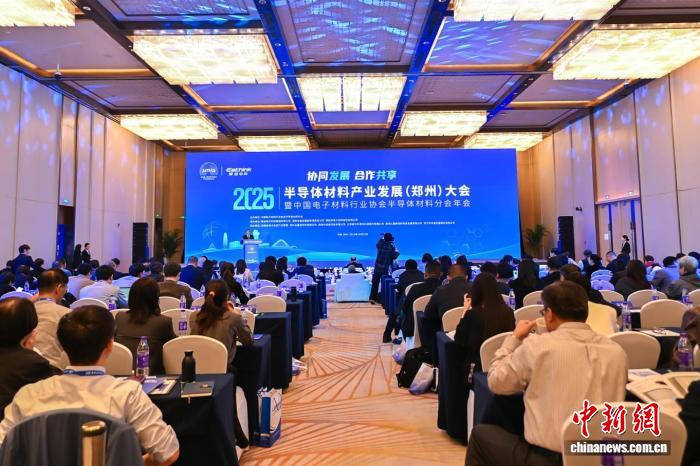
2025半导体材料产业发展(郑州)大会启幕 聚焦创新、生态、绿色等
Zhong Guo Xin Wen Wang· 2025-10-23 08:58
Core Insights - The 2025 Semiconductor Materials Industry Development Conference in Zhengzhou focuses on innovation, ecological construction, and green transformation in the semiconductor materials sector [1][2]. Group 1: Conference Overview - The conference is themed "Collaborative Development and Shared Cooperation" and is organized by the China Electronic Materials Industry Association Semiconductor Materials Branch, with participation from over 300 industry experts and representatives from the supply chain [2]. - Key discussions include the development of third-generation wide bandgap semiconductor materials and the exploration of two-dimensional semiconductor materials [2]. Group 2: Expert Opinions - Wang Lili, a researcher from the Ministry of Industry and Information Technology, emphasized the importance of integrating technology innovation with ecological harmony and advancing green recycling technology [2]. - Academician Tu Hailing suggested four strategies to enhance China's semiconductor industry: strengthening basic research, deepening collaborative innovation, embracing green and intelligent trends, and building a resilient talent chain [2]. Group 3: Market Outlook - The semiconductor market is expected to recover in 2024, driven by technological breakthroughs and market demand, with AI chips, automotive electronics, high-performance computing (HPC), and memory becoming core growth areas [2]. Group 4: Collaborative Initiatives - Agreements were signed between companies such as Yuxin Electronic Technology Group and Chip Alliance Integrated Circuit Manufacturing Co., focusing on semiconductor wafer and module manufacturing projects, as well as large-size silicon wafer projects [3].
2025中国芯片集体冲刺IPO:存储龙头长鑫科技或成“新标杆”
Cai Fu Zai Xian· 2025-07-09 06:17
Group 1 - The A-share market is experiencing the largest semiconductor IPO wave of the year, with at least 11 companies from various segments of the semiconductor industry submitting listing applications, indicating a trend of accelerated capital development in the domestic semiconductor sector [1][3] - Notable participants in this IPO wave include Changxin Technology, a leading storage chip company, which is expected to set a new industry benchmark [1][4] - The IPO pace in the semiconductor sector has significantly increased since June, with several key companies, including Shanghai Super Silicon Semiconductor Co., Ltd. and Unisoc, initiating their IPO processes [3][4] Group 2 - Changxin Technology's listing is strategically significant, coinciding with a critical point in the industry's development, as the global DRAM market is projected to exceed $100 billion by 2025 [4] - The listing of Changxin Technology is expected to drive the capitalization process of upstream and downstream enterprises, reshaping the industry valuation system and promoting overall semiconductor industry upgrades [4][5] - The current semiconductor industry is entering a key window period, with supportive policies from the Science and Technology Innovation Board providing essential capital assistance for enterprises [4]

全球新材料行业发展趋势及前景预测
研精毕智调研报告网· 2025-05-08 14:45
Investment Rating - The report does not explicitly provide an investment rating for the new materials industry Core Insights - The new materials industry is experiencing rapid technological innovation driven by interdisciplinary integration, particularly in fields like biomedical materials and smart materials [2] - Green and environmentally friendly manufacturing processes are becoming crucial, focusing on reducing environmental impact and improving resource efficiency [3] - Advanced computational techniques and artificial intelligence are transforming material design, significantly shortening development cycles and reducing costs [4] - The demand for high-performance materials is expected to grow, particularly in aerospace and electronics, where materials with superior properties are required [6][7] - The market is shifting towards multifunctional materials that can meet complex application needs across various sectors [6][8] Summary by Sections 1. Technological Innovation Trends - New materials technology is evolving towards interdisciplinary integration, combining physics, chemistry, materials science, and biomedical engineering [2] - Innovations in biomedical materials, such as bioactive nanocomposites, are providing new treatment methods [2] - Smart materials, like shape memory alloys, are being developed to respond intelligently to environmental changes [2] 2. Market Demand Trends - The demand for high-performance materials in aerospace is increasing, with new high-temperature alloys and carbon fiber composites being developed [6] - The electronics sector is pushing for semiconductor materials with higher electron mobility and lower power consumption [6] - Multifunctional materials are gaining traction, offering various capabilities in construction and electronics [6][8] 3. Industry Policies and Development Opportunities - Government policies are providing significant support for the new materials industry, including financial subsidies and tax incentives [10][11] - Strategic planning identifies new materials as a key area for development, with initiatives like "Made in China 2025" emphasizing the importance of advanced materials [11] - Policy support is expected to enhance innovation capabilities and attract more investment into the sector [11][12] 4. Challenges and Response Strategies - The industry faces technological bottlenecks, particularly in high-end materials where domestic capabilities lag behind international standards [12][13] - Market competition is intensifying, with foreign companies dominating high-performance segments [12] - Resource dependency and environmental concerns are significant challenges, necessitating improved recycling and sustainable practices [13][14] - Collaborative efforts between enterprises and government are essential to overcome these challenges and promote sustainable development [14]
上海又一超级独角兽要IPO了
36氪· 2025-04-15 00:06
Core Viewpoint - The semiconductor industry in China is experiencing a surge in IPO activities, with multiple companies, including Shanghai Super Silicon, initiating their IPO plans, signaling a positive trend for capital market exits and potential growth in the sector [3][5][14]. Group 1: Shanghai Super Silicon - Shanghai Super Silicon, founded by Chen Meng in 2008, is a pioneer in the production of large-sized silicon wafers, specifically 200mm-300mm, and has achieved a valuation of 20 billion yuan prior to its IPO [4][9]. - The company has completed seven rounds of financing, attracting over 30 investors, including notable institutions and local state-owned funds, with a significant B+ round raising 1 billion yuan in November 2022 [9][10]. - Shanghai Super Silicon has established itself as the only domestic company capable of mass-producing 12-inch silicon wafers, with a monthly production capacity exceeding 1 million wafers [8][9]. Group 2: Industry Trends - A wave of IPOs is occurring in the semiconductor sector, with nearly ten companies, including Shangdingxin and Jieli Technology, also launching their IPO plans, indicating a broader trend of capital market engagement [5][15]. - The Chinese government has implemented various supportive policies for the semiconductor industry, including R&D subsidies and tax incentives, which have contributed to the successful listing of 11 companies in the sector in 2024 [16][17]. - The regulatory environment is becoming increasingly favorable for technology companies, with the China Securities Regulatory Commission advocating for the listing of high-quality, unprofitable tech firms, which positions semiconductor companies as key players in this initiative [16][18].