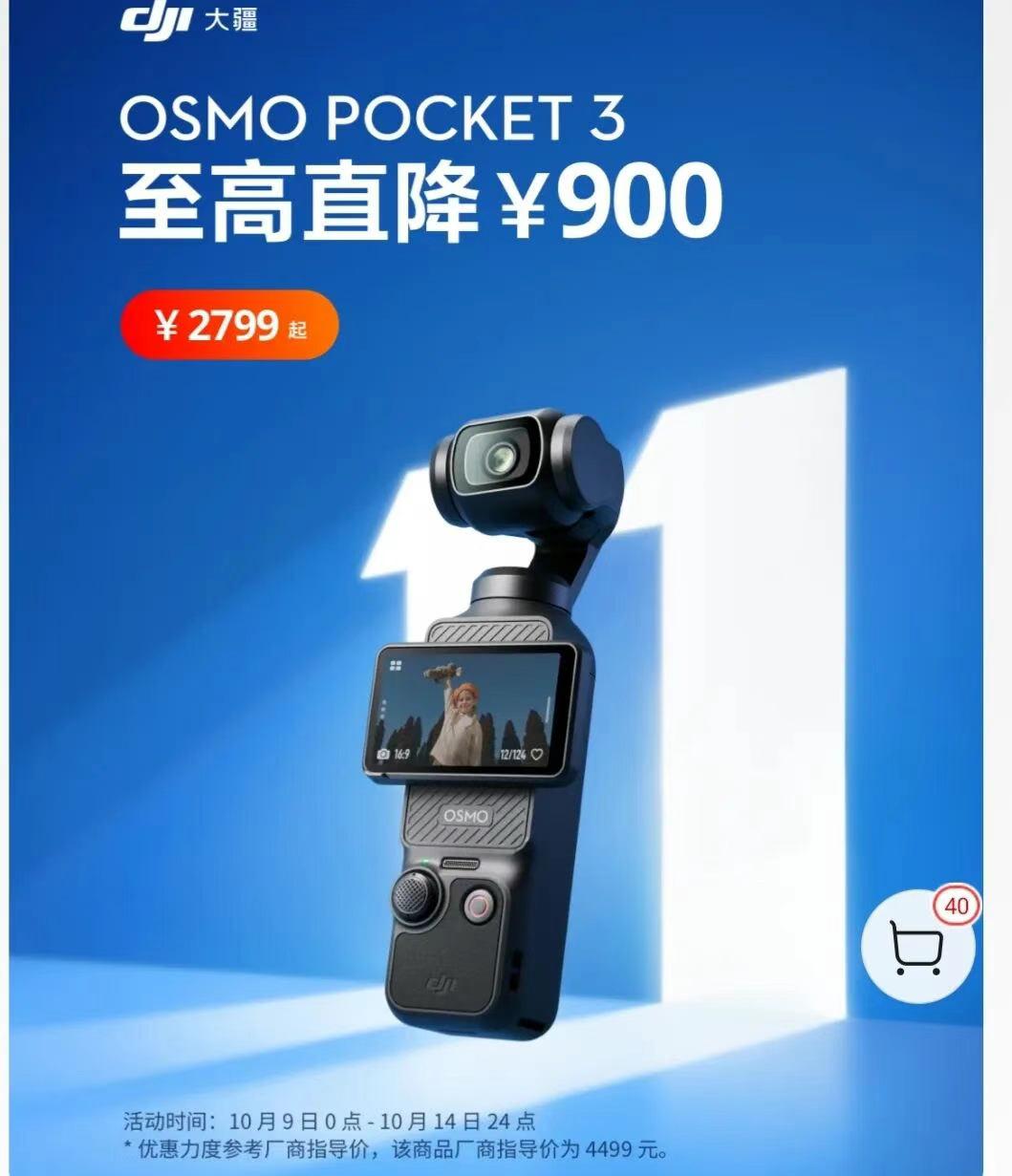
大疆Osmo Pocket 3

Search documents
上市第一年 这家深圳科技公司年会奖励员工5套房
2 1 Shi Ji Jing Ji Bao Dao· 2026-02-12 12:25
Core Viewpoint - Insta360, a company under影石创新, has made headlines by rewarding its employees with five sets of residential properties during its annual meeting, marking a significant shift in employee incentives after its successful IPO [1][2]. Group 1: Employee Incentives - The company has a history of unconventional employee rewards, previously giving away gold bars and luxury cars, with a total of 33 cars valued over 10 million yuan in the past eight years [2]. - This year, the top reward was upgraded to five sets of high-quality residential properties in the Bay Area, aimed at encouraging employees to settle down and contribute to the company's future [4]. - The average age of the award recipients is under 32, with many being "post-90s" employees, highlighting the company's focus on younger talent [4]. Group 2: Product Development and Market Position - Insta360 is actively expanding its product lines, with plans to launch a dual-camera handheld gimbal camera named "Luna," which is designed to compete with DJI's popular Osmo Pocket 3 [5][6]. - The company has invested significantly in R&D, with over 3 billion yuan spent in the past seven years, and over 1 billion yuan in the first three quarters of 2025 alone, representing 15.3% of its revenue [8]. - The founder, Liu Jingkang, emphasized that "Luna" will not be just another version of the Pocket series, as it features modular design and long-focus capabilities, potentially differentiating it in the market [8]. Group 3: Market Performance and Future Outlook - The company’s stock closed at 221.69 yuan on February 12, 2023, with a slight increase of 0.83%, and a total market capitalization of 89 billion yuan [1]. - There are expectations for record revenue growth in 2025, with the fourth quarter of the previous year anticipated to set a new quarterly revenue record, indicating a strong growth trajectory [8].

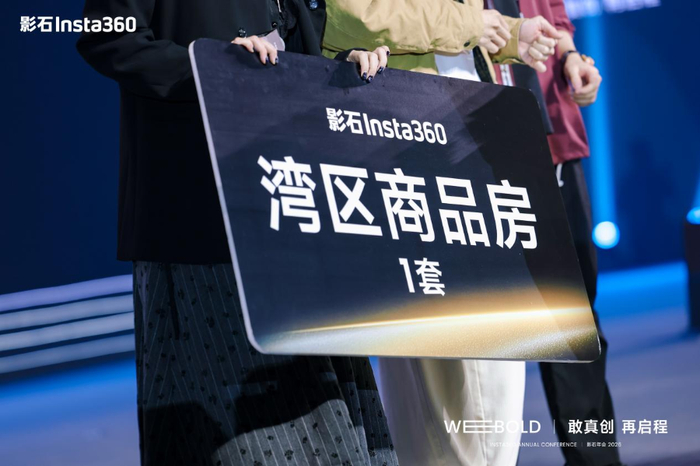
影石年会送员工5套房,还有豪车和定制金钞
2 1 Shi Ji Jing Ji Bao Dao· 2026-02-12 11:36
Core Insights - Insta360, a company under影石创新, has gained attention for its unique employee incentives, including the distribution of five sets of residential properties as rewards during its annual meeting, marking a significant upgrade from previous years' incentives [1][3] - The company is actively expanding in the drone and smart imaging sectors, with plans to launch a new dual-camera handheld gimbal camera named "Luna" in 2026, which aims to differentiate itself from competitors like DJI [8][11] Employee Incentives - The company has a history of unconventional employee rewards, having previously given away gold bars and luxury cars, totaling 33 vehicles worth over 10 million yuan in the past eight years [2][3] - This year's top reward of five residential properties is intended to encourage employees to settle down and contribute to the company's future [5] - The annual meeting also included the continuation of the tradition of giving away luxury cars, with six high-end models awarded, alongside 3,600 other prizes with an 80% winning rate [5][8] Product Development - Insta360 is set to launch the "Luna," a dual-camera handheld gimbal, which is designed to compete with DJI's popular Osmo Pocket series [8][11] - The company has invested significantly in research and development, with over 3 billion yuan spent in the past seven years, and 1 billion yuan in the first three quarters of 2025 alone, representing 15.3% of its revenue [11] - The CEO has indicated that the number of new products in 2026 will far exceed those of the previous year, reflecting the company's commitment to innovation and market expansion [1][11]

迟来的Pocket狂欢,与大疆的野望
3 6 Ke· 2026-01-14 13:39
Core Insights - The DJI Osmo Pocket 3 has emerged as a significant player in the consumer electronics market, maintaining high visibility and popularity two years post-launch, defying typical product lifecycle trends [1] - The product has successfully transitioned from a niche professional tool to a widely accepted consumer device, appealing to a broader audience including families and young people [1][2] - The success of Pocket 3 has prompted major smartphone manufacturers and traditional imaging companies to develop similar products, indicating a shift in the imaging industry towards a new standard [2] Product Evolution - The journey of the Osmo Pocket series began in 2014 when DJI identified a market need for ground-based filming solutions, leading to the development of the first integrated handheld gimbal camera [3][5] - The first generation of Pocket was launched in 2018, validating the product category but revealing limitations that were addressed in subsequent iterations [9][12] - The Pocket 3 represents a culmination of years of technological refinement, overcoming challenges in image quality, usability, and aesthetic appeal [13][15][17] Market Positioning - The Pocket 3 has established itself as a high-value independent imaging device, not merely an accessory to smartphones, showcasing a strong premium pricing capability [2] - The user demographic has notably shifted, with over 50% of Pocket 3 users being female, indicating a successful rebranding of DJI's image from a technical brand to one that resonates with lifestyle and aesthetic values [2][17] - The product's design and functionality have been tailored to enhance user experience, making it an attractive option for casual users and content creators alike [15][17] Competitive Landscape - The entry of multiple manufacturers into the "Pocket-like" product space signifies a competitive shift in the imaging market, with DJI's Pocket 3 remaining a benchmark for quality and performance [2][19] - The ongoing evolution of the Pocket series is expected to include advanced features such as dual-camera systems and enhanced optical capabilities, further differentiating it from smartphone offerings [21][22] - The market is anticipated to see a coexistence of smartphone-based imaging solutions and dedicated independent cameras, with DJI's approach emphasizing the importance of physical optics and mechanical stabilization [22][24]

深蓝“背靠背”组合打响L06营销战
Zhong Guo Jing Ji Wang· 2025-11-25 06:34
Core Insights - Deep Blue Automotive has launched its new model, the Deep Blue L06, positioned as a "long-range magnetorheological laser intelligent coupe" with a limited-time price range of 132,900 to 154,900 yuan, achieving over 20,000 orders within the first hour of launch [3] - The CEO of Deep Blue, Jiang Hairong, acknowledges the company's strong technological capabilities but emphasizes the need for better market competitiveness and effective communication with consumers [3][7] - The target demographic for the Deep Blue L06 is primarily young consumers, with an average age of 29, reflecting a strategic focus on appealing to this age group [3][4] Product Features and Market Positioning - The Deep Blue L06 features advanced technologies such as magnetorheological suspension and lidar, which are designed to enhance vehicle stability and safety [3][4] - The vehicle is marketed with a focus on safety and comfort, aiming to provide a balance between performance and user experience [4][5] - The company is actively working on improving its brand communication to better resonate with consumers, using relatable language and experiences to explain its advanced features [7][8] Marketing and Brand Strategy - Deep Blue is shifting its marketing strategy to better engage with young consumers, moving away from technical jargon to more relatable messaging [7] - The brand's awareness has significantly increased, with its unaided brand awareness (UBA) rising from single digits to double digits by the end of October [8] - The company is also focusing on securing financing to support the development of next-generation technologies and to establish itself as a mid-to-high-end brand under the Changan Automobile Group [8]

趋势研判!2025年中国手持稳定器行业发展背景、产业链、市场规模、重点品牌及未来趋势分析:拍摄需求驱动手持稳定器发展,行业规模达25.78亿元[图]
Chan Ye Xin Xi Wang· 2025-11-17 01:46
Core Insights - The rise of the handheld stabilizer industry in China is driven by the proliferation of mobile imaging technology and the increasing demand for improved shooting quality [1][9] - The market for handheld stabilizers has transitioned from professional use to mass consumer adoption, with a projected market size growth from 0.1 billion yuan in 2015 to 23.33 billion yuan in 2024, reflecting a compound annual growth rate (CAGR) of 83.27% [1][10] - The industry is expected to continue its growth trajectory, with an estimated market size of 25.78 billion yuan by 2025 [1] Industry Overview - Handheld stabilizers, also known as handheld gimbals, provide stability for cameras or smartphones, primarily used in various filming scenarios such as live streaming, sports, and news reporting [3] - The technology relies on gyroscopic sensors to detect motion and adjust the device's position to ensure stable footage [3] Industry Development History - The handheld stabilizer industry in China has evolved through four stages: market initiation (2012-2014), exploration (2014-2017), growth (2017-2019), and explosion (2019-present) [6] - The industry has seen significant advancements in technology, with companies like DJI and Zhiyun leading the market through strong industrial design capabilities and supply chain management [6] Market Demand Drivers - The high penetration rate of smartphones in China has led to increased consumer demand for high-quality video recording, pushing the need for stabilizers [6][8] - The short video content market has significantly contributed to the growth of the handheld stabilizer industry, with the market size projected to grow from 55.3 billion yuan in 2017 to 420 billion yuan in 2024, achieving a CAGR of 85.63% [6] Industry Chain - The upstream of the handheld stabilizer industry includes raw materials and components such as sensors, motors, and batteries, while the midstream focuses on manufacturing, and the downstream encompasses various application fields [7] - The sensor market in China is also experiencing growth, with projections indicating an increase from 1690.8 billion yuan in 2017 to 4061.2 billion yuan in 2024, at a CAGR of 13.34% [7] Competitive Landscape - The Chinese handheld stabilizer market is becoming increasingly competitive, with notable companies including DJI, YI Technology, and Zhiyun, each focusing on different market segments [10] - The market features a mix of established brands and emerging players, driving innovation and product differentiation [10] Future Trends - The industry is expected to focus on lightweight designs, enhancing portability while maintaining performance [13] - The rise of Vlog culture is pushing the industry towards an integrated ecosystem that combines hardware, software, and content creation [15] - There is potential for product diversification, leveraging core technologies to create new forms of stabilizing devices for various applications [16]

风靡全网的电子茅台,年轻人只租不买?
虎嗅APP· 2025-10-23 13:36
Core Viewpoint - The article discusses the rising trend of renting action cameras instead of purchasing them, highlighting the economic and practical advantages of this shift in consumer behavior [4][5][6]. Group 1: Market Trends - The rental market for action cameras is experiencing significant growth, with a reported 600% increase in transaction volume for portable action cameras by April 2025 compared to the previous year [6]. - The rental price for action cameras is approximately one-tenth of the purchase price, making it a more economical choice for infrequent users [5][6]. - The popularity of action cameras has led to a surge in rental services, with many physical stores and online platforms capitalizing on this trend [6][18]. Group 2: Consumer Behavior - Young consumers, particularly those who travel infrequently, prefer renting over buying due to the high costs associated with ownership and the rapid product iteration in the action camera market [6][9]. - The ease of use and low entry barrier of action cameras make them appealing to non-professional photographers, further driving the rental trend [12][14]. - Many consumers view renting as a way to avoid the financial burden of purchasing equipment that may not be used frequently, leading to a mindset of "renting is better than buying" [9][19]. Group 3: Economic Implications - The action camera rental market is seen as a new blue ocean, with significant opportunities for entrepreneurs and businesses to tap into this growing demand [18]. - Some individuals have turned to renting out their own action cameras as a side business, viewing it as a viable income source [19]. - The rapid turnover and high demand for popular models have created a secondary market where prices can fluctuate significantly, leading to concerns about potential financial risks for consumers [15][19]. Group 4: Social and Cultural Impact - Action cameras have become a social tool for young people, reflecting a desire to document experiences and share them on social media [18][27]. - The phenomenon of renting action cameras highlights a broader cultural trend where experiences are often mediated through technology, raising questions about the authenticity of these experiences [27][28]. - The article suggests a need for consumers to balance their desire for documentation with the intrinsic value of experiences, advocating for a more mindful approach to consumption and memory [27][28].

风靡全网的电子茅台,年轻人只租不买?
36氪· 2025-10-22 00:15
Core Viewpoint - The article discusses the rising trend of renting action cameras among young consumers, highlighting the economic advantages and changing consumer behavior in the context of travel and photography [4][6][25]. Group 1: Market Trends - The rental market for action cameras is experiencing significant growth, with a reported 600% increase in transaction volume on platforms like Xianyu by April 2025 compared to the previous year [8][24]. - The average price for renting an action camera is around 20 yuan per day, significantly lower than the purchase price, which typically ranges from 2000 to 3000 yuan [7][22]. - The demand for action cameras is reflected in retail transaction data, showing a 300% year-on-year increase in orders during the "618" shopping festival [24]. Group 2: Consumer Behavior - Young consumers, particularly those who travel infrequently, prefer renting over buying due to the high costs associated with ownership and the rapid product iteration in the action camera market [8][12]. - The ease of use and low entry barrier of action cameras make them appealing to non-professional photographers, as they require less technical skill compared to traditional cameras [17][18]. - Many consumers express a preference for renting to avoid the financial burden of purchasing equipment that may not be used frequently, leading to a trend of "use but not own" [34][36]. Group 3: Business Opportunities - The rise of the rental economy presents new business opportunities for entrepreneurs, with some individuals successfully establishing rental services for action cameras and other photography equipment [26][29]. - The action camera rental market is seen as a new blue ocean, attracting both individual sellers and small businesses looking to capitalize on the growing demand [25][26]. - The phenomenon of renting action cameras is also linked to a broader trend of "pain-free entrepreneurship" among young people, allowing them to generate income from idle equipment [29][30].

风靡全网的电子茅台,年轻人只租不买?
创业邦· 2025-10-21 10:37
Core Viewpoint - The article discusses the rising trend of renting action cameras among young consumers, highlighting the economic advantages and changing consumer behavior in the context of travel and social media [5][9][28]. Group 1: Renting vs. Buying - Renting action cameras is becoming increasingly popular, with platforms like Xianyu and Aizhuji reporting significant growth in rental transactions, with a 600% increase in rental volume for portable action cameras by April 2025 compared to the previous year [7][10]. - The cost of renting an action camera is significantly lower than purchasing one, with rental prices around 20 yuan per day compared to purchase prices of 2000-3000 yuan [9][10]. - Young consumers prefer renting due to the high frequency of new product releases, making it more practical to rent the latest models rather than buy [9][28]. Group 2: Consumer Behavior and Preferences - Many young consumers, like the interviewee Xiao Yu, find renting more suitable for their needs as it allows them to try different products without the financial burden of ownership [14][16]. - The ease of use and low entry barrier of action cameras compared to traditional cameras make them appealing to non-professional photographers [18][20]. - The trend reflects a broader shift in consumer behavior where convenience and cost-effectiveness drive decisions, especially among younger demographics [25][28]. Group 3: Market Dynamics and Opportunities - The action camera rental market is identified as a new growth area, with significant increases in transaction volumes and demand for popular models [28][29]. - Some entrepreneurs are capitalizing on this trend by establishing rental businesses, with reports of individuals earning substantial income through action camera rentals [29][32]. - The competitive landscape is characterized by rapid product turnover and fluctuating prices, leading consumers to prefer renting over buying to avoid potential losses [25][28]. Group 4: Social Media Influence - The rise of social media has created a culture where capturing experiences is prioritized, leading to increased demand for action cameras as tools for content creation [36][39]. - The phenomenon of "memory externalization" is discussed, where the pressure to document experiences can detract from the authenticity of the experience itself [39].

风靡全网的电子茅台,年轻人只租不买?
Hu Xiu· 2025-10-18 01:18
Core Insights - The rise of rental services for action cameras reflects a shift in consumer behavior, with many preferring to rent rather than buy due to cost-effectiveness and the rapid product iteration in the market [4][6][27] Group 1: Market Trends - The average price of mainstream action cameras is between 2000 to 3000 yuan, while renting for a week typically costs about one-tenth of the purchase price [5][6] - Data from second-hand rental platforms indicates a significant increase in rental transactions, with a 600% year-on-year growth expected by April 2025 for portable action cameras [6][26] - The rental economy is expanding, with both online platforms and physical stores offering self-service rental kiosks for cameras and drones [7][8] Group 2: Consumer Behavior - Young consumers, particularly those who travel infrequently, find renting more economical than purchasing, as it allows them to try different products without the financial burden of ownership [10][21] - The ease of use and low entry barrier of action cameras make them appealing to non-professional photographers, leading to a preference for renting over buying [16][20] - The trend of renting action cameras is driven by a desire for high-quality photography experiences without the commitment of ownership, especially as many consumers do not use these devices frequently [19][21] Group 3: Economic Implications - The action camera rental market is seen as a new blue ocean, with rising transaction volumes indicating strong demand [27] - Some entrepreneurs are capitalizing on this trend, with reports of individuals generating significant income through camera rental businesses [28][30] - The phenomenon of renting action cameras has transformed them into a social tool, reflecting a broader cultural shift towards shared experiences and social media documentation [25][41]
大疆罕见降价引热议:新品将至还是竞争加剧?
Mei Ri Jing Ji Xin Wen· 2025-10-09 13:57
Core Insights - DJI, known for its price stability, has unexpectedly reduced prices on several popular products, notably the Osmo Pocket 3, with the standard kit dropping from 3499 yuan to 2799 yuan, a reduction of 700 yuan, and the all-around kit from 4499 yuan to 3599 yuan, a reduction of 900 yuan [1][3] Pricing Strategy - The price adjustments are part of a promotional strategy for the upcoming "Double 11" shopping festival, as stated by DJI officials, who have communicated this through various channels [3][6] - The Osmo Pocket 3 has seen significant sales, with over 10 million units sold since its release in October 2023, indicating its popularity in the market [5] Consumer Reactions - The sudden price drop has led to mixed reactions from consumers, particularly those who purchased the product shortly before the discount, with some seeking price protection or refunds [3][5] - There is a noted discrepancy in price protection policies between online and offline channels, which has caused confusion among consumers [5] Market Dynamics - The price reduction may be influenced by the impending release of the Osmo Pocket 4, which is expected to feature enhancements such as improved zoom capabilities and support for 6K/8K video recording [7] - Competition from smartphone manufacturers entering the handheld imaging device market is also a significant factor, as companies like OPPO are developing similar products, posing a threat to DJI's market share [6][7] Competitive Landscape - The handheld imaging device market remains concentrated, with DJI's Pocket series and Insta360's action cameras being the most recognized products, each targeting different consumer needs [8] - The entry of smartphone manufacturers into this space could disrupt DJI's established position, as these companies leverage existing resources and customer bases to expand their product offerings [7][9] Technical Challenges - DJI faces the challenge of balancing portability and image quality in its Pocket series, requiring advanced technical solutions to optimize both aspects [9] - The company has a strong foundation in stabilization technology, which is critical for maintaining image quality in handheld devices, stemming from its experience in the drone industry [9]