
影石运动相机

Search documents
钉钉大楼换LOGO硬刚飞书,网友:商战总是朴实无华;马斯克团队摸底中国光伏产业链,A股巨头回应;断友商后路?元宝回应被微信「封了」
雷峰网· 2026-02-05 01:08
Group 1 - Tesla's team is exploring the Chinese photovoltaic industry chain and has signed orders with a leading heterojunction equipment manufacturer [4][5] - JinkoSolar confirmed contact with Tesla's team regarding their technology and production capabilities, leading to a surge in stock prices [5] - The photovoltaic sector saw a collective rise in stock prices following the news of Tesla's interest [5] Group 2 - DingTalk changed its logo in a competitive move against Feishu, reflecting a playful approach to brand rivalry [7][8] - The logo change was inspired by a perceived height advantage of Feishu's logo, leading to humorous online reactions [8] Group 3 - The CEO of RT-Mart's parent company, Gao Xin Retail, has been unreachable after only two months in the position, raising concerns about his status [10][11] - The company reported a significant decline in revenue and profit prior to the CEO's disappearance, indicating potential operational challenges [11] Group 4 - WeChat blocked the sharing links for the Yuanbao app, leading to a rapid adjustment in its sharing mechanism to maintain user experience [12][13] - The incident highlights the competitive tensions within Tencent's ecosystem, as other apps also faced similar restrictions [12][13] Group 5 - Vivo has confirmed the development of a Vlog camera aimed at competing with DJI's Pocket series, with a planned release in 2026 [15][16] - The new product is part of Vivo's strategy to expand its offerings in the camera technology sector [16] Group 6 - Xiaohongshu's valuation has reportedly increased to 350 billion RMB after a recent sale of shares, reflecting strong investor interest [23][24] - The platform experienced a surge in monthly active users, surpassing 350 million, contributing to its rising valuation [24] Group 7 - Panasonic announced plans to expand its layoffs to 12,000 employees due to challenges in its AI business and a decline in sales [45] - The company is facing significant operational restructuring costs as it attempts to navigate these challenges [45] Group 8 - Realme has begun layoffs in India as it transitions back under OPPO's management, indicating a shift in its operational strategy [46][47] - The brand's return to OPPO aims to enhance product innovation and service delivery [46][47] Group 9 - Samsung Electronics' market value surpassed 1,000 trillion KRW, driven by a surge in demand for storage chips amid the AI boom [49][50] - The company's stock has seen significant growth, with expectations for continued strong performance in the semiconductor market [49][50] Group 10 - AMD's CEO revealed that the next generation Xbox is on track for a 2027 release, with custom SoCs already in development [52] - This collaboration continues AMD's long-standing partnership with Microsoft in the gaming console market [52]





三维度发力让国货扎根免税赛道
Zheng Quan Ri Bao· 2025-12-07 15:41
Core Viewpoint - Recent policies have significantly enhanced the presence of domestic products in duty-free stores, transforming them into platforms for showcasing Chinese brands and cultural heritage [1][2]. Policy Developments - On October 17, the Ministry of Finance announced adjustments to the duty-free shopping policy for travelers in Hainan, allowing certain domestic products to be sold in duty-free stores [1]. - On October 30, a notification was released to support consumption by mandating that at least 25% of the sales area in duty-free stores be allocated for domestic products [1]. - On November 26, a plan was issued to promote the entry of high-quality domestic products and cultural heritage items into duty-free stores, along with optimizing the tax refund process for travelers [1]. Challenges for Domestic Products - Domestic products face three main challenges in establishing a foothold in the duty-free market: 1. Insufficient product adaptability to international consumer preferences and travel shopping scenarios [2]. 2. Weak bargaining power in distribution channels, with international brands dominating prime shelf space [2]. 3. Low brand recognition, as many domestic products lack a compelling international narrative, making it difficult to compete with established global brands [2]. Strategic Recommendations - Product positioning should focus on understanding international consumer preferences and optimizing designs to meet travel shopping needs, such as creating portable versions of cultural products [3]. - Deepening channel operations is crucial, including partnerships with leading duty-free operators and utilizing online booking combined with offline pickup to enhance consumer experience [3]. - Brand value should be communicated through immersive experiences in duty-free stores and leveraging international platforms to promote the cultural and innovative aspects of domestic products [3]. Conclusion - Duty-free channels provide a low-risk environment for domestic brands to test and showcase their products internationally, supported by favorable policies [4]. The success of domestic products in this space will depend on their product quality, channel management, and brand strength, marking a significant step in the evolution of Chinese brands and the economy [4].
AI机器人店员已就位!全球首家赛博主题潮品店在深开业
2 1 Shi Ji Jing Ji Bao Dao· 2025-11-11 09:32
Core Insights - The opening of the world's first humanoid robot-themed retail store, a collaboration between Zhongqing Robotics and JD Home, marks a significant step in integrating robots into the retail environment [1][2] - The store aims to enhance consumer shopping experiences by utilizing robots as sales assistants, showcasing the commercial value and potential of robotics in various scenarios [1][2] Group 1: Store Features - The store combines brand display, product experience, and scenario demonstration in an immersive commercial space [1] - Robots will introduce products to consumers, particularly targeting tech and digital product enthusiasts [1] - The store features collaborative areas with multiple brands, including Leifen and Yingshi, to create multi-dimensional interactive experiences [1] Group 2: Robot Capabilities - In addition to acting as sales assistants, robots will perform actions such as dance and martial arts to engage customers [2] - This interaction is intended to enhance the robots' capabilities in customer service and promote the overall development of the robotics industry [2] Group 3: Technological Integration - The store utilizes the JoyInside large language model, which allows robots to perform coordinated actions based on semantic content [2] - JoyInside has been integrated with over 30 leading robotics and AI toy brands, enhancing the functionality of the robots deployed in the store [2] Group 4: Market Impact - The presence of humanoid robots in retail is expected to drive new consumption patterns and create innovative retail scenarios in the era of embodied intelligence [2] - The successful implementation of robots in commercial settings could lead to a broader acceptance and integration of robotics in everyday consumer experiences [2]


中国对美贸易战,掀起大反攻了!
Xin Lang Cai Jing· 2025-10-10 17:21
Group 1 - China has initiated an antitrust investigation against Qualcomm, highlighting its monopolistic position in the mobile chip market, where it dominates nearly all major players except for Apple, Huawei, and Samsung [2][6] - Qualcomm's business model involves charging a royalty based on the entire device price rather than just the technology used, leading to significant costs for Chinese smartphone manufacturers, which often struggle with low profit margins [4][6] - The investigation aims to address the perceived unfairness of Qualcomm profiting from the Chinese smartphone market while simultaneously benefiting from U.S. sanctions against Huawei [6] Group 2 - China has implemented comprehensive export controls on rare earth materials, mirroring U.S. strategies against Chinese chips, effectively creating a full supply chain blockade [7][11] - The export restrictions cover all aspects of rare earth production, including technology, equipment, and finished products, requiring Chinese permission for any overseas transactions [7] - This move is seen as a direct response to U.S. actions and aims to leverage China's position in the rare earth market [11] Group 3 - China has introduced a special port service fee for U.S. flagged vessels, as a retaliatory measure against similar fees imposed by the U.S. on Chinese ships, indicating a tit-for-tat approach in trade relations [9][11] - This fee applies to all U.S. registered ships docking at Chinese ports, reflecting a broader strategy of reciprocal economic measures [9] Group 4 - China's advancements in domestic chip technology, including breakthroughs in DUV lithography machines and ongoing development of EUV machines, are positioning the country to reduce reliance on foreign technology [11][12] - Chinese companies like Alibaba, Xiaomi, NIO, and XPeng are developing their own competitive chip products, indicating a significant shift in the domestic tech landscape [11] - The decreasing dependency on U.S. imports, with shifts towards other countries for energy and agricultural products, further strengthens China's negotiating position in trade [12]


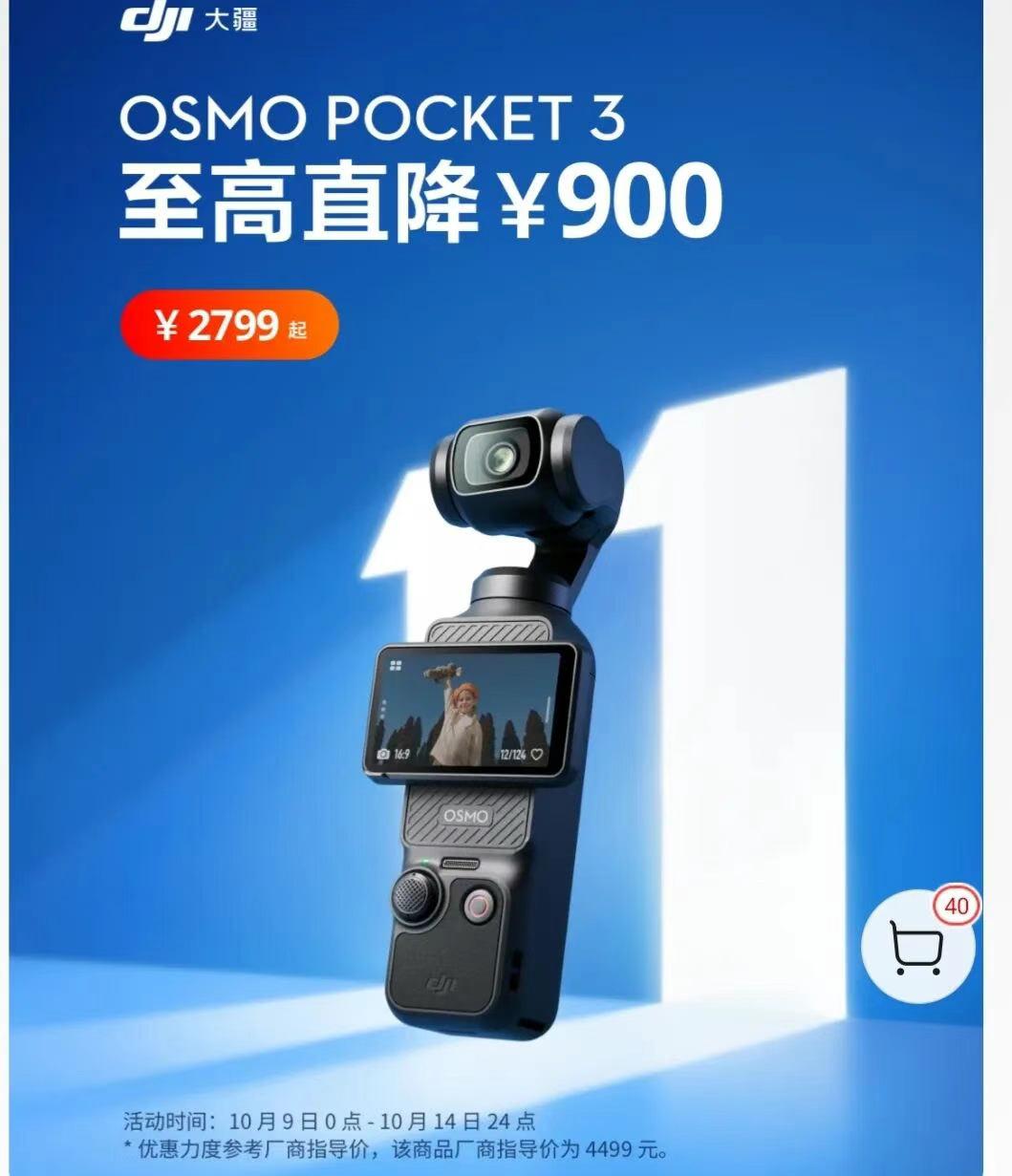
大疆罕见降价引热议:新品将至还是竞争加剧?
Mei Ri Jing Ji Xin Wen· 2025-10-09 13:57
Core Insights - DJI, known for its price stability, has unexpectedly reduced prices on several popular products, notably the Osmo Pocket 3, with the standard kit dropping from 3499 yuan to 2799 yuan, a reduction of 700 yuan, and the all-around kit from 4499 yuan to 3599 yuan, a reduction of 900 yuan [1][3] Pricing Strategy - The price adjustments are part of a promotional strategy for the upcoming "Double 11" shopping festival, as stated by DJI officials, who have communicated this through various channels [3][6] - The Osmo Pocket 3 has seen significant sales, with over 10 million units sold since its release in October 2023, indicating its popularity in the market [5] Consumer Reactions - The sudden price drop has led to mixed reactions from consumers, particularly those who purchased the product shortly before the discount, with some seeking price protection or refunds [3][5] - There is a noted discrepancy in price protection policies between online and offline channels, which has caused confusion among consumers [5] Market Dynamics - The price reduction may be influenced by the impending release of the Osmo Pocket 4, which is expected to feature enhancements such as improved zoom capabilities and support for 6K/8K video recording [7] - Competition from smartphone manufacturers entering the handheld imaging device market is also a significant factor, as companies like OPPO are developing similar products, posing a threat to DJI's market share [6][7] Competitive Landscape - The handheld imaging device market remains concentrated, with DJI's Pocket series and Insta360's action cameras being the most recognized products, each targeting different consumer needs [8] - The entry of smartphone manufacturers into this space could disrupt DJI's established position, as these companies leverage existing resources and customer bases to expand their product offerings [7][9] Technical Challenges - DJI faces the challenge of balancing portability and image quality in its Pocket series, requiring advanced technical solutions to optimize both aspects [9] - The company has a strong foundation in stabilization technology, which is critical for maintaining image quality in handheld devices, stemming from its experience in the drone industry [9]
全球全景相机龙头!影石创新即将登陆科创板,了解下?
市值风云· 2025-05-29 12:23
Investment Rating - The report assigns a positive investment rating to the company, indicating strong market and investor confidence in its future development. Core Insights - The company, Insta360, holds a leading global market share of 67.2% in the panoramic camera segment as of 2023, and ranks second in the action camera market [5][15]. - The company has achieved a remarkable growth trajectory, with a revenue compound annual growth rate (CAGR) of 66% from 2017 to 2024, projecting revenues of 5.574 billion yuan in 2024 [47][49]. - The company has a strong focus on research and development, with nearly 57.68% of its workforce dedicated to R&D and a cumulative investment of 1.74 billion yuan over the past five years [32][33]. Summary by Sections Company Overview - Insta360 was founded in July 2015 and has quickly risen to become a global leader in the panoramic camera market, achieving significant milestones within just four years of its establishment [6][15]. Market Position - The company has consistently outperformed competitors, with its panoramic camera market share increasing from 33% in 2019 to 67.2% in 2023 [15]. - The company’s products have gained substantial recognition, with its latest product launch in New York generating significant consumer interest [18][21]. Financial Performance - The company plans to raise 1.938 billion yuan through its upcoming IPO, with an issuance price set at 47.27 yuan per share, which is below the average price-to-earnings ratio of its peers [5]. - The company’s revenue is projected to reach 5.574 billion yuan in 2024, nearly matching that of GoPro, which is expected to generate 5.761 billion yuan [49]. Research and Development - The company has invested heavily in R&D, with a focus on innovative technologies such as panoramic image capture and processing, which have contributed to its competitive edge [36][40]. - The R&D investment has been substantial, with 7.8 billion yuan allocated for 2024, reflecting a commitment to continuous innovation [33]. Growth Potential - The global market for action cameras is experiencing rapid growth, with a CAGR of 43.04% from 2011 to 2022, indicating a robust demand for the company’s products [43]. - The company is well-positioned to capitalize on the increasing demand for smart imaging devices across various sectors, including live streaming and virtual reality applications [45].
运动装备市场将破6000亿元!“体育+”新蓝海的泼天流量来了
2 1 Shi Ji Jing Ji Bao Dao· 2025-05-09 12:27
Core Insights - The sports consumption market in China is experiencing significant growth, with an expected consumer spending of 53.97 billion yuan during the May Day holiday and a projected market size of 602.1 billion yuan by 2025, reflecting a year-on-year growth of 14.2% [1][5] Group 1: Market Trends - The sports equipment market is seeing a shift towards professional, customized, and smart products, driven by changing consumer preferences and the need for personalized solutions [2][3] - The rise in cycling enthusiasm among young people has led to a substantial increase in sales of cycling gear, while camping trends have boosted the market for outdoor camping equipment [1][5] Group 2: Technological Integration - Smart devices are becoming integral to the sports experience, with products like smart sports watches enhancing user engagement by tracking performance metrics and minimizing distractions [3][4] - The integration of advanced technologies such as 5G, AI, and VR is transforming sports events into immersive experiences, enhancing both the viewing and participation aspects [4][5] Group 3: Policy and Economic Impact - Government initiatives are promoting health consumption and sports participation, with policies aimed at expanding the sports event landscape and stimulating economic growth through sports [5][6] - The collaboration between sports and other sectors, such as tourism and healthcare, is creating new market opportunities and driving the evolution of the sports industry into a hub connecting various aspects of life and economy [6]