大虾

Search documents
经营承压,分化加剧,2026年餐饮该怎么干才能赚钱?
3 6 Ke· 2026-01-04 05:31
Core Insights - The restaurant industry faced unprecedented operational challenges in 2025, with significant declines in customer traffic and profits, leading many entrepreneurs to struggle for survival [1] - Consumer behavior has fundamentally changed, with increased price sensitivity and a stronger demand for quality and experience, forcing restaurants to optimize their value propositions [1] Group 1: Industry Challenges - The pressures on the restaurant industry include rising costs of labor, rent, and ingredients, compounded by a sharp drop in customer traffic and profits [1] - The emergence of a divide in the industry, where high-end restaurants are struggling while mid-range and budget options face intense competition [1][3] - The cost of acquiring new customers remains high, often exceeding 100 yuan, leading to a cycle of losses for many businesses [3] Group 2: Successful Business Models - Brands that effectively understand consumer segmentation are either focusing on extreme cost-performance ratios or unique experiential offerings [5] - The brand "南城香" has successfully implemented a model that emphasizes fresh cooking and competitive pricing, achieving a per capita consumption of over 20 yuan [5] - The new brand "椿芽·鲜牛肉杭州拌川" has differentiated itself through fresh preparation and a unique aesthetic, creating significant consumer interest in the 30-50 yuan price range [7] Group 3: Regional Cuisine and Consumer Preferences - Regional cuisines, such as Jiangxi cuisine, have gained popularity, with the number of related restaurants exceeding 20,000 by December 2025, reflecting a 287.5% increase in new registrations [8] - The importance of "regional characteristics" in consumer decision-making has risen from 18% in 2024 to 29% in 2025, indicating a shift towards authenticity and uniqueness [8] Group 4: Social Media and Brand Engagement - Authenticity in brand communication is becoming a key driver of consumer engagement, with brands like 比格披萨 leveraging personal storytelling and transparency to build trust [9] - The Northeast hot pot brand 熊喵来了 has utilized a strategy of offering free items to enhance social media presence and consumer interaction [11] Group 5: Operational Strategies for 2026 - The industry is advised to shift focus from merely expanding the number of outlets to creating unique value for customers and enhancing brand memorability [16] - Businesses should consider smaller store formats to reduce costs and improve operational efficiency, as seen with brands like "麻小六" and 小菜园 [12] - Emphasis on optimizing menu structures, enhancing space efficiency, and maintaining product quality is crucial for survival in the evolving market [18]


经营承压,分化加剧,2026年餐饮该怎么干才能赚钱?
虎嗅APP· 2026-01-01 13:19
Core Viewpoint - The restaurant industry faced unprecedented challenges in 2025, with significant pressure on operators due to rising costs, declining customer traffic, and a sharp drop in profits, leading to a survival struggle for many entrepreneurs [4][5]. Group 1: Consumer Behavior Changes - Consumer behavior has fundamentally changed, with increased price sensitivity and a heightened demand for quality and experience, forcing restaurants to optimize their "value-for-money" proposition [5]. - The controversy surrounding pre-prepared meals has intensified industry differentiation, impacting cost structures, service models, and consumer trust [5]. Group 2: Successful Business Models - Brands that successfully navigate the challenges have adopted new operational models, focusing on either extreme cost-effectiveness or unique customer experiences [7]. - For example, "南城香" has implemented a model of "fresh stir-fry + self-service weighing," offering competitive pricing with a focus on quality [8]. - The brand "椿芽·鲜牛肉杭州拌川" has differentiated itself through fresh preparation and a unique aesthetic, achieving significant market presence [8]. Group 3: Regional Cuisine and Consumer Preferences - Regional cuisines, such as Jiangxi cuisine, have gained popularity, with a notable increase in the number of related establishments and consumer preference for authentic local flavors [9]. - Data indicates that the importance of "regional characteristics" in restaurant selection has risen from 18% in 2024 to 29% in 2025, reflecting a shift towards unique and authentic dining experiences [9]. Group 4: Social Media and Brand Engagement - Building genuine brand engagement through social media has become crucial, with brands leveraging authenticity and transparency to connect with consumers [10]. - For instance, the founder of Big Pizza has cultivated a personal brand that resonates with consumers by sharing real experiences and addressing operational issues openly [10]. Group 5: Operational Adjustments - Smaller store formats have emerged as a strategy to reduce costs and adapt to the dual demands of dine-in and delivery services [12]. - Brands like "麻小六" and "小菜园" have successfully reduced store sizes and simplified their offerings to enhance operational efficiency and profitability [12]. Group 6: Strategic Recommendations for 2026 - Moving into 2026, the industry must shift focus from merely expanding store numbers to creating unique value for customers and ensuring brand memorability [14]. - Operators are advised to optimize their menu, enhance space efficiency, prioritize delivery channels without becoming overly reliant on platforms, and maintain product quality [14][15]. - Emphasizing team cohesion and employee well-being is critical for navigating challenging times, as a strong team can significantly impact business resilience [15].
扬泰机场双节再推特色市集 航旅融合让候机变“淘趣”体验
Zhong Guo Min Hang Wang· 2025-10-02 11:50
Core Insights - The article highlights the successful implementation of a local specialty market at Yangzhou Taizhou International Airport during the peak travel period of the Mid-Autumn Festival and National Day, enhancing the travel experience by integrating local food culture with air travel [1][4] Group 1: Event Overview - The "Taste of Gaoyou" specialty market featured 11 local businesses showcasing products such as hairy crabs, large shrimp, and various local snacks, attracting significant traveler interest and generating nearly 2000 transactions over the event period [1][4] - The market operated for 5 hours daily, allowing travelers to experience local culinary culture while waiting for their flights, transforming idle time into a vibrant shopping experience [1][4] Group 2: Traveler Engagement - Travelers actively participated in the market, with one customer ordering 100 units of a local specialty after being drawn in by its aroma, demonstrating the appeal of fresh, locally sourced products available at the airport [2] - A Northeast travel group also expressed enthusiasm for the local snacks, with some members purchasing up to 30 boxes, indicating a strong demand for regional specialties among travelers [2] Group 3: Business Impact - The event provided local businesses with a platform to reach a broader audience, facilitating direct sales and establishing potential long-term partnerships with airport merchants [2][4] - The integration of local specialties into the airport environment not only boosted sales but also enhanced brand visibility for participating companies, creating a win-win situation for travelers, businesses, and the airport [4] Group 4: Future Plans - The airport plans to continue exploring the integration of regional culture and specialties into its offerings, aiming to enrich the travel experience and transform the airport into a cultural hub [4] - Future initiatives will focus on incorporating more local elements from surrounding areas, further enhancing the connection between air travel and regional culture [4]
双节将至,日照海鲜市场供需两旺
Qi Lu Wan Bao Wang· 2025-09-25 09:20
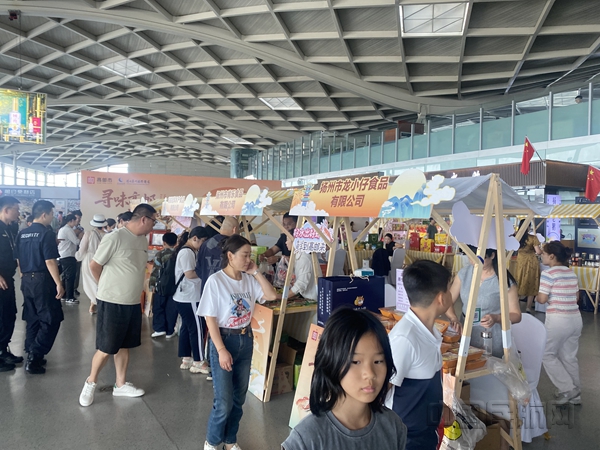
Core Insights - The seafood market is experiencing a sales peak as the Double Festival approaches, with a significant influx of consumers purchasing seafood for gifts and family gatherings [1][3][7] Market Trends - The seafood market is bustling with activity, as many consumers are flocking to purchase various types of seafood, including popular items like knife fish, mackerel, pomfret, and yellow flower fish, often buying in bulk [3][5] - The demand for live seafood such as king crabs, black tiger prawns, and Boston lobsters is also increasing, indicating a trend towards premium seafood purchases for festive occasions [3] Pricing Information - Current prices for seafood include mackerel at 20 yuan per jin, grouper at 28 yuan per jin, blackhead at 35 yuan per jin, prawns at 26 yuan per jin, and crabs ranging from 35 to 60 yuan per jin [5] - The popularity of certain seafood items is reflected in sales, with some stores selling over ten king crabs daily as the holiday approaches [5] Consumer Behavior - Consumers are showing a preference for purchasing seafood in person rather than online, as they seek assurance of quality and price stability [3] - The market is attracting not only local residents but also tourists from other regions, highlighting the appeal of the seafood offerings in the area [7]