天鹊液氧甲烷发动机

Search documents
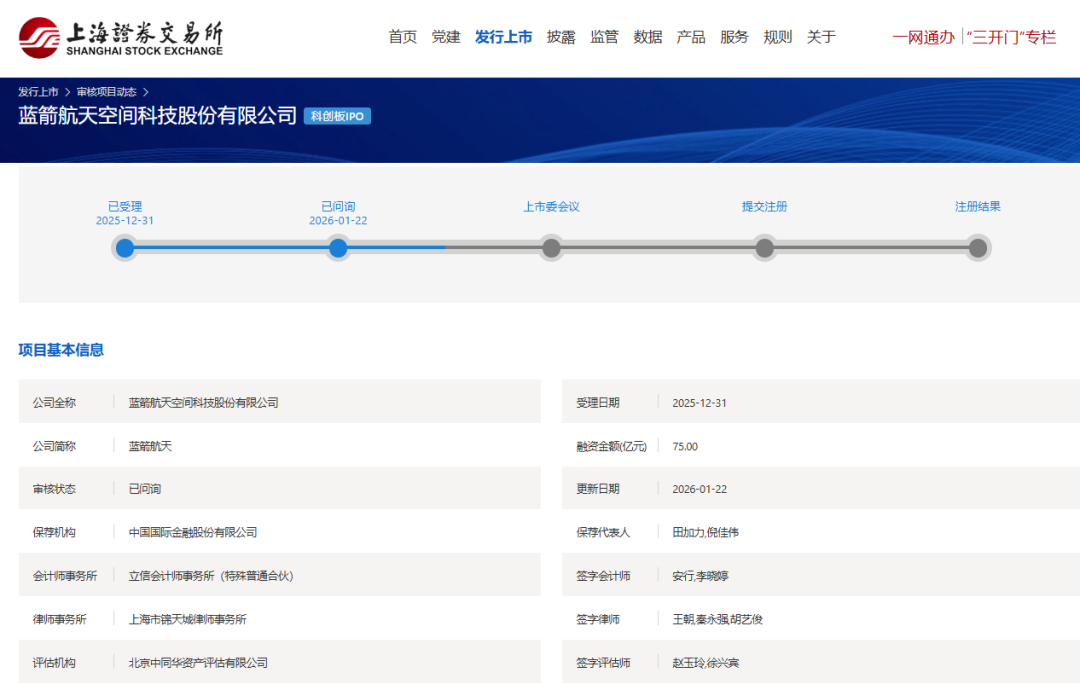
冲击商业航天第一股,蓝箭航天IPO审核状态变更为“已问询”
2 1 Shi Ji Jing Ji Bao Dao· 2026-01-23 07:04
Core Viewpoint - Blue Arrow Aerospace is progressing towards its IPO on the Sci-Tech Innovation Board, marking a significant step in the commercial rocket sector in China, with several other companies also pursuing IPOs [1][4]. Group 1: Company Information - Blue Arrow Aerospace has changed its IPO review status to "inquiry" as of January 22, 2026, after being accepted on December 31, 2025 [2]. - The company aims to raise 7.5 billion yuan (approximately 1.1 billion USD) through its IPO, with funds allocated for projects enhancing reusable rocket capacity and technology [2]. - The company is backed by China International Capital Corporation and has engaged Lixin Accounting Firm and Shanghai Jintiancheng Law Firm for auditing and legal services, respectively [2]. Group 2: Technology and Competitive Edge - Blue Arrow Aerospace has adopted a liquid oxygen-methane technology path, with its self-developed "Tianque" liquid oxygen-methane engine considered a core competitive advantage [3]. - Compared to traditional liquid oxygen-kerosene and solid fuels, liquid oxygen-methane offers lower costs, easier maintenance, and greater potential for reusability, making it an ideal choice for next-generation reusable rockets [3]. - The Zhuque-2 series rockets have successfully completed four flight missions, successfully placing commercial satellites into orbit, with contracts signed with China Star Network and Yuanxin Satellite for satellite launch services [3]. Group 3: Industry Context - In addition to Blue Arrow Aerospace, several other commercial rocket companies are also in the process of pursuing IPOs, including Zhongke Aerospace, Xinghe Power, Tianbing Technology, and Interstellar Glory, indicating a growing trend in the commercial space sector [1][4].

谁在押注“飞天梦”? 160余家机构久坐“冷板凳”静候“摘桃时刻”
Di Yi Cai Jing· 2026-01-11 08:57
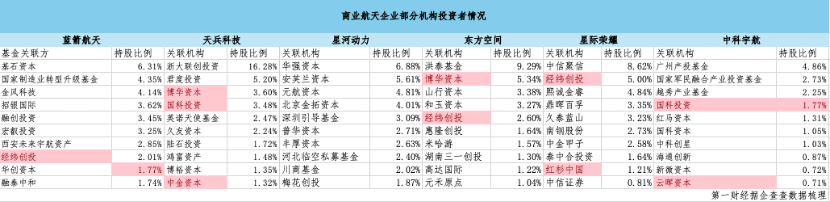
Core Viewpoint - The announcement from the Shanghai Stock Exchange regarding the listing standards for commercial rocket companies opens a significant opportunity for over 160 investment institutions that have been deeply involved in the sector for nearly a decade, potentially leading to a profitable exit for early investors [1][2]. Investment Landscape - At least six companies, including Blue Arrow Aerospace and Tianbing Technology, are in the IPO sprint phase, having undergone over 10 rounds of financing in the past decade, with total financing amounting to several billion yuan [1][3]. - The investment landscape has evolved from early-stage venture capital (VC) investments to significant participation from local state-owned enterprises and industrial capital as the industry matures [1][5]. Financial Performance - High valuations coexist with substantial losses in the sector, exemplified by Blue Arrow Aerospace, which reported cumulative losses exceeding 3.5 billion yuan over three and a half years [1][11]. - The financial data indicates that Blue Arrow Aerospace's net losses from 2022 to 2024 were -821 million yuan, -1.216 billion yuan, and -916 million yuan, with a loss of 635 million yuan in the first half of 2025 [11][12]. Investor Composition - The investor landscape is categorized into four main types: government and policy capital, market-oriented financial investors (VC/PE), industrial and strategic investors, and individual investors [7][8]. - Government funds, such as the National Manufacturing Transformation and Upgrade Fund, have made significant investments in companies like Blue Arrow Aerospace, often with specific industrial development requirements [7]. - Market-oriented financial institutions, including Sequoia Capital and Matrix Partners, have played a crucial role in early-stage funding, providing essential capital and resources for innovation [8]. IPO Progress - Blue Arrow Aerospace has been accepted for IPO by the Shanghai Stock Exchange, marking a significant milestone as it is the first private rocket company to successfully launch a liquid oxygen-methane rocket into orbit [3][4]. - Other companies, such as Tianbing Technology and Star Glory, are also in various stages of the IPO process, indicating a broader trend of accelerated listing activities in the commercial space sector [2][3].
朱雀三号总指挥谈火箭首飞:最后一脚刹车没踩好
第一财经· 2025-12-15 10:58
Core Viewpoint - The successful launch of the Zhuque-3 rocket marks a significant milestone in China's commercial space industry, despite the failure of the first stage recovery, which is seen as a valuable learning experience for future missions [1][3][21]. Summary by Sections Launch and Recovery - Zhuque-3 was launched on December 3, with the first and second stages separating successfully. The second stage completed its orbital mission, while the first stage attempted a return but failed to land successfully [2][3][21]. - The failure of the first stage recovery was attributed to a miscalculation during the landing burn, which resulted in the rocket crashing approximately 40 meters from the intended landing zone [5][23]. Significance of the Mission - The primary goal of the mission was to achieve orbital insertion, which was accomplished, demonstrating the rocket's capability to serve satellite clients. The recovery aspect, while important for cost reduction, was secondary to the successful delivery of payloads to orbit [7][21]. - The mission is viewed as a critical step in addressing the urgent demand for satellite constellations in China, highlighting the importance of commercial space capabilities [9][18]. Development Background - The Zhuque-3 rocket is a product of Blue Arrow, a private aerospace company founded in 2016, which aims to provide low-cost, reusable launch services. The company has faced challenges, including a previous launch failure in 2018, which led to a strategic shift towards developing its own liquid oxygen-methane engines [14][15][18]. - The development of the Tianque series of engines represents a breakthrough in China's private aerospace sector, significantly reducing costs and enhancing performance [15][18]. Future Prospects - The successful launch of Zhuque-3 is expected to pave the way for future missions, including the Long March 12 rocket, which will also focus on recovery technology [24]. - The competitive landscape for low Earth orbit resources is intensifying, with companies like SpaceX leading the charge. China's efforts to establish its satellite internet system are crucial for maintaining competitiveness in global communications and AI capabilities [18][24].

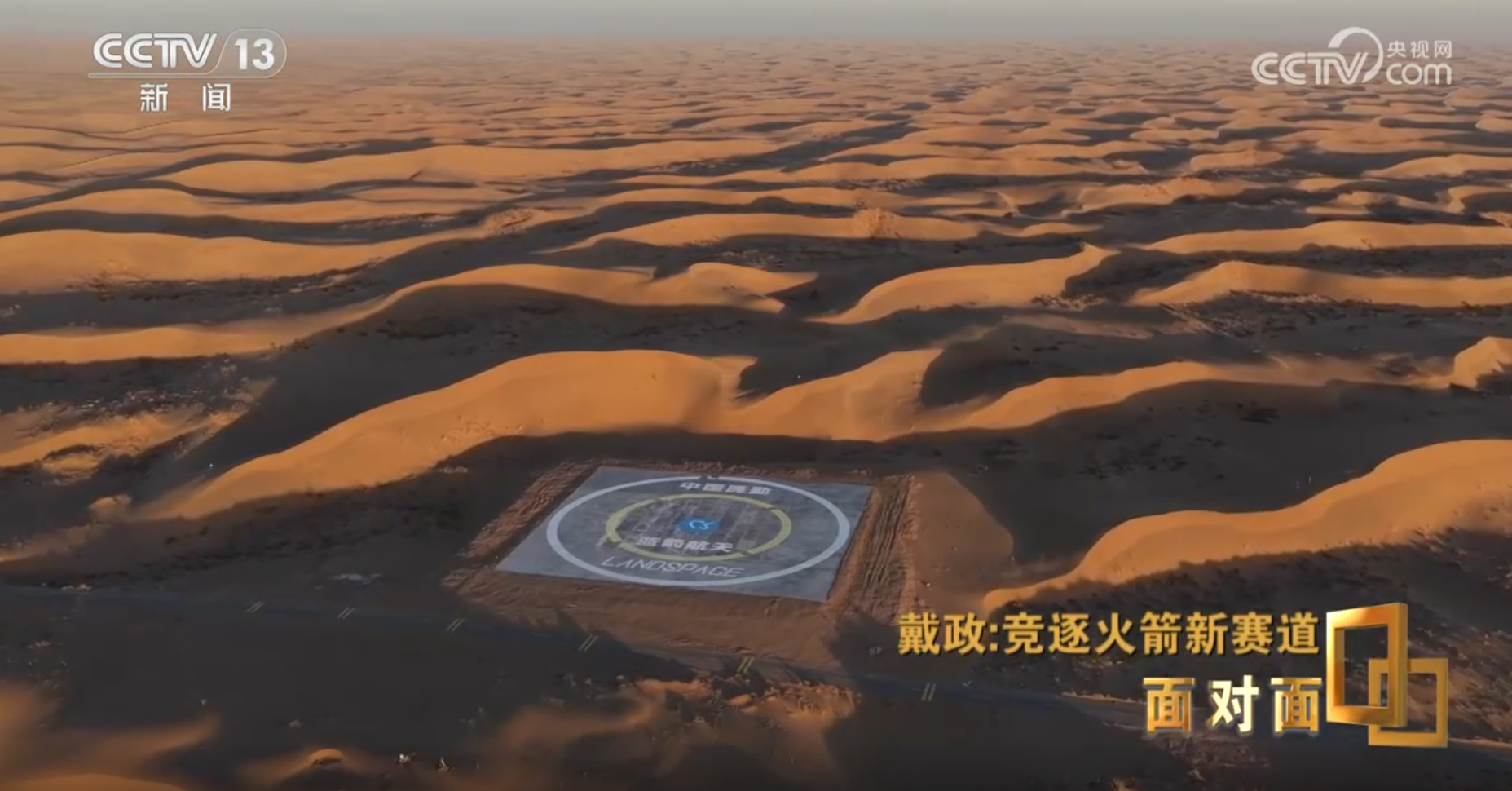
面对面丨首次挑战火箭入轨回收 朱雀三号总指挥:最后一脚刹车没有踩好
Yang Shi Wang· 2025-12-14 22:20
Core Viewpoint - The successful launch of the Zhuque-3 rocket marks a significant milestone in China's commercial space industry, emphasizing the importance of both achieving orbit and the experimental nature of rocket recovery [1][3][5]. Group 1: Launch and Recovery - The Zhuque-3 rocket successfully achieved orbit, but the recovery of the first stage was unsuccessful, leading to discussions about the mission's overall success [3][5]. - The mission was primarily focused on the successful entry into orbit, which is crucial for future satellite services, while recovery is seen as a means to reduce costs for the company [9][11]. Group 2: Technical Insights - The rocket's design includes a unique grid fin for deceleration and stability during descent, which performed well until the final landing phase [7][9]. - The rocket was approximately 40 meters from the intended landing center, indicating that successful recovery is within reach for future missions [7][9]. Group 3: Industry Context - The launch reflects the growing demand for satellite constellations in China, highlighting the urgency for commercial space capabilities [11][29]. - The company aims to leverage the experience gained from this launch to improve future missions, emphasizing the importance of iterative learning in the aerospace sector [30][34]. Group 4: Future Prospects - The Zhuque-3 rocket is designed to enhance payload capacity and reduce refurbishment costs, positioning it as a competitive option in the commercial launch market [29][34]. - The upcoming Long March 12A rocket will also focus on validating recovery technologies, indicating a broader trend towards reusable launch systems in China's space strategy [34].