奶酒

Search documents
浅析商标权与字号权的法律保护机制及冲突解决路径
Jin Rong Jie· 2026-02-12 06:28
Core Viewpoint - The article emphasizes the need to clarify the legal protection mechanisms for trademark rights and business name rights (字号权) in order to resolve conflicts between them and enhance the predictability and certainty of the law [1][2]. Group 1: Legal Protection Mechanisms - Trademark rights are primarily protected under the Trademark Law, which aims to distinguish the source of goods or services and provides exclusive rights on a national level [2]. - Business name rights are regulated by the Enterprise Name Registration Management Regulations, which manage registration based on administrative divisions and industries [2]. - Both trademark and business name rights reflect the commercial reputation and benefits associated with these identifiers, despite their different legal frameworks [2]. Group 2: Forms of Conflict - Conflicts between trademark rights and business name rights can manifest in two main forms: 1. A registered trademark being used as a business name by another party, which can infringe on the trademark if it leads to public confusion [3]. 2. A registered business name being used as a trademark by another party, which lacks clear legal provisions but can be addressed if the business name has acquired a certain level of influence [3]. Group 3: Judicial Practice in Conflict Resolution - The judicial practice often reveals "free-riding" behavior, where companies exploit the differences in regional registration of business names and national protection of trademarks to benefit from the reputation of well-known trademarks [4]. - In the case of Mengniu Dairy vs. Mengniu Liquor, the court found that the use of the "Mengniu" name by Mengniu Liquor created confusion and infringed on the trademark rights of Mengniu Dairy, which had established rights and recognition prior to the registration of the liquor company's name [5][6]. Group 4: Optimizing Judicial Paths for Unified Protection - The article suggests that even if trademarks and business names are similar, they do not necessarily constitute trademark infringement or unfair competition unless they mislead the public [7]. - It highlights the importance of respecting prior judicial decisions to avoid contradictory evaluations of the same identifier in different legal contexts, which can undermine judicial credibility [8]. - Companies are encouraged to adopt a unified strategy for managing trademarks and business names, promoting timely trademark registration of core business names to enhance brand clarity and trust [8].
博州年货大集开集啦!
Sou Hu Cai Jing· 2026-02-08 07:48
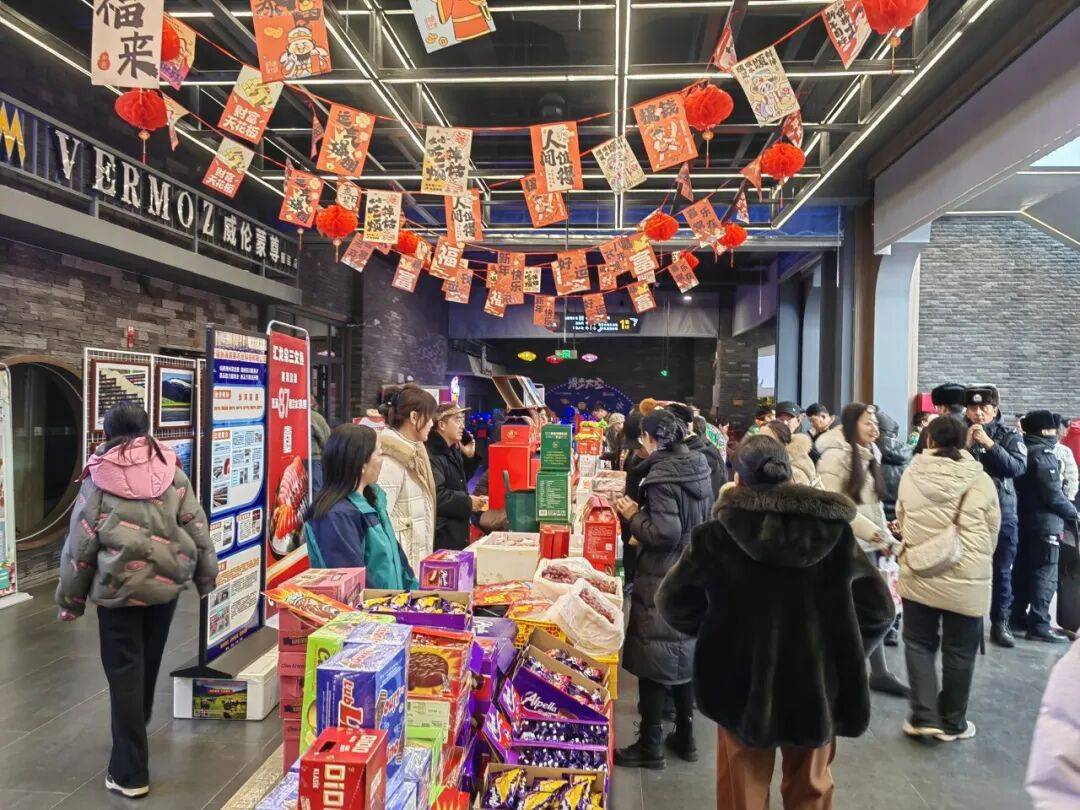
Core Viewpoint - The "Non-Heritage New Year Celebration: Taste of Chinese New Year" event in Bole City aims to stimulate consumer spending through various promotional measures and cultural activities, enhancing the local economy and community engagement [1][3]. Group 1: Event Overview - The event commenced on February 7 and will last until February 15, featuring a variety of themed booths including non-heritage crafts, local agricultural products, brand goods, and specialty foods [7]. - The "hi购博乐" initiative, launched in January, includes nine consumer promotion measures designed to boost spending in key sectors such as real estate and automotive, while also benefiting related industries like home appliances and dining [1][3]. Group 2: Consumer Engagement - The event provides a platform for local merchants to showcase and sell their products, enhancing consumer choice and experience [3]. - Interactive activities such as red envelope giveaways and lucky draws are incorporated to increase festive engagement and stimulate consumer spending [3][7]. Group 3: Local Products and Cultural Integration - The event highlights local agricultural products, including Bole rice and specialty snacks, attracting significant consumer interest [3][5]. - Non-heritage cultural displays, such as traditional crafts and performances, are featured, allowing attendees to experience local culture firsthand [3][5].

市场监管总局通报47批次食品抽检不合格情况
Yang Shi Xin Wen· 2026-01-30 12:19
Core Viewpoint - The State Administration for Market Regulation conducted a food safety inspection of 2,516 samples, identifying 47 batches of non-compliant products, prompting provincial market regulation departments to initiate investigations and corrective actions [1]. Group 1: Non-compliant Products - A batch of pure sweet potato vermicelli sold by a convenience store in Shanxi was found to have aluminum residue levels compliant with national standards but did not meet labeling requirements [2]. - A batch of milk wine from Inner Mongolia was found to have sweetener levels exceeding national safety standards [2]. - A batch of sorghum raw liquor from Ningxia was found to have non-compliant levels of sucralose [2]. - Dried wild cranberry sold online was found to have non-compliant levels of food colorants [3]. - A batch of seasoning noodles from Gansu was found to have non-compliant levels of food colorants [3]. - Dried cucumber slices sold online were found to have non-compliant levels of food additives and sulfur dioxide [3]. - A batch of traditional handmade sweet potato vermicelli from Henan was found to have aluminum residue levels compliant with national standards but did not meet labeling requirements [3]. - A batch of dried plums from Xinjiang was found to have non-compliant levels of preservatives, although the producer disputed the findings [4]. - A batch of sweet potato vermicelli from Shandong was found to have compliant levels of certain preservatives but did not meet labeling requirements [4]. - A batch of tofu from Guangxi was found to have non-compliant levels of preservatives [4]. Group 2: Additional Non-compliance Cases - A batch of white fungus sold online was found to have non-compliant levels of sulfur dioxide [5]. - A batch of white fungus from Guizhou was found to have non-compliant levels of sulfur dioxide [6]. - A batch of sesame oil from Anhui was found to have non-compliant levels of ethyl maltol [6]. - A batch of red goji berries from Gansu was found to have non-compliant levels of sulfur dioxide [6]. - A batch of star anise from Shanxi was found to have non-compliant levels of sulfur dioxide [6]. - A batch of potato vermicelli from Ningxia was found to have non-compliant levels of aluminum [7]. - A batch of dried tofu from Shanxi was found to have non-compliant levels of sulfur dioxide, but the producer disputed the findings [7]. - A batch of spicy sour noodles from Henan was found to have non-compliant levels of aluminum [7]. - A batch of dried vegetables sold online was found to have non-compliant levels of sulfur dioxide [7]. - A batch of pickled radish from Shanghai was found to have non-compliant levels of sweeteners [7]. Group 3: Further Non-compliance Issues - A batch of ginger candy was found to have non-compliant levels of preservatives [8]. - A batch of dried tofu from Fujian was found to have non-compliant levels of preservatives [8]. - A batch of peach meat from Hunan was found to have non-compliant levels of preservatives [8]. - A batch of herbal tea from Anhui was found to have non-compliant levels of preservatives [8]. - A batch of sunflower seeds from Henan was found to have non-compliant levels of mold [9]. - A batch of herbal tea from Shandong was found to have non-compliant levels of mold [9]. - A batch of seafood noodles from Hainan was found to have non-compliant levels of bacteria [9]. - A batch of beef jerky from Guizhou was found to have non-compliant levels of bacteria [9]. - A batch of mushroom rice noodles from Shandong was found to have non-compliant levels of bacteria [10]. - A batch of dried beef from Inner Mongolia was found to have non-compliant levels of carcinogens [10].
蜜雪冰城也要卖啤酒了,新茶饮为什么纷纷“买醉”?
Xin Jing Bao· 2025-10-29 08:32
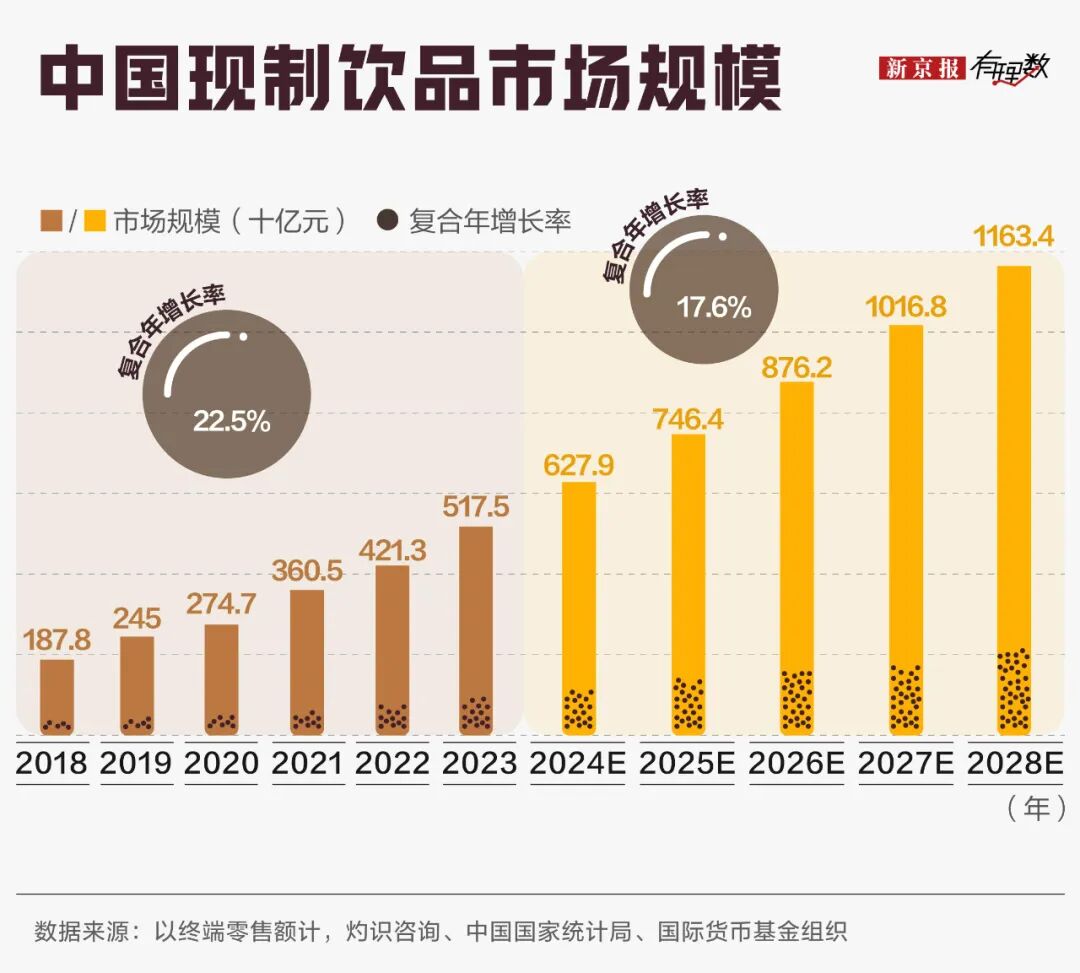
Core Insights - The core point of the news is that Mixue Ice City has expanded its business into the alcoholic beverage sector by acquiring a 53% stake in Fresh Beer Fulu, marking a strategic move to diversify its product offerings beyond tea and coffee [1][14]. Group 1: Company Expansion - Mixue Ice City has acquired Fresh Beer Fulu for a total price of 297 million yuan, officially entering the alcoholic beverage market [1]. - Fresh Beer Fulu, established in 2021, specializes in fresh beer products and has plans to expand to 1,200 stores across 28 provinces by August 2025 [1]. - The pricing strategy for Fresh Beer Fulu's products ranges from 5.9 yuan to 14.9 yuan, significantly lower than similar craft beer products, which are priced at one-third to one-half of the market rate [1]. Group 2: Market Trends - The tea beverage market in China is experiencing a slowdown, with a projected growth rate of only 17.6% from 2023 to 2028, compared to a compound annual growth rate of 22.5% from 2018 to 2023 [3]. - The trend of tea brands entering the alcoholic beverage market reflects a search for new growth points amid increasing competition and market saturation [3][14]. - The rise of the "micro-drunk economy" indicates a shift in consumer preferences, particularly among younger demographics, with over 60% of liquor consumption now attributed to consumers aged 18 to 35 [11]. Group 3: Competitive Landscape - Despite Mixue Ice City's leading position with over 40,000 stores, competition is intensifying from brands like Hushang Auntie, Cha Baidao, and Bawang Tea Princess, which are gaining traction with unique positioning [8]. - The transition from selling tea to alcoholic beverages raises questions about the effectiveness of low-price strategies in maintaining consumer loyalty and achieving sustained growth [14].