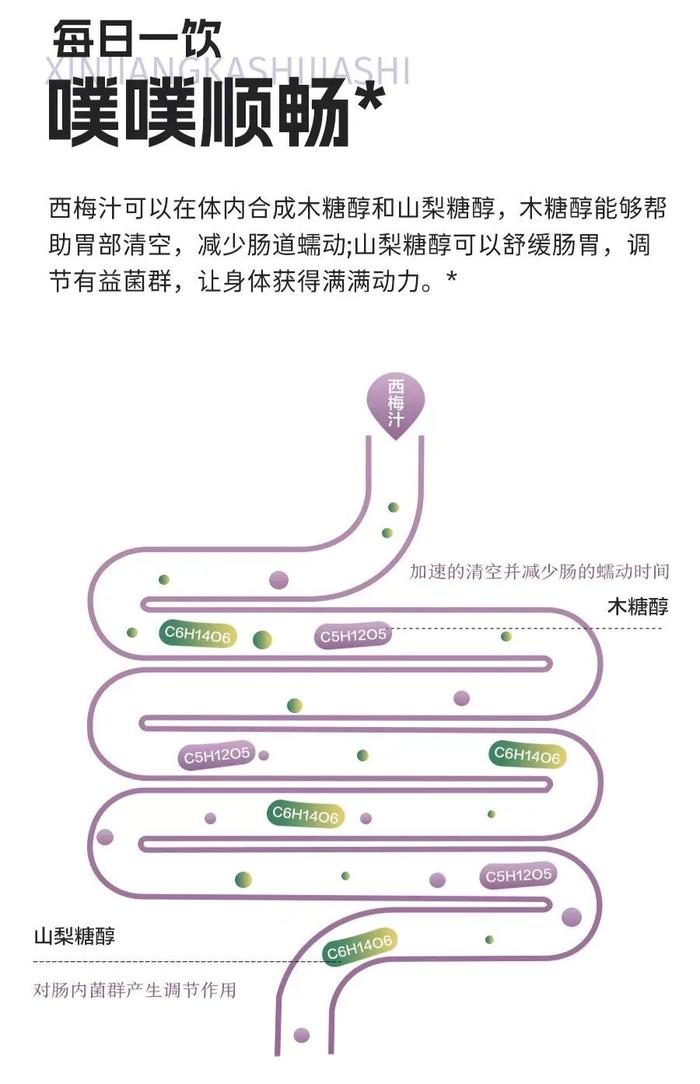
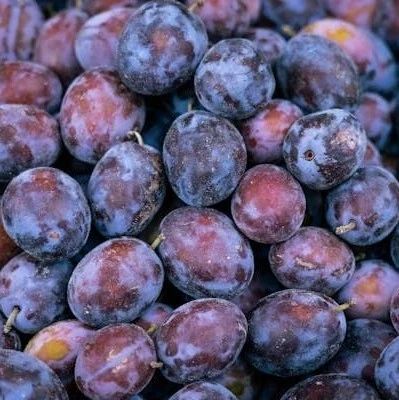
西梅干

Search documents
尉犁县“我们的节日 春节”新时代文明实践益集热闹开集
Xin Lang Cai Jing· 2026-02-14 10:20
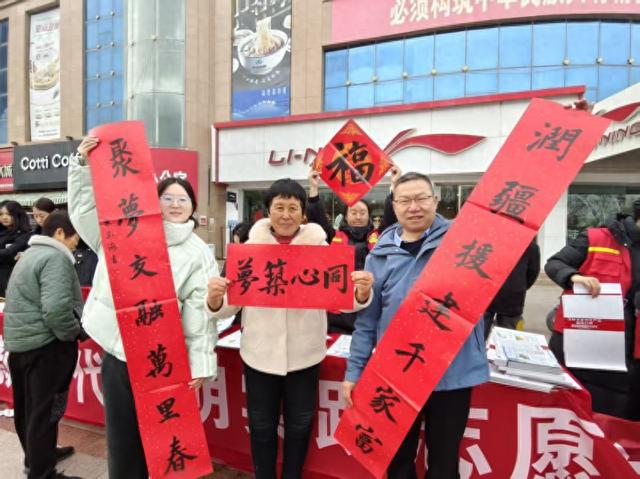
Core Viewpoint - The "Our Festival · Spring Festival" New Era Civilization Practice Benefit Market event in Weili County aims to promote traditional Chinese culture and provide community services, enhancing the festive atmosphere and offering practical benefits to the public [2][5]. Group 1: Event Structure and Activities - The event is organized into three main areas: Benefit Service Area, Policy Explanation Area, and Knowledge Interaction Area, creating a vibrant and engaging environment for attendees [3][4]. - The Benefit Service Area features health services such as free blood pressure checks and consultations provided by county hospital staff, as well as free calligraphy of Spring Festival couplets and "Fu" characters by local calligraphers [3][4]. - The Policy Explanation Area includes various stations where local officials explain policies related to legal rights, social security, and consumer protection, ensuring that attendees are informed about their rights and safety during the festive season [4]. Group 2: Community Engagement and Cultural Experience - The Knowledge Interaction Area offers fun activities such as a robot dance performance and interactive games, fostering a lively atmosphere and encouraging community participation [4][5]. - Attendees express satisfaction with the event, highlighting the value of free policy education, the joy of receiving traditional calligraphy, and the overall festive spirit [5]. - The event successfully integrates community service, cultural experiences, and policy dissemination, deepening the understanding of New Era Civilization Practices and promoting a positive cultural atmosphere in Weili County [5].

市场监管总局通报47批次食品抽检不合格情况
Yang Shi Xin Wen· 2026-01-30 12:19
Core Viewpoint - The State Administration for Market Regulation conducted a food safety inspection of 2,516 samples, identifying 47 batches of non-compliant products, prompting provincial market regulation departments to initiate investigations and corrective actions [1]. Group 1: Non-compliant Products - A batch of pure sweet potato vermicelli sold by a convenience store in Shanxi was found to have aluminum residue levels compliant with national standards but did not meet labeling requirements [2]. - A batch of milk wine from Inner Mongolia was found to have sweetener levels exceeding national safety standards [2]. - A batch of sorghum raw liquor from Ningxia was found to have non-compliant levels of sucralose [2]. - Dried wild cranberry sold online was found to have non-compliant levels of food colorants [3]. - A batch of seasoning noodles from Gansu was found to have non-compliant levels of food colorants [3]. - Dried cucumber slices sold online were found to have non-compliant levels of food additives and sulfur dioxide [3]. - A batch of traditional handmade sweet potato vermicelli from Henan was found to have aluminum residue levels compliant with national standards but did not meet labeling requirements [3]. - A batch of dried plums from Xinjiang was found to have non-compliant levels of preservatives, although the producer disputed the findings [4]. - A batch of sweet potato vermicelli from Shandong was found to have compliant levels of certain preservatives but did not meet labeling requirements [4]. - A batch of tofu from Guangxi was found to have non-compliant levels of preservatives [4]. Group 2: Additional Non-compliance Cases - A batch of white fungus sold online was found to have non-compliant levels of sulfur dioxide [5]. - A batch of white fungus from Guizhou was found to have non-compliant levels of sulfur dioxide [6]. - A batch of sesame oil from Anhui was found to have non-compliant levels of ethyl maltol [6]. - A batch of red goji berries from Gansu was found to have non-compliant levels of sulfur dioxide [6]. - A batch of star anise from Shanxi was found to have non-compliant levels of sulfur dioxide [6]. - A batch of potato vermicelli from Ningxia was found to have non-compliant levels of aluminum [7]. - A batch of dried tofu from Shanxi was found to have non-compliant levels of sulfur dioxide, but the producer disputed the findings [7]. - A batch of spicy sour noodles from Henan was found to have non-compliant levels of aluminum [7]. - A batch of dried vegetables sold online was found to have non-compliant levels of sulfur dioxide [7]. - A batch of pickled radish from Shanghai was found to have non-compliant levels of sweeteners [7]. Group 3: Further Non-compliance Issues - A batch of ginger candy was found to have non-compliant levels of preservatives [8]. - A batch of dried tofu from Fujian was found to have non-compliant levels of preservatives [8]. - A batch of peach meat from Hunan was found to have non-compliant levels of preservatives [8]. - A batch of herbal tea from Anhui was found to have non-compliant levels of preservatives [8]. - A batch of sunflower seeds from Henan was found to have non-compliant levels of mold [9]. - A batch of herbal tea from Shandong was found to have non-compliant levels of mold [9]. - A batch of seafood noodles from Hainan was found to have non-compliant levels of bacteria [9]. - A batch of beef jerky from Guizhou was found to have non-compliant levels of bacteria [9]. - A batch of mushroom rice noodles from Shandong was found to have non-compliant levels of bacteria [10]. - A batch of dried beef from Inner Mongolia was found to have non-compliant levels of carcinogens [10].
“菜篮子”“果盘子”量足价稳物丰 吃出人气“挤”出财气添彩火热“年经济”
Yang Shi Wang· 2026-01-07 10:15
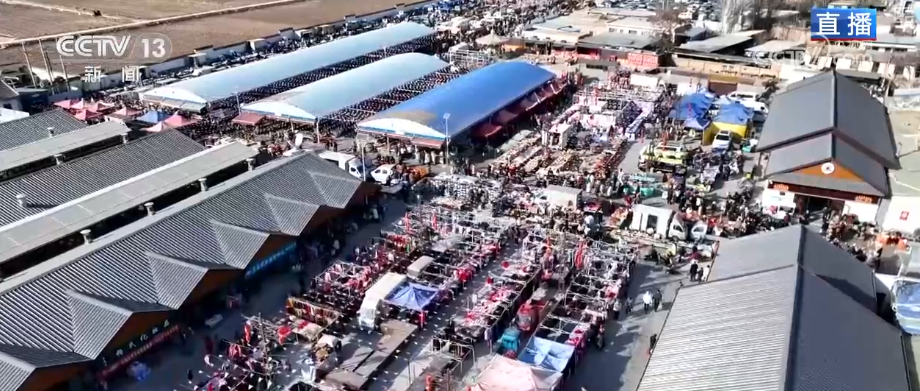
Group 1 - The article highlights the bustling atmosphere of the Jinguo Market in Yinchuan, Ningxia, as it prepares for the upcoming Spring Festival, with activities like shopping for New Year goods gaining popularity [1][3] - The market features over 400 stalls offering a wide variety of products, including fresh fruits, nuts, and local specialties like lamb, making it a one-stop destination for festive shopping [5][11] - The market attracts over 50,000 visitors on peak days, with an annual transaction volume nearing 100 million yuan, indicating its significance as a commercial hub [11] Group 2 - The Jinguo Market has undergone upgrades, moving traditional stalls into a clean, spacious indoor area, enhancing food safety and visitor comfort [16] - Cultural activities, including traditional performances, are planned to take place from New Year's Day until the festival, enriching the shopping experience with a festive atmosphere [20] - The market is evolving into a comprehensive experience that combines shopping, culture, and tourism, reflecting a modern approach to traditional markets [22] Group 3 - In Xinjiang, the largest agricultural product distribution center is experiencing a surge in sales of specialty dried fruits and various fruits, indicating a vibrant pre-festival market [24][32] - The dried fruit market features a wide range of products, including various types of raisins and dates, which are popular for gifting during the New Year [26][31] - The integration of online live streaming with offline sales is boosting transaction volumes, showcasing a trend towards digital engagement in traditional markets [34] Group 4 - The fruit market in Xinjiang is also thriving, with daily sales exceeding 5,000 tons, as it sources fresh produce from various regions, enhancing the diversity of offerings [37] - The establishment of six storage facilities for fruits and vegetables is helping to stabilize prices and ensure a steady supply, contributing to a positive consumer experience [38]
谁说山姆是中产?
3 6 Ke· 2025-12-29 07:42
Core Insights - The article discusses the perceived betrayal of middle-class consumers by Sam's Club, highlighting their dissatisfaction with the introduction of lower-tier brands and changes in product quality, which they believe devalues their membership experience [1][13]. Group 1: Membership and Pricing Strategy - Sam's Club raised its membership fee from 150 yuan to 260 yuan in 2016, targeting a specific consumer segment and claiming that the value provided would exceed the price increase [3]. - The value proposition for members is estimated to save around 5,000 yuan annually based on a 10% discount on purchases [4]. - The membership fee serves as a significant source of cash flow, allowing Sam's Club to maintain low product margins while ensuring profitability [11]. Group 2: Market Positioning and Competition - Sam's Club is positioned as a "mass-market discount supermarket" rather than a high-end retailer, with a focus on low prices and limited product selection [9][12]. - The article compares Sam's Club to high-end supermarkets like La Grande Épicerie de Paris and Waitrose, emphasizing that true high-end retailers offer a different shopping experience and product quality [5][7]. - Sam's Club's strategy includes expanding into lower-tier markets, evidenced by its recent growth in smaller cities and the introduction of more accessible brands [13][24]. Group 3: Product Strategy and Customization - Sam's Club offers a range of products categorized as private label, exclusive items, and customized products, which are tailored to meet specific consumer preferences [14][16]. - The introduction of lower-cost brands and products has sparked controversy among middle-class consumers, who feel that their expectations for quality are being compromised [1][32]. - The company has made efforts to localize its supply chain, with a significant portion of its products sourced from domestic suppliers, reflecting a strategy to cater to local consumer preferences [31][32]. Group 4: Expansion and Future Outlook - Sam's Club aims to double its membership in the next 8-10 years, indicating a strong growth strategy focused on increasing market penetration [24]. - The use of front warehouses and partnerships with delivery services has enhanced operational efficiency and allowed for rapid expansion without the need for numerous physical stores [19][21]. - The company is adapting to the competitive landscape by localizing its management and supply chain, which is essential for capturing a larger share of the Chinese market [25][31].
智利出口企业数量创历史新高
Shang Wu Bu Wang Zhan· 2025-11-12 15:15
Core Insights - Chile's export companies exceeded 8,000 for the first time, reaching a record high in the first ten months of 2025 [1] - Total trade volume for Chile reached $163.68 billion, marking an 8.3% increase compared to the same period in 2024 [1] - Export value reached $86.39 billion, a 5.6% increase year-on-year, achieving the highest level recorded for the same period [1] Industry Breakdown - The manufacturing sector led with 4,925 exporting companies, followed by agriculture (1,712), services (1,055), wine (374), fisheries and aquaculture (338), forestry (303), and mining (245) [1] - Among the exporting companies, 3,262 were small and medium-sized enterprises, 504 were micro-enterprises, and 3,026 were large enterprises [1] Export Performance - Mining exports totaled $49.90 billion, with a year-on-year growth of 7.3%, driven by strong copper concentrate exports amounting to $28.78 billion, which increased by 15.1% [1] - The fruit sector, including products like hazelnuts, walnuts, avocados, and lemons, saw exports of $7.08 billion, a 4.2% increase compared to the first ten months of 2024 [1] - The food industry exported $11.36 billion, with key products including salmon, squid, bamboo fish, frozen blueberries, and dried plums [1]
疆香入粤韵 湾区品伽情——“疆品南下 粤品北上”伽师名优产品推介活动走进广州社区
Nan Fang Nong Cun Bao· 2025-08-29 01:35
Core Viewpoint - The event "Xinjiang Products Southbound, Guangdong Products Northbound" aims to promote high-quality agricultural products from Kashi County to the Guangdong Bay Area, enhancing regional economic cooperation and cultural exchange [4][20][30]. Group 1: Event Overview - The promotional event took place on August 22 in Guangzhou, featuring unique agricultural products from Kashi County, attracting hundreds of local residents [4][5]. - The atmosphere at the event was lively, with many residents eager to taste and purchase the products [5][8]. Group 2: Featured Products - Kashi County showcased various products, including Kashi melons, new plums, paper-skin walnuts, gray dates, raisins, and more than ten specialty items, all marked with quality labels [17][18]. - Residents expressed satisfaction with the taste and quality of the products, highlighting the sweetness of Kashi melons and the balanced flavor of new plums [10][12]. Group 3: Strategic Goals - The event is part of a series aimed at fostering deeper collaboration between Guangdong and Xinjiang, utilizing e-commerce, cold chain logistics, and community group buying to integrate Xinjiang products into the Bay Area's consumption ecosystem [20][22]. - Future plans include regular online promotions and the establishment of dedicated "Xinjiang Product Zones" in collaboration with local unions, communities, and supermarkets to facilitate smoother sales [23][24]. Group 4: Cultural and Economic Significance - The initiative not only promotes product circulation but also symbolizes the transmission of goodwill and cultural integration between the two regions [28][30]. - The event serves as a bridge for industrial integration and emotional resonance between Guangdong and Xinjiang, moving from mere product connection to deeper mutual understanding [33].

智利输华植物产品检疫证书无纸化改革在天津落地
Zhong Guo Xin Wen Wang· 2025-08-14 19:05
Group 1 - The implementation of a paperless phytosanitary certificate system for Chilean products entering China has been officially launched at Tianjin Customs, enhancing trade facilitation between the two countries [1][2] - The new system allows for the direct cancellation of paper certificates, relying solely on electronic certificates for customs clearance, which significantly improves efficiency in bilateral trade [2] - The transition to a paperless model is expected to save companies approximately 100 yuan in international shipping and labor costs per certificate, while also reducing the average customs declaration review time by about 30% [2]
从小众水果到“西梅宇宙”,一个功效大于口味的超级水果如何诞生?
FBIF食品饮料创新· 2025-05-10 15:07
Core Viewpoint - The article discusses the transformation of prunes from a niche fruit to a "super fruit," highlighting the dual advancement of industry and consumer demand for health-oriented, functional, personalized, and emotional products [42]. Group 1: Market Trends and Consumer Behavior - The health and functional beverage trend has revitalized the juice market, with prune juice market size reaching 4.5 billion RMB in 2023, a 15% year-on-year growth, and projected to reach 6 billion RMB by 2025, with a compound annual growth rate of 12% [16]. - Consumers are increasingly prioritizing health in their food and beverage choices, with 73.5% willing to spend more for quality, indicating a shift away from sugary drinks towards healthier options [16]. - The demand for functional beverages is evident, with 91.6% of consumers purchasing NFC juice for its health benefits rather than taste [18]. Group 2: Product Development and Innovation - The "Prune Universe" has expanded to include various products such as prune juice, dried prunes, and yogurt, reflecting a shift in consumer perception towards prunes as a functional ingredient rather than just a snack [2][13]. - The introduction of new products has led to a significant increase in SKU numbers, with prune-related food and beverage SKUs growing by 55.5% and 454% respectively [22]. - Companies like Huiyuan Juice have successfully launched NFC prune juice, which quickly became their best-selling product, demonstrating the potential for prunes in the beverage market [22]. Group 3: Supply Chain and Production - The supply chain for prunes has improved significantly, with investments in modern agricultural practices and cold chain logistics enhancing the quality and availability of prunes [39][40]. - Xinjiang is the largest prune production area in China, with significant investments in processing facilities to support the growing demand for prune products [39][40]. - The establishment of modern production facilities has allowed for better management of the supply chain, addressing previous challenges such as high spoilage rates and lack of standardization [41]. Group 4: Challenges and Market Dynamics - The prune industry faces challenges related to consumer trust, particularly following incidents involving misleading product claims, which have led to a perception of prunes as a laxative [44][45]. - Despite these challenges, the prune market is not artificially inflated, and the scrutiny may lead to healthier long-term growth for the industry [45]. - The article emphasizes that the focus on health benefits over taste is reshaping consumer expectations and market dynamics in the beverage sector [17][42].
为求贸易协议,印度抛出橄榄枝:将对美关税差“膝盖斩”
Jin Shi Shu Ju· 2025-05-09 10:31
Core Viewpoint - India is proposing to significantly reduce its tariff gap with the US from nearly 13% to below 4% in exchange for exemptions from current and potential tariff increases by the Trump administration, marking a substantial shift in trade policy aimed at lowering trade barriers [1][2] Group 1: Trade Negotiations - The average tariff gap between India and the US will decrease by 9 percentage points, reflecting India's commitment to reducing trade barriers [1] - The total bilateral trade between India and the US is projected to be approximately $129 billion in 2024, with India currently enjoying a trade surplus of $45.7 billion [1] - An Indian official indicated that Japan is next in line for a trade agreement with the US after the UK, highlighting India's strategic approach to trade negotiations [1] Group 2: Market Access and Tariff Reductions - India has offered preferential market access for nearly 90% of goods imported from the US, including a reduction in tariffs [2] - Key export sectors such as gems and jewelry, leather, textiles, and horticultural products are seeking preferential market access to enhance trade conditions compared to other US trading partners [2] - India is also looking to ease export regulations on high-value US goods, including aircraft, luxury cars, and pharmaceuticals, to make the agreement more appealing to Washington [2] Group 3: Technology and Equal Treatment - India is requesting equal treatment in key technology sectors such as AI, telecommunications, biotechnology, pharmaceuticals, and semiconductors, similar to that afforded to US allies like the UK, Australia, and Japan [2]
从小众水果到“西梅宇宙”,一个功效大于口味的超级水果如何诞生?
3 6 Ke· 2025-04-30 10:56
Core Insights - The health, functionality, personalization, and emotional aspects are the upgrade directions for the new consumption industry, with prunes successfully tapping into these demands, representing a dual advancement in both industry and consumer trends [1][34]. Industry Trends - The market for prune juice reached 4.5 billion yuan in 2023, showing a 15% year-on-year growth, and is expected to reach 6 billion yuan by 2025, with a compound annual growth rate of 12%, significantly outpacing the overall beverage industry's growth rate of 6% [11]. - The juice market had previously faced a decline, with retail sales dropping from 87.14 billion yuan in 2017 to 75.26 billion yuan in 2021, indicating a shift in consumer preferences towards healthier options [11][12]. - The trend towards health-oriented products has led to a rise in functional beverages, with 91.6% of consumers purchasing NFC juice for its functional benefits rather than taste [13]. Product Development - The "Prune Universe" has rapidly expanded with various products such as prune juice, dried prunes, and yogurt, reflecting a shift in consumer perception from prunes as a mere fruit to a functional ingredient [2][19]. - The introduction of new products has been significant, with a 454% increase in SKU numbers for prune-related beverages, indicating strong market interest and investment [16]. Consumer Behavior - Consumers are increasingly seeking products that prioritize health and functionality over traditional sugary drinks, with 73.5% of respondents in a survey indicating a preference for quality food and beverages [12]. - The narrative around prunes has shifted, with consumers sharing experiences of the product's effectiveness in addressing digestive issues, thus creating a community of potential customers [10][22]. Supply Chain and Production - The supply chain for prunes has improved significantly, with investments in modern agricultural practices and cold chain logistics enhancing the quality and availability of fresh prunes [29][30]. - The Xinjiang region is a major production area for prunes in China, with significant investments in processing facilities to support the growing demand for prune products [30][31]. Market Challenges - Despite the growth, the prune juice market faces challenges, including a recent trust crisis due to quality issues with certain products, highlighting the need for transparency and quality assurance in the industry [35][36].