嫩烤DHA大黄鱼等

Search documents
太突然,西贝大降价!多位顾客晒账单:有人点单417元付17元,有人一分钱没花
Sou Hu Cai Jing· 2025-10-01 23:57
Core Insights - The company Xibei is implementing a significant price adjustment across its nationwide stores, with price changes ranging from 20% to 40% [1][3] - The price adjustment is sudden, leading to staff manually updating price tags on existing menus instead of using printed new menus [1][3] - The largest price changes are observed in first-tier and quasi-first-tier cities [3] Pricing Details - Specific dishes have seen varied price changes, with some items remaining unchanged while others have decreased by notable percentages: - Scallion Grilled Fish: Original price 80, New price 79, Decrease of 11% [5] - Sesame Oil Cucumber: Original price 23, New price 19, Decrease of 17% [5] - Five Tomato Sour Soup Noodles: Original price 29, New price 23, Decrease of 20% [5] - Sesame Oil Fried Eggs: Original price 43, New price 33, Decrease of 23% [5] Promotional Activities - The company has launched a promotional campaign called "Xibei Treats You," offering customers a 100 yuan dining voucher with no minimum spend required, valid until October 31 [5] - Customers have reported significant savings using these vouchers, with some paying as little as 4 yuan for meals that originally cost over 200 yuan [8][12]

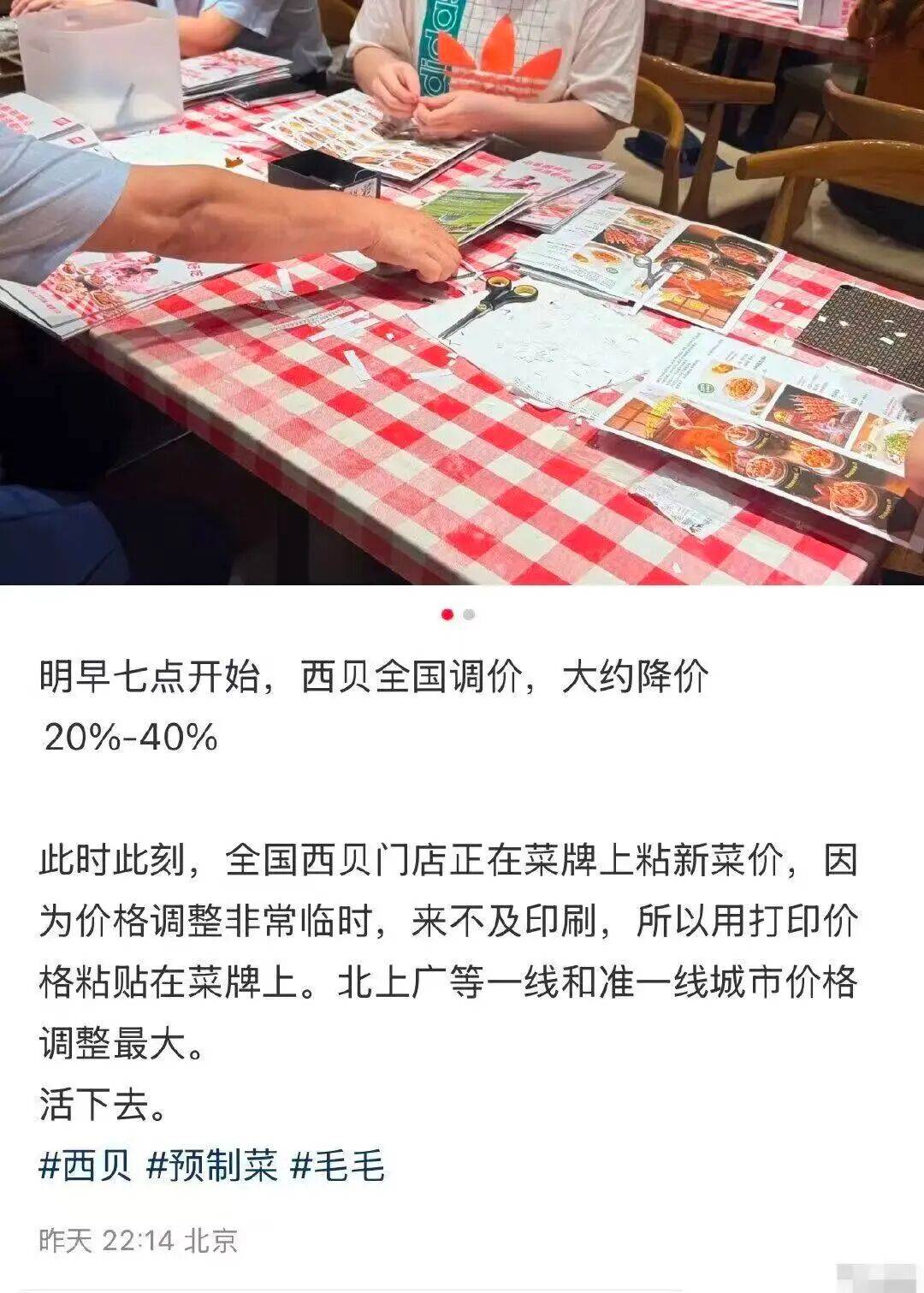
西贝大降价!
Sou Hu Cai Jing· 2025-10-01 08:00
Group 1 - The core action taken by Xibei is a significant price adjustment on menu items, with increases ranging from 20% to 40% across its nationwide stores starting October 1 [1] - The price adjustment was unexpected, leading to a situation where new price tags had to be affixed to old menus due to the sudden notice [1] - Specific menu items have seen varied price changes, with some items experiencing price reductions while others remain unchanged [2] Group 2 - The item "葱香烤鱼" saw a price drop from 89 to 79, reflecting an 11% decrease [2] - "胡麻油炒鸡蛋" was reduced from 43 to 33, marking a 23% decrease [2] - Conversely, "鸡汤白玉山药炖豆腐" increased from 43 to 46, indicating a 3% rise [2]
西贝大降价
Sou Hu Cai Jing· 2025-10-01 04:41
Core Insights - Xibei is facing a significant challenge and is attempting to implement measures for self-rescue amid recent controversies [1] Pricing Strategy - On October 1, Xibei will implement a substantial price adjustment across its nationwide stores, with price increases ranging from 20% to 40% [1] - The notification for the price change was sudden, leading to staff working to update old menus with new price tags [1] Menu Changes - A selection of dishes has seen varied price adjustments, with some items experiencing price reductions while others remain unchanged or have slight increases [5] - For example, the price of "葱香烤鱼" decreased from ¥89 to ¥79, reflecting an 11% reduction, while "鸡汤白玉山药炖豆腐" increased from ¥43 to ¥46, showing a 3% increase [5]
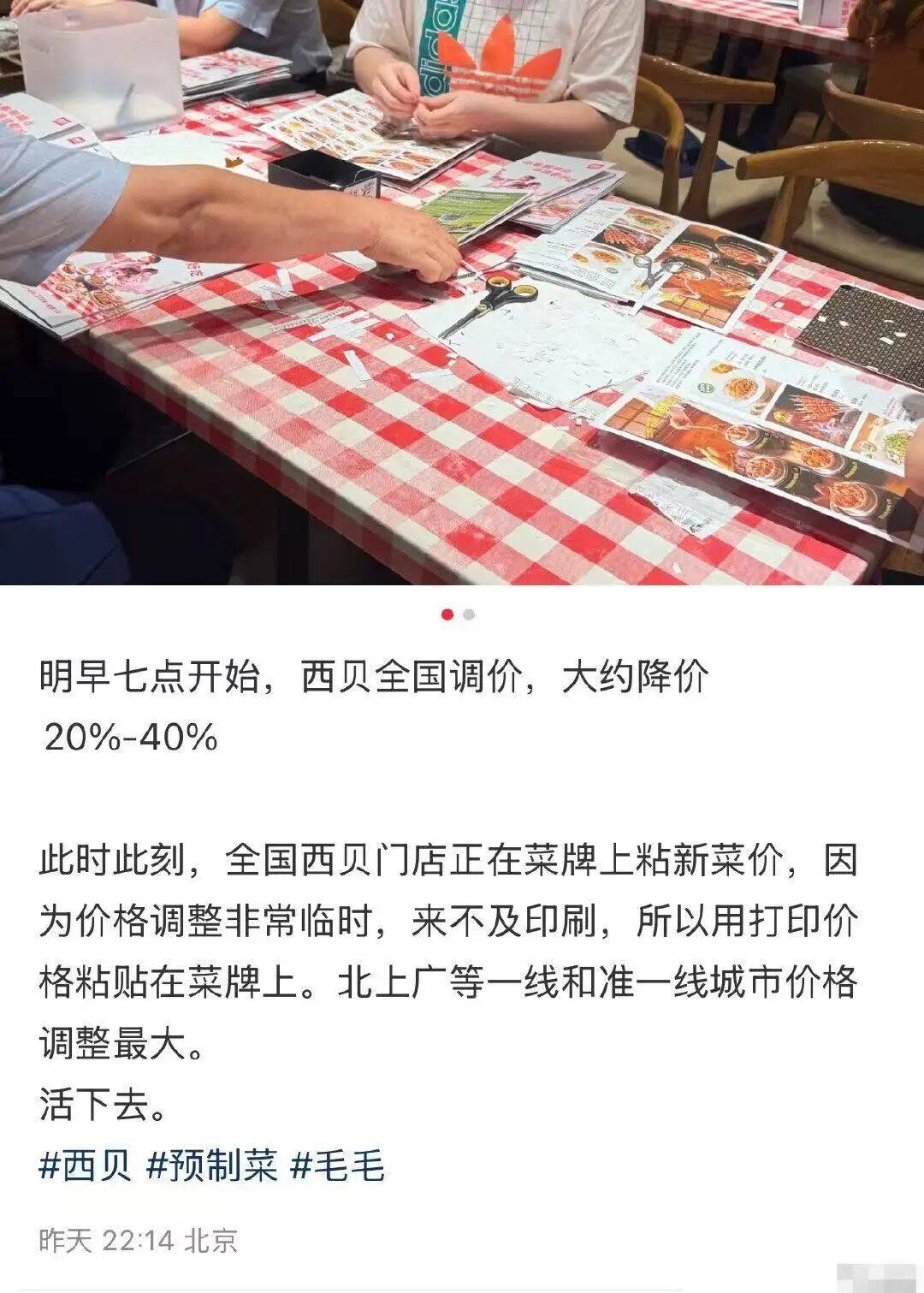
西贝:感谢罗永浩
Sou Hu Cai Jing· 2025-09-12 13:54
Core Viewpoint - The incident involving Luo Yonghao's criticism of Xibei's use of pre-prepared dishes has sparked a public debate about transparency in the pre-prepared food industry in China, with Xibei defending its practices and providing detailed production processes for its dishes [1][3]. Group 1: Company Response - Xibei publicly thanked Luo Yonghao for his feedback but firmly opposed his claims, stating that his criticisms were unfounded [1]. - In response to the allegations, Xibei released a detailed "operational guide" outlining the production processes of 13 dishes served at its restaurants, asserting that these processes align with national standards [1][2]. - Xibei announced plans to open its kitchens for public tours, allowing customers to observe food preparation practices firsthand, thereby promoting transparency [3]. Group 2: Industry Context - The definition of pre-prepared dishes, as outlined by the Chinese government, specifies that these dishes are made from one or more food products through industrial pre-processing methods and are not classified as staple foods [2][3]. - There is a noted discrepancy between public perception of pre-prepared dishes and the official definitions provided by regulatory bodies, indicating a potential area for consumer education [4].
西贝的问题不是有没有预制菜
首席商业评论· 2025-09-12 10:51
Core Viewpoint - The controversy surrounding the use of "pre-prepared dishes" at Xibei was ignited by a comment from Luo Yonghao, leading to a strong response from Xibei's founder, who denied the allegations and emphasized their cooking practices [2][4][6]. Group 1: Company Response - Xibei's founder, Jia Guolong, firmly denied the use of "pre-prepared dishes," stating that all dishes are made from pre-processed ingredients with final cooking done in-store [4][6]. - To address the concerns, Xibei announced that all 370 locations would open their kitchens for public viewing starting September 12, allowing customers to observe the cooking process [8]. - Jia Guolong indicated intentions to sue Luo Yonghao for his comments, while Luo responded by offering a reward for evidence supporting the claim of Xibei using pre-prepared dishes [8][12]. Group 2: Definition and Standards - The definition of "pre-prepared dishes" was clarified by the State Administration for Market Regulation, which stated that dishes made in central kitchens and then frozen or packaged do not fall under this category [12]. - Xibei's practices involve pre-processing ingredients but require final cooking steps to be completed in-store, which aligns with the definition of "pre-processed ingredients" rather than "pre-prepared dishes" [12][13]. - The lack of a clear standard for what constitutes "pre-prepared dishes" has led to public confusion, as many consumers may equate central kitchen processing with pre-prepared dishes [12][13]. Group 3: Consumer Perception - Consumer sentiment towards Xibei has been affected by perceptions of high prices and dissatisfaction with food quality, with some customers recalling previous positive experiences that have since declined [14][20]. - Luo Yonghao's comments resonated with consumers who feel that Xibei's dishes are overpriced and lack flavor, leading to discussions about the restaurant's overall value proposition [14][20]. - The ongoing debate highlights the challenges faced by the restaurant industry in maintaining quality and transparency while navigating consumer expectations and regulatory definitions [12][20].

追热点|罗永浩悬赏10万元征证据,西贝发公开信称指责不实!预制菜标准如何划定?
Sou Hu Cai Jing· 2025-09-12 09:03
Core Viewpoint - The controversy surrounding the restaurant chain "Xibei" has been ignited by public criticism from influencer Luo Yonghao, who accused the brand of serving mostly pre-prepared dishes, leading to significant public concern and a strong response from Xibei's founder, Jia Guolong [1][4][11]. Group 1: Controversy and Reactions - Luo Yonghao publicly criticized Xibei on social media, claiming that the restaurant served "almost all pre-prepared dishes" and called for legislation requiring restaurants to disclose the use of such items [1][11]. - Jia Guolong, the founder of Xibei, announced plans to sue Luo Yonghao, emphasizing the damage to the brand's reputation caused by the influencer's extreme statements [4][6]. - In response to the criticism, Xibei has launched a "Luo Yonghao Menu" in all its locations, allowing customers to order dishes that Luo had previously tried, with a promise of a money-back guarantee if they are unsatisfied [7][13]. Group 2: Financial and Operational Details - Luo Yonghao's dining experience at Xibei included 15 dishes for a total of 830 yuan, which Jia Guolong defended as reasonable pricing [6][8]. - Xibei has committed to transparency by allowing customers to visit the kitchen and observe the cooking process, aiming to dispel claims of using pre-prepared dishes [13][25]. Group 3: Industry Context and Regulations - The controversy has sparked discussions about the use of pre-prepared dishes in the restaurant industry, with regulatory bodies advocating for clearer labeling to inform consumers [34][36]. - Jia Guolong acknowledged the growing trend of pre-prepared dishes in the industry but clarified that Xibei does not currently use them, distinguishing between pre-prepared and pre-cooked items [28][26]. Group 4: Public Sentiment and Social Media Impact - The incident has generated significant online discussion, with some supporting Luo Yonghao's claims while others defend Xibei's quality and pricing [11][39]. - The situation highlights the influence of social media on public perception and the potential impact of celebrity endorsements or criticisms on brand reputation [30][41].
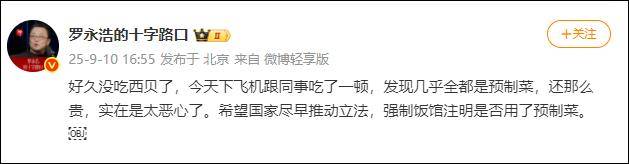
对话西贝前后厨员工:究竟用没用预制菜?
凤凰网财经· 2025-09-12 05:21
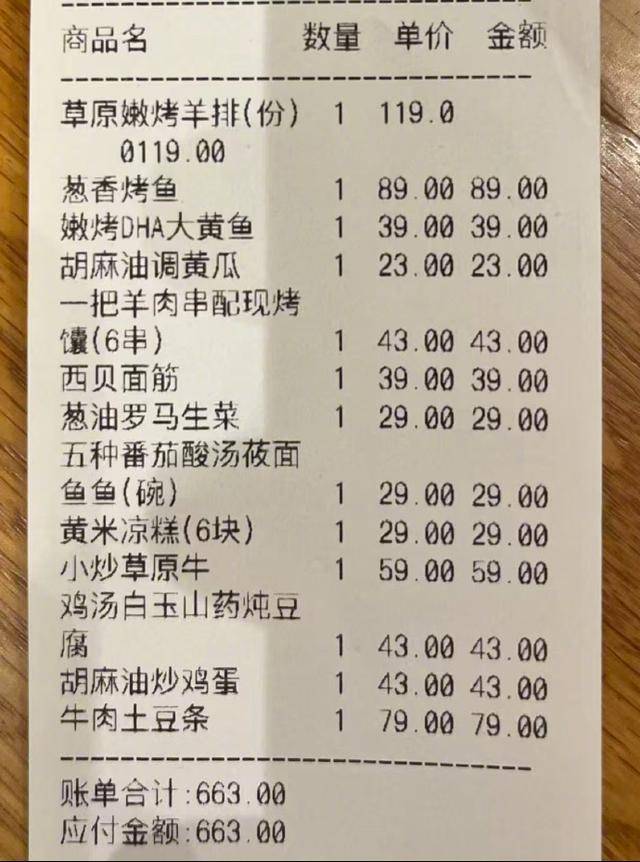
Core Viewpoint - The controversy surrounding "pre-made dishes" has escalated between Luo Yonghao and Xibei, with both parties presenting conflicting narratives, leading to significant public discourse [1]. Group 1: Controversy Overview - Luo Yonghao criticized Xibei for serving mostly pre-made dishes at high prices, calling for legislation to require restaurants to disclose the use of pre-made ingredients [1]. - Xibei's founder, Jia Guolong, announced plans to sue Luo for damaging the restaurant's reputation and invited customers to observe the cooking process in their kitchens [1]. Group 2: Employee Insights - A former Xibei kitchen employee commented on the perception of pre-made dishes, acknowledging that while the portions may be small and prices high, the preparation involves fresh ingredients and cooking processes [3][4]. - The employee explained that dishes like "potato stewed beef" are prepared fresh in the morning and served later, which may lead to consumer confusion regarding the freshness of the food [6][7]. Group 3: Cooking Processes - The cooking process involves preparing ingredients in advance, with some dishes being cooked on-site while others are reheated from earlier preparations [19][20]. - The employee clarified that while some items are prepared ahead of time, they are not classified as pre-made dishes in the traditional sense, as they still undergo cooking processes before serving [23][28]. Group 4: Menu and Pricing - A detailed menu was provided, showcasing various dishes and their prices, indicating a total bill of 663.00 [16]. - The pricing reflects the perceived quality and preparation methods, with some dishes being freshly cooked while others are prepared in advance [19][20].