定制化服务

Search documents
马年“开门红”!武汉多家酒店春节假期连续满房
Chang Jiang Ri Bao· 2026-02-23 00:41
Core Insights - Wuhan hotels are experiencing a surge in bookings and dining during the 2026 Lunar New Year holiday, indicating a strong start to the year for the hospitality sector [1] Group 1: Hotel Performance - Wuhan hotels such as the Wuhan Hongshan Hotel and Wuhan Sheraton Grand Hotel achieved full occupancy from the second to the fifth day of the Lunar New Year, with the Sheraton maintaining a 95% occupancy rate on the fifth day [2] - The demand for hotel accommodations is driven by a mix of local and out-of-town tourists, with significant increases in visitors from Beijing, Shanghai, and Shenzhen, highlighting Wuhan's appeal as a travel destination [2] - The occupancy rates for hotels like the Wuhan Crown Plaza and the Wuhan Jian Guo Hotel remained high, often exceeding 90%, showcasing the overall robust performance of the hotel sector during the holiday [4] Group 2: Dining and Customer Experience - Dining services in hotels are thriving, with breakfast services attracting over 800 guests daily, and high demand for lunch and dinner services leading to full dining halls [2] - Special initiatives such as the "New Year Children's Gift Pack" and 24-hour butler services have been well-received, enhancing the overall guest experience [2] - The Wuhan Hongshan Hotel reported record daily revenue from its dining services during the holiday, indicating strong consumer spending in the food and beverage sector [2][4] Group 3: Thematic Offerings and Family Engagement - Hotels are introducing family-friendly packages and activities, such as DIY crafts and themed rooms, to attract family travelers, which has proven successful in increasing occupancy and revenue [4] - The Wuhan Crown Plaza Hotel's focus on cultural activities, such as traditional crafts, has drawn families, further solidifying its position as a preferred destination for family travel [4] - The Wuhan Jian Guo Hotel's family-oriented offerings, including themed rooms and children's activities, have led to a 30% increase in revenue compared to the previous year during the holiday period [4]

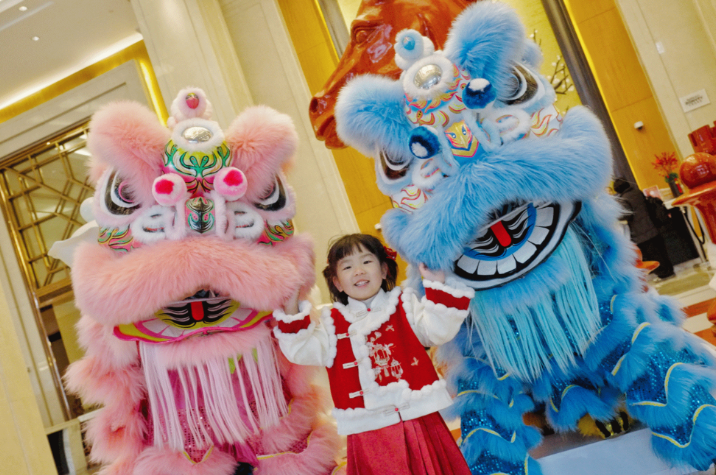
琼海博鳌机场为特殊旅客提供定制化服务
Hai Nan Ri Bao· 2026-02-14 04:41
Group 1 - The core focus of the news is the enhanced services provided by Qionghai Boao International Airport during the Spring Festival, specifically targeting vulnerable groups such as elderly travelers, unaccompanied children, and those with mobility issues [1][2] - The airport has implemented a proactive care approach, replacing traditional waiting at counters with active staff patrols to assist elderly passengers throughout the entire travel process, ensuring a smooth experience from check-in to boarding [1] - A "special passenger service station" has been established at the airport, equipped with items like reading glasses and walking aids, and offers free blood pressure and oxygen level measurements [1] Group 2 - For unaccompanied minors aged 5 to 12, the airport has introduced the "Childcare Escort" service, which includes a secure handover process involving parents, ground staff, flight crew, and receiving individuals [2] - The service for unaccompanied children includes dedicated check-in counters, enjoyable waiting areas, and priority security checks, with staff ensuring the safe delivery of children to their designated guardians [2] - Additionally, the airport offers a "seamless passage" service for passengers with mobility challenges, allowing them to book wheelchair assistance from the car door to the aircraft door 24 hours in advance [2]
数据驱动的管理
3 6 Ke· 2026-01-19 03:29
Core Insights - Data has become an indispensable strategic resource for enterprises, often referred to as the "new oil" of business development. Efficient data collection, scientific analysis, and effective utilization are essential for driving decision-making, optimizing operations, and unlocking innovation [1] Group 1: Necessity of Data-Driven Management - The rapid development of IoT, big data, and AI is driving a comprehensive digital transformation in the global economy, resulting in massive data generation across all operational aspects of businesses [2] - Traditional management models relying on experience and intuition are becoming inadequate in the face of explosive data growth and rapidly changing market conditions, leading to slower responses and inaccurate judgments [2] Group 2: Core Elements of Data-Driven Management - **Data Resource Optimization**: Companies are shifting focus from merely pursuing advanced models to deeply optimizing their unique internal data resources, which are crucial for AI application and differentiated innovation [3] - **Technological Empowerment**: Advanced technologies like AI, machine learning, and big data analytics serve as the engine for data-driven management, enabling precise market trend predictions and operational insights [4] - **Talent Development**: There is a growing need for composite talents who understand both business and data, with positions like data scientists experiencing significant growth in demand [6] Group 3: Practical Pathways for Data-Driven Management - **Precision Decision-Making**: Companies should establish data-based decision-making mechanisms, integrating data analysis into strategic planning, market expansion, and product iteration [7] - **Process Optimization**: Businesses should utilize data to identify and eliminate redundant processes, enhancing efficiency in production, supply chain management, and financial operations [8] - **Risk Prevention**: A data risk warning system should be established to capture potential market, credit, and operational risks in real-time [9] - **Value Creation**: Companies need to leverage data as a core driver for innovation in business models and services, enhancing customer engagement and operational efficiency [10] Group 4: Challenges and Responses in Data-Driven Management - **Data Security and Privacy**: Companies must strengthen data security measures to prevent breaches and ensure compliance with legal regulations [11] - **Data Quality and Governance**: Establishing stringent data quality standards and governance frameworks is essential to avoid misleading decisions due to low-quality data [12] - **Technological Iteration and Talent Shortage**: Companies should invest in R&D and collaborate with educational institutions to keep pace with rapid technological advancements and address talent shortages [13] Group 5: Future Outlook for Data-Driven Management - The latest accounting standards require companies to recognize data resources as assets, marking a significant step towards data assetization. Several companies have begun to disclose the monetary value of their data resources [14] - The emergence of financialization cases for data assets indicates new financing channels for businesses, driven by technological advancements and regulatory frameworks [15] - Embracing a data culture and building core competitive capabilities will be crucial for companies to navigate the challenges and opportunities in the digital economy [16]
金证股份跌2.02%,成交额2.06亿元,主力资金净流出590.81万元
Xin Lang Cai Jing· 2026-01-16 02:47
Group 1 - The core viewpoint of the news is that Jinzheng Co., Ltd. has experienced fluctuations in stock price and significant changes in financial performance, with a notable decrease in revenue and a net loss reported for the recent period [1][2]. - As of January 16, Jinzheng's stock price was 16.95 yuan per share, with a market capitalization of 15.954 billion yuan. The stock has increased by 6.47% year-to-date [1]. - The company operates in the IT services sector, providing comprehensive solutions to clients in finance, including securities, funds, banks, and regulatory bodies, with a revenue composition of 45.26% from customized services, 36.55% from software, and 15.00% from hardware [1][2]. Group 2 - For the period from January to September 2025, Jinzheng reported a revenue of 1.771 billion yuan, a year-on-year decrease of 49.08%, while the net profit attributable to shareholders was a loss of 56.533 million yuan, an increase in loss of 51.03% compared to the previous year [2]. - The company has distributed a total of 518 million yuan in dividends since its A-share listing, with 83.1695 million yuan distributed over the last three years [3]. - As of September 30, 2025, the number of shareholders decreased by 12.97% to 78,800, while the average circulating shares per person increased by 14.30% to 11,940 shares [2].

从制造产品到制造价值以服务型制造推动制造业转型升级
Xin Lang Cai Jing· 2026-01-14 20:45
Core Viewpoint - The "14th Five-Year Plan" emphasizes the construction of a modern industrial system and the strengthening of the real economy, with a focus on intelligent, green, and integrated development [1] Group 1: Service-Oriented Manufacturing - Service-oriented manufacturing is a new manufacturing model that integrates manufacturing and services, representing a key direction for the transformation and upgrading of the manufacturing industry [2] - This model shifts the business focus from merely producing and selling products to providing a combination of "products + services," extending value creation across the entire lifecycle of products [2][3] - Service-oriented manufacturing is characterized by customization, lifecycle management, and information value-added services, requiring a deep integration of services into all stages of the manufacturing process [2][3] Group 2: Benefits of Service-Oriented Manufacturing - The development of service-oriented manufacturing promotes the upgrading of industrial foundations and modernization of industrial chains, contributing to domestic demand expansion and consumption promotion [4] - It enhances the technological level and innovation capability of the manufacturing sector by increasing investments in productive services such as R&D and data [4] - Service-oriented manufacturing fosters a dynamic balance between supply and demand, shifting consumer focus from mere functionality to enhanced experiences [5] Group 3: Current Trends and Challenges - The service-oriented manufacturing model is becoming a critical lever for the manufacturing industry to move up the value chain, with countries like the US and Japan already seeing mature developments in this area [7] - Despite rapid growth, China's service-oriented manufacturing still faces challenges such as a lack of awareness, insufficient technological supply, and an underdeveloped standard system [8] Group 4: Policy Recommendations - The "14th Five-Year Plan" suggests a systematic approach to developing service-oriented manufacturing, focusing on regional strengths and encouraging innovation and application [9] - It emphasizes the need for support in building service-oriented manufacturing enterprises, including fostering collaboration between leading companies and smaller firms [10] - Policies should include financial incentives and support for technology development to facilitate the transition to service-oriented manufacturing [11]
探索企业的AI智能定制,改变企业未来
Sou Hu Cai Jing· 2026-01-08 06:29
Core Insights - The core argument of the article emphasizes that in the current digital wave, the competitive edge for businesses is shifting from "scale advantage" to "intelligent efficiency" through AI technology [2] Group 1: Demand Identification - The first step in AI customization is accurately identifying the true pain points rather than succumbing to "technology anxiety" and blindly following trends [2] - Businesses should focus on three dimensions for precise demand positioning [5] Group 2: Technology Selection - Companies often face a dilemma between building in-house teams and purchasing third-party services; for many SMEs, a "modular AI tools + customized services" model from intelligent media technology is more efficient [2][3] - The core advantage of intelligent media technology lies in its "scene adaptation capability" [3] Group 3: Ecosystem Collaboration - AI customization is not a one-time purchase but requires deep collaboration with existing systems and external ecosystems [3] - For instance, a logistics company reduced operational costs by 18% by integrating AI scheduling systems with ERP and TMS [3] Group 4: Scalability and Long-term Strategy - Companies need to consider the scalability of AI technologies [4] - The value of AI lies in its ability to address business pain points and create sustainable competitive advantages, necessitating a long-term perspective in AI strategy [4] Group 5: Practical Implementation - Businesses should conduct a deep analysis of their operational scenarios to identify patterns and optimize strategies using AI [5] - Companies must assess the completeness, accuracy, and usability of their existing data assets to avoid failures in predictive maintenance models [5] - Quantifying ROI for AI projects should include not only technology costs but also hidden costs like training and process modifications [5] Group 6: Advanced AI Applications - Low-code development platforms allow businesses to quickly generate AI applications tailored to their needs without starting from scratch [5] - Dynamic optimization mechanisms enable systems to adjust model parameters based on real-time data feedback, enhancing performance [5] - Integrating AI with IoT can facilitate real-time defect detection in manufacturing, reducing manual inspection errors [5] - Knowledge graphs can support specialized knowledge bases for industries like law, enhancing decision-making [5] - AIGC tools can streamline content creation processes, significantly reducing time-to-market for new products [5]
以榫卯精神,为小微企业“咬合”成长机遇!
Jin Rong Jie Zi Xun· 2025-12-30 09:08
Core Insights - Beijing Rural Commercial Bank is leveraging the ancient wisdom of "mortise and tenon" structure to provide tailored financial solutions for small and micro enterprises, focusing on their operational pain points and development needs [1][5] Group 1: Information Technology Sector - The bank's West City branch provided 10 million yuan in credit support to a high-tech information technology company, alleviating its funding pressure and enabling it to enhance service capabilities and expand business boundaries [2] Group 2: Healthcare Sector - A medical technology company in Pinggu District received nearly 6 million yuan in loans from the bank, which helped address cash flow challenges due to long payment cycles and procurement costs, thereby stabilizing its operational foundation [3] Group 3: Food Processing Sector - The bank's Huairou branch offered 7 million yuan in working capital to a food processing enterprise, effectively easing the financial burden of raw material procurement and supporting the company's production capabilities [4] Group 4: Overall Strategy - Beijing Rural Commercial Bank aims to deepen its financial services for small and micro enterprises by providing diversified financial products, professional service teams, and efficient approval processes, thereby fostering high-quality development across various industries [5]
数智化趋势下如何以新供给创造新消费?
Xin Lang Cai Jing· 2025-12-27 04:15
Core Insights - The article discusses the profound changes in consumer behavior and supply-demand mismatches in the context of evolving economic conditions and technological advancements [1] Group 1: Changes in Consumer Behavior - The transition from self-sufficiency in agricultural civilization to large-scale production and centralized distribution during the industrial revolution has led to unprecedented changes in consumption patterns in the digital age [1] - There is a significant shift from product-centric consumption to a balanced focus on both goods and services, with service consumption, particularly in leisure and entertainment, growing at a faster rate than goods consumption [1] - The proportion of upgraded goods characterized by intelligence, greenness, and convenience is rapidly increasing, with China becoming the largest market for wearable wrist devices, accounting for 30% of global shipments [1] Group 2: Supply-Side Challenges - Despite the acceleration of new technologies and business models, the supply side still requires a systematic approach to meet the complex demands of changing consumer needs and technological iterations [1] - Addressing deep-seated technical, structural, and institutional challenges is crucial for expanding effective consumer demand [1] Group 3: Technological Empowerment - The development of new information technologies is redefining product forms and content presentation, enabling customized and personalized supply based on consumer profiles [2] - Companies are encouraged to leverage cutting-edge technologies such as AI, quantum technology, and biotechnology to create tailored products and services [2] Group 4: Multi-Industry Integration - Promoting multi-industry integration can break down industry boundaries and create one-stop, composite consumption scenarios that integrate functional services and experiential value [3] - Upgrading consumption supply facilities and developing local cultural and ecological resources into distinctive tourism products can enhance consumer experiences [3] Group 5: Rural Market Development - The growth rate of consumption in rural areas has surpassed that in urban areas, presenting a "blue ocean" market opportunity [4] - There is a need to enhance the infrastructure and supply structure in rural markets to meet diverse consumer demands effectively [4] Group 6: Optimizing Consumption Environment - The consumption environment, encompassing both hardware and software aspects, is critical for market stability and consumer confidence [5] - Strengthening market regulation and improving quality standards and consumer rights protection are essential for enhancing the overall consumption experience [5][6]
金证股份跌2.06%,成交额1.26亿元,主力资金净流出1568.87万元
Xin Lang Cai Jing· 2025-11-05 03:18
Core Viewpoint - Jinzheng Technology Co., Ltd. has experienced a decline in stock price and significant changes in financial performance, indicating potential challenges in its business operations and market perception [1][2]. Financial Performance - As of September 30, 2025, Jinzheng reported a revenue of 1.771 billion yuan, a year-on-year decrease of 49.08%, while the net profit attributable to shareholders was -56.53 million yuan, an increase of 51.03% year-on-year [2]. - The stock price has dropped 6.26% year-to-date, with a 10.72% decline over the past 20 days and a 12.79% decline over the past 60 days [1]. Shareholder Information - The number of shareholders as of September 30, 2025, was 78,800, a decrease of 12.97% from the previous period, with an average of 11,940 circulating shares per person, an increase of 14.30% [2]. - The company has distributed a total of 518 million yuan in dividends since its A-share listing, with 83.17 million yuan distributed over the past three years [3]. Market Activity - On November 5, 2025, Jinzheng's stock saw a trading volume of 126 million yuan, with a turnover rate of 0.82% and a total market capitalization of 15.211 billion yuan [1]. - The company has appeared on the "Dragon and Tiger List" once this year, with a net buy of -75.66 million yuan on January 23, 2025 [1]. Business Overview - Jinzheng's main business includes providing comprehensive technical solutions to clients in the securities, fund, banking, futures, trust, exchange, and regulatory sectors, as well as engaging in digital economy projects with government and internet companies [2]. - The revenue composition includes customized services (45.26%), software (36.55%), hardware (15.00%), technology park leasing (3.19%), and other sources (0.01%) [2].
东城国企消费季启动,国货好物齐聚钟鼓楼
Xin Jing Bao· 2025-10-26 09:45
Core Insights - The "Quality Life · Zijin Selection - Dongcheng State-owned Enterprises Quality Consumption Event" was launched on October 26, showcasing high-quality products and services from state-owned enterprises and time-honored brands in Dongcheng District [1][3]. Group 1: Event Overview - The event features 17 boutique exhibition booths at the Bell and Drum Tower Cultural Square, focusing on a diverse range of consumer needs, including time-honored brands, fashionable living, and cultural creative products [1][3]. - The event serves as a significant platform to display the transformation of state-owned enterprises and the innovation of time-honored brands [1]. Group 2: Highlights of Exhibits - The time-honored brand exhibition area attracted significant attention, featuring traditional crafts and innovative products, such as cultural gift boxes and customized services from various brands [3]. - The fashionable living exhibition area targets younger consumers, showcasing products like heritage pearl brooches and seasonal tea drinks, reflecting the modernization of state-owned brands [3]. Group 3: Regional Development and Future Plans - The event is part of the "Walking An Ding Men" cultural and commercial tourism integration project, aimed at creating a unique district that combines cultural experiences, commercial consumption, and leisure tourism [5]. - The Dongcheng District State-owned Assets Supervision and Administration Commission plans to use this event as a starting point to promote further reforms and brand innovations among state-owned enterprises, contributing to high-quality regional economic development [5].