
实验用猴

Search documents
股东清仓吓崩股价?昭衍新药连夜修改减持计划!
Sou Hu Cai Jing· 2026-03-18 10:19
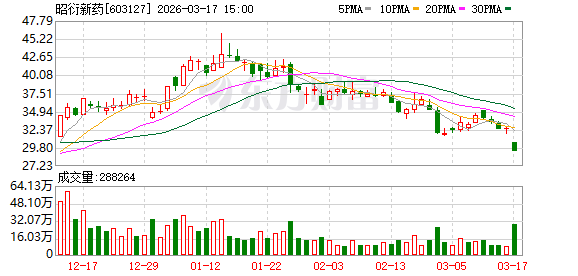
Group 1 - The core issue revolves around two shareholders, who are heirs of a prominent private enterprise, announcing a reduction in their holdings, which led to a significant drop in the stock price of the leading CRO company, Zhaoyan Pharmaceutical, hitting the daily limit down [1] - Following the announcement, the company quickly revised its plan to reduce the total shareholding from 4.1% to no more than 3%, primarily through block trades, which helped stabilize the stock price [1] - Historically, the term "reduction" has negatively impacted Zhaoyan's stock price, with previous instances of share reductions leading to immediate declines of 5.7%, 7%, and 6% in stock price [1] Group 2 - Since the second half of last year, a total of nine shareholders have exited their positions, raising questions about the timing and reasons behind this trend, with speculation that it reflects a lack of confidence in the company's future [2] - Zhaoyan's stock price surged over 110% in 2025, climbing from around 20 yuan to 46 yuan, significantly outperforming other companies in the CRO sector [2] - The company has benefited from a surge in demand for experimental monkeys, with prices rising sharply, contributing to inflated profits that are not necessarily tied to operational performance, as the main business revenue has been declining for two consecutive years [2] - By early this year, Zhaoyan's price-to-earnings ratio reached 97, significantly higher than the 20-30 range of industry peers, raising concerns about the sustainability of this inflated valuation [2]

昭衍新药遭股东“清仓式”减持 业绩预增超两倍为何还留不住人?
2 1 Shi Ji Jing Ji Bao Dao· 2026-03-17 07:02
Core Viewpoint - The significant drop in the stock price of Zhaoyan New Drug is attributed to a "clearance-style" share reduction by major shareholders, despite the company recently announcing a substantial profit increase for 2025, raising questions about the underlying logic behind these actions [1][2][5]. Shareholder Actions - Major shareholders Gu Xiaolei and Gu Meifang plan to reduce their holdings by a total of 30.74 million shares, representing 4.1% of the company's total share capital, citing "personal funding needs" as the reason for the reduction [1][5]. - The timing of the share reduction coincides with a significant rebound in the company's stock price, leading to speculation that the shareholders are cashing out at a high point to secure long-term gains [2][6]. Financial Performance - Zhaoyan New Drug's 2025 performance forecast indicates a projected net profit increase of 214% to 371%, despite a revenue decline of 13.9% to 22.1% compared to the previous year [6][8]. - The profit surge is primarily driven by the rising market prices of experimental monkeys, rather than a recovery in core business operations, raising concerns about the sustainability of this profit growth [7][8]. Market Context - The CRO (Contract Research Organization) industry is experiencing a recovery, with a notable increase in investment and financing, but the benefits have not yet fully translated into revenue for Zhaoyan New Drug due to the lag in order execution [9][10]. - The company is facing challenges as it operates in a market where the prices of new contracts are only beginning to recover, while existing contracts were signed during a downturn [10]. Industry Dynamics - The CRO industry is undergoing significant differentiation, with larger firms like WuXi AppTec and Tigermed gaining market share, while smaller companies are exiting the market due to competitive pressures [12][13]. - Zhaoyan New Drug must navigate this competitive landscape and leverage its core asset of experimental monkeys to enhance its bargaining power and maintain its market position [13].

200亿“猴茅”创新药巨头跌停,股东清仓式减持离场
21世纪经济报道· 2026-03-17 06:51
Core Viewpoint - The recent "liquidation-style" share reduction by major shareholders of Zhaoyan New Drug has caused significant market panic, leading to a sharp decline in the company's stock price despite a strong profit forecast for 2025 [1][3][4]. Shareholder Actions - Major shareholders Gu Xiaolei and Gu Meifang plan to reduce their holdings by a total of 30.74 million shares, representing 4.1% of the company's total shares, citing "personal funding needs" as the reason for the reduction [2][6]. - The timing of the share reduction coincides with a substantial profit forecast, raising concerns about the company's governance and long-term value [4][7]. Financial Performance - Zhaoyan New Drug's 2025 profit forecast indicates a projected net profit increase of 214% to 371%, despite a revenue decline of 13.9% to 22.1% [7][8]. - The profit surge is primarily attributed to the rising market prices of experimental monkeys rather than a recovery in core business operations, which have seen a decrease in revenue and profit contribution [8][9]. Market Dynamics - The CRO industry is experiencing a recovery, with a projected increase in investment and financing, but Zhaoyan New Drug's revenue is still impacted by contracts signed during a previous downturn [12][13]. - The company faces challenges as the prices of experimental monkeys, while currently beneficial, may lead to volatility in earnings if market conditions change [10][14]. Industry Trends - The CRO industry is undergoing significant consolidation, with a notable reduction in the number of clinical CRO companies, which may benefit larger firms like Zhaoyan New Drug in terms of market positioning and pricing power [15]. - The competitive landscape is shifting towards a few dominant players, emphasizing the need for Zhaoyan New Drug to leverage its core resources effectively to maintain its market position [15].

实验猴供需缺口大-持续看好临床前CRO
2026-03-03 02:52
Summary of Conference Call on Experimental Monkey Supply and Demand Industry Overview - The report focuses on the experimental monkey supply and demand dynamics, particularly in the context of preclinical Contract Research Organizations (CROs) [1][2] - The global supply of experimental monkeys is tight, with a projected shortfall of nearly 10,000 monkeys in China and 20,000 to 30,000 in the U.S. by 2024 [1][4] Key Points and Arguments Supply Constraints - China's experimental monkey population is aging, with 80% of breeding females over 8 years old in 2023, severely limiting breeding capacity [1][6] - The high prices from 2019 to 2022 led to significant loss of breeding monkeys, and the long breeding cycle of the species further complicates supply recovery [1][6] - Importing monkeys from overseas faces multiple constraints, including strict approvals and complex quarantine requirements, which hinder short-term improvements in supply [1][7] Demand Drivers - The demand for experimental monkeys is expected to grow significantly due to improved investment in innovative drugs, with projections of 45,000 to 50,000 monkeys needed in China from 2026 to 2028 [1][11] - The increase in IND (Investigational New Drug) applications is anticipated to continue, reflecting a recovery in preclinical safety evaluation demand [1][11] Price Trends - Monkey prices are expected to rise again, potentially reaching previous highs of over 200,000 yuan per monkey by 2026-2028 due to the expanding supply-demand gap [1][12][13] - The price fluctuations have historically ranged from 3,000 yuan to over 200,000 yuan, with recent trends indicating a recovery from lows of 80,000 to 100,000 yuan [1][4] Impact on CROs - The profitability of preclinical CROs is expected to improve as monkey prices rise, with net profit margins projected to rebound from negative values to around 10% by 2025 [1][14] - The fair value changes related to monkey assets will significantly impact companies like Zhaoyan New Drug, which is expected to see a profit contribution of approximately 450 to 500 million yuan from fair value changes in 2025 [1][15][16] Additional Important Insights - The report highlights the potential impact of U.S. trade changes with Cambodia, which could further strain China's monkey supply as U.S. demand may siphon off available resources [1][9] - The analysis indicates that unless there is a large-scale opening of monkey imports, the supply issues in China will persist through 2026-2027 [1][10] - The report emphasizes the importance of monitoring the performance of key CROs such as WuXi AppTec, Kanglong Chemical, and Medpace, as they are expected to benefit from the evolving market dynamics [1][17]
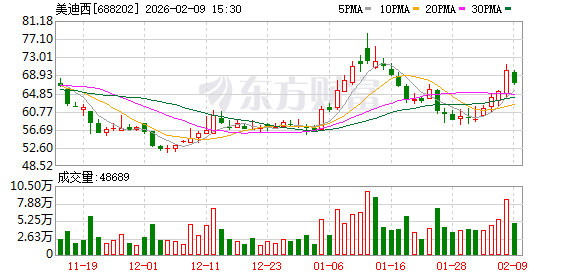
美迪西:近期实验用猴市场价格呈上行趋势
Zheng Quan Ri Bao· 2026-02-09 14:09
Core Insights - The price of experimental monkeys in the market is on the rise, indicating a growing demand and potential supply constraints for this specific type of laboratory animal [2] Company Actions - The company is actively taking measures to ensure a stable supply of experimental monkeys by diversifying procurement channels and deepening cooperation with laboratory animal suppliers [2]

2026-CXO有哪些值得期待
2026-01-23 15:35
Summary of the Conference Call on the CRO Industry Industry Overview - The CRO (Contract Research Organization) industry is experiencing a significant improvement in service prices and demand in Q4 2026, reversing the low price and high volume situation seen in the first three quarters of the year, indicating a recovery in the industry's fundamentals [1][5] - The procurement price for experimental monkeys has risen to around 150,000 yuan, with expectations for continued increases in 2026 due to strong global demand and supply shortages [1][6] Key Insights and Arguments - The overall performance of the CRO industry in 2026 is positive, with a notable increase in service prices and demand in Q4, following a challenging first half of the year [2][5] - The demand for overseas CRO services has been strong and is expected to accelerate, driven by improvements in the investment environment and the development of new business pipelines [4][10] - The acquisition of a monkey breeding facility in Cambodia by Charles River may lead to changes in U.S. import policies, potentially exacerbating global supply shortages and increasing procurement costs for experimental monkeys [7] Price Recovery and Market Dynamics - The CRO sector's price recovery in Q4 2026 is primarily driven by the independent and clinical segments, with the former benefiting from new drug development cycles and the latter seeing price increases due to a reduction in the number of CRO companies, which has improved the competitive landscape [1][8] - The clinical pre-stage is driven by improved demand, while the clinical stage is focused on price recovery, with expectations for continued demand growth into 2027 [9] Additional Important Points - The FDA's proposal for organoid alternatives to monkeys is expected to have limited short-term impact on demand, as global demand for monkeys remains high [6] - The overall investment environment for the CRO industry is expected to improve, with emerging business pipelines and optimized competition driving growth opportunities [4][13] - The impact of the biobusiness safety bill on the industry remains uncertain, with potential implications for multinational corporations depending on how the policy evolves [12]
医药生物行业报告(2025.12.22-2025.12.28):国内创新药研发景气回暖,关注非临床安评行业投资机会
China Post Securities· 2025-12-29 04:55
Investment Rating - The industry investment rating is "Outperform the Market" and is maintained [2] Core Insights - The domestic innovative drug research and development is experiencing a recovery, with a focus on investment opportunities in the non-clinical safety evaluation sector [4][16] - The non-clinical safety evaluation industry is characterized by high competitive barriers and is expected to see increased demand due to the growth of domestic innovative drug development [5][20] - The pricing of experimental monkeys, crucial for safety evaluations, is expected to rise due to limited supply and increasing demand from innovative drug research [20] Summary by Sections Industry Overview - The closing index for the industry is 8254.26, with a 52-week high of 9323.49 and a low of 6764.34 [2] Recent Market Performance - In the week from December 22 to December 26, 2025, the A-share pharmaceutical and biotechnology sector fell by 0.18%, underperforming the CSI 300 index by 2.13 percentage points [6][22] - The raw material drug sector ranked first in performance among sub-sectors, increasing by 2.05%, while the hospital sector declined by 2.82% [6][22] Industry Perspectives 1. **Innovative Drugs and Industry Chain**: The innovative drug sector is in a continuous correction phase, driven by a retreat from previously optimistic expectations. However, clinical data from recent conferences supports the maturity of domestic innovative drugs [7][24] 2. **Investment Opportunities**: Companies with high certainty and less volatility in business development (BD) expectations are recommended, including Innovent Biologics and 3SBio [9][25] 3. **Medical Devices**: The medical device sector is expected to attract more investment as the pressure from centralized procurement diminishes, with leading companies showing improved performance [10][28] Recommendations - Focus on companies like Zhaoyan New Drug and Yino Science in the non-clinical safety evaluation sector, and consider investment in WuXi AppTec and Tigermed in the CRO and life science services sectors [20][26] - In the medical device sector, companies such as Mindray and Kangli Medical are highlighted for their potential recovery and growth [30][28]
这家A股公司,拟投资逾2000万元养猴
Zheng Quan Shi Bao Wang· 2025-04-22 02:39
Core Viewpoint - The investment by Medisi is aimed at strengthening the supply of key experimental animals through acquiring a 23% stake in Plai Biological, which specializes in breeding and selling experimental animals like macaques and crab-eating monkeys [1][2]. Group 1: Investment Details - Medisi plans to acquire a 23% stake in Plai Biological for a total amount of 21.906 million yuan [1]. - The registered capital corresponding to this stake is 23 million yuan, with a paid-in capital of 7.728 million yuan [2]. - The remaining unpaid capital of 15.272 million yuan will be settled by Medisi at a nominal fee of 1 yuan per registered capital [2]. Group 2: Company Background - Plai Biological was established in November 2022 with a registered capital of 100 million yuan and paid-in capital of 33.6 million yuan [1]. - The company is fully owned by Puxin Biological, which holds a national license for breeding key protected terrestrial wildlife [1]. Group 3: Industry Context - Medisi primarily engages in pharmaceutical research outsourcing, with experimental animals being a crucial raw material [3]. - The demand for experimental animals has surged due to the growth in the healthcare industry, leading to significant price increases for monkeys used in experiments [3]. - The price of crab-eating monkeys rose from approximately 13,500 yuan in 2018 to over 200,000 yuan in 2022, impacting Medisi's operational costs [3]. Group 4: Market Trends - In 2023, the demand for experimental monkeys has decreased, resulting in a drop in prices to 125,000 yuan, with projections for 2024 to fall below 100,000 yuan [4]. - Companies that previously stockpiled monkeys, like Zhaoyan New Drug, have faced financial challenges due to the declining value of biological assets [4].