宠物旅游

Search documents
新消费如何赋能“好生活”?多元路径如何探索?
Xin Jing Bao· 2025-11-28 07:20
Group 1 - The concept of "good life" transcends material wealth, emphasizing a harmonious balance between material and spiritual, individual and societal, creation and enjoyment [2][3] - The rise of "new consumption" reflects a shift from product-centric to experience-centric purchasing, where consumers seek emotional value and unique experiences [5][6] - The trend of "personalized consumption" is becoming prevalent, with consumers increasingly favoring tailored products and services that resonate with their individual lifestyles [5][7] Group 2 - The integration of AI technology in various industries, such as tourism and fashion, is seen as a genuine upgrade that addresses industry pain points and enhances efficiency [9][10] - The tourism sector continues to prioritize core elements of travel, with AI serving to better meet personalized consumer demands rather than replacing the fundamental travel experience [10] - The beauty industry is experiencing a complex relationship with AI, where it serves as a tool for data processing but requires careful interpretation to avoid marketing missteps [9] Group 3 - The "pet economy" is rapidly growing, with an increasing number of tourism and hospitality venues accommodating pet owners, indicating a significant market opportunity [6] - The "de-gendering" trend in the beauty sector shows that male consumers are increasingly purchasing a wider range of skincare products, reflecting a shift in consumer attitudes [6] - The future of consumption in China is expected to evolve towards lifestyle brands that embody cultural values, moving away from mere product replication [7]

国庆假期,它去哪儿?
3 6 Ke· 2025-09-30 10:13
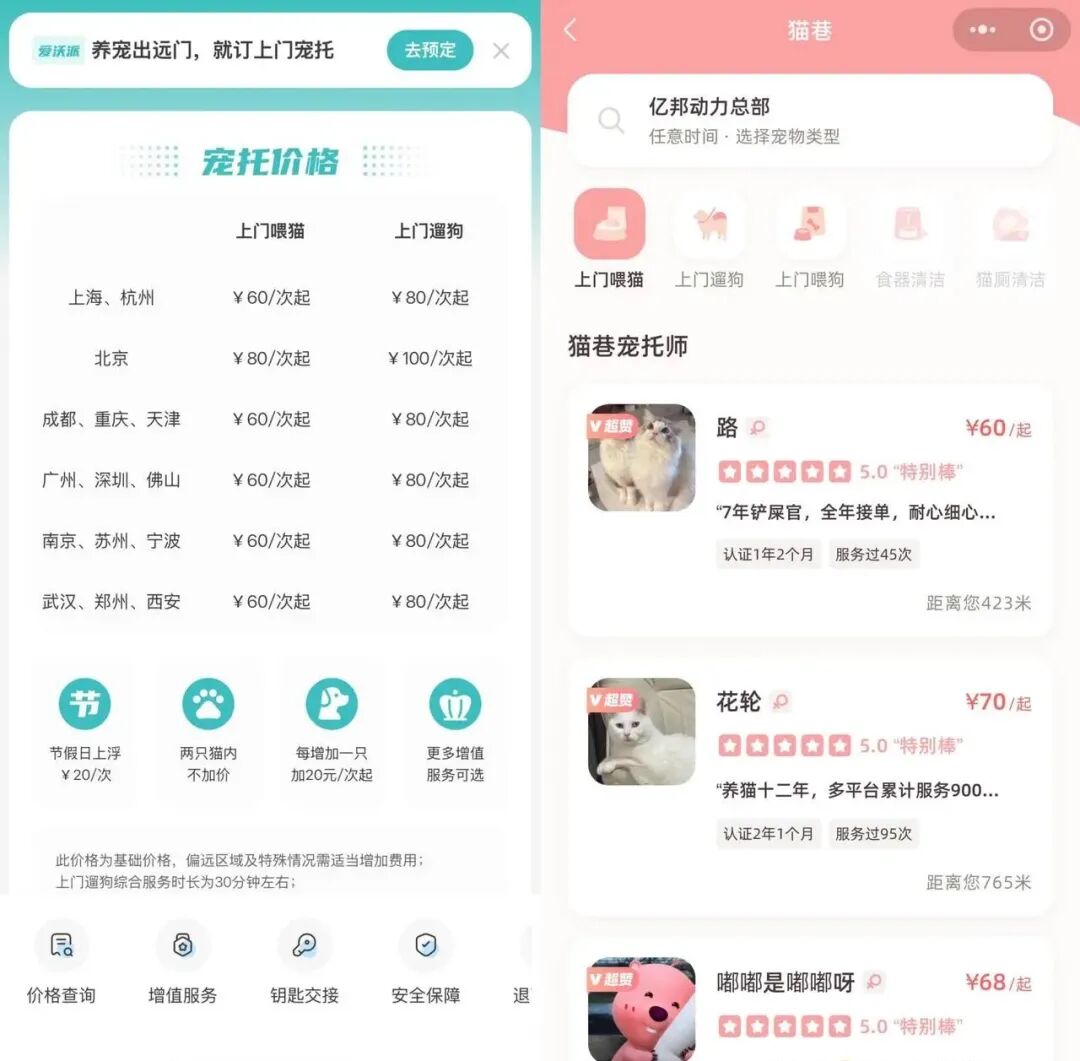
Core Insights - The traditional pet boarding model is being challenged as pet owners increasingly view their pets as family members, leading to a demand for higher-quality pet care services [1][3][4] - The rise of on-demand pet care services, such as home feeding and pet-friendly travel options, reflects a shift in consumer preferences towards personalized and quality services [1][5][8] Pet Care Services - Many pet owners are opting for home feeding services instead of traditional boarding due to concerns about the quality of care and the environment in boarding facilities [3][4] - The market for home pet care services is growing, with platforms like Aiwopai and Cat Alley offering various packages during peak seasons like National Day [5][7] - The pricing for home feeding services varies, with costs ranging from 40 to 100 yuan per visit depending on the service and location [5] Pet-Friendly Trends - The concept of "pet-friendly" is becoming a new consumer trend, with more businesses catering to pet owners by allowing pets in their establishments [8][9] - Pet-friendly hotels are increasingly popular, with a nearly 20% year-on-year increase in the number of such hotels listed on major booking platforms [8][9] - Travel agencies are also creating pet-friendly travel packages, allowing pet owners to travel with their pets while ensuring their care and safety [11] Market Growth and Dynamics - The Chinese pet industry is experiencing rapid growth, with the number of pet-related businesses increasing from 380,000 in 2019 to nearly 4 million in 2025 [14] - The market for pet products and services is projected to exceed 400 billion yuan by 2027, with pet food accounting for over 40% of the market share [14] - The demand for quality and personalized pet care is driving innovation and competition within the industry, leading to a diversification of services offered [14][17] Challenges and Issues - The pet care industry faces challenges such as product standardization, quality control, and consumer trust due to issues like misleading marketing and inconsistent product quality [17][19] - There is a growing need for regulatory frameworks and quality standards to address these challenges and rebuild consumer confidence in pet products and services [19]