宠物用品

Search documents
2025中国宠物产业科技创新与投融资报告
宠星云· 2026-03-26 23:25
Investment Rating - The report indicates a cautious investment environment in the pet industry, highlighting a shift towards early-stage investments and technology-driven growth [36][52][76]. Core Insights - The 2025 Chinese pet industry is characterized by "event recovery, total amount decline, early-stage dominance, and technology-driven" features, marking a transition from capital-driven expansion to high-quality development focused on technological innovation and early-stage value layout [36][76]. - The total financing amount for 2025 is approximately 900 million yuan, the lowest in five years, indicating a more cautious overall capital investment [37][52]. - The report emphasizes that technology innovation is a core theme, with pet medicine, AI smart products, and digital services accounting for over 70% of the financing activities [36][37]. Market Dynamics - The report identifies 40 financing events in 2025, a significant recovery compared to 2024, reflecting increased industry activity [52][86]. - Early-stage financing accounts for over 60% of total investments, indicating a strong focus on the long-term growth potential of the pet industry [87]. - The financing events are evenly distributed throughout the year, with a notable increase in activity in the second half [86]. Segment Analysis - **Pet Food**: The pet food sector leads with a total financing amount of over 425 million yuan, representing 47% of the total industry financing, despite having fewer events than pet medicine [153][154]. - **Pet Medicine**: This segment has the highest number of financing events (14), totaling over 200 million yuan, indicating a strong focus on technology-driven solutions [140][141]. - **Pet Services**: The pet services sector shows a diverse range of business models, with 8 financing events totaling 12.5 million yuan, reflecting a balanced approach to investment [172][173]. - **Pet Supplies**: The pet supplies sector has 8 financing events with a total of 11.6 million yuan, showcasing an active innovation environment [163]. Policy Insights - The report highlights that the pet economy has been integrated into the national consumption strategy, indicating its growing importance in the economic landscape [108][109]. - Various local governments are implementing supportive policies to foster the development of the pet industry, focusing on innovation, standardization, and market expansion [111][117].
消费行业新股专题研究报告:情绪经济风起,消费新股涌动
Wanlian Securities· 2026-03-17 06:27
Investment Rating - The report maintains a "stronger than market" rating for the consumer sector [4]. Core Insights - The report highlights that the expansion of domestic demand policies and the structural optimization of the financing environment for the consumer sector present opportunities for new consumer stocks [2]. - The government is focusing on building a strong domestic market, with initiatives such as a 250 billion yuan special bond for consumer goods and 100 billion yuan in financial support to stimulate domestic demand [2][19]. - The rise of emotional consumption is driving the popularity of new consumer products, leading to a strong willingness among companies in the new consumption sector to go public [2][3]. Summary by Sections 1. Expansion of Domestic Demand Policies - The government has prioritized expanding domestic demand as a key task, with various measures aimed at increasing residents' income and consumption capacity [19]. - Local governments are also implementing collaborative policies to support consumption, enhancing the multi-layered policy framework [19][22]. 2. Investment Opportunities in New Consumption Sectors - **Trendy Toys**: The market is rapidly expanding, with leading companies going public. Factors such as rising disposable income and the popularity of emotional consumption are driving growth [3]. - **Gold and Jewelry**: This sector combines consumption and investment attributes, with high growth potential in traditional gold markets due to rising gold prices and cultural trends [3]. - **Cosmetics/Medical Beauty**: The beauty economy is creating a billion-dollar market, with domestic brands poised to benefit from the shift towards self-expression and emotional healing [3]. - **Outdoor Sports**: Increased health awareness and policy support are driving growth in outdoor sports, presenting investment opportunities in related brands [4]. - **Tea Drinks**: The market is steadily growing, but competition is intensifying, leading to industry differentiation [4]. - **Snacks**: The rise of bulk purchasing models is contributing to steady industry expansion, particularly in lower-tier markets [9]. - **Pets**: The emotional economy is driving growth in the pet market, with expectations for both volume and price increases [9]. 3. Market Dynamics and Trends - The report notes that the consumer sector is experiencing a structural shift, with a significant number of companies opting for listings in Hong Kong due to favorable conditions compared to A-shares [26]. - The IPO environment for consumer companies in mainland China has become more challenging, leading to a notable increase in listings in Hong Kong [26][31]. - The report emphasizes the importance of high-quality consumer enterprises in stimulating market vitality and releasing domestic demand potential [25][26].
消费需求持续扩容,宠物食品前景广阔
Soochow Securities· 2026-03-06 06:29
Investment Rating - The industry investment rating is "Accumulate," indicating an expected outperformance of the industry index relative to the benchmark by more than 5% in the next six months [53]. Core Insights - The pet industry in China is experiencing continuous expansion in consumer demand, with a notable rise in the "cat economy." The market size is projected to grow from 249 billion yuan in 2020 to 312.6 billion yuan by 2025, reflecting a growth of 25.54% [6][9]. - The pet food market is solidifying its foundation, transitioning towards a more refined and value-driven approach to pet care. Pet food accounts for 46% of the market, with increasing demand for health products, indicating a shift from basic survival feeding to value-driven nurturing [17][19]. - Technological advancements in pet food are ongoing, with a rising demand for functional products. Categories such as baked, freeze-dried, and prescription foods are witnessing high growth, while pet snacks are evolving towards functional and interactive options [26][37]. Summary by Sections 1. Continuous Expansion of Pet Industry Demand - The pet industry in China is seeing a steady increase in the number of urban pets, with the market size expected to reach 312.6 billion yuan by 2025 [6][9]. - The proportion of pet cats is increasing, driven by urban lifestyle changes and emotional needs, with cat ownership projected to grow from 46.62 million in 2020 to 72.89 million by 2025 [9][10]. 2. Solid Foundation of Pet Food Market - The primary consumer group for pets consists of highly educated, young women, predominantly in first-tier and new first-tier cities, with over 60% being female [12]. - Pet food constitutes nearly half of the pet market, with a significant shift towards value-driven, refined pet care [17][19]. 3. Technological Upgrades in Pet Food - The market for pet food is seeing high growth in categories like baked and freeze-dried foods, with functional pet food becoming a new growth point [26]. - Pet snacks are increasingly focusing on functionality, with a notable shift towards health-oriented products [37]. 4. Broad Market Potential for Pet Food - The company "Lusi Co., Ltd." is highlighted as a pioneer in the pet food industry, transitioning from OEM to a full-category brand strategy, with a strong presence in both domestic and international markets [45].
国内卖得很好的智能硬件产品,为什么一出海就不行了?
Founder Park· 2026-03-04 10:46
Core Insights - The article highlights the disparity between China's manufacturing prowess and the visibility of Chinese brands in the North American market, indicating a significant misalignment in brand recognition despite China's industrial capabilities [2][9]. - The next decade is identified as a critical period for transitioning from "Made in China" to "Brand from China," emphasizing the need for Chinese companies to focus on brand building rather than just manufacturing [3][11]. Group 1: Market Dynamics - North America’s retail landscape is dominated by offline channels, which account for 80% of retail share, contrasting with China's 45% [16]. - The article notes that brand recognition in North America is validated through offline repurchase rather than online algorithms, highlighting the importance of physical retail presence [17][18]. - Structural changes in consumer behavior in North America are creating opportunities for new brands, particularly in the food sector, where consumers are more open to trying products from diverse cultural backgrounds [23]. Group 2: Challenges for Chinese Brands - The main challenge for Chinese brands entering the North American market is not the product itself but gaining access to mainstream retail channels and understanding the local market dynamics [28]. - Many Chinese entrepreneurs face difficulties in navigating the North American retail landscape, often lacking knowledge about which chains to approach and what buyers prioritize [28][29]. - The article emphasizes the need for a focused approach in product categories and alignment with local consumer preferences to succeed in the North American market [29]. Group 3: Cismea's Role - Cismea is positioned as a brand incubation platform that helps Chinese brands establish a foothold in the North American market by leveraging its extensive network and understanding of local retail dynamics [31][32]. - The company has built relationships with over 30 major North American retailers, covering more than 100,000 physical stores, and operates as a vendor within these retail systems [32][35]. - Cismea offers a comprehensive methodology for brand development, including product compliance, packaging, buyer negotiations, and sales management, to facilitate the growth of Chinese brands in North America [33][36].


预计超4.6万名境内外采购商参会
Xin Lang Cai Jing· 2026-02-27 07:06
Core Insights - The 34th East China Import and Export Commodity Fair (HuaJiaoHui) is being held from March 1 to 4 in Shanghai, showcasing a total exhibition area of 115,000 square meters and attracting over 46,000 domestic and international professional buyers [1] Group 1: Exhibition Scale and Participation - The fair features 5,291 exhibition booths with participation from 3,325 domestic and international enterprises, including 375 foreign exhibitors from 14 countries and regions, marking increases of 2.88%, 2.31%, and 3.02% respectively compared to the previous edition [1] - The event has seen a rapid growth in professional buyers, with expectations of over 46,000 attendees, indicating a significant enhancement in both scale and industry influence [1] Group 2: Innovation and Quality of Exhibitors - The fair has optimized the structure of participating enterprises, featuring a significant number of high-tech enterprises, specialized "little giant" companies, and leading firms in niche markets, with 20% of exhibitors being brand enterprises and 19.5% holding patents [2] - 8.6% of the participating companies are utilizing new materials and processes, and there are 59 specialized and innovative enterprises present [2] Group 3: New Market Opportunities - A dedicated pet supplies section has been established within the household goods exhibition area, featuring 51 exhibitors across 67 booths, covering various pet-related products and services [3] - Innovative products showcased include multifunctional cat houses and eco-friendly pet baskets, catering to the diverse and high-quality demands of the pet consumer market [3] Group 4: Integration of Domestic and Foreign Trade - The fair emphasizes the integration of domestic and foreign trade, with proactive efforts to organize overseas promotional events in countries like Austria, Poland, and Spain, enhancing market access for participating enterprises [4] - A procurement matching area will be set up during the fair, hosting seven specialized matching sessions across various industries, with a notable increase of 57.14% in Southeast Asian buyers compared to the previous year [4] - The fair continues to support enterprises looking to expand domestic sales channels, with 577 companies marked for engaging with domestic buyers, reflecting a growth of 4.53% from the last event [4]
叮当健康公告2025年度实现Non-GAAP盈利
Zheng Quan Ri Bao· 2026-02-27 01:41
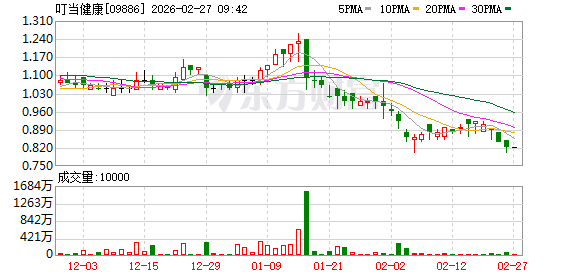
Core Viewpoint - Dingtang Health Technology Group Limited has announced an 80% reduction in losses for the fiscal year 2025 compared to the previous year, achieving Non-GAAP profitability [2]. Group 1: Business Expansion and Revenue Growth - The company is expanding its revenue boundaries based on "efficiency + density" by upgrading its AI smart pharmacy to create a comprehensive health service center that includes specialized pharmacies, consultation rooms, patient education areas, clinical research recruitment points, and smart medical device experience zones [2]. - Dingtang Health is optimizing its product structure by introducing innovative drugs, chronic disease prescription drugs, and medical devices, while also entering the pet market, launching pet supplies to form a diversified profit matrix [2]. - The multi-dimensional business expansion has opened up revenue growth opportunities, with the company achieving profitability in major cities like Beijing, Shanghai, and Shenzhen, which has become a key support for overall profitability [2]. Group 2: Future Growth Potential - The company is recognized as a rare "quasi-profitable target" in the pharmaceutical instant retail sector, with future growth potential expected as AI technology deepens, national expansion continues, and profitability is fully realized [2]. - As of the end of the first half of 2025, Dingtang Health holds over 1.359 billion yuan in cash and cash equivalents, along with time deposits, indicating a solid financial safety net [2]. Group 3: Market Confidence - Recently, Dingtang Health has completed multiple rounds of stock buybacks, demonstrating confidence in the company's future to the market [3].
人民币汇率再创新高,外贸企业继续“向内求”
Di Yi Cai Jing· 2026-02-25 09:13
Core Viewpoint - The appreciation of the RMB against the USD poses challenges for export companies, leading to profit erosion and difficulties in raising prices amidst competitive pressures [2][3]. Group 1: Impact of RMB Appreciation on Export Companies - Export companies are struggling to maintain profits due to RMB appreciation, making it difficult to raise prices in a competitive market [2]. - Companies are focusing on cost-cutting measures within their supply chains to mitigate the impact of currency fluctuations [2][3]. - The need for precise policy support is emphasized, especially for small and medium-sized enterprises facing heightened survival challenges [3]. Group 2: Strategies for Enhancing Efficiency - Companies are investing in automation and lean manufacturing to improve production efficiency and reduce costs [3]. - Continuous investment in new equipment is planned to further enhance productivity [3]. - The ability to manage supply chains effectively and maintain financial strength is crucial for companies to navigate the current volatile environment [4]. Group 3: Market Dynamics and Pricing Strategies - Companies are cautiously testing price increases based on market feedback, indicating a need for strong product branding and market positioning [4]. - The design and market competitiveness of products directly influence a company's pricing power and survival [4]. - Establishing a comprehensive supply chain ecosystem and refining management practices are essential for enhancing competitiveness and addressing risks [4]. Group 4: External Economic Factors - The RMB's strength is attributed to improved external economic conditions and increased demand for currency settlement from exporters [6]. - The potential for RMB depreciation exists, influenced by external economic factors and domestic growth policies [6]. - The uncertainty surrounding U.S. tariff policies may impact China's export growth and currency dynamics in the coming year [7][8].
悦己消费产业链研究专题:从刚需渗透到情感叙事,宠物消费下半场如何展开
Guoxin Securities· 2026-02-24 12:56
Investment Rating - The report rates the industry as "Outperform" [4] Core Insights - The emotional narrative is driving the evolution of consumer concepts, with pet consumption in China transitioning from basic survival needs to a focus on health and emotional resonance, indicating a significant upgrade in pet consumption [1][15] - The domestic pet ownership demographic is rapidly expanding, particularly among young, educated individuals, which is expected to further stimulate both physical product consumption and service consumption in the pet industry [1][24] - The pet food sector is experiencing a transformation driven by emotional narratives, with domestic brands upgrading and new channels collaborating effectively, leading to a stronger market position for established brands [1][4] - The pet medical market is still in its infancy in China, with significant room for growth as the aging pet population drives demand for medical services, and the low chain rate of veterinary hospitals presents consolidation opportunities for leading chains [2][4] - The pet supplies segment is witnessing opportunities in niche markets and brand transformation, with essential products like cat litter showing potential for expansion and new brands gaining market share through high-end positioning [2][4] Summary by Sections Pet Food - The emotional narrative is reshaping the consumer landscape, with domestic brands enhancing their market presence through trust and professional endorsements [1][4] - The market is expected to undergo a phase where quality brands will prevail, as the industry moves towards a "good money drives out bad money" scenario [1][4] Pet Medical - The pet medical market is still young, with significant expansion potential driven by the aging pet population and the adoption of scientific pet care concepts [2][4] - The current low chain rate of veterinary hospitals indicates a fragmented market, with leading chains likely to consolidate market share based on supply chain and talent advantages [2][4] Pet Supplies - The segment is focusing on niche opportunities and brand transformation, with essential products like cat litter showing long-term growth potential [2][4] - Leading domestic manufacturers are accelerating their transformation by building proprietary brands and enhancing distribution capabilities, which is expected to significantly increase their market share [2][4]
视频丨非遗“潮品”、“数字好物”今年办年货就按这个清单来!
Yang Shi Xin Wen Ke Hu Duan· 2026-02-14 12:50
Core Insights - The article highlights the evolving trends in purchasing traditional and modern goods for the upcoming Chinese New Year, showcasing a blend of cultural heritage and technological innovation [3][4][6]. Group 1: Traditional Cultural Products - The Hebei Weixian paper-cutting, a national intangible cultural heritage with over 200 years of history, is gaining popularity as a symbol of good fortune during the New Year [3]. - Local schools in Weixian are teaching children the art of paper-cutting, ensuring the tradition's continuity for future generations [3]. Group 2: Technological Innovations - New technology products, such as smart glasses and digital companions, are becoming popular choices for New Year gifts, reflecting a shift in consumer preferences towards innovative items [4][6]. - The introduction of government subsidies for smart glasses has led to increased sales, with features like first-person perspective recording and seamless interaction with smartphones [6]. Group 3: Duty-Free Shopping Trends - The implementation of the new duty-free policy in Hainan has made it easier for consumers to purchase a wider variety of goods, enhancing the shopping experience for both tourists and local residents [7][9]. - Local residents can now enjoy significant discounts and promotional offers at duty-free stores, encouraging them to buy New Year goods [10]. Group 4: Sales Performance - Sales of electronic products in duty-free stores have surged, with some locations reporting over a 120% increase in sales compared to the previous year [11]. - Consumers can benefit from substantial discounts, with potential savings of up to 2400 yuan when combining government coupons and promotional offers [11].
(乡村行·看振兴)扬州广陵区头桥新春花市闹新春 绘就乡村振兴新图景
Xin Lang Cai Jing· 2026-02-14 10:21
Core Viewpoint - The "Spring Flower Market" in Yangzhou's Head Bridge Town is a vibrant cultural event that combines flower sales, folk experiences, and community services, marking the celebration of the Year of the Horse [1][5]. Group 1: Event Highlights - The event features traditional performances such as lion dances and fortune god parades, engaging the audience and enhancing the festive atmosphere [2]. - A cultural showcase includes classic segments from Yang Opera and intangible cultural heritage performances, highlighting local artistic vitality [2]. - The market is organized into four themed experience areas, including a core flower area with various floral offerings, a local delicacies section, a pet-friendly zone, and a public welfare service area [2]. Group 2: Economic and Community Impact - The signing of projects related to smart agriculture and cold chain storage during the event signifies a boost in local agricultural innovation and industry upgrades [5]. - The successful hosting of the market reflects the achievements in industry innovation, cultural tourism integration, and public service in the region [5]. - Future plans for Head Bridge Town include further development of the pet economy, smart agriculture, and cultural tourism integration, aiming to contribute to modernized practices in China [5].