小微企业贷款

Search documents
陆金所控股的风波终局与新周期起点
Ge Long Hui· 2026-02-17 07:58
Core Viewpoint - Lufax Holdings has concluded a series of announcements that clarify historical issues, marking the end of a turbulent year and the transition from a phase of rapid growth to one focused on high-quality development [1][2]. Group 1: Historical Risk Clearance - The announcements represent a significant milestone in Lufax's comprehensive reform, addressing historical financial irregularities and ensuring compliance with regulatory standards [2]. - The financial restructuring primarily involves historical legacy issues from 2023 and earlier, with no substantial impact on current cash flow, described as a "one-time short pain" [2]. - The company engaged Deloitte as an independent internal control consultant to conduct a thorough review across seven core areas, successfully closing all identified risk points by the announcement date [2]. Group 2: Operational Resilience and Performance - Lufax exemplifies resilience in the financial technology sector, demonstrating strong operational performance despite a challenging macroeconomic environment [4]. - The company has optimized its core business, achieving a balance between business scale and quality, with a notable reduction in overdue loan rates and a decrease in credit impairment losses [4][5]. - By the end of 2024, Lufax's loan balance reached 2,169 billion, with a significant improvement in asset quality, showcasing effective risk management capabilities [4]. Group 3: Strategic Shift and Future Outlook - Lufax is transitioning to a "new normal" of high-quality development, focusing on profit quality rather than aggressive scale expansion [6]. - By the end of 2025, the company plans to adjust its loan balance to 1,838 billion, emphasizing a strategic shift towards consumer finance and reducing reliance on external credit enhancement [7]. - The ongoing support from major shareholder Ping An Group is expected to enhance Lufax's strategic value, leveraging synergies in customer resources, risk management, and technological empowerment [7]. Group 4: Conclusion and Investment Opportunity - Lufax is positioned as a resilient entity in the financial technology landscape, having shed historical burdens and upgraded its operational framework [8]. - The company is now set to embark on a new journey, offering potential benefits to investors who recognize its adaptability and commitment to high-quality growth [8].

农发行兴安盟分行深耕“三农”领域 书写支农答卷
Xin Lang Cai Jing· 2026-01-02 18:29
Core Insights - The Agricultural Development Bank of China, Xing'an League Branch, has focused on its role as a policy bank during the 14th Five-Year Plan, emphasizing support for agriculture and rural development, with total loan disbursements exceeding 20 billion yuan [1][2]. Group 1: Financial Support for Agriculture - The bank has prioritized food security, providing 15 billion yuan in loans for grain and oil, supporting the purchase of nearly 6 million tons of grain, capturing over 70% market share, and increasing customer numbers by 30% [1]. - Strategic partnerships with key enterprises like China Grain Reserves Corporation have been deepened to enhance local grain reserve systems, promoting models such as "credit guarantee fund+" and "smart grain loans" to support the entire grain industry chain [1]. Group 2: Long-term Investment for Rural Revitalization - The bank has issued over 5 billion yuan in medium- and long-term loans, targeting critical areas such as agricultural infrastructure, rural construction, and ecological development [2]. - Specific support includes enhancing grain storage capabilities, optimizing land resources, and financing education and tourism projects to improve rural livelihoods [2]. Group 3: Support for Poverty Alleviation and Economic Growth - The bank has allocated over 8 billion yuan in loans aimed at consolidating poverty alleviation efforts, focusing on five poverty-stricken banners and three key support counties, with loan growth rates of 10% and 28% respectively [2]. - Continued efforts in post-relocation support and targeted assistance are being implemented to ensure sustainable development for impoverished communities [2]. Group 4: Empowering Small and Micro Enterprises - The bank has increased support for private and small enterprises, providing over 500 million yuan in loans to leading industrial enterprises and over 300 million yuan to small businesses, while reducing service fees and interest rates to alleviate financial burdens [3]. - The "leading enterprises + cooperatives + farmers" model has been effective in helping thousands of individuals increase their income [3]. Group 5: Future Commitment - The Agricultural Development Bank of China, Xing'an League Branch, aims to continue its commitment to supporting agricultural development and rural revitalization, injecting strong financial momentum into the region's agricultural sector [3].


邮储银行洛阳市分行持续深化“阳光信贷”宣传活动
Huan Qiu Wang· 2025-12-30 07:52
Core Viewpoint - The Postal Savings Bank of China's Luoyang branch has been actively promoting the "Sunshine Credit" initiative since 2025 to enhance transparency in financial services and build public trust in credit operations [1][2] Group 1: Promotion Activities - The bank has implemented a multi-dimensional promotional model by engaging with business circles, enterprises, and service points to ensure comprehensive outreach [1] - A three-in-one promotional matrix has been established, centered around the bank's service points, incorporating "service points + halls + counters" [1] - The bank has set up thematic posters and animated videos in service points to visually present the entire credit application, approval, and disbursement process, making it easier for customers to understand the "Sunshine Credit" services [1] Group 2: Public Engagement and Transparency - The bank has proactively disclosed supervision and reporting channels, encouraging public participation in oversight to foster a community governance atmosphere [1] - Staff members distribute "Sunshine Credit Supervision Cards" to customers, providing detailed one-on-one explanations of loan application conditions, processes, and interest rate policies to ensure clear understanding of credit services [1] - The promotional activities have significantly increased awareness and transparency of the bank's credit services, demonstrating its commitment to inclusive finance and public service [2] Group 3: Economic Impact - The "Sunshine Credit" initiative is expected to promote more transparent, efficient, and secure financial services, thereby providing stronger financial support for the high-quality economic development of Luoyang City [2]

2025普惠金融报告|不良处置:“质量”赶考之路
Bei Jing Shang Bao· 2025-12-14 06:40
Core Viewpoint - The expansion of inclusive finance has led to increased asset quality pressures for banks and consumer finance institutions, necessitating a focus on both quality and efficiency to ensure sustainable development [1][4]. Group 1: Asset Quality Challenges - Small and micro enterprises face operational instability and lack effective collateral, making them vulnerable to economic fluctuations, which impacts their repayment capabilities [4]. - The asset quality of consumer loans and business loans is under pressure due to declining repayment abilities among individuals [4]. - The rise in non-performing loans (NPLs) is evident, with banks and consumer finance institutions actively engaging in asset quality protection measures [5][6]. Group 2: Asset Disposal Strategies - Banks are increasingly transferring non-performing loans through platforms like the Silver Registration Center, with significant amounts involved, such as a package of 7.62 billion yuan from Ping An Bank [4]. - Consumer finance institutions are also urgently disposing of non-performing assets, with some starting bids as low as 0.15% of the asset value, indicating a pressing need to mitigate potential risks [5]. - Efficient disposal channels, including internet auction platforms, are becoming essential for institutions to manage non-performing assets effectively [8]. Group 3: Regulatory and Strategic Responses - Regulatory bodies are emphasizing the need for enhanced asset disposal and capital replenishment, urging financial institutions to improve risk classification and increase the disposal of non-performing loans [8]. - Financial institutions are adopting innovative disposal methods, leveraging technology for risk management and operational efficiency [8][9]. - The focus on early identification and management of credit risks is being reinforced, with banks enhancing their capabilities in risk control and non-performing loan recovery [9]. Group 4: Long-term Sustainability - The effective management of non-performing assets is crucial for the sustainability of inclusive finance, as poor handling can lead to increased operational costs and higher risk pricing [6]. - Institutions are encouraged to explore partnerships with asset management companies and industry funds to optimize resource allocation and enhance the value of non-performing assets [9].

不良处置 “质量”赶考之路
Bei Jing Shang Bao· 2025-12-10 12:00
Core Viewpoint - The expansion of inclusive finance has led to increased pressure on asset quality, particularly for small and micro enterprises and individual borrowers, prompting banks and consumer finance institutions to focus on maintaining asset quality while ensuring sustainable development [1][3]. Group 1: Asset Quality Challenges - Small and micro enterprises face operational instability and lack effective collateral, making them vulnerable to economic fluctuations, which in turn affects the asset quality of consumer loans and business loans [3]. - The asset quality of inclusive finance is under pressure, with banks and consumer finance institutions actively engaging in an "asset quality defense war" to manage non-performing assets [3][4]. Group 2: Non-Performing Asset Disposal - Since 2025, there has been a notable increase in the transfer of non-performing assets related to small and micro enterprises and personal loans, with banks frequently listing these assets on platforms like the Silver Registration Center [3]. - Banks such as Ping An Bank and Zhongyuan Bank have announced significant non-performing asset transfer projects, with amounts reaching 7.62 billion yuan and 5.22 billion yuan respectively [3]. - Consumer finance institutions are also urgently addressing non-performing assets, with some assets being auctioned at extremely low starting prices, indicating a pressing need for risk resolution and asset optimization [4]. Group 3: Regulatory and Strategic Responses - Financial institutions are encouraged to enhance their asset disposal and capital replenishment efforts, as highlighted by regulatory authorities [7]. - Institutions are exploring innovative disposal methods, leveraging financial technology to improve risk management and operational efficiency [7][8]. - The emphasis on early identification and management of credit risks is becoming a priority for banks, with a focus on improving the efficiency of non-performing asset recovery [8]. Group 4: Long-term Sustainability - Effective management of non-performing assets is crucial for the sustainability of inclusive finance, as delays in disposal can erode profits and capital, limiting the ability to extend further inclusive credit [6]. - The relationship between the management of non-performing assets and the goals of inclusive finance is highlighted, with potential negative impacts on operational costs and credit pricing if not addressed properly [6]. - The need for collaboration between banks, consumer finance institutions, and asset management companies is emphasized to optimize resource allocation and enhance the recovery of non-performing assets [8].


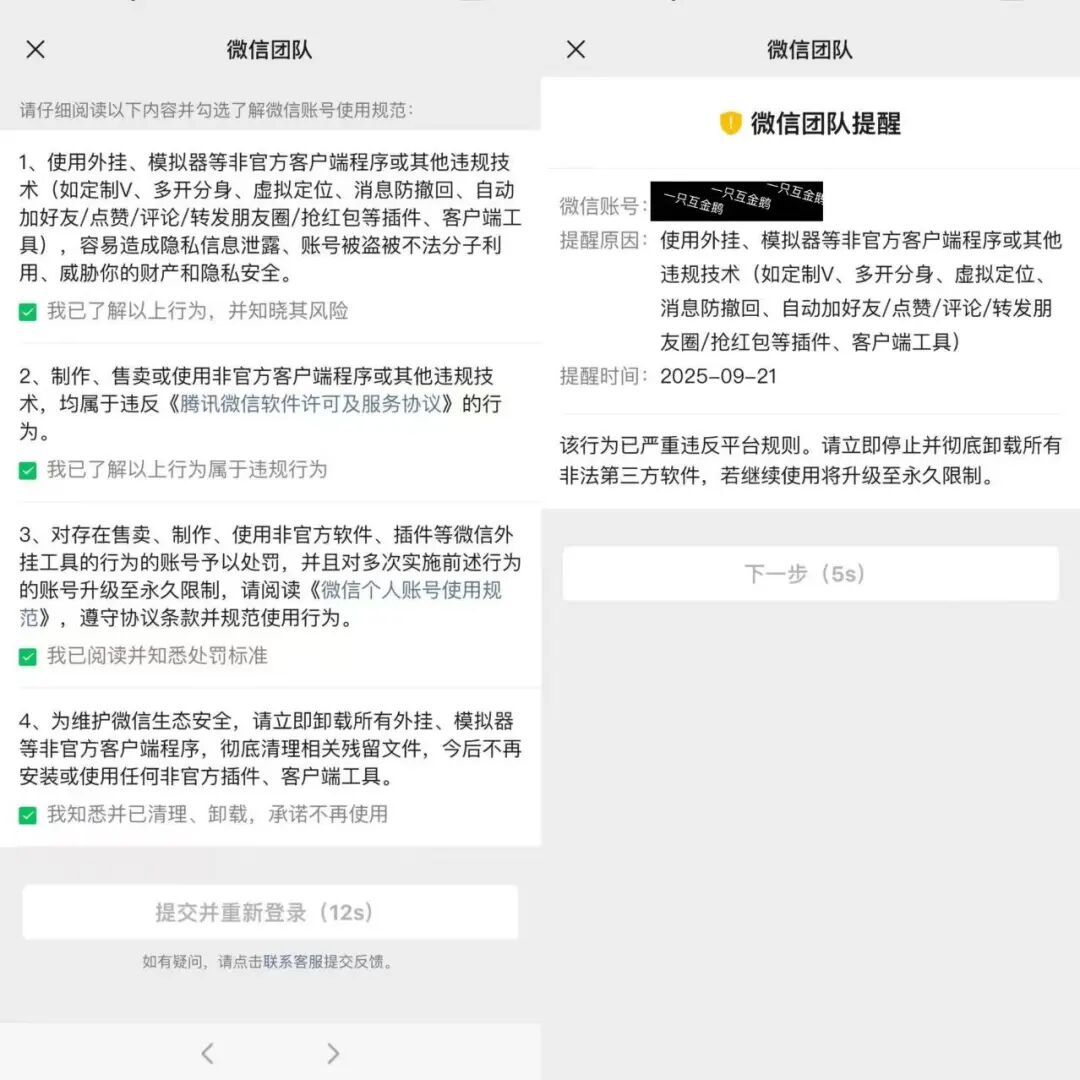
微信铁拳整治「贷款中介」,有人朋友圈发贷款宣传被封号
3 6 Ke· 2025-10-10 08:41
Core Viewpoint - WeChat is intensifying its crackdown on loan intermediaries, significantly impacting millions of loan channel intermediaries in China [3][39]. Group 1: Impact on Loan Intermediaries - A recent incident involving a loan intermediary's WeChat account being temporarily suspended highlights the platform's strict enforcement against financial marketing violations [1][3]. - The Beijing University report indicates that there are approximately 1.5 to 2 million credit intermediaries in China, excluding those using various unconventional marketing methods [3]. - The crackdown poses a severe threat to the business model of loan intermediaries, who rely heavily on social media for marketing [3][39]. Group 2: Business Operations of Loan Intermediaries - Loan intermediaries like "Old Wu" have adapted their business models over the years, transitioning from grassroots marketing to establishing companies that collaborate with various financial institutions [7][9]. - The industry is characterized by a multi-tiered channel system, where intermediaries earn commissions from higher-level channels [12][14]. - Despite the controversies surrounding loan intermediaries, many financial institutions still engage in partnerships with them, albeit indirectly [10][18]. Group 3: Regulatory Environment - Recent years have seen a concerted effort by platforms like WeChat and Douyin to regulate financial marketing activities, including the banning of certain loan intermediaries [39][40]. - WeChat has previously penalized over 30,000 public accounts and 2,000 mini-programs for promoting unqualified financial services [43]. - The WeChat Safety Center has issued warnings about fraudulent loan promotions, emphasizing the risks associated with non-compliant loan services [44][46]. Group 4: Challenges Faced by Loan Intermediaries - Loan intermediaries face significant challenges in transitioning to compliant advertising methods, as operating as a formal business entity incurs high costs and complex processes [34][35]. - Many intermediaries are hesitant to invest in formal advertising due to past experiences of poor returns on investment [35]. - The industry is marked by a lack of effective regulation, leading to chaotic competition and potential violations [38].

搭好小微企业的融资桥梁
Jing Ji Ri Bao· 2025-08-25 21:56
Core Viewpoint - The article emphasizes the importance of small and micro enterprises (SMEs) in driving economic growth, stabilizing employment, and improving livelihoods, highlighting the government's efforts to address financing challenges faced by these businesses through a series of coordinated policy measures [1]. Group 1: Policy Measures - The National Financial Supervision Administration and eight other departments have implemented measures to support SME financing, aiming to create effective solutions to the persistent issue of financing difficulties [1]. - A coordination mechanism has been established to understand SME needs and facilitate direct access to credit, resulting in significant outcomes, including 23.6 trillion yuan in new credit and 17.8 trillion yuan in new loans issued by banks by mid-2023 [1]. Group 2: Practical Approaches - The article outlines a three-pronged approach to resolve the dual challenges of SMEs being unable to find financing and banks being hesitant to lend, which includes enhancing financial service processes and policy collaboration [2]. - Local governments are encouraged to adopt best practices, such as the example from Jiangxi Fuzhou, where a multi-department collaboration has created a credible "recommendation list" for banks to identify viable SMEs [2]. Group 3: Technological Integration - The integration of online and offline efforts is crucial to bridging the gap in financial services for SMEs, with a focus on streamlining application processes and utilizing intelligent risk assessment tools [3]. - Banks are leveraging technology, such as AI-driven credit assessment tools, to expedite loan approvals and enhance the efficiency of financial services for SMEs [3]. Group 4: Financial Structure Optimization - The article stresses the need for a multi-faceted policy approach to lower financing costs for SMEs, including differentiated regulatory policies and increased support for various types of loans [3]. - There is a call for improving the credit support mechanisms for SMEs with good credit ratings and expanding the range of collateral accepted for loans [3].
人民银行:截至2025年二季度末小微企业贷款余额65万亿元
Bei Jing Shang Bao· 2025-08-15 11:49
Group 1 - The People's Bank of China reported significant improvements in the financing conditions for small and micro enterprises over the past decade, with a notable increase in the loan balance and proportion of total enterprise loans [1] - As of the end of Q2 2025, the loan balance for small and micro enterprises reached 65 trillion yuan, with their share of total enterprise loans rising from 30.4% at the end of 2014 to 38.2%, reflecting an average annual growth rate of approximately 15% [1] - Since the end of 2018, inclusive small and micro loans have experienced an average annual growth rate exceeding 20%, with the number of credit accounts tripling, indicating effective support for genuine small and micro enterprises [1] Group 2 - The People's Bank of China plans to continue focusing on problem-oriented and goal-oriented strategies to enhance the implementation and monitoring of existing policies, particularly for small and micro enterprises [2] - Key initiatives include improving the credit enhancement system for private small and medium enterprises, leveraging government financing guarantees, information sharing, and credit derivative products to address issues of credit insufficiency and information asymmetry [2] - The central bank aims to enhance financial service capabilities and utilize various service platforms to improve financing efficiency for small and micro enterprises, while also promoting the collaborative effects of policy tools to increase financial support for key sectors [2]
中小银行要聚焦主责主业
Xin Hua Wang· 2025-08-12 06:25
Core Viewpoint - The People's Bank of China emphasizes the need for small and medium-sized banks to focus on their primary responsibilities, particularly in providing financial services to agriculture and small enterprises, thereby enhancing the modern financial system's adaptability and competitiveness [1] Group 1: Role of Small and Medium-Sized Banks - Small and medium-sized banks play a crucial role in supporting agriculture and small enterprises, with their loans to small businesses and agriculture accounting for 47% and 40% of the respective total loans in the banking sector [2] - These banks leverage their local knowledge and relationships, allowing them to identify creditworthy borrowers that larger banks may overlook, thus turning perceived "risky" loans into quality loans [2] Group 2: Challenges and Deviations - Despite their successes, some small and medium-sized banks have deviated from their core mission, leading to a decline in agricultural and small business loan balances [2][3] - Issues such as inaccurate reporting of small business loans and misallocation of funds to larger enterprises instead of intended small businesses have been identified, raising concerns about the integrity of their lending practices [2][3] Group 3: Recommendations for Improvement - To address these challenges, regulatory bodies are urged to enforce stricter assessments and establish clear rules and penalties to ensure compliance with inclusive finance policies [3] - Collaboration among various departments is necessary to improve the financing guarantee system and facilitate the issuance and management of inclusive loans [3] - Small and medium-sized banks are encouraged to refine their focus on identifying and nurturing potential small clients, fostering mutual growth and success [3]
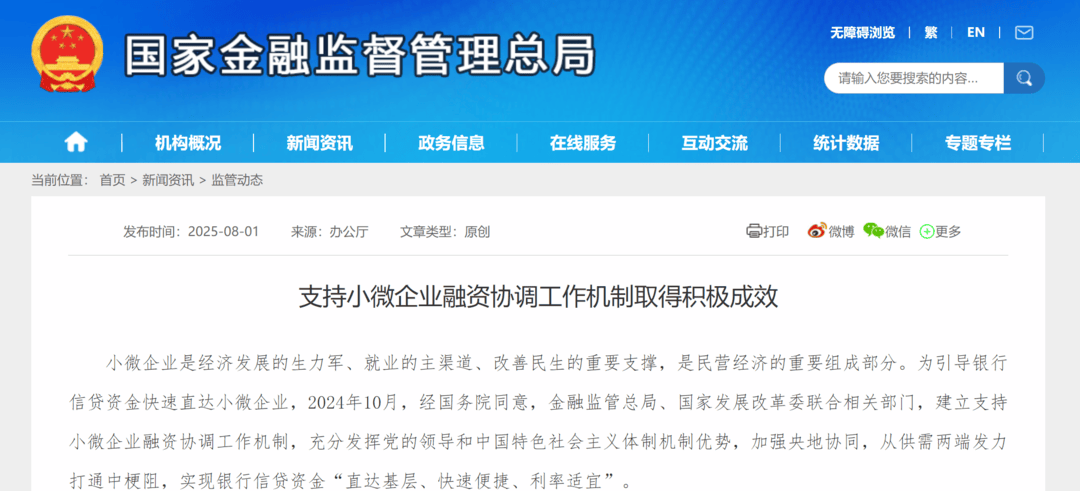
金融监管总局:支持小微企业融资协调工作机制已推动新发放贷款17.8万亿元
Sou Hu Cai Jing· 2025-08-02 06:11
Core Viewpoint - The financing coordination mechanism for small and micro enterprises has achieved positive results, with significant increases in credit and loan issuance by banks [1][3]. Group 1: Financing Mechanism - As of June 2025, over 90 million small and micro enterprises have been visited under the financing coordination mechanism, resulting in new credit issuance of 23.6 trillion yuan and new loans of 17.8 trillion yuan, with credit loans accounting for 32.8% [1][3]. - The mechanism was established in October 2024 with the approval of the State Council, aiming to facilitate direct and efficient access to bank credit for small and micro enterprises [3][4]. Group 2: Support for Small and Micro Enterprises - Small and micro enterprises are recognized as vital for economic development, employment, and improving livelihoods, forming an essential part of the private economy [3][4]. - The mechanism emphasizes both the coverage of visits and targeted support in key areas such as foreign trade, private sector, technology, and consumption, while also addressing operational challenges faced by small and micro enterprises [4]. Group 3: Future Plans - The financial regulatory authority plans to deepen the financing coordination mechanism, enhance the identification of financing needs, and improve the channels for direct credit access to continuously elevate financial service levels [4].