
小鹏第二代VLA智驾系统

Search documents
何小鹏直播“坦白”:每月烧3个亿,赌第二代VLA,我们心里也慌
创业邦· 2026-03-17 04:14
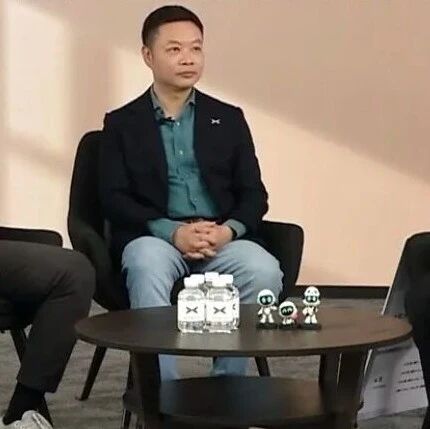
Core Viewpoint - The live session with Xiaopeng Motors' chairman He Xiaopeng and the head of the General Intelligent Center, Liu Xianming, revealed a bold commitment to a single technological path, focusing on the development of the second-generation VLA (Vision-Language-Action model) autonomous driving system, which represents a significant investment and a shift in driving logic through AI [6][7][9]. Investment and Development Strategy - Xiaopeng Motors is investing 300 million yuan (approximately 43 million USD) monthly for over a year in the development of a fully self-researched system encompassing chips, compilers, software architecture, and data integration [9]. - The second-generation VLA is the product of this investment, undergoing multiple iterations before its launch, with the current version being the fourth major iteration and the 28th minor version [9][10]. Safety and User Experience - Safety is a primary concern, as demonstrated by a case where the VLA system recognized children on the road but did not decelerate sufficiently to stop, highlighting the need for further improvements [12]. - The goal of the second-generation VLA is to enhance user confidence, aiming to make even inexperienced drivers feel safe and willing to drive [13]. Technological Advancements - The system's ability to navigate complex situations, such as rerouting during road closures, showcases its advanced reasoning capabilities, although there is a desire for quicker decision-making [15]. - Xiaopeng Motors aims to leap from Level 2 to Level 4 autonomous driving, bypassing Level 3, to maintain competitiveness in the global market [16][18]. Future Vision - The company envisions a comprehensive integration of various vehicle systems into a single intelligent system, likening it to a "super intelligent agent" or robot capable of performing complex tasks [18]. - Upcoming software updates for various models are scheduled for March and April, with the expectation that users will gain a new understanding of the future of autonomous driving and robotics [19].


小鹏汽车系列十八:小鹏第二代VLA开启推送,技术与新品周期共振【国信汽车】
车中旭霞· 2026-03-13 01:45
Core Viewpoint - Xiaopeng Motors is focusing on the development of its second-generation VLA (Vision-Language-Action model) autonomous driving system, which aims to enhance the user experience and expand its market presence in the mid-to-high-end segment of the automotive industry [2][4][6]. Group 1: Second-Generation VLA System - The second-generation VLA system supports full-scene assisted driving, covering various scenarios such as highways and narrow roads, and is set to push the boundaries of autonomous driving from niche applications to mainstream usage [2][6]. - The system has achieved an 80% reduction in response latency and a 12-fold increase in reasoning efficiency, allowing vehicles to respond to sudden road conditions intuitively, similar to human drivers [4][7]. - In practical tests, the second-generation VLA demonstrated a travel time of 43 minutes in Guangzhou, outperforming navigation software predictions [7]. Group 2: 2026 Xiaopeng X9 Electric Vehicle - The 2026 Xiaopeng X9 electric vehicle was launched with five models priced between 309,800 to 369,800 yuan, featuring significant upgrades in intelligent driving and comfort configurations [12][19]. - The vehicle is equipped with an 800V high-voltage platform and a 5C supercharging AI battery, allowing for a range of 400 kilometers with just 8 minutes of charging [19]. - The new model includes a Turing AI chip with a maximum computing power of 2250 Tops, enhancing advanced driving capabilities significantly [17]. Group 3: Future Product Matrix - Xiaopeng Motors is developing a product matrix that includes new intelligent driving models, Robotaxi, the next-generation IRON, and flying cars, aiming to create a new paradigm for future mobility [5][9]. - The company plans to initiate nationwide test drives for the second-generation VLA on March 11, with a full rollout for existing models expected by late March [9][21]. - The second-generation VLA is projected to begin global deliveries in 2027, entering the market in its full version [9].

小鹏汽车-W(09868):小鹏第二代VLA开启推送,技术与新品周期共振
Guoxin Securities· 2026-03-12 09:36
Investment Rating - The investment rating for the company is "Outperform the Market" (maintained) [2][6][24] Core Viewpoints - The company officially launched its second-generation VLA (Vision-Language-Action model) intelligent driving system on March 2, which supports full-scene assisted driving and is expected to push autonomous driving from niche to mainstream usage [3][5][24] - The 2026 model of the Xiaopeng X9 electric vehicle was also launched on the same day, featuring five variants priced between 309,800 to 369,800 yuan, with significant upgrades in intelligent driving, battery systems, and comfort configurations [3][15][24] - The second-generation VLA has improved response time by 80% and increased reasoning efficiency by 12 times, allowing vehicles to respond intuitively to sudden road conditions [4][8][11] - The company has adjusted its revenue forecasts for 2025, 2026, and 2027 to 76 billion, 105 billion, and 140.2 billion yuan respectively, down from previous estimates due to external factors like industry subsidies and raw material costs [4][24] Summary by Sections Product Launch and Features - The second-generation VLA system enables full-scene driving assistance, covering various scenarios including highways and narrow roads, and is set to be pushed to users in March [3][5][24] - The 2026 Xiaopeng X9 features a high-voltage 800V platform, 5C supercharging AI battery, and the second-generation VLA model, enhancing its competitive edge [4][15][24] Technological Advancements - The second-generation VLA eliminates traditional processing steps, achieving end-to-end decision-making, which significantly enhances the vehicle's adaptability and efficiency [4][8][11] - The system has been tested in urban environments, showing improved travel times compared to navigation software, indicating its effectiveness [4][8] Financial Projections - The company has revised its profit forecasts, expecting net profits of -1.7 billion, 1 billion, and 4.1 billion yuan for 2025, 2026, and 2027 respectively [4][24] - The revenue projections have been adjusted to reflect a more conservative outlook based on market conditions [4][24]
汽车周报:比亚迪闪充2.0对标HALO,GTC和小鹏VLA2.0有望科技催化-20260309
Shenwan Hongyuan Securities· 2026-03-09 06:28
Investment Rating - The report maintains a positive outlook on the automotive industry, particularly highlighting the advancements in technology and new product launches from key players like BYD and XPeng [2][13]. Core Insights - The report emphasizes the significant technological advancements in the automotive sector, including BYD's second-generation blade battery and fast-charging technology, which can charge from 10% to 70% in just 5 minutes [13][37]. - XPeng's second-generation VLA intelligent driving system aims to transition from L2 to L4 automation, enhancing the overall driving experience and safety [7][8]. - The North American tech giants have signed a self-powering agreement, indicating a growing demand for distributed power sources, which could benefit related industries [5]. Industry Updates - In February, the average daily retail sales of passenger cars in China reached 41,000 units, marking a 54% year-on-year increase [2]. - The automotive industry total transaction value for the week was 433.96 billion yuan, with a week-on-week increase of 26.69% [2]. - The report notes a divergence in the sales performance of new energy vehicle companies, with BYD's sales dropping by 41% year-on-year, while other brands like Zeekr and NIO saw increases [3][4]. Market Conditions - The automotive industry index closed at 7985.60 points, down 2.76% for the week, which is a greater decline compared to the Shanghai and Shenzhen 300 index [23]. - A total of 35 automotive stocks rose, while 234 fell, with the largest gainers being Changyuan Donggu and Feilong Shares, and the largest losers being Kailong High-Tech and Daimi Shares [29]. Investment Analysis - The report suggests focusing on companies that are leveraging AI and automation trends, particularly new energy vehicle manufacturers like BYD and XPeng, as well as traditional automakers undergoing reforms [2]. - It highlights the importance of companies with overseas business support for profitability, such as BYD and Geely [2]. - The report also recommends monitoring the performance of key players in the supply chain, particularly those involved in robotics and data center cooling technologies [2]. Key Events - The report outlines several significant events, including the release of new models by BYD and XPeng, and the signing of a self-powering agreement by major North American tech companies [5][6][13]. - It also mentions the upcoming annual report season, suggesting a focus on companies with strong earnings support [2].
