
比亚迪第二代刀片电池

Search documents
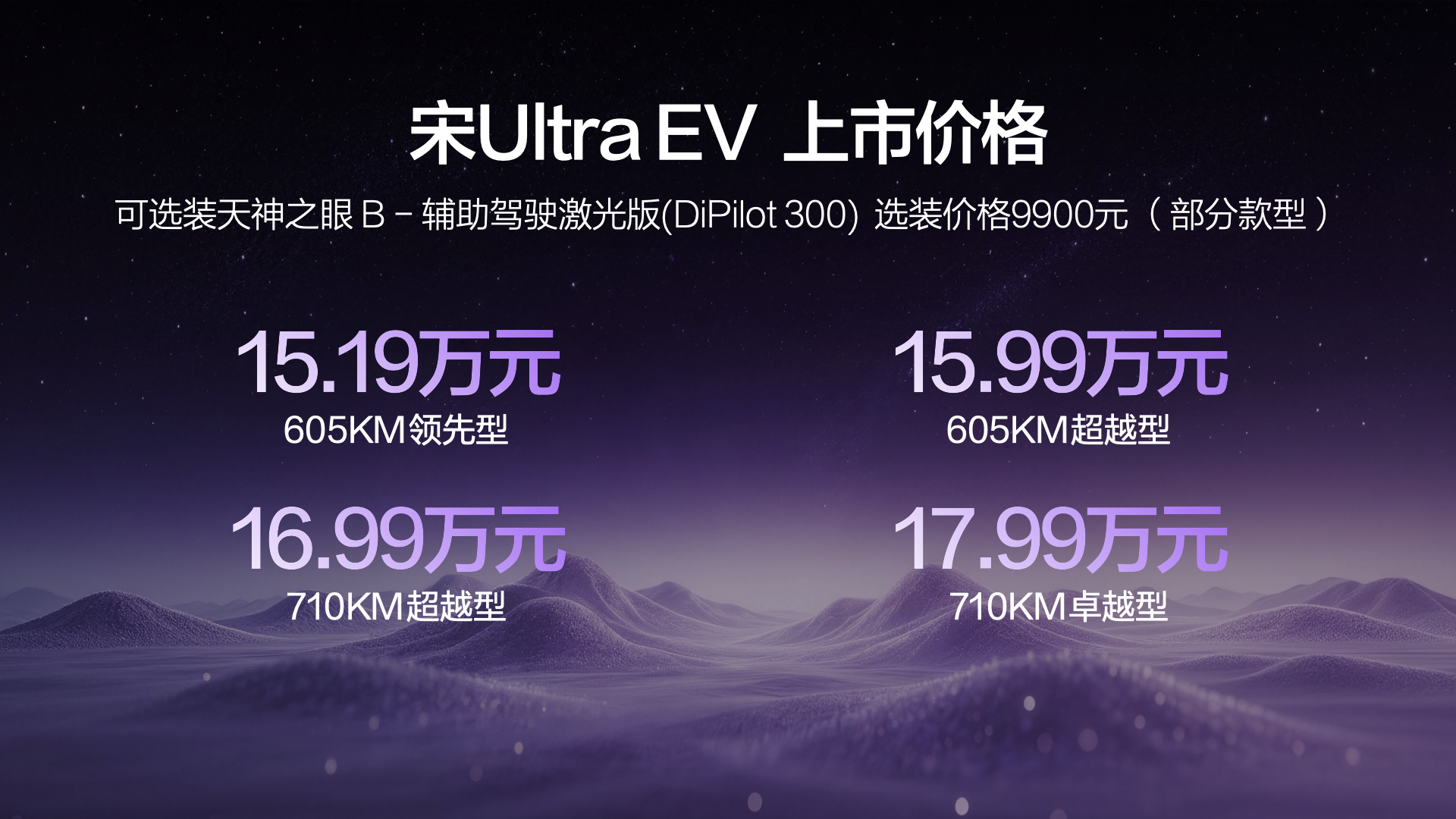
售价15.19万元—17.99万元 比亚迪宋Ultra EV开启B级SUV闪充时代
Bei Jing Ri Bao Ke Hu Duan· 2026-03-30 11:04
Core Insights - BYD has officially launched the Song Ultra EV, which includes four models with a price range of 151,900 to 179,900 yuan [1] - The vehicle features the second-generation blade battery and fast-charging technology, offering a maximum range of 710 kilometers on a single charge [1][10] Group 1: Vehicle Specifications - The Song Ultra EV is equipped with a fast-charging technology that allows charging from 10% to 70% in just 5 minutes and from 10% to 97% in 9 minutes, even in temperatures as low as -30 degrees Celsius [10][13] - It features a maximum speed of 210 km/h powered by a 270 kW motor, with a 0-100 km/h acceleration time of just 6.8 seconds [10][17] - The vehicle comes with over 20 core configurations, including a 15.6-inch central control screen, four-zone voice interaction, and wireless phone charging [17] Group 2: Battery and Charging Technology - The second-generation blade battery has a higher energy density, longer lifespan, and enhanced safety standards, ensuring a maximum range of 710 kilometers [10] - BYD's fast-charging station has a power output of 1500 kW and features a unique "sliding rail suspension T-type pile" design for ease of use [13] - The battery warranty has been upgraded, offering free replacement if capacity drops below 77.5% and lifetime warranty on battery cells [13] Group 3: Design and Features - The Song Ultra EV is available in eight exterior colors and features a stylish and luxurious design [17] - It includes advanced features such as a smart damping body control system and a TBC high-speed blowout stability system that maintains vehicle stability at high speeds [17]


市场血战,比亚迪单车利润见底了吗?
Hua Er Jie Jian Wen· 2026-03-28 05:57
Core Viewpoint - BYD is undergoing a significant strategic shift in 2025, facing challenges in both domestic and international markets while making substantial investments to maintain its competitive edge and expand its operations [2][15]. Group 1: Financial Performance - BYD's profit increased from 3 billion to 40.3 billion over the past four years, with a consistent high growth rate and a gross margin rising from 12% to 19% [1]. - In 2025, revenue growth hit a five-year low, and profits saw a decline for the first time in the new energy era, despite a record capital expenditure nearly doubling from 2023 [2][13]. - The company's net profit for the year was 32.6 billion, a 19% year-on-year decrease, with gross margin dropping from 19.44% to 17.74% [13]. Group 2: Market Challenges - BYD is facing its most severe domestic challenges since the onset of the new energy era, with a significant drop in vehicle sales and a decrease in average selling prices [4][5]. - Competitors have strengthened, with technologies catching up, leading to increased competition in the 100,000 to 200,000 yuan price range [5][6]. - The company is experiencing pressure on its pricing strategy due to regulatory scrutiny as the industry leader [5]. Group 3: Strategic Investments - BYD is aggressively investing in technology and infrastructure, including the launch of the second-generation blade battery and a plan to build 20,000 fast-charging stations by the end of 2026 [8][11]. - The company is also focusing on expanding its overseas operations, with overseas revenue soaring from 99.7 billion to 191.3 billion, nearly doubling [11]. - Significant capital expenditures are directed towards overseas production facilities, with plans for factories in Hungary, Brazil, and Thailand, aiming for a local production capacity of over 510,000 vehicles by the end of 2026 [11][12]. Group 4: Future Outlook - BYD's strategy appears to be a long-term bet, with expectations that profits will increasingly rely on overseas markets as domestic growth slows [15]. - The company is preparing for critical milestones in 2026, including the launch of new technologies and production capabilities, which will be essential for its financial performance [15][16]. - The effectiveness of BYD's investments and strategies will be closely monitored, as they will determine whether 2025 is seen as a year of capacity building or a turning point for profitability [15].
比亚迪第二代刀片电池首批生产基地实现试生产_陕西日报数字报-群众新闻网
Shan Xi Ri Bao· 2026-03-18 19:21
Group 1 - The core point of the article is that BYD's new energy vehicle battery project in Xixian has commenced trial production, marking a significant advancement in battery technology with the introduction of the second-generation blade battery and fast-charging technology [1][2] - The second-generation blade battery can charge from 10% to 70% in just 5 minutes at room temperature, and only requires an additional 3 minutes for charging at -30 degrees Celsius, achieving a 5% increase in energy density compared to the first generation [1] - The Xixian base has an annual production capacity of 16 GWh, sufficient to support approximately 700,000 new energy vehicles, with an expected annual output value of 8 billion yuan [1] Group 2 - The Xixian battery project covers an area of 1,333 acres with a total investment of 7 billion yuan, and its trial production is expected to attract upstream and downstream enterprises in battery materials, precision components, and intelligent driving systems [2] - This project is anticipated to lower vehicle manufacturing costs and enhance the local supply chain in the Shaanxi automotive industry, contributing to the growth of the automotive industry cluster in the region [2]
全球首台比亚迪第二代刀片电池及闪充车型:全新腾势Z9GT开启交付;Lucid即将推出Midsize平台,新车起售价低于5万美元丨汽车交通日报
创业邦· 2026-03-15 10:48
Group 1 - Li Auto's MEGA battery recall completion rate has exceeded 97.5%, with 11,411 vehicles recalled and 11,128 replacements completed, leaving 283 owners yet to replace their batteries [2] - Lucid Group, Inc. announced a comprehensive financial and product strategy to expand its business and accelerate towards profitability, introducing the Midsize platform with three models, including Lucid Cosmos and Lucid Earth, and plans to deploy these models in partnership with Uber [2] - The all-new Denza Z9GT, featuring BYD's second-generation blade battery and fast-charging technology, has officially commenced delivery, priced between 269,800 to 369,800 yuan, with a maximum CLTC electric range of 1,036 kilometers [2][4] Group 2 - The Denza Z9GT can charge from 10% to 70% in just 5 minutes and from 10% to 97% in 9 minutes under normal conditions, with only a 3-minute increase in charging time at -30 degrees Celsius [4] - There are concerns regarding the illegal installation of range extenders on pure electric vehicles, which could disrupt the original electrical architecture and increase safety risks, including battery thermal runaway and collision hazards [4]

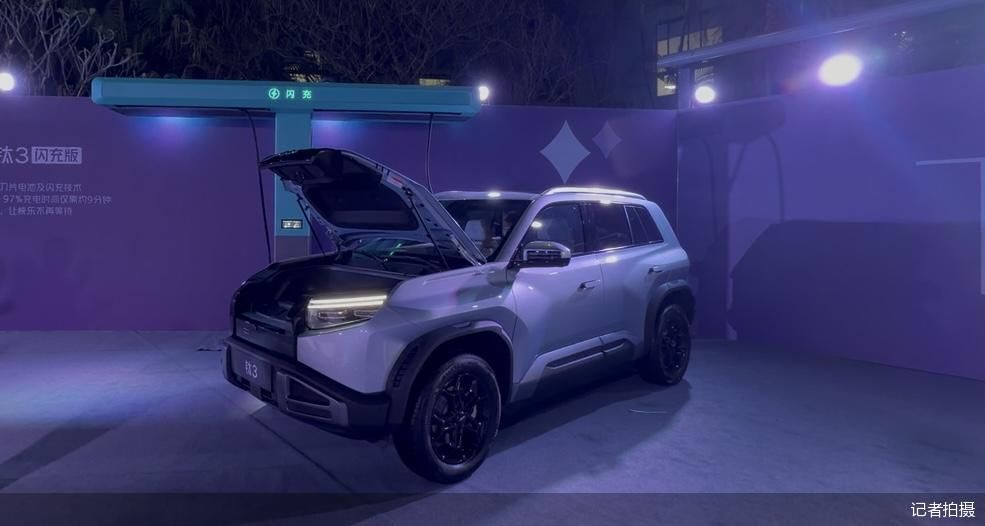
钛3闪充版上市,比亚迪闪充技术规模化落地
Bei Jing Shang Bao· 2026-03-14 14:21
Core Insights - BYD's flash charging technology has officially entered mass production with the launch of the Fangcheng Leopard Titanium 3 flash charging version, which offers two configurations priced between 153,800 and 169,800 yuan [2] - The introduction of the flash charging version raises the entry price by 20,000 yuan compared to the standard version, reflecting the costs associated with the second-generation blade battery and high-voltage fast charging architecture [2] - The flash charging technology allows for rapid charging, with 10% to 70% charge achieved in approximately 5 minutes and 10% to 97% in about 9 minutes under normal conditions [3] Charging Infrastructure - As of March 12, the number of flash charging stations has increased to 4,597, with plans to build 20,000 stations by the end of 2026, ensuring coverage within 3 to 6 kilometers in various city tiers [3][4] - The charging stations will include energy storage cabinets to manage energy supply and demand, mitigating grid impact and transforming charging points into micro-energy nodes [3] Market Impact - The mass production of flash charging technology is expected to significantly reduce battery prices, intensifying competition in the industry and posing challenges to battery swapping models [4] - Industry experts suggest that BYD must focus on enhancing battery range, reducing charging time, and improving battery stability and cost to maintain its competitive edge in the evolving electric vehicle market [4]
比亚迪和蔚来,争的不止是高下
Zhong Guo Jing Ji Wang· 2026-03-13 02:58
Core Viewpoint - The competition between BYD and NIO centers around charging technologies, with BYD promoting its "flash charging" technology as a faster alternative to NIO's battery swapping model, which emphasizes reliability and user experience [1][6][9] Group 1: BYD's Flash Charging Technology - BYD has improved its charging speed, reducing the time to charge from 10% to 97% to just 9 minutes, which poses a significant challenge to NIO's battery swapping model [1][3] - The company has released multiple technical videos to address concerns regarding battery lifespan and safety associated with flash charging, asserting that it will not negatively impact battery performance [2][5] - BYD's second-generation blade battery has a 5% increase in energy density compared to the first generation, and it features advanced thermal management systems to ensure safety during rapid charging [5] Group 2: NIO's Battery Swapping Model - NIO's founder, Li Bin, has publicly criticized flash charging, arguing that it could harm battery health over time, while emphasizing the reliability of battery swapping as a core competitive advantage [1][6] - NIO has invested heavily in its battery swapping infrastructure, with over 3,753 stations built, representing a significant financial commitment to establish a unique market position [8] - The company views its battery swapping service as a crucial differentiator in a competitive market, and any shift towards flash charging could undermine its established business model and user base [6][9] Group 3: Industry Dynamics - The competition between BYD and NIO reflects broader industry trends where companies are pushing the limits of technology and resource allocation to secure market survival [2][9] - Both companies are navigating a challenging market landscape, where technological advancements and cost management are critical for maintaining competitive advantages [9] - The outcome of this technological rivalry will significantly influence the future of electric vehicle charging solutions and the sustainability of each company's business model [9]

6年能量密度仅提升5%,比亚迪能否靠第二代刀片电池翻身?
Xin Lang Cai Jing· 2026-03-13 01:15
Core Viewpoint - BYD's second-generation blade battery has been launched, but its energy density improvement of only 5% over six years raises concerns about its ability to maintain a competitive edge in the electric vehicle market [1][12]. Group 1: Battery Technology - The first-generation blade battery from BYD was a significant innovation, enhancing consumer confidence in electric vehicles and establishing BYD as a leader in the industry [1]. - The second-generation blade battery's energy density increase is minimal, averaging less than 1% per year over six years, which may not be sufficient to regain market leadership [1][12]. - Traditional lithium batteries have reached a density ceiling of 140-180 Wh/kg, limiting advancements in energy density for major players like BYD and CATL [3][13]. Group 2: Flash Charging Technology - BYD's second-generation blade battery supports flash charging, allowing for 70% charge in 5 minutes and 97% in 9 minutes, even in low temperatures [4][13]. - The flash charging technology is seen as a potential game-changer, especially compared to the battery swap model promoted by competitors like NIO [4][13]. - BYD plans to build 20,000 flash charging stations by 2026, which is a significant commitment but still limited compared to the existing infrastructure of over 30 million home charging points [6][15]. Group 3: Market Challenges - Despite the technological advancements, BYD faces challenges in reversing its declining sales, with recent figures showing a drop from peak monthly sales of 510,000 to around 190,000 [1][12]. - The limited number of models compatible with the second-generation blade battery may hinder the widespread adoption of flash charging technology [7][15]. - The current charging infrastructure's low utilization rates pose a challenge for BYD's vision of making electric vehicle charging as fast as refueling gasoline cars [6][15]. Group 4: Future Outlook - BYD's CEO indicated that the second-generation blade battery and flash charging represent the culmination of the first phase of electric vehicle technology, suggesting a need for new innovations to address future challenges [19][20]. - Solid-state batteries are anticipated to be the next major advancement, with BYD planning to start mass production around 2027, which could significantly enhance energy density and safety [19][20]. - The company aims to leverage flash charging as a transitional technology while preparing for the introduction of solid-state batteries in the coming years [20][22].
比亚迪闪充到底伤不伤电池?李斌一语点破:反正没换电快!
Xin Lang Cai Jing· 2026-03-11 13:33
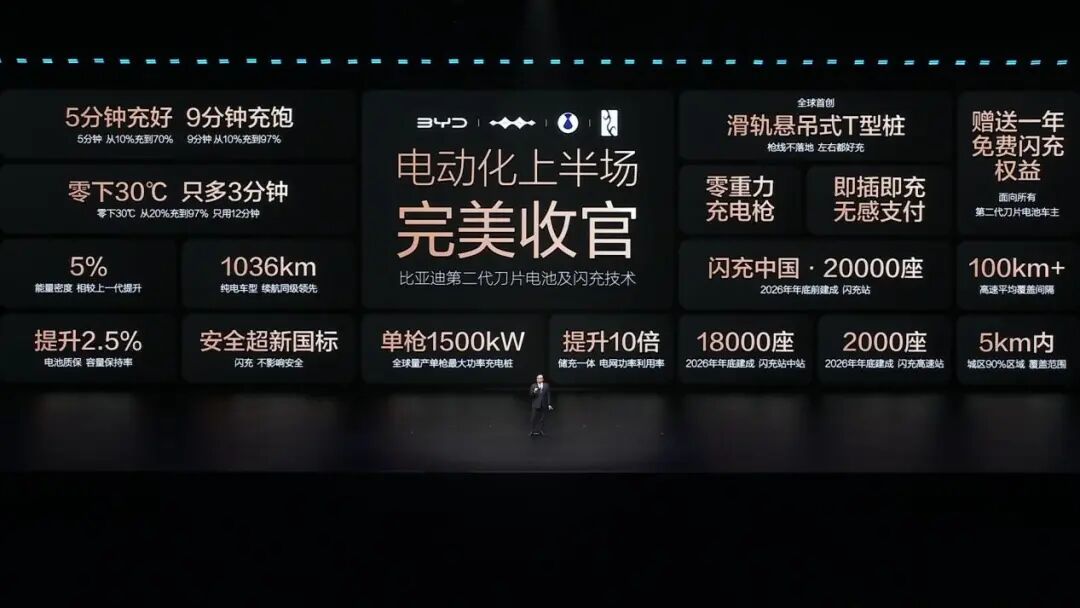
Core Viewpoint - The competition in the new energy vehicle charging sector is intensifying, with BYD's second-generation blade battery achieving a "70% charge in 5 minutes" and NIO's battery swap service offering "full charge in 3 minutes," raising concerns among car owners about battery health and longevity [1][14]. Charging Technology Insights - Fast charging can lead to battery damage, as traditional fast charging uses high current to accelerate lithium-ion migration, resulting in increased wear over time [3][17]. - Data from Geotab indicates that frequent use of fast charging (over 100 kW) can double the battery degradation rate compared to slow charging, with heavy fast charging users experiencing an annual degradation rate of up to 2.5%, while those who use it less see only 1.5% [3][17]. - Each 1C increase in fast charging current raises battery polarization voltage by 50-80 mV, which in turn increases degradation speed; high temperatures during fast charging can further accelerate capacity loss by 40-60% [5][19]. Battery Swap Advantages - NIO's CEO, Li Bin, emphasizes that battery swapping offers a significant advantage in preserving battery health, stating that fast charging can damage battery lifespan and safety [6][20]. - NIO's battery swap stations ensure each battery undergoes extensive real-time health checks and employs specialized charging strategies, maintaining a degradation rate below 15% [9][23]. Technology Developments - BYD claims to have developed technology that mitigates the traditional belief that fast charging damages batteries, with their second-generation blade battery demonstrating stable performance after 500 fast charge cycles [10][24]. Usage Scenarios - Fast charging is suitable for emergency situations, such as long-distance travel, where a quick charge is needed, while battery swapping is more appropriate for daily commuting and users without home charging options [13][27]. - Approximately 60% of users in China lack the ability to install home charging stations, making battery swapping a more convenient option for these consumers [13][27].
秦汉新城比亚迪动力电池西咸基地入选比亚迪第二代刀片电池首批生产基地
Xin Lang Cai Jing· 2026-03-10 03:42
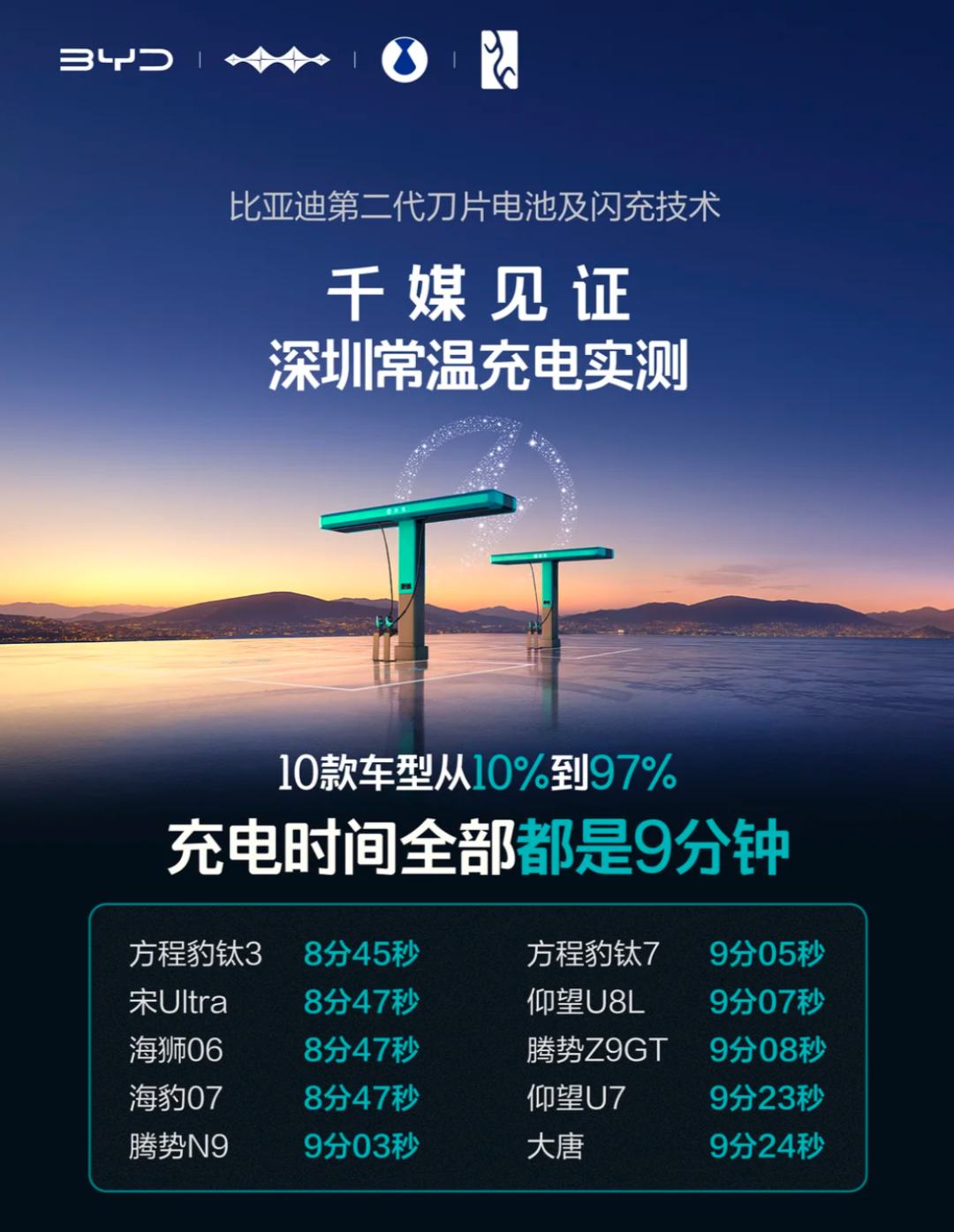
Core Insights - BYD has launched its second-generation blade battery and fast-charging technology, marking a significant advancement in the electric vehicle industry with charging times of 5 minutes to reach 70% and 9 minutes to reach 97% [1][3] Group 1: Battery Technology - The second-generation blade battery achieves the fastest mass production charging speed globally, with a 5% increase in energy density compared to the first generation [3] - The new battery technology allows for efficient heat dissipation, ensuring that fast charging has minimal impact on battery lifespan [6] Group 2: Production and Manufacturing - The Xi'an base for BYD's second-generation blade battery is fully equipped for the entire production process, from electrode preparation to system testing, utilizing a smart manufacturing system for real-time data tracking [2] - The first battery cells from the Xi'an base were successfully produced within 10 months of project initiation, showcasing BYD's strong resource integration and project execution capabilities [2] Group 3: Market Impact - The new battery technology is expected to enhance user experience significantly, with models like the Tengshi Z9GT achieving a range of 1,036 kilometers [3] - The Xi'an base is positioned to foster innovation and development within the smart connected vehicle ecosystem, attracting various high-quality enterprises in the electric vehicle and AI sectors [2]

汽车周报:比亚迪闪充2.0对标HALO,GTC和小鹏VLA2.0有望科技催化-20260309
Shenwan Hongyuan Securities· 2026-03-09 06:28
Investment Rating - The report maintains a positive outlook on the automotive industry, particularly highlighting the advancements in technology and new product launches from key players like BYD and XPeng [2][13]. Core Insights - The report emphasizes the significant technological advancements in the automotive sector, including BYD's second-generation blade battery and fast-charging technology, which can charge from 10% to 70% in just 5 minutes [13][37]. - XPeng's second-generation VLA intelligent driving system aims to transition from L2 to L4 automation, enhancing the overall driving experience and safety [7][8]. - The North American tech giants have signed a self-powering agreement, indicating a growing demand for distributed power sources, which could benefit related industries [5]. Industry Updates - In February, the average daily retail sales of passenger cars in China reached 41,000 units, marking a 54% year-on-year increase [2]. - The automotive industry total transaction value for the week was 433.96 billion yuan, with a week-on-week increase of 26.69% [2]. - The report notes a divergence in the sales performance of new energy vehicle companies, with BYD's sales dropping by 41% year-on-year, while other brands like Zeekr and NIO saw increases [3][4]. Market Conditions - The automotive industry index closed at 7985.60 points, down 2.76% for the week, which is a greater decline compared to the Shanghai and Shenzhen 300 index [23]. - A total of 35 automotive stocks rose, while 234 fell, with the largest gainers being Changyuan Donggu and Feilong Shares, and the largest losers being Kailong High-Tech and Daimi Shares [29]. Investment Analysis - The report suggests focusing on companies that are leveraging AI and automation trends, particularly new energy vehicle manufacturers like BYD and XPeng, as well as traditional automakers undergoing reforms [2]. - It highlights the importance of companies with overseas business support for profitability, such as BYD and Geely [2]. - The report also recommends monitoring the performance of key players in the supply chain, particularly those involved in robotics and data center cooling technologies [2]. Key Events - The report outlines several significant events, including the release of new models by BYD and XPeng, and the signing of a self-powering agreement by major North American tech companies [5][6][13]. - It also mentions the upcoming annual report season, suggesting a focus on companies with strong earnings support [2].