
崔字牌小磨香油

Search documents
近200家老字号企业亮相,老字号国潮年货大集在临沂开市
Qi Lu Wan Bao· 2026-01-22 13:26
Core Viewpoint - The "2026 Old Brand National Tide New Year Goods Fair" serves as a significant cultural and consumer event, showcasing traditional Chinese brands and promoting local products while enhancing consumer engagement through immersive experiences [1][2][3] Group 1: Event Overview - The fair, held at the Linyi International Expo Center, features nearly 200 old brand enterprises from 16 provinces, creating a vibrant cultural consumption atmosphere for the New Year [1] - The event includes five themed exhibition areas: "New Year's Eve Dinner," "Happy Reunion," "Visiting Friends and Relatives," "Langya Gifts," and "Traditional Folk Experience," highlighting various aspects of traditional New Year celebrations [1] Group 2: Consumer Engagement - Interactive experiences such as traditional paper-cutting, wood carving, and live cooking demonstrations attract significant visitor interest, enhancing the festive atmosphere [2] - The fair offers various consumer incentives, including limited-time discounts and gifts for purchases, effectively stimulating consumer enthusiasm and promoting immediate sales [2] Group 3: Cultural Significance - The event not only serves as a consumer fair but also plays a crucial role in promoting traditional Chinese culture and fostering innovation in domestic brands [3] - The fair runs from January 22 to January 26, providing an opportunity for consumers to engage with traditional crafts and experience the vibrant atmosphere of the New Year [3]


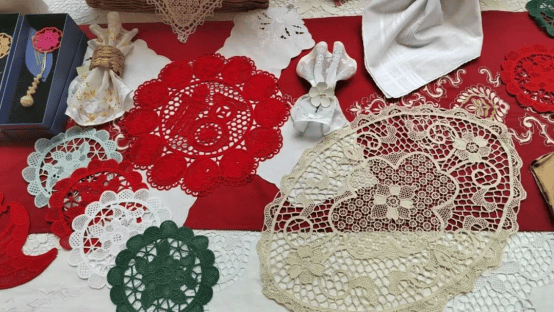
赞!即墨花边入选2025山东省非遗助力消费推广案例
Sou Hu Cai Jing· 2025-11-20 06:11
Core Points - The Shandong Provincial Department of Culture and Tourism has organized a collection activity for 2025 Shandong Province's intangible cultural heritage (ICH) to promote consumption, resulting in the selection of 31 cases, including the Jimo lace [1][6] Group 1: Promotion Cases - The selected cases include various initiatives across different cities, such as "Hongji Tangs' 'Hongji Yuyang' New Consumption Scene" in Jinan and "Jimo Lace Handcrafting Skills Supporting Rural Revitalization" in Qingdao [4][5] - Other notable cases include "Ceramic Art Development and Promotion" in Zibo and "Non-heritage Glass Innovation Practices" in Zibo, showcasing the integration of ICH into modern consumption [4][5] - The initiative aims to enhance the marketability of ICH products and promote cultural tourism, with examples like "Experience-based Consumption" in Yantai and "Tea Aroma Enriching the People" in Rizhao [5][4] Group 2: Implementation Units - Various organizations are involved in the implementation of these cases, including Shandong Hongjitang Pharmaceutical Group, Qingdao Guohua Craft Co., and Zibo Xiaoxiaomi Soft Clay Studio [4][5] - Local government bodies, such as cultural and tourism bureaus, are also key players in promoting these initiatives, ensuring a collaborative approach to revitalizing ICH [5][4] - The cases reflect a diverse range of cultural practices and products, indicating a broad commitment to integrating ICH into the local economy and tourism [4][5]

与冀相约 山东老字号引燃京津冀消费热潮
Sou Hu Cai Jing· 2025-09-28 09:55
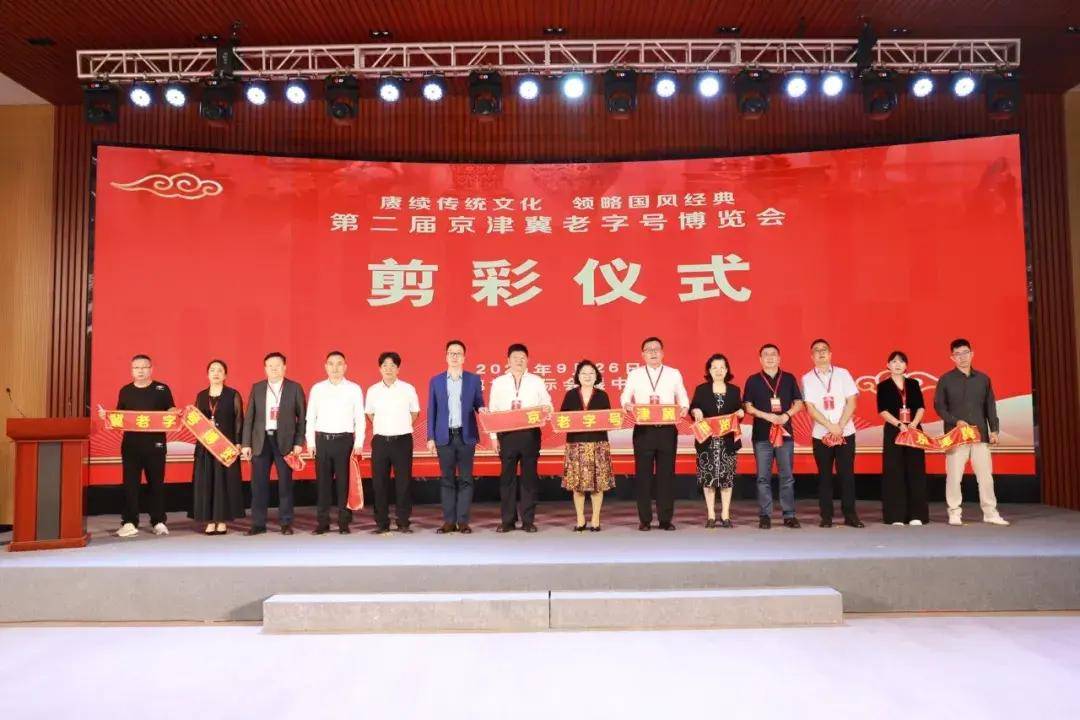
Group 1 - The second Beijing-Tianjin-Hebei Old Brand Expo will be held from September 26 to 28, 2025, in Langfang, Hebei, showcasing regional特色企业 from Shandong [1] - The Shandong delegation includes notable brands such as Dezhou Braised Chicken, Cui's Sesame Oil, and others, aiming to enhance the visibility and reputation of "Shandong Old Brands" [1][3] - The expo serves as a significant platform for promoting regional old brands and facilitating collaboration between the Beijing-Tianjin-Hebei region and Shandong [9] Group 2 - The Shandong exhibition team attracted attention with local特色 and quality, featuring products like Dezhou Braised Chicken and various traditional dishes [3][5] - The delegation visited Hebei's Gu's Fragrance Industry and Yannan Spring Distillery to explore new development paths for old brands, focusing on cultural and industrial tourism integration [5][6] - Several Shandong brands, including Dezhou Braised Chicken and Huayang Beef, received the "Most Loved Brand Award" during the event, highlighting their market potential in the Beijing-Tianjin-Hebei area [7]
透过潍坊风筝、鹅肝看发展的“精准定位”(人民观点)
Ren Min Ri Bao· 2025-07-17 21:47
Core Viewpoint - The article emphasizes the importance of precise positioning and leveraging unique advantages for regional development, using Shandong Weifang as a case study to illustrate how local resources can be transformed into economic strengths [2][3][4]. Group 1: Regional Development Strategies - Weifang's development showcases how cultural and natural resources can be harnessed to boost tourism and local industries, such as the international kite festival and the introduction of unique culinary offerings [2][3]. - The city of Linqu in Weifang has successfully developed a robust goose industry, producing 70% of China's foie gras and 20% globally, with an annual output value exceeding 8 billion yuan [3]. - The article highlights the necessity of understanding local conditions and resources to create unique development paths, as seen in various regions across China [5][6]. Group 2: Innovation and Technology Integration - The integration of traditional culture with modern technology is crucial for attracting new consumers, as demonstrated by projects in Guizhou and Zhejiang that blend cultural heritage with innovative experiences [6][7]. - Shenzhen's engineering biotechnology innovation center exemplifies the synergy between scientific research and industrial application, enhancing the region's competitiveness in key technologies [7]. Group 3: Economic and Cultural Synergy - The article discusses how cultural resources can drive economic growth, with Weifang's kite industry generating over 2 billion yuan annually and fostering tourism through cultural events [8]. - The importance of cultural richness as a measure of happiness and a resource for regional development is emphasized, suggesting that regions should leverage their unique cultural assets for economic advantage [8][9]. Group 4: Trade and Market Expansion - Weifang's foreign trade has seen significant growth, with imports and exports reaching 153.94 billion yuan in the first five months of the year, marking a 5.1% increase from the previous year [10]. - The article highlights the importance of integrating domestic and international markets, with Weifang actively seeking cooperation in agriculture and machinery with countries like Tanzania and Colombia [10][11].
“把芝麻点大的事做到极致”——一家93年老字号企业的强信心样本观察
Xin Hua She· 2025-05-14 13:45
Core Viewpoint - The article highlights the success of Ruifu Oil Co., a 93-year-old traditional brand, emphasizing its commitment to quality and innovation in sesame oil production, showcasing how a small-scale operation can evolve into a leading industry player through dedication and modernization [1][4]. Group 1: Company Overview - Ruifu Oil Co. was established in 1932 and has transformed from a small sesame oil workshop into a leading enterprise with annual sales exceeding 600 million yuan, processing over 60,000 tons of sesame and producing 10,000 tons each of sesame oil and sesame paste annually [1]. - The company is recognized as one of the first "Chinese Time-honored Brands" and a national high-tech enterprise, reflecting its historical significance and technological advancement in the industry [1]. Group 2: Production and Quality Control - The company prioritizes high-quality sesame, sourcing over 3,000 tons from major domestic production areas and Africa, ensuring that the supply lasts only a month due to high demand [2]. - Traditional production methods are maintained, such as stone grinding and water extraction, which preserve the nutritional and aromatic qualities of sesame oil, demonstrating a commitment to craftsmanship [3]. - Ruifu has invested over 10 million yuan in a testing center to ensure product quality at every production stage, allowing for traceability of each bottle [3]. Group 3: Innovation and Market Adaptation - The company has adapted to modern consumer preferences by launching new products like black sesame balls, sesame yogurt, and dipping sauces, appealing to younger demographics [4]. - Ruifu has participated in the formulation of 17 national and industry standards related to sesame and sesame oil, holding 15 patents and various certifications, which enhances its credibility and market position [4]. - The company is expanding its global footprint by exporting high-end sesame products to over 30 countries, including the USA, Japan, and Germany, thus promoting Chinese sesame oil internationally [4].