嵌入式软件

Search documents
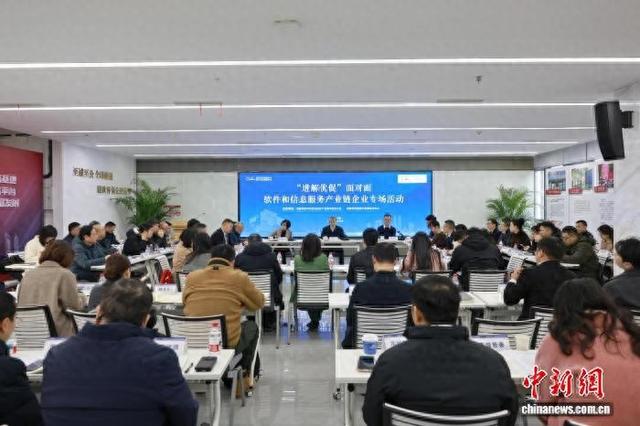
成都政企对接“面对面” 助力软件产业发展加速跑
Xin Lang Cai Jing· 2026-01-22 13:00
Core Viewpoint - The event "Jin Jie You Cu" focused on the software and information service industry in Chengdu, aimed at addressing operational challenges faced by enterprises through direct communication with government and industry representatives [1] Group 1: Event Overview - The event gathered over 40 key enterprises, universities, and industry associations in Chengdu's software and information service sector, along with representatives from 17 municipal departments and state-owned enterprises [1] - A total of over 30 issues raised by enterprises were collected, covering areas such as technology research and development, scenario implementation, supply-demand matching, and resource assurance [2] Group 2: Responses to Enterprise Needs - 18 of the issues raised received immediate responses during the event, while the remaining were recorded in a service ledger for the software and information service industry, with designated responsible units and deadlines for resolution [2] - Chengdu Dingqiao Communication Technology Co., Ltd. expressed the need for support in digital construction projects and local collaboration, as well as increased funding for technical research [2] Group 3: Support for Innovation and Technology - Chengdu's government officials indicated plans to enhance communication with local railway and transportation groups to facilitate collaboration on domestic systems like the open-source HarmonyOS [2] - Chengdu Softcom Power Information Technology Service Co., Ltd. requested support for testing autonomous vehicles, to which the Chengdu Public Security Traffic Management Bureau responded by working on management measures for low-speed autonomous vehicle testing [3] Group 4: Industry Foundation and Future Plans - Chengdu is recognized as one of the first comprehensive Chinese software cities, ranking 6th in the Ministry of Industry and Information Technology's 2023 evaluation, and is the top city in the central and western regions [5] - The city has over 1,600 software enterprises and has nurtured 16 leading companies, with 6 recognized as key software enterprises by the national government [5] - The Chengdu Economic and Information Bureau plans to continue hosting events to promote high-quality development in the software industry, emphasizing collaboration between government and enterprises [5]

2026-2032年中国工业软件行业市场专项调研及投资前景规划报告
Sou Hu Cai Jing· 2026-01-20 09:36
Group 1 - The report provides a comprehensive analysis of the industrial software industry in China, focusing on market capacity, competitive landscape, and future development trends [2][3][4] - It emphasizes the importance of industrial software in the context of China's industrial transformation and upgrading, highlighting its role in enhancing operational efficiency and innovation [4][6] - The report outlines the classification of industrial software, including embedded software, design software, production control software, and management software, along with their respective market sizes and trends [7][8][9] Group 2 - The analysis includes a detailed examination of the policy environment affecting the industrial software industry, including management systems and relevant regulations [4][6] - Economic conditions, both domestic and international, are assessed to understand their impact on the industrial software market, including industrial value-added and manufacturing indices [4][6] - Technological advancements and trends within the industry are discussed, providing insights into the overall technical level and future directions of industrial software development [4][6] Group 3 - The global industrial software market is analyzed, including its size, regional distribution, and key trends, indicating a growing demand for software solutions in manufacturing [5][6] - Leading companies in the industrial software sector are profiled, detailing their product offerings, market performance, and strategic developments, such as Dassault Systèmes, Siemens PLM, and Autodesk [5][6] - The report identifies investment opportunities within the industrial software industry, emphasizing the potential for growth driven by technological innovation and increasing demand for digital solutions [8][13]
博时基金王萌:AI赋能叠加自主可控 看好工业软件投资机会
Shang Hai Zheng Quan Bao· 2025-11-30 18:51
Core Viewpoint - The industrial software market is experiencing increased demand, driven by AI empowerment and the push for self-sufficiency, indicating promising future development and rich investment opportunities [1]. Group 1: Industry Overview - The National Index for Industrial Software reflects the price changes of listed companies in the industrial software sector [2]. - Industrial software is categorized into four main types: R&D design software, production control software, digital management software, and embedded software, each serving distinct functions in the industrial process [2]. - The industry is benefiting from multiple favorable factors, including government policies aiming to update approximately 2 million sets of industrial software by 2027, strong internal demand for refined management, and technological innovation driving the sector [2]. Group 2: Strategic Importance - Changes in the external environment are elevating the strategic importance of industrial software, as global manufacturing shifts towards high efficiency, flexibility, and customization [3]. - Domestic software is currently in a phase of breaking into high-end products, with embedded software showing potential advantages, although it still faces challenges in competing with foreign products [3]. Group 3: Investment Opportunities - Three core investment logics are identified: the steady advancement of self-sufficiency in industrial software, the significant replacement potential for imported software, and the ongoing R&D and mergers and acquisitions driving product enhancement [4]. - AI is seen as a transformative force for domestic industrial software, potentially enabling leapfrog development and creating significant valuation premiums in the industry [4]. Group 4: AI Impact - AI models, such as DeepSeek, are accelerating industry development and lowering application barriers, facilitating rapid penetration of AI into industrial software [5]. - Companies are developing multi-layered AI product service systems, offering various AI models and tools, which present diverse investment opportunities [5]. Group 5: Market Characteristics - The National Industrial Software Index primarily consists of small and mid-cap stocks, with over 70% of stocks having a total market value below 50 billion [5]. - The index's largest sector is computers, while also covering machinery, power equipment, and communications, aligning with the technology growth characteristics of the sector [5].
博时基金王萌:AI赋能叠加自主可控,看好工业软件投资机会
Shang Hai Zheng Quan Bao· 2025-11-30 14:09
Core Insights - The industrial software market is experiencing increased demand, driven by AI empowerment and the push for self-sufficiency, indicating promising future growth and investment opportunities [1][2]. Group 1: Industry Overview - The National Index for Industrial Software reflects the price changes of listed companies in the industrial software sector [2]. - Industrial software is categorized into four main types: R&D design, production control, digital management, and embedded software, each serving distinct functions in the industrial process [2]. - The industry is benefiting from multiple favorable factors, including government policies that aim to update approximately 2 million sets of industrial software by 2027, creating clear market growth potential [2][3]. Group 2: Strategic Positioning - The global manufacturing landscape is shifting towards high efficiency, flexibility, and personalized customization, highlighting the strategic importance of industrial software [3]. - Domestic software is currently in a phase of breaking into high-end products, with embedded software showing significant market potential, although it still faces challenges in competing with foreign products [3]. Group 3: Investment Opportunities - Three core investment logics are identified: the steady advancement of self-sufficiency in industrial software, the significant replacement potential for imported software, and the ongoing R&D and acquisition efforts by manufacturers to enhance product capabilities [4]. - AI is seen as a transformative force for domestic industrial software, potentially enabling leapfrog development and creating significant valuation premiums in the industry [4][5]. Group 4: Market Characteristics - The National Industrial Software Index primarily consists of small and mid-cap stocks, with over 70% of the total market capitalization being below 50 billion yuan [6]. - The index's largest sector is computers, with substantial representation from manufacturing industries such as machinery, electrical equipment, and communications [6]. - The index aligns well with the technology growth characteristics of the Sci-Tech Innovation Board and the Growth Enterprise Market, indicating strong investment value due to high and steadily increasing R&D investments [6].
工业软件行业专题报告:国产化与智能化双轮驱动,工业软件行业快速发展
Dongguan Securities· 2025-10-30 11:43
Investment Rating - The report maintains an "Overweight" rating for the industrial software industry, driven by domestic localization and intelligent transformation [1]. Core Insights - The domestic industrial software market is experiencing rapid growth, with a compound annual growth rate (CAGR) of 13.20% from 2019 to 2023, significantly outpacing the global market [10][25]. - The localization rate in the research and design software segment is currently low at around 10%, indicating substantial room for domestic manufacturers to replace foreign competitors [10][31]. - External pressures, such as U.S. export restrictions on key software, are accelerating the need for domestic self-sufficiency in industrial software [11][41]. - The integration of AI into industrial software is expected to drive significant advancements, with the AI+ industrial software market projected to grow at a CAGR of 41.4% from 2024 to 2029 [47]. Summary by Sections 1. Rapid Growth of Domestic Industrial Software Market - The industrial software sector is crucial for China's industrial transformation, enhancing efficiency and product quality while reducing costs [20]. - The market share of research and design software is currently only 8.5%, highlighting a significant gap compared to embedded software, which holds a 57.4% share [21][23]. - The domestic industrial software market size is expected to reach approximately 3,390 billion yuan by 2025 [25]. 2. Localization and Intelligent Transformation 2.1 External Pressures and Policy Support - U.S. restrictions on industrial software have highlighted the urgency for China to develop its own capabilities [11][41]. - The Chinese government has introduced various supportive policies to bolster the industrial software sector, including targets for software updates and technology upgrades [43][44]. 2.2 AI Integration - AI technologies are increasingly being integrated into industrial software, enhancing development efficiency and creating new market opportunities [47]. - The penetration rate of AI in industrial software is expected to rise from 9% in 2024 to 22% by 2029 [47]. 3. Key Companies in the Industry 3.1 Huada Jiutian - Huada Jiutian is a leading domestic EDA company, providing a comprehensive suite of EDA tools for integrated circuit design, manufacturing, and packaging [59]. - The company is the only domestic provider of a complete EDA tool system for analog circuit design, filling a critical gap in the market [59].
楚天龙上涨6.08%,报28.43元/股
Jin Rong Jie· 2025-08-19 01:53
Core Viewpoint - Chutianlong's stock price increased by 6.08% on August 19, reaching 28.43 yuan per share, with a trading volume of 732 million yuan and a turnover rate of 5.78%, resulting in a total market capitalization of 13.11 billion yuan [1] Company Overview - Chutianlong Co., Ltd. is located in Dongguan, Guangdong Province, and specializes in digital security and digital services, smart hardware, integrated solutions, system platforms, and operational services, serving various sectors including government and fintech [1] - The company provides smart hardware, software, and service solutions based on embedded software and secure payment products, actively participating in the construction of a digital society, digital government, and the digital RMB system in China [1] Financial Performance - As of March 31, Chutianlong had 50,100 shareholders, with an average of 9,110 circulating shares per person [2] - For the first quarter of 2025, Chutianlong achieved operating revenue of 258 million yuan, a year-on-year increase of 0.51%, while net profit attributable to shareholders was 18.37 million yuan, a year-on-year decrease of 3.63% [2]
《中国软件产业高质量发展紫金指数(二〇二五)》发布
Nan Jing Ri Bao· 2025-06-18 03:31
Core Insights - The "2025 Zijin Software Index" was officially released at the 2025 Nanjing Software Conference, highlighting the importance of software in driving new productivity and industrialization in China [1] - Nanjing ranks fourth nationally in the comprehensive index, showcasing its strong software industry and ecosystem [2] Group 1: Software Industry Overview - Software is identified as the core of new information technology, playing a crucial role in economic development and industrial transformation [1] - The index continues to include 26 sample cities, with Beijing, Shenzhen, and Shanghai leading in innovation [1] Group 2: City-Specific Developments - Nanjing, recognized as China's first "Software City," has over 3,600 key software-related enterprises, with a software and IT service industry scale reaching 8,600 billion yuan in 2024, ranking first in Jiangsu province [2] - Nanjing's software business revenue grew by 11.8% year-on-year in Q1 of this year [2] - Other cities like Hangzhou, Guangzhou, Chengdu, and Suzhou show strong development in software, with Hangzhou having a high concentration of software companies and Guangzhou providing robust policy support [2] Group 3: Emerging Trends and Potential - Cities such as Wuxi, Hefei, Ningbo, and Wenzhou have unique strengths in IoT and big data, while cities like Yangzhou, Taizhou, Shaoxing, and Suqian exhibit significant growth potential [2] - Taizhou's software business profit growth rate exceeded 250% in 2024, with its comprehensive index ranking improving by 8 positions compared to the previous year [2]

南京服务业一季度稳健开局前景向好
Sou Hu Cai Jing· 2025-05-26 23:10
Group 1: Economic Growth and Service Industry Development - In Q1 2025, Nanjing's service industry achieved a growth rate of 5.8%, with an added value of 325.406 billion yuan, contributing significantly to the city's economic recovery [2] - The software and information technology service sector in Nanjing saw a revenue increase of 13.8% year-on-year, with internet-related services leading at a growth rate of 25.7%, showcasing the vitality of the digital economy [3] - Nanjing aims to build a trillion-yuan software and information service industry cluster, focusing on enhancing competitive advantages and fostering new growth engines [4] Group 2: Transportation and Logistics Development - Nanjing is enhancing its logistics network through major projects, including the construction of a multi-modal transport system that integrates air, rail, and water transport [5] - The city has 221 regulated transportation enterprises, accounting for 11% of the province's waterway transport companies and 30% of large-scale freight forwarding companies, indicating a vibrant logistics market [6] - Nanjing is developing a cold chain logistics hub with an investment of 5 billion yuan, which will create a distribution network covering the Yangtze River Delta [6] Group 3: Consumer Market and Tourism Growth - In Q1 2025, Nanjing's total retail sales of consumer goods reached 232.311 billion yuan, with a year-on-year growth of 7.5%, driven by the "first store economy," night economy, and cultural tourism [8] - The city has seen a significant increase in tourism, with 35.9 million domestic and international visitors in the first two months, a 14% increase year-on-year, and tourism revenue of 48.1 billion yuan, up 10% [9] - Nanjing is enhancing the quality of service consumption in various sectors, including tourism, health, and elder care, leveraging its status as a pilot city for service industry expansion [9] Group 4: Strategic Integration and Future Outlook - Nanjing is constructing a modern service industry development framework, integrating software information, transportation logistics, and consumer upgrades into a "golden triangle" for economic growth [9] - The city is positioned to showcase stronger capabilities in the context of China's modernization journey, with the accelerated formation of trillion-yuan industry clusters and the continuous enhancement of its international hub capabilities [9]