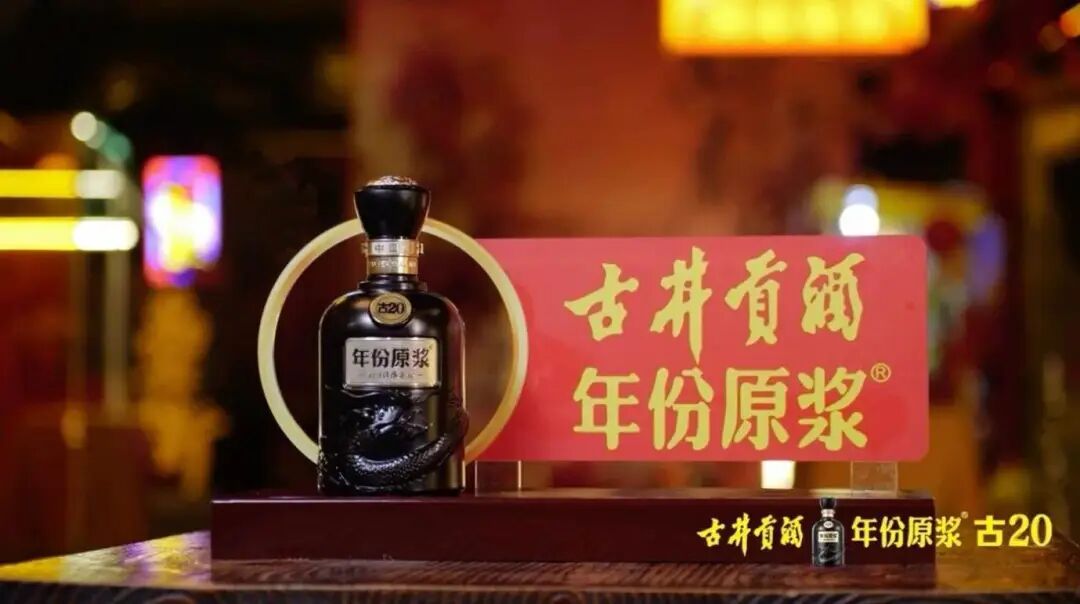
年份原浆古20

Search documents
这一届春晚,古井贡酒如何“花式点亮中国年”
Cai Jing Wang· 2026-02-17 00:48
Core Insights - The article highlights the significance of Gujinggongjiu's participation in the 2026 Spring Festival Gala as a unique opportunity to strengthen its brand identity and cultural connection with consumers [1][2][10] - Gujinggongjiu has successfully integrated its brand into the Chinese New Year celebrations, positioning itself as a "national year wine" through consistent marketing efforts over 11 years [8][11] Group 1: Brand Strategy - Gujinggongjiu has been the exclusive partner of the Spring Festival Gala for 11 consecutive years, showcasing its commitment to brand visibility and cultural relevance [2][10] - The brand's marketing strategy includes a comprehensive approach that combines program content, scene creation, and online interaction, creating a complete "New Year cultural experience" [1][7] - The introduction of Liu Tao as the "New Year Blessing Officer" enhances the brand's emotional connection with consumers, leveraging her popularity to convey festive sentiments [4][7] Group 2: Cultural Integration - The setting of the Spring Festival Gala in Hefei, Anhui, allows Gujinggongjiu to emphasize its regional identity and cultural heritage, reinforcing its status as a representative of Anhui [2][11] - Gujinggongjiu's products, such as the "New Year's Eve" series and zodiac-themed offerings, strengthen the brand's association with traditional Chinese New Year celebrations [8][10] - The brand's narrative transcends mere sponsorship, becoming an integral part of the New Year's Eve rituals for many families [2][10] Group 3: Market Positioning - Gujinggongjiu's sustained investment in the Spring Festival Gala has built significant brand equity, differentiating it from competitors and establishing a strong market presence [10][11] - The brand's identity as a "national year wine" enhances its pricing power in the mid-to-high-end market segments, allowing for better sales performance during key occasions [11] - The emotional resonance of the brand with consumers serves as a stabilizing force in a fluctuating market, providing a pathway for premiumization and growth [11]


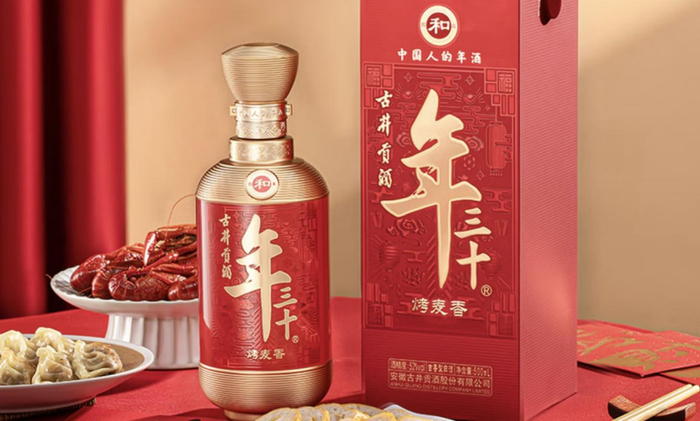
古井贡酒的“年味”答案:从春晚记忆到一杯“年三十”
Xin Lang Cai Jing· 2026-01-26 02:52
Core Viewpoint - Gujinggongjiu has successfully positioned itself as an integral part of the Chinese New Year celebration through its new product "Nian San Shi He," which aims to redefine the family reunion experience with an accessible price point and cultural significance [1][3][5] Group 1: Product Launch and Market Response - The new product "Nian San Shi He" is priced around 220 yuan, targeting a broader audience by making high-quality Chinese New Year liquor accessible for family gatherings [3][6] - The product quickly gained popularity, reaching the top 5 in liquor sales on Douyin on its launch day, with over 10,000 bottles sold within four days [3][6] - The design of the bottle resembles a lantern, symbolizing warmth and celebration, enhancing its appeal as a festive centerpiece [6][10] Group 2: Cultural and Strategic Significance - Gujinggongjiu has been a partner of the CCTV Spring Festival Gala for eleven consecutive years, embedding its brand into the cultural fabric of the holiday [5][13] - The product's name "Nian San Shi" evokes a shared cultural memory among Chinese people, while the suffix "He" emphasizes harmony and family unity, aligning with deep-rooted cultural values [5][8] - The strategic focus on cultural attributes rather than just taste positions Gujinggongjiu uniquely in a competitive market, aiming to resonate with consumers' emotional connections to family and tradition [13] Group 3: Marketing and Consumer Engagement - The pricing strategy of 220 yuan is designed to balance between premium gifting and everyday consumption, targeting families and social gatherings [10][11] - Online marketing initiatives, such as the "Global Spring Couplets Collection" and "Show Your Nian San Shi" campaigns, effectively engage consumers and create a festive atmosphere around the product [11][13] - The brand aims to transform cultural resonance into consumer action, creating a complete festive experience that integrates the product into the New Year celebration [11][13]
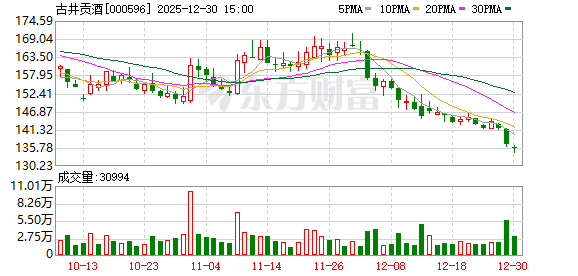
古井贡酒(000596):定力足顺势充分纾压,韧性强筑底重拾升势
Soochow Securities· 2026-01-09 04:01
Investment Rating - The report maintains a "Buy" rating for Gujing Gongjiu [1] Core Views - Gujing Gongjiu is expected to navigate through the current industry adjustment phase, with a focus on stabilizing its management team and leveraging its brand and market advantages to recover sales in the long term [12][31] - The company is positioned to benefit from a recovery in consumer demand, particularly in the mass market segment, as it has a strong brand presence and distribution channels [27][31] Summary by Relevant Sections Financial Forecasts and Valuation - Total revenue projections for Gujing Gongjiu are as follows: 2023A: 20,254 million, 2024A: 23,578 million, 2025E: 18,705 million, 2026E: 19,146 million, 2027E: 21,119 million [1] - Net profit attributable to shareholders is forecasted as: 2023A: 4,589 million, 2024A: 5,517 million, 2025E: 4,243 million, 2026E: 4,448 million, 2027E: 5,004 million [1] - The earnings per share (EPS) estimates are: 2023A: 8.68, 2024A: 10.44, 2025E: 8.03, 2026E: 8.42, 2027E: 9.47 [1] - The price-to-earnings (P/E) ratios are projected as: 2023A: 15.66, 2024A: 13.03, 2025E: 16.94, 2026E: 16.16, 2027E: 14.37 [1] Market Dynamics - The report highlights that the white liquor industry has entered a period of adjustment since 2021, with significant revenue and profit declines observed in major companies during 2025 [12][13] - Gujing Gongjiu's management team has remained stable during this challenging period, reflecting support from local government for the company's stability [12][18] Long-term Outlook - Gujing Gongjiu is expected to leverage its strong brand and market position to recover and grow, particularly in the mass market segment, as consumer demand is anticipated to rebound [27][31] - The company is focusing on a dual strategy of penetrating surrounding markets while maintaining strong control in its home province of Anhui [31][56] Competitive Advantages - Gujing Gongjiu is recognized as a leading brand among the "Old Eight Famous Liquors" and has a competitive edge in both brand recognition and distribution channels [32][39] - The company has implemented a "Three Connections Project" to enhance its distribution efficiency and market penetration [46][49]
720亿徽酒老大,穿越酒业低谷
2 1 Shi Ji Jing Ji Bao Dao· 2025-12-31 00:59
Core Viewpoint - Gujing Gongjiu, a leading liquor company with a market value of 72 billion, is actively pursuing strategic initiatives as the year-end approaches, including a continued partnership with CCTV for the Spring Festival Gala and launching new products to adapt to market changes [2][3]. Group 1: Strategic Initiatives - The company has set a target for a 2.5% overall growth in cash returns for the coming year, building on its current performance despite a challenging market environment [4]. - Gujing Gongjiu's chairman, Liang Jinhui, emphasized a "breakthrough year" in 2026, focusing on strategic, quality, market, and management improvements [3][14]. - The company is optimizing its product matrix, with the Year Original series as a core pillar, and introducing new products like the light version of Gu20 to cater to younger consumers [7][8]. Group 2: Financial Performance - For the first nine months, Gujing Gongjiu reported revenues of 16.425 billion and a net profit of 3.96 billion, both showing double-digit declines [6]. - The company is implementing measures to alleviate pressure on distributors, including relaxing payment terms and increasing marketing investments in key growth markets [11][12]. Group 3: Market Adaptation - Gujing Gongjiu is venturing into the loose liquor market to create a "second growth curve," with the first "Gujing Liquor Shop" opening in December [8]. - The loose liquor model aligns with the trend of rational consumption, aiming to lower the barriers for premium liquor consumption [9]. - The company is enhancing its online presence through e-commerce and social media to tap into new growth opportunities [13]. Group 4: Operational Efficiency - The company is focusing on a "Three Connections" strategy to improve channel efficiency and stability, which includes direct control over sales channels and reducing the role of distributors [10]. - Gujing Gongjiu is committed to maintaining market order and combating issues like price chaos through a dual approach of empowerment and regulation [12]. Group 5: Future Outlook - Liang Jinhui outlined four strategic directions for 2026: deepening the core business, maintaining quality control, innovating in the market, and revolutionizing management practices [15]. - The chairman acknowledged that 2025 would be a pivotal year for the liquor industry, and the ability to navigate through challenges will require time to validate [16].
黄淮名酒这10年
Sou Hu Cai Jing· 2025-11-20 15:16
Core Insights - The Huanghuai famous liquor summit held in Zibo, Shandong, highlighted the significant growth and development of liquor enterprises from Anhui, Shandong, Henan, and Jiangsu over the past decade, with a market scale increase from approximately 1150 billion yuan in 2014 to 2369 billion yuan in 2024, more than doubling in size [2][3] Market Growth - The market scale of the Huanghuai liquor region has seen a substantial increase, with the total market size surpassing 2000 billion yuan by 2024, reaching 2369 billion yuan [2] - The number of large-scale enterprises in the Huanghuai liquor region decreased from 424 in 2014 to 283 in 2024, indicating a rise in market concentration and competitiveness [3] Brand Development - In 2014, only Yanghe had a sales scale exceeding 10 billion yuan, while by 2024, half of the top 10 listed liquor companies in China were from the Huanghuai region, with Gujing Gongjiu achieving 235.78 billion yuan in revenue and joining the top brands [3] - The successful upgrade of price bands has allowed Huanghuai liquor brands to break through previous limitations, with mainstream consumer prices rising from around 80 yuan in 2014 to 200 yuan and beyond by 2018 [3][4] Price Band Strategy - Huanghuai liquor companies have successfully established a complete pricing system covering mass-market, mid-range, and high-end products, with price ceilings reaching up to 2000 yuan by 2024 [3][4] - The introduction of high-quality products in the 100-600 yuan price range has allowed these companies to capture both the value-for-money and premium market segments [3][4] Innovation and Standards - The past decade has seen significant innovation in product categories, with various new fragrance types and industry standards being established, positioning Huanghuai liquor companies at the forefront of the industry [4] - Multiple national-level standards have been created for different types of Huanghuai liquor, enhancing the overall quality and marketability of the products [4] Production Capacity and Storage - The cancellation of the white liquor production limit in 2019 allowed Huanghuai liquor companies to expand their production capacity significantly, with many top enterprises doubling their capacity over the past decade [5][6] - Yanghe has achieved the highest production capacity for solid-state liquor and the largest storage capacity for high-quality original liquor globally [5][6]



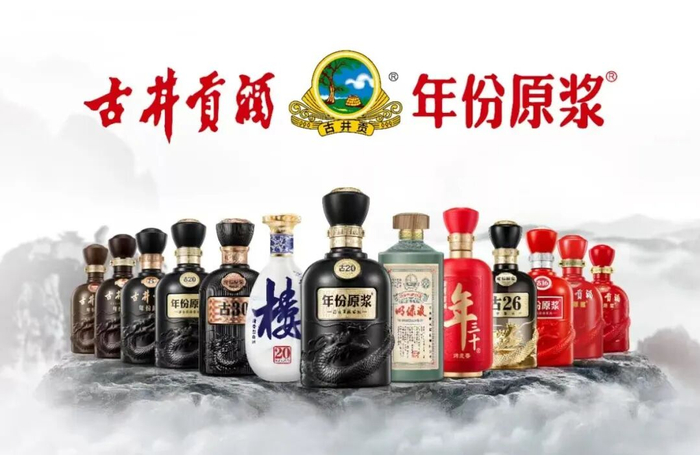
古井贡酒“功守道”:行业寒冬中寻突围
Zhong Guo Jing Ying Bao· 2025-10-31 05:40
Core Insights - The Chinese liquor industry is undergoing a significant adjustment phase, characterized by a "cold wave" as highlighted in the report by the China Alcoholic Drinks Association, indicating a shift from high growth to a period of stock competition by 2025 [1][3] - The industry faces a "three-phase overlap" situation, with increasing production capacity juxtaposed against slowing demand, leading to insufficient consumption momentum and declining prices [3] - Leading companies, such as Gujing Gongjiu, are demonstrating resilience during this adjustment period by exploring innovative strategies to navigate the challenges [1][4] Industry Challenges - The report indicates that the liquor industry is entering a new phase of stock competition, with the contradiction between production capacity growth and demand slowdown becoming a core challenge [3] - Data shows that the best-performing price range for liquor is shifting down to 100-300 RMB, while products priced between 500-800 RMB are struggling, with 60% of companies experiencing price inversion [3] - Gujing Gongjiu has shifted its focus from growth targets to quality development, reflecting a strategic adjustment in response to market conditions [3] Company Strategies - Gujing Gongjiu has adopted a dual strategy of "nationalization + next-high-end" to capture market share, focusing on its core product, the aged raw liquor "G20," while also consolidating its offerings in the mass market [3][6] - The company has achieved over 70% coverage in its nationalization strategy, employing a "base camp model" for expansion rather than a broad-based approach [3][4] - In response to the industry's downturn, Gujing Gongjiu has proactively alleviated pressure on distributors by relaxing payment terms and enhancing financial support in key regions [4][5] Operational Innovations - Gujing Gongjiu has been focusing on capacity optimization and product upgrades, integrating traditional brewing methods with digital technology, achieving 96% connectivity in its production equipment [6] - The company has shown agility in product innovation, launching new products like the "G20 Light Aged Raw Liquor" targeting younger consumers, aligning with the trend of "self-indulgent consumption" [6][7] - The company is also exploring potential growth avenues by launching health-oriented products and herbal whiskey, diversifying its offerings [7][10] Market Expansion - Gujing Gongjiu has established a deep distribution network through its "Three Connections Project" (hotels + distribution + group purchases), enhancing its market presence [8] - The company has made strides in international markets, with its core product "Aged Raw Liquor" reaching over 30 countries and regions across Asia, Europe, America, Africa, and Oceania [10] - The company is actively pursuing a "liquor +" model, expanding into health technology and collaborating on whiskey projects, indicating a strategic diversification [10]
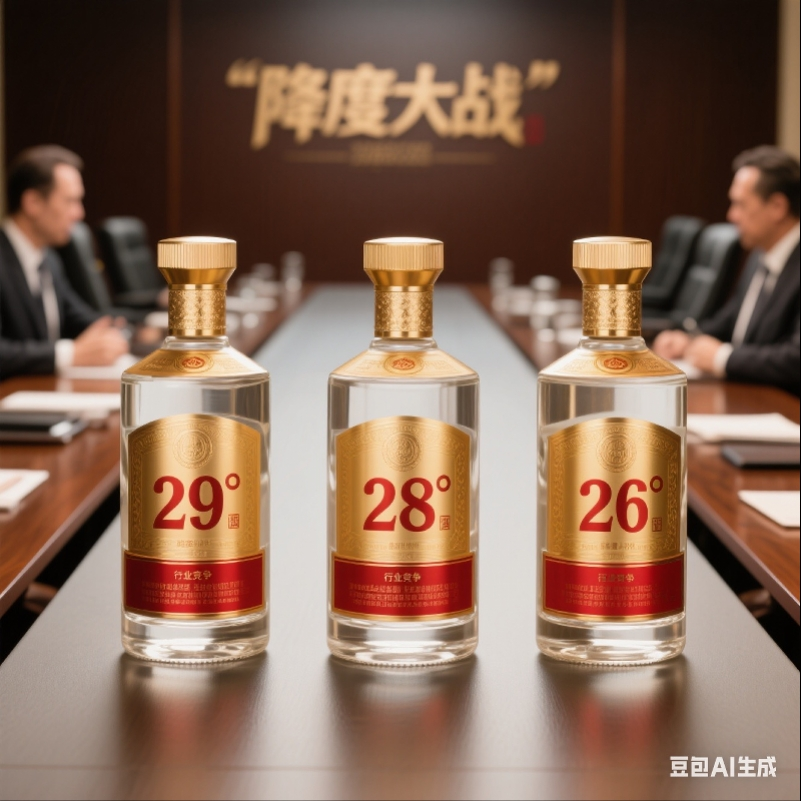
白酒巨头掀“降度大战”,年轻人会买账吗?
Hu Xiu· 2025-08-21 08:56
Core Viewpoint - The Chinese liquor industry is experiencing a trend towards low-alcohol products as companies seek to capture the younger consumer market and address declining sales in traditional high-alcohol offerings [8][9][11]. Group 1: Industry Trends - Major liquor companies, including Gujing Gongjiu, Shede Liquor, Wuliangye, and Luzhou Laojiao, are launching low-alcohol products to tap into the growing demand for lighter drinking options [8][9][10][11]. - The low-alcohol segment is seen as a potential growth area amid high inventory levels and declining sales in traditional high-end liquor [9][12][14]. - The shift towards low-alcohol products is part of a broader strategy to engage younger consumers, who prefer personalized and lower-alcohol options for social drinking [15][18][20]. Group 2: Company-Specific Developments - Gujing Gongjiu launched a new low-alcohol product, "Gujing Gongjiu·Nianfen Yuanjiang Qingdu Gu20," with an alcohol content of 26 degrees, targeting urban youth aged 25-35 [1][27]. - Shede Liquor is set to introduce its first low-alcohol, high-flavor aged liquor, "Shede Zizai," with an alcohol content of 29 degrees [2]. - Luzhou Laojiao has successfully developed a 28-degree version of its flagship product, Guojiao 1573, and is testing even lower alcohol variants [5][21]. Group 3: Market Challenges - The liquor industry is facing significant challenges, including high inventory levels and a lack of consumer demand, particularly for mid-range and high-end products [9][11][12]. - Companies are struggling to maintain pricing power as high-end liquors frequently experience price cuts, leading to concerns about brand value erosion [11][23]. - The acceptance of low-alcohol products at premium prices remains uncertain, as evidenced by Gujing Gongjiu's pricing strategy, which positions its new product at a high price point compared to traditional low-alcohol options [26][35].