
品类创新

Search documents
锅圈:业态升级助力26年业绩展望超预期-20260313
HTSC· 2026-03-13 07:25
Investment Rating - The report maintains a "Buy" rating for the company with a target price of HKD 6.05 [6][5]. Core Insights - The company reported a revenue of HKD 7.81 billion for 2025, representing a year-over-year increase of 20.7%, and a net profit of HKD 450 million, up 88.2% year-over-year [1]. - The company plans to open over 2,934 new stores in 2026, bringing the total to more than 14,500, with a strong focus on store efficiency and category innovation [1][4]. - The company has seen significant growth in its franchise sales, with a 16.6% increase in revenue to HKD 3.62 billion in the second half of 2025, and a net addition of 1,168 franchise stores [2]. - The gross margin for the second half of 2025 was 21.2%, with expectations for improvement in 2026 due to scale advantages and the production of proprietary products [3]. Summary by Sections Financial Performance - For 2025, the company achieved a core operating profit of HKD 460 million, a year-over-year increase of 48.2%, aligning with performance forecasts [1]. - The company expects a significant increase in core operating profit growth in 2026, outpacing revenue growth due to scale effects [4]. Store Expansion and Market Strategy - The company is accelerating its store openings, particularly in rural markets, with 1,004 new stores opened in these areas, accounting for 71% of total new openings in 2025 [2]. - The company has effectively utilized platforms like Douyin, achieving over 9.4 billion exposures and a 75.3% increase in retail revenue from promotional packages [2]. Profitability and Cost Management - The company has improved its sales expense ratio, which decreased by 0.8 percentage points to 8.7%, reflecting enhanced efficiency in advertising and marketing expenditures [3]. - The administrative expense ratio also fell by 0.6 percentage points to 5.6%, indicating better cost management as the company scales [3].
NIQ快消月报2025年12月-尼尔森IQ
Sou Hu Cai Jing· 2026-02-13 16:29
Core Insights - The fast-moving consumer goods (FMCG) market in 2025 showed a slight overall growth of 2.2% year-on-year, with non-food categories leading at a growth rate of 9.7%. However, December experienced a negative growth of -2.7%, indicating a year-end slowdown in consumer demand [5][6][19]. Market Overview - The overall FMCG market growth for 2025 was 2.2%, with non-food categories growing by 9.7%. In December, the growth rate turned negative at -2.7%, and e-commerce growth slowed to 3.4% [5][6]. - Online channels were the main growth driver, achieving a 16.7% increase for the year, while offline channels saw a decline across various formats, with convenience stores showing better resilience [7][10]. Channel Performance - Online platforms outperformed offline channels, with significant growth in comprehensive and content e-commerce. Offline channels, including hypermarkets and supermarkets, faced sales challenges [10][14]. - In terms of city-level performance, all tiers of offline markets experienced declines, with county and rural markets performing better than higher-tier cities [14][15]. Category Performance - Personal care emerged as the standout category with an annual growth rate of 11.5%, while snacks and dairy products saw declines. In December, baby food and snacks experienced significant drops, with staple grains and dairy also recording negative growth [2][19]. - The household care category is shifting from price competition to value competition, focusing on innovation to meet evolving consumer needs. Online channels for household care are diversifying, with platforms like Douyin, JD, and Alibaba showing varied growth [21][25]. Conclusion - The FMCG market in 2025 is characterized by structural adjustments in consumer demand and channel strategies, with a notable shift towards online sales and innovation in product offerings to cater to changing consumer preferences [1][2][19].


宠物行业专题十:品牌格局、品类创新、渠道变革
GF SECURITIES· 2026-02-01 10:41
Industry Rating - The investment rating for the agricultural, forestry, animal husbandry, and fishery industry is "Buy" [2] Core Insights - The pet industry is experiencing continuous growth driven by new pet owners and increased per capita spending on pets. The market size for urban pet consumption (dogs and cats) in China is projected to reach approximately 312.6 billion CNY in 2025, representing a year-on-year growth of 4% compared to 2024. The growth rates for cat and dog consumption are 5% and 3%, respectively [14][16] - The preference for domestic brands is on the rise, with brand competition remaining intense. By 2025, the preference for domestic brands in cat and dog food is expected to reach 38% and 35%, respectively, up from 16% and 20% in 2022. The market has seen significant changes over the past decade, influenced by various e-commerce and social media trends [25][35] - There is increasing competition in the baked food segment, with functional pet foods emerging as a potential growth area. Consumer preferences are shifting towards baked and freeze-dried foods, with functional foods expected to become a new trend in the industry [43][56] - The report emphasizes the importance of focusing on new retail channels, particularly instant retail, which is currently in a high-growth phase. The market share of major online platforms like Tmall, Taobao, JD, Douyin, and Pinduoduo is approximately 29%, 9%, 9%, and 10%, respectively [14][19] Summary by Sections Industry Overview - The pet industry is projected to grow, with the number of cat and dog owners increasing to approximately 42.14 million and 36.60 million, respectively, in 2025. The average annual spending per pet cat and dog is expected to be 2,085 CNY and 3,006 CNY, respectively [14][20] Brand Landscape - The competitive landscape is evolving, with domestic brands gaining market share. The top five brands in cat and dog food by usage rate in 2025 will predominantly be domestic brands, reflecting a shift in consumer preferences [25][30] Product Innovation - Consumer preferences are shifting towards baked and freeze-dried pet foods, with a notable decline in the preference for puffed foods. The report identifies functional pet foods as a key area for future growth, with specific health benefits being a major consideration for consumers [43][56] Channel Transformation - The report highlights the significance of instant retail channels, which are experiencing rapid growth. The integration of online and offline channels is seen as a critical factor for success in the pet industry [14][19] Investment Recommendations - The report suggests that the pet industry will continue to grow at a rate of 4% in 2025, driven by new pet owners and increased spending. It recommends focusing on companies with strong R&D capabilities and sales performance, such as Guobao Pet, Zhongchong Co., and Petty Co. [14][8]
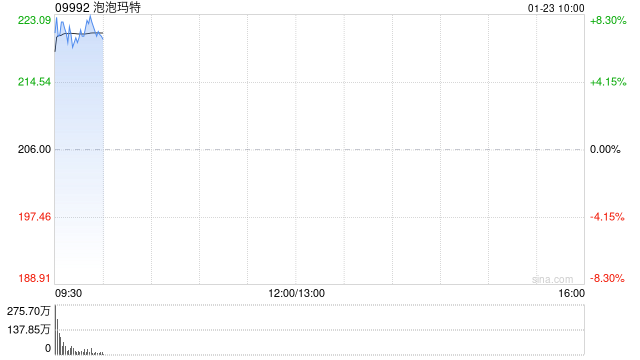
泡泡玛特早盘涨超7%近期公司多款新品热销 回购彰显成长信心
Xin Lang Cai Jing· 2026-01-23 02:01
Core Viewpoint - Pop Mart (09992) has seen a significant stock price increase of 7.18%, reaching HKD 220.8, with a trading volume of HKD 2.067 billion, driven by new product launches and share buybacks [1][4]. Product Launches - On January 22, Pop Mart's new PUCKY series electronic wooden fish plush blind box gained attention, transforming traditional wooden fish into plush toys that produce realistic sounds when tapped, focusing on emotional relief [1][4]. - The 2026 "Full Throttle" series plush blind box sold out within one minute of its online release [1][4]. - Additionally, the 2026 Valentine's Day limited edition blind box "Starry Person's Heartbeat" series was quickly sold out, marking the first Valentine's series product for the Starry Person brand [1][4]. Share Buybacks - Pop Mart has recently conducted share buybacks totaling nearly HKD 350 million, with the latest buyback transactions exceeding previous amounts, indicating the company's confidence in its growth prospects [1][4]. Operational Excellence - The company continues to enhance its store operations, scene atmosphere, and emotional experiences, demonstrating its long-term capabilities in IP innovation and category innovation, which are driving new IPs and gameplay to gain popularity [1][4].

郭晶晶代言的奶品巨头,要去港交所IPO了
Sou Hu Cai Jing· 2026-01-21 14:13
Core Viewpoint - Junlebao Dairy Group has submitted its application for a mainboard listing on the Hong Kong Stock Exchange, aiming to establish itself as the "third pole" in the competitive dairy market dominated by giants Yili and Mengniu [2][3]. Financial Performance - Junlebao's total revenue is projected to grow from RMB 175 billion in 2023 to RMB 198 billion in 2024, with RMB 151 billion achieved in the first nine months of 2025, indicating steady revenue growth [4]. - In comparison, Mengniu's revenue for 2024 is RMB 886.75 billion, while Yili's is RMB 1,153.93 billion, highlighting a significant gap in revenue between Junlebao and these industry leaders [5]. Market Position and Brand Recognition - Junlebao ranks as the third most recognized dairy brand in China, with a market share of only 4.3%, significantly trailing behind Yili and Mengniu [6][8]. - Despite being labeled as part of a "three-legged" competition, the financial scale and market share of Junlebao are not on par with the two giants, indicating a challenging path ahead [8]. Strategic Focus and Product Innovation - Junlebao has strategically avoided direct competition in the saturated milk market, focusing instead on low-temperature yogurt and infant formula, which has allowed it to carve out a niche [9]. - The "Jianchun" brand of low-temperature yogurt has gained traction due to its "zero sugar" positioning, aligning with consumer trends towards healthier options [10]. - In the fresh milk segment, Junlebao's "Yuexianhuo" product has achieved a market share of 24.0%, making it the leader in the high-end fresh milk market [10]. Supply Chain Management - Junlebao boasts a milk source self-sufficiency rate of 66%, the highest among major dairy companies in China, which mitigates the impact of external milk price fluctuations [13]. - The company has invested in breeding technology and has established a breeding company, ensuring lower costs and higher quality for its dairy products [16]. Industry Context and Future Outlook - The challenges faced by Junlebao reflect the broader transition of the Chinese dairy industry from scale expansion to high-quality development [16]. - The success of Junlebao's IPO could validate its differentiated competitive strategy and provide a new model for the industry [17].

沪上阿姨盘中涨超11% 预计2025年全年纯利同比增长最多60%
Xin Lang Cai Jing· 2026-01-20 02:33
Core Viewpoint - The company "沪上阿姨" (stock code: 02589) has seen a significant stock price increase following the release of its earnings forecast, indicating strong growth potential for the upcoming years [5]. Financial Performance - The company expects to achieve a net profit of between 495 million to 525 million yuan for the year 2025, representing a year-on-year growth of 50% to 60% [5]. - Adjusted net profit is projected to be between 560 million to 590 million yuan, with a year-on-year increase of 34% to 41% [5]. - For the second half of the year, the adjusted net profit is estimated to be between 320 million to 350 million yuan, reflecting a substantial year-on-year growth rate of 54.8% to 69.5% [5]. Growth Drivers - The rapid growth in the second half of the year is attributed to three main drivers: accelerated store expansion, improved same-store operational efficiency, and the realization of cost reduction and efficiency enhancement results [5]. - The company is expected to fully capitalize on the takeout delivery boom in 2025, with strong same-store growth anticipated [5]. - The management team's background in e-commerce and familiarity with platform strategies are seen as advantageous in capturing traffic from the competitive delivery market [5]. Future Outlook - The company is expected to enhance its user acquisition and retention capabilities, alongside gradual growth in coffee and breakfast offerings and ongoing product innovation [5]. - For 2026, the main brand's same-store performance is anticipated to maintain a certain level of resilience [5].
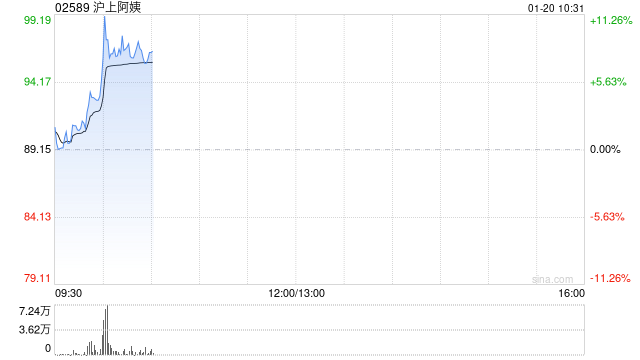
港股异动 | 沪上阿姨(02589)再涨超11% 25年业绩预告超预期 纯利同比增长最多60%
智通财经网· 2026-01-20 02:18
Core Viewpoint - The company,沪上阿姨, has seen a significant stock price increase of over 11%, with a current price of 96.15 HKD, driven by strong earnings forecasts for 2025 [1] Financial Performance - The company expects a net profit of 495 million to 525 million CNY for the full year of 2025, representing a year-on-year growth of 50% to 60% [1] - Adjusted net profit is projected to be between 560 million and 590 million CNY, indicating a year-on-year increase of 34% to 41% [1] Growth Drivers - Galaxy Securities estimates that the company will achieve an adjusted net profit of 320 million to 350 million CNY in the second half of the year, with a year-on-year growth rate of 54.8% to 69.5% [1] - The rapid growth in the second half is attributed to three main drivers: accelerated store expansion, improved same-store operational efficiency, and the release of cost reduction and efficiency enhancement results [1] Market Position and Future Outlook - GF Securities anticipates that the company will fully capitalize on the takeout delivery boom in 2025, with strong same-store growth [1] - The management's background in e-commerce and familiarity with platform strategies has positioned the company well to capture traffic from the competitive delivery market [1] - Looking ahead, the company is expected to enhance its user acquisition and retention capabilities, with potential growth in coffee and breakfast offerings, alongside continuous product innovation, suggesting resilience in same-store performance for the main brand in 2026 [1]
沪上阿姨(02589):同店与拓店共振,25年业绩预告略超预期
GF SECURITIES· 2026-01-18 14:46
Investment Rating - The investment rating for the company is "Buy" with a current price of HKD 87.20 and a fair value of HKD 121.32 [5]. Core Insights - The company is expected to benefit from both same-store sales growth and expansion, with a 2025 profit forecast slightly exceeding expectations. The projected net profit for 2025 is between RMB 4.95 billion and RMB 5.25 billion, representing a year-on-year growth of 50%-60% [7]. - The management's background in e-commerce has allowed the company to effectively capture the benefits of the takeaway market, enhancing user acquisition and retention capabilities. The main brand is expected to maintain resilience in same-store sales growth [7]. - The company has opened 905 new franchise stores and closed 645 in the first half of 2025, with a net increase of approximately 2,000 stores expected by the end of the year [7]. - The adjusted net profit forecasts for 2025, 2026, and 2027 are RMB 5.7 billion, RMB 6.6 billion, and RMB 7.7 billion, respectively, indicating a clear growth strategy [7]. Financial Summary - Revenue projections for the company are as follows: RMB 3.348 billion in 2023, RMB 3.285 billion in 2024, RMB 4.348 billion in 2025, RMB 4.917 billion in 2026, and RMB 5.719 billion in 2027, with growth rates of 52.3%, -1.9%, 32.4%, 13.1%, and 16.3% respectively [4][11]. - The EBITDA is expected to grow from RMB 610 million in 2023 to RMB 988 million in 2027, with corresponding growth rates of 52.3%, -1.9%, 32.4%, 13.1%, and 16.3% [4]. - Non-GAAP net profit is projected to increase from RMB 416 million in 2023 to RMB 775 million in 2027, with growth rates of 169.8%, 0.4%, 37.5%, 14.6%, and 17.7% [4][11]. - The company maintains a strong return on equity (ROE) of 49.6% in 2023, expected to decrease gradually to 29.8% by 2027 [4][11].
国泰海通|食饮:渠道变革,精酿崛起——啤酒行业专题报告
国泰海通证券研究· 2026-01-13 13:20
Core Insights - The article highlights the transformation in beer demand, indicating that the domestic craft beer market has significant growth potential, with leading breweries likely to benefit from this trend [1][2] - The new retail model is expected to facilitate regional breweries in overcoming market disadvantages and breaking through sales ceilings for individual products [1] - The beer industry may have entered a new normal of stock competition, emphasizing the importance of category and channel changes as structural opportunities [1] Category Insights - The rise of craft beer is seen as a major opportunity driven by generational shifts in consumer preferences, with the current penetration rate of craft beer in China estimated at around 3%, compared to 5-15% in developed countries [2] - The craft beer market is expected to experience limited concentration in the medium term, with supply chains and budget markets gravitating towards leading brands, while flavor innovation and niche markets may still be dominated by smaller brands [2] - Major breweries are positioned to fully capitalize on the craft beer trend, as there are no strict regulations in China regarding the scale and independence of craft breweries, allowing larger companies to compete effectively [2] Channel Insights - The new retail channels for beer have grown rapidly, driven by consumer demands for convenience, rationality, and differentiation, with the current sales volume in new retail channels estimated at approximately 30 billion yuan and a penetration rate of about 6% [3] - New retail is expected to accelerate channel equality, diminishing the traditional advantages of leading breweries and enabling regional breweries to expand in weaker markets [3] - Despite the rise of new channels, established brands, especially in the mid-to-high-end beer segment, still hold significant competitive advantages due to brand recognition, quality control, and scale effects [3] Investment Recommendations - The short-term outlook for the beer industry is under pressure, but there are opportunities for growth through category innovation and channel transformation [3] - It is recommended to increase holdings in strong regional breweries that can enhance market share and exhibit robust earnings elasticity, as well as in industry leaders with ongoing premiumization, stable performance, and attractive dividend yields [3]


国泰海通:短期啤酒行业景气度承压 建议增持强α区域酒企及行业龙头
Zhi Tong Cai Jing· 2026-01-13 02:25
Core Insights - The beer industry in China is entering a new phase of competition, focusing on structural opportunities arising from category and channel innovations [2] - The demand for beer is gradually declining, with a projected slowdown in average selling price (ASP) growth for leading companies to 0.4% in 2024 due to lower-than-expected demand recovery and inflation [2] - The craft beer segment is emerging as a key trend, with an estimated penetration rate of approximately 3% in China, compared to 5-15% in developed countries [3] Category Innovation - The generational shift among consumers is creating significant opportunities for category innovation in the beer market, particularly in craft beer [3] - The craft beer landscape is expected to see limited concentration in the mid-term, with small brands leading flavor innovation and niche markets [3] - Major breweries are likely to benefit from the craft beer trend, as they are not bound by the same scale and independence requirements as craft breweries in Europe and the U.S. [3] Channel Transformation - The rapid growth of new retail channels is driven by consumer demands for convenience, rationality, and differentiation, with new retail beer sales estimated at around 30 billion yuan and a penetration rate of approximately 6% [4] - New retail is leveling the playing field, allowing regional breweries to gain market share in weaker markets and providing opportunities for small breweries to utilize excess capacity through OEM [4] - Despite the rise of new retail, established brands still hold significant competitive advantages in terms of brand recognition, quality control, and scale, which can help them maintain or increase market share [4]
