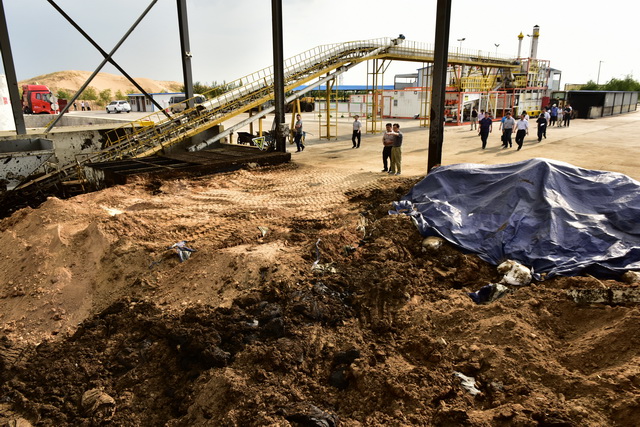
建筑垃圾

Search documents
我国首个针对固废综合治理专项文件出炉
Mei Ri Jing Ji Xin Wen· 2026-01-14 12:21
Core Viewpoint - The "Comprehensive Solid Waste Management Action Plan" aims to establish a systematic approach to solid waste management in China, addressing key issues and promoting a shift from end-of-pipe treatment to a holistic prevention strategy [1] Group 1: Action Plan Overview - The Action Plan outlines the overall strategy, work objectives, key tasks, and support measures for solid waste management, integrating existing management methods across various sectors [1] - It emphasizes a problem-oriented approach and aims to enhance the effectiveness of solid waste management through comprehensive policy measures [1] Group 2: Resource Utilization and Circular Economy - The Action Plan aims to improve the resource utilization efficiency of solid waste, promoting the development of a circular economy [2] - It follows the principles of "reduction, resource utilization, and harmlessness," highlighting the resource attributes of solid waste [2] - Specific measures include source reduction, process control, and resource utilization to create sustainable business models and leverage market forces [2][3] Group 3: Specific Measures for Solid Waste Management - Strengthening comprehensive utilization by directly using industrial, construction, agricultural solid waste without altering their properties [3] - Encouraging the extraction of valuable components from waste products through detailed disassembly and promoting the development of the remanufacturing industry [3] - Promoting the application of recycled materials through institutional and market incentives, establishing standards and certification for recycled materials [3] Group 4: Future Planning and Goals - The National Development and Reform Commission will lead the formulation of the "14th Five-Year Plan" for circular economy development, focusing on key areas and improving resource utilization efficiency [4] - The plan aims to support green and low-carbon transitions and enhance resource security [4] Group 5: Industrial Solid Waste Management - The focus will be on reducing the intensity of industrial solid waste generation through green design and manufacturing practices [6] - The plan encourages the construction of "waste-free" parks and enterprises to lower waste generation and improve the usability of solid waste [6] - It also emphasizes the importance of enhancing the comprehensive utilization of industrial solid waste, particularly in sectors like steel and non-ferrous metals [6][7]
锐财经|固废综合治理能力再提升
Ren Min Ri Bao Hai Wai Ban· 2026-01-14 06:06
Core Viewpoint - The article discusses the release of the "Solid Waste Comprehensive Management Action Plan" by the State Council, which aims to strengthen solid waste management in China as part of the country's green transformation efforts. The plan emphasizes a comprehensive management system based on reduction, resource utilization, and harmless disposal of solid waste [1][2]. Group 1: Overall Strategy and Goals - The "Action Plan" outlines the overall strategy, work objectives, key tasks, and supporting measures for solid waste management in the coming years, addressing prominent issues in solid waste governance with systematic and integrated policy measures [2]. - By 2030, the plan aims for significant improvements in solid waste management, including controlling historical stockpiles, curbing illegal dumping, achieving a comprehensive utilization of 4.5 billion tons of major solid waste, and recycling 510 million tons of main renewable resources annually [2]. Group 2: Sector-Specific Management - In agriculture, the plan highlights the challenges of managing solid waste, with current utilization rates for livestock waste at 80.1%, straw at over 88%, and agricultural film disposal at over 85%. The Ministry of Agriculture will enhance guidance on the scientific use of agricultural film and promote resource utilization of livestock waste [4]. - In urban areas, the plan addresses the large amounts of construction waste generated by urbanization, with the Ministry of Housing and Urban-Rural Development focusing on promoting green construction and improving waste management practices [4]. - For industrial waste, the plan emphasizes controlling the generation and historical stockpiles of industrial solid waste, with the Ministry of Ecology and Environment aiming to explore new channels for large-scale utilization and gradually reduce both new and accumulated waste [5]. Group 3: Promoting Circular Economy - The "Action Plan" aims to enhance resource utilization levels and leverage market forces to promote the development of a circular economy, emphasizing the principles of reduction and resource utilization [6]. - Specific requirements are set for the source reduction, process control, and resource utilization of solid waste, encouraging sustainable business models [6]. - The plan also focuses on the extraction and utilization of valuable components from industrial and agricultural solid waste, promoting the recycling of various materials and the development of remanufacturing industries [6]. Group 4: Future Planning - The National Development and Reform Commission will lead the formulation of the "14th Five-Year Plan" for circular economy development, setting clear goals and tasks for key areas of recycling and utilization of solid waste [7].
到2027年,这些地区要完成存量磷石膏库整治
Zhong Guo Hua Gong Bao· 2026-01-06 11:26
Core Viewpoint - The State Council has issued the "Solid Waste Comprehensive Governance Action Plan," aiming for significant improvements in solid waste management by 2030, including a target of 4.5 billion tons of annual comprehensive utilization of major solid waste and 510 million tons of annual recycling of main renewable resources [1][4]. Group 1: Overall Requirements - The plan emphasizes a systematic approach to solid waste management, focusing on reduction, resource utilization, and harmless treatment, with a goal to effectively control historical solid waste stockpiles and curb illegal disposal practices by 2030 [4][3]. Group 2: Source Control and Reduction - The plan mandates strict source reduction of industrial solid waste, promoting green design and improved production processes to lower waste generation intensity [5][6]. - It also calls for the implementation of source control measures for urban solid waste, including the classification and reduction of construction waste [6][5]. Group 3: Standardized Collection, Transportation, and Storage - The plan requires the establishment of a standardized management system for industrial solid waste, including classification and tracking to prevent mixing and illegal disposal [7][6]. - It emphasizes the need for improved collection and transportation systems for urban solid waste, integrating recycling networks with waste collection points [7][6]. Group 4: Resource Utilization Enhancement - The plan aims to enhance the comprehensive utilization of major solid waste, including mining waste and construction debris, and to promote the recycling of agricultural waste [8][9]. - It encourages the development of a circular economy by improving the recycling of renewable resources and promoting the use of recycled materials in production [8][9]. Group 5: Increasing Harmless Treatment Capacity - The plan focuses on improving the harmless treatment of industrial solid waste and optimizing the structure of waste disposal methods, including the construction of incineration facilities [9][10]. - It also explores large-scale disposal channels for industrial solid waste, ensuring compliance with environmental standards [9][10]. Group 6: Implementation of Key Area Special Rectification - The plan outlines specific rectification efforts in areas such as illegal disposal, environmental hazards from landfills, and historical solid waste sites, aiming for the remediation of over 60% of historical waste sites by 2030 [10][11]. - It includes targeted actions for the comprehensive management of phosphogypsum, with specific timelines for remediation in various provinces by 2027 [12][11]. Group 7: Regulatory and Technical Framework - The plan emphasizes the need to improve legal frameworks and standards related to solid waste management, including the revision of existing laws and the establishment of new regulations [14][15]. - It also highlights the importance of technological innovation in solid waste recycling and pollution control [14][15]. Group 8: Policy Support - The plan calls for enhanced land use policies to support solid waste management projects and encourages financial support for resource recycling initiatives [15][16]. - It promotes the establishment of a reasonable pricing mechanism for waste management services to incentivize recycling and waste reduction [16][15]. Group 9: Strengthening Implementation Assurance - The plan stresses the importance of organizational leadership and accountability at all levels of government to ensure effective implementation of solid waste management strategies [17][16]. - It encourages public education and international cooperation to foster a culture of waste reduction and recycling [17][16].
固体废物综合治理行动怎么干?专家提出处置“四原则”
Di Yi Cai Jing· 2025-12-24 03:34
Group 1 - The core viewpoint emphasizes the need for a comprehensive governance strategy and supporting policy system for solid waste management to curb the growth of solid waste in China [1] - The State Council has initiated a solid waste comprehensive governance action plan, focusing on enhancing infrastructure for harmless storage, transportation, and disposal, while promoting resource utilization and circular economy development [1][2] - Solid waste, heavy metal pollution, and new pollutants management are crucial for advancing the construction of a beautiful China, with current challenges including a lack of scientific assessment indicators and insufficient policy support [1][2] Group 2 - China's solid waste generation exceeds 11 billion tons annually, with over 33 billion tons of industrial solid waste stored historically, posing ecological risks [2] - Recent investigations revealed over 20 environmental violations related to solid waste in 109 cities, primarily concerning illegal dumping of construction waste [2] - The need for a strategic plan for solid waste governance is highlighted, as the current economic development stage presents new challenges and changes in solid waste disposal [4][5] Group 3 - The growth rate of hazardous waste generation has slowed since 2019, indicating a shift in the solid waste disposal industry that necessitates a reform in management practices [5] - The demand for recycled building materials has decreased, suggesting that the management of large solid waste types should adapt to market supply and demand changes [5] - Effective management of solid waste requires a coordinated approach, including national and local planning, and the establishment of a comprehensive regulatory framework [6]