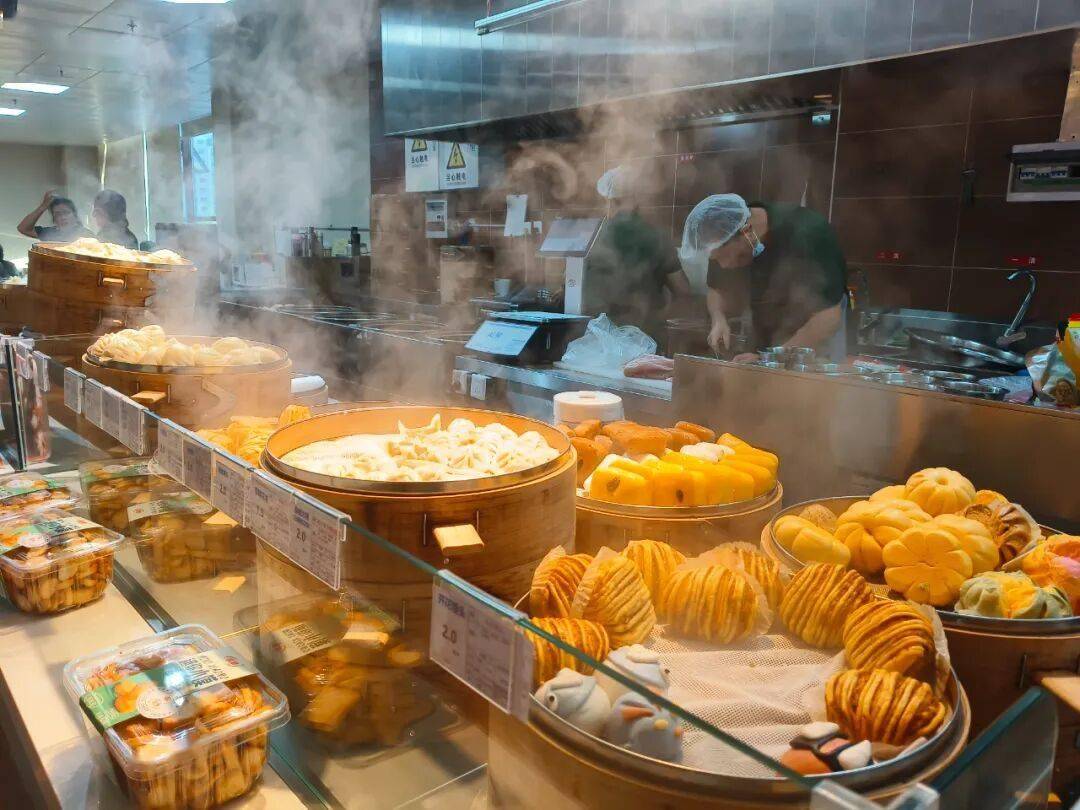
主食

Search documents
春节吃喝不“踩坑”!这些误区要避开
Xin Hua Wang· 2026-02-16 02:22
Core Viewpoint - The article emphasizes the importance of maintaining healthy eating habits and medication adherence during the Chinese New Year holiday to prevent health issues related to irregular diets and lifestyle changes [1]. Group 1: Dietary Recommendations - During the holiday, it is common for people to drink alcohol, but certain medications like cephalosporins and metronidazole can cause severe reactions when combined with alcohol, leading to shock or even death. It is advised to avoid alcohol for seven days before and after taking these medications [1]. - Experts recommend a healthy eating sequence during festive meals: starting with light soup to signal the stomach, followed by leafy vegetables to slow down the absorption of fats and sugars, then meat, and finally carbohydrates, potentially reducing the amount of staple food consumed [3]. - Leftover vegetables, especially leafy greens, should not be stored for more than 24 hours due to increased nitrite levels, which cannot be eliminated by cooking. It is advised to refrigerate leftovers while still warm to prevent bacterial growth [3]. Group 2: Food Safety and Storage - The presence of Listeria bacteria in refrigerated food poses a significant risk, as it can grow at cold temperatures. Leftovers must be thoroughly reheated to a core temperature of over 70°C for at least three minutes to eliminate this and other pathogens [3]. - Long-term medication users, particularly those with chronic conditions, should not stop their medications during the holiday. For instance, stopping medication for hypertension can lead to dangerous fluctuations in blood pressure, increasing the risk of cardiovascular events [4]. - Diabetic patients are advised to monitor their blood sugar levels more frequently during the holiday due to potential lifestyle changes that can cause significant fluctuations [4].

金融赋能消费市场“稳产保供”
Jin Rong Shi Bao· 2026-01-29 05:07
Core Insights - Agricultural Bank of China (ABC) is actively supporting small and micro enterprises in Huai'an to ensure stable supply during the festive season, providing timely financial assistance to meet increased demand [1][2][3][4] Group 1: Financial Support to Small Businesses - ABC provided a loan of 2 million yuan to Jiangsu Huai'an Caikuo Food Co., Ltd. to help secure inventory for the busy sales season [1] - Jiangsu Feng'an Catering Service Company received 6 million yuan in credit support from ABC to prepare for the peak demand for catering services during the New Year [2] Group 2: Market Engagement and Service Initiatives - ABC established youth and party member teams to engage with local markets, understanding customer needs and promoting financial services tailored to small businesses [3] - The bank implemented a green channel for small businesses to facilitate financing, utilizing preferential policies to enhance approval efficiency and meet diverse financing needs during the festive period [3] Group 3: Financial Performance and Impact - In just 20 days of the New Year, ABC disbursed inclusive financial loans to 2,814 clients, totaling 1.565 billion yuan [4] - ABC aims to enhance the accessibility of inclusive finance, supporting the integration of production, supply, and sales, and driving the "Spring Festival economy" [4]

在这个时间吃饭,真的瘦得快!很多人都不知道
Xin Lang Cai Jing· 2026-01-03 00:40
Group 1 - The core idea emphasizes that effective weight management is not solely about reducing food intake but rather about adopting a scientific approach to diet [1] Group 2 - Breakfast is recommended to be consumed before 8:00 AM, as insulin sensitivity is higher in the morning, leading to better energy conversion from carbohydrates [2] - A 12-week study indicates that those who eat breakfast earlier (6:30-7:00 AM) lose more weight compared to those who eat later (7:00-9:00 AM) [2] Group 3 - Lunch should ideally be eaten between 12:30 PM and 1:30 PM; late lunch eaters experience a 35% reduction in weight loss effectiveness under the same caloric intake [3] - Observational studies show that individuals who habitually eat lunch after 2:00 PM tend to have higher BMI and waist circumference [3] Group 4 - Dinner is best scheduled between 6:00 PM and 7:00 PM, with a maximum cutoff at 8:00 PM, as insulin sensitivity decreases after 7:00 PM, leading to higher chances of fat storage [4] Group 5 - The ideal eating sequence is soup → vegetables → protein → carbohydrates [5] Group 6 - Soup should be low-calorie and low-fat; vegetables are low in calories and fats while rich in dietary fiber, minerals, and vitamins, enhancing satiety [6] - Protein sources such as meat, beans, dairy, and eggs provide sufficient satiety [7] - Consuming carbohydrates last helps in controlling their intake [8]
四大控糖“陷阱” 你掉进几个
Bei Jing Qing Nian Bao· 2025-12-02 01:28
Core Viewpoint - The article discusses common misconceptions about sugar control diets and emphasizes the importance of understanding food labels and nutritional content for individuals managing their blood sugar levels [1] Group 1: Misconceptions about Sugar Control - Misconception 1: Consuming "sugar-free" foods is completely safe. "Sugar-free" only indicates sugar content ≤0.5g/100g, but these foods may still contain starch and sugar alcohols that can raise blood sugar levels [2] - Misconception 2: Avoiding staple foods will lower blood sugar. Not consuming staple foods can lead to low blood sugar, nutrient imbalance, and muscle loss, ultimately making weight control more difficult [3][4] Group 2: Fruit Consumption and Alcohol Intake - Misconception 3: Diabetics should not eat fruit. Fruits provide essential vitamins and fiber, and when consumed wisely, can aid in blood sugar management. It is important to choose low glycemic index fruits and control portion sizes [5][6] - Misconception 4: Stable blood sugar allows for increased alcohol consumption. Alcohol can significantly impact blood sugar levels and may lead to complications. It is recommended that diabetics limit alcohol intake and avoid drinking on an empty stomach [7]
十月稻田(09676.HK)Q3经营利润约1.35亿元至1.5亿元 同比增长约71.5%至90.5%
Ge Long Hui· 2025-10-31 12:01
Core Viewpoint - The company, 十月稻田, is poised for significant growth driven by health and convenience food trends, with strategic initiatives in product diversification and channel expansion [1] Financial Performance - For the third quarter of 2025, the company expects revenue to be approximately RMB 1.74 billion to RMB 1.82 billion, representing a year-on-year growth of about 25.7% to 31.5% compared to the third quarter of 2024 [1] - The operating profit for the same period is projected to be around RMB 135 million to RMB 150 million, reflecting a year-on-year increase of approximately 71.5% to 90.5% compared to the third quarter of 2024 [1] Strategic Initiatives - The company is focusing on a "main food + leisure food" strategy, enhancing brand momentum through integrated marketing activities during the "new rice season" [1] - There is an accelerated expansion into modern supermarket systems and direct customer channels, along with a strategic layout for instant retail platforms to seize market opportunities and drive sustained growth [1]
国家粮食和储备局:“十四五”期间粮食产业规模、效益齐头并进
Xin Hua Cai Jing· 2025-10-14 05:26
Core Insights - The high-quality development of the grain industry during the 14th Five-Year Plan period is characterized by simultaneous growth in scale and efficiency, with innovative policy support and implementation mechanisms [1][2] Group 1: Financial Support and Investment - The Ministry of Finance and the National Grain and Material Reserve Bureau have initiated projects to enhance grain circulation quality and efficiency, focusing on major grain-producing counties [2] - As of September 2023, local governments have allocated 46.2 billion yuan in fiscal funds, attracting over 84 billion yuan in social investment, leading to the implementation of more than 8,400 projects [1] - The first batch of support for 40 major grain-producing counties includes over 270 projects, driving total investment close to 10 billion yuan [2] Group 2: Policy Implementation and Equipment Upgrades - The use of ultra-long-term special government bond funds is aimed at promoting new equipment for processed grain oil, staple foods, feed processing, and comprehensive utilization of grain deep processing and by-products [1][2] - Significant progress has been made in updating grain and oil processing equipment, with specific machinery like grain dryers and color sorters included in agricultural machinery subsidy programs [2] Group 3: Future Planning and Strategic Goals - The planning for the 15th Five-Year Plan for grain circulation is underway, with a focus on optimizing industrial structure, extending the industrial chain, and enhancing the value chain [3] - The goal is to strengthen policy implementation and project execution to assist enterprises in overcoming challenges and promote high-quality development in the grain industry [3]
一位超市老板的自述:5年亏下500万,终于把加工做到净利率8%
Sou Hu Cai Jing· 2025-09-29 03:18
Core Insights - The article discusses the journey of a supermarket owner in Beijing, Zhao Yulong, who has spent eight years exploring the processing sector, sharing experiences and insights to help industry peers [2] - The processing segment is crucial for supermarkets to differentiate themselves and attract customers, especially in a competitive market [5][10] Group 1: Challenges in Processing - Transitioning from outsourcing to self-operated processing proved to be difficult due to a lack of skilled personnel and operational mechanisms [4][12] - The company faced significant financial losses, amounting to approximately 5 million yuan over five years, as the processing segment struggled to generate profits [5][14] - The pandemic exacerbated existing challenges, leading to a decline in store sales by about 8% to 10%, which was better than the industry average but still concerning [5] Group 2: Strategic Shifts and Improvements - After a period of reflection, the owner decided to take direct control of the processing operations, leading to a notable improvement in profitability, with a net profit margin reaching 8% [5][16] - The company restructured its organizational framework and shifted its performance evaluation from gross margin to sales, significantly boosting employee motivation and productivity [16][17] - The introduction of high-quality raw materials and a focus on authentic flavors helped enhance product quality and customer satisfaction [20][21] Group 3: Recommendations for Industry Peers - Establishing a robust organizational structure is essential for effective processing management, requiring leaders who understand both the business and the needs of the team [22][24] - Clear product categorization and regular updates based on market trends are necessary to maintain customer interest and drive sales [24][25] - Daily operational management should focus on optimizing product availability during peak hours while ensuring quality and minimizing waste [28]
2025国际消费大会:社区便民生活圈连锁化率明显提升
Jing Ji Guan Cha Wang· 2025-09-11 04:11
Group 1 - The 2025 China International Service Trade Fair has commenced, highlighting the accelerated development of the "15-minute convenient living circle" across the country, with 5,188 community service circles established by the end of 2024, serving 118 million residents [1] - The "15-minute convenient living circle" aims to meet residents' daily and quality consumption needs within a 15-minute walking radius, covering 79% of cities above the prefecture level and 13,600 communities, with a total of 1.371 million commercial outlets [1] - The overall satisfaction rate among residents in these living circles exceeds 93% [1] Group 2 - The report indicates a significant increase in the chain development within community living circles, with a chain rate of 26.9% by the end of 2024, up from 21% in the same period of 2023, marking an increase of approximately 6 percentage points [2] - The eastern region has the highest chain rate at 32%, with a notable increase of 7.3 percentage points compared to the previous year [2] Group 3 - Major companies are actively expanding into community commerce, with Haidilao opening its first community store in Beijing, which offers a variety of food services and operates from 6 AM to 3 AM, catering to diverse consumer needs [3] - Walmart has announced the opening of its first community store in Shenzhen, marking a shift in its strategy after previously scaling back its community business, with four community stores opened in just eight months [3] - Alibaba's Hema has also prioritized the development of community stores, with nearly 300 locations established, focusing on smaller store formats that align with consumer lifestyles [4] Group 4 - The report suggests extending the convenient living circles from major cities to eligible county towns and developing a multi-layered, diversified service system to meet the needs of all age groups, particularly focusing on services for the elderly and children [4]



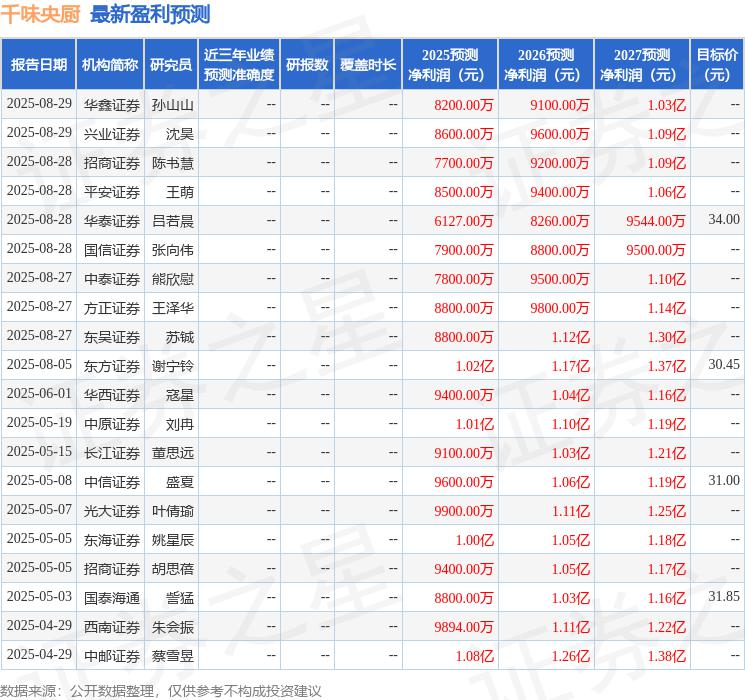
千味央厨(001215):经营承压 修复在途
Xin Lang Cai Jing· 2025-09-01 00:47
Core Insights - The company reported a decline in revenue and net profit for the first half of 2025, with total revenue of 889 million yuan, down 0.7% year-on-year, and a net profit attributable to shareholders of 40 million yuan, down 39.7% year-on-year [1] - The sales of traditional products are under pressure, while the pre-prepared food segment is experiencing rapid growth [1] Revenue Breakdown - In H1 2025, revenue from staple foods, snacks, baked goods, and frozen prepared dishes was 410 million, 200 million, 210 million, and 70 million yuan respectively, with year-on-year changes of -9.1%, -6.6%, +11.0%, and +67.3% [1] - The decline in staple and snack categories is attributed to market competition and product lifecycle issues, while the growth in baked goods is due to product adjustments for key clients [1] Channel Performance - Direct sales in H1 2025 generated 430 million yuan, an increase of 5.3% year-on-year, while distribution sales decreased by 6.4% to 450 million yuan [2] - The top five clients contributed revenues of 190 million, 50 million, 40 million, 30 million, and 3 million yuan, with varying year-on-year performance [2] Profitability Metrics - The company's gross margin for H1 2025 was 23.6%, a decrease of 1.6 percentage points year-on-year, primarily due to an increase in low-margin business [3] - The net profit margin for H1 2025 was 4.0%, down 2.6 percentage points year-on-year, with a non-GAAP net profit margin of 3.9%, down 2.7 percentage points [4] Future Projections - Revenue projections for 2025-2027 are 1.89 billion, 2.00 billion, and 2.10 billion yuan, with year-on-year growth rates of 1.1%, 5.4%, and 5.5% respectively [4] - Expected net profits for the same period are 80 million, 90 million, and 100 million yuan, with a projected decline in 2025 followed by growth in subsequent years [4]
民生证券:给予千味央厨买入评级
Zheng Quan Zhi Xing· 2025-08-31 23:40
Core Viewpoint - Qianwei Yangchun (千味央厨) reported a decline in revenue and net profit for the first half of 2025, indicating operational pressure but potential for recovery in the future, with a "buy" rating suggested by Minsheng Securities [1][2]. Financial Performance - For H1 2025, the company achieved revenue of 0.89 billion yuan, a year-on-year decrease of 0.7%, and a net profit attributable to shareholders of 0.04 billion yuan, down 39.7% year-on-year [2]. - In Q2 2025, revenue was 0.42 billion yuan, a decline of 3.1% year-on-year, with a net profit of 0.01 billion yuan, down 42.1% year-on-year [2]. Product Performance - Revenue from staple foods, snacks, baked goods, and frozen prepared dishes showed mixed results, with staple foods and snacks declining due to market competition and product lifecycle issues, while frozen prepared dishes grew significantly by 67.3% [2]. - The company is focusing on customized prepared dishes for key clients, contributing to revenue growth in the frozen prepared dishes category [2]. Channel Performance - Direct sales revenue increased by 5.3% year-on-year to 0.43 billion yuan, while distribution revenue decreased by 6.4% to 0.45 billion yuan due to intensified market competition [3]. - The top five clients contributed varying revenue changes, with the largest client generating 0.19 billion yuan, a slight increase of 0.3% [3]. Profitability and Costs - The gross profit margin for H1 2025 was 23.6%, down 1.6 percentage points year-on-year, attributed to an increase in low-margin business [4]. - Operating expenses increased, with selling expenses rising to 6.9% of revenue, reflecting higher personnel and online marketing costs [4]. Future Outlook - Revenue projections for 2025-2027 are estimated at 1.89 billion yuan, 2.00 billion yuan, and 2.10 billion yuan, respectively, with a slight growth forecast [4]. - Net profit forecasts for the same period are 0.08 billion yuan, 0.09 billion yuan, and 0.10 billion yuan, indicating a potential recovery in profitability [4].