新型透明光伏车身

Search documents
柔性晶硅-钙钛矿叠层电池效率再获突破 车载光伏商业化加速
Zheng Quan Ri Bao· 2025-11-27 02:29
Core Insights - Longi Green Energy has achieved a significant breakthrough in silicon-based tandem solar cell technology, with a certified efficiency of 29.8%, marking the first authoritative record for this type of cell globally [1][2] - The development of flexible silicon-perovskite tandem solar cells is expected to facilitate commercial applications in lightweight, high-power photovoltaic scenarios such as space and automotive solar energy [1][2] Group 1: Technological Advancements - The research team has successfully reduced the thickness of silicon wafers to 60 micrometers, allowing for flexibility without breaking at a bending radius of less than 2 centimeters [2] - An innovative "loose and dense" dual-layer buffer structure has been developed to address the challenges of mechanical stress and efficient charge transfer, enhancing the performance of the tandem cells [2] - Laboratory tests have shown that the small-area devices of the ultra-thin silicon-perovskite tandem solar cells have achieved an efficiency of 33.4%, certified by the National Renewable Energy Laboratory (NREL) [2] Group 2: Market Implications - The achievement of 30% efficiency is seen as a critical point for the large-scale commercialization of automotive solar energy, potentially transforming vehicles from energy consumers to mobile power stations [3] - Automotive companies like BYD and Changan are actively promoting solar energy integration in vehicles, with BYD's solar roof technology achieving a conversion efficiency of 23.18% and Changan's transparent solar body technology providing daily energy replenishment [4] - The collaboration between Longi Green Energy and academic institutions is expected to accelerate the commercialization of vehicle-mounted solar energy, with projections for widespread applications in logistics, cold chain, and emergency power supply [5]

汽车会飞行 车衣能充电
Bei Jing Wan Bao· 2025-09-07 07:43
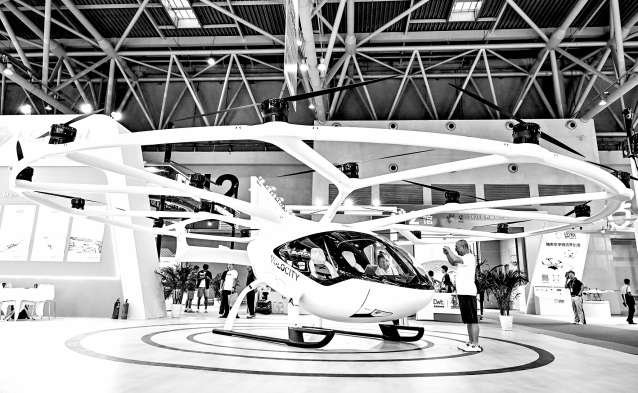
Core Insights - The 2025 World Intelligent Industry Expo is currently being held in Chongqing, focusing on intelligent connected new energy vehicles with over 150 participating automotive companies [1] Group 1: New Technologies in Transportation - A "flying car" showcased at the expo features a lightweight design using carbon fiber and aluminum, with a maximum takeoff weight of 620 kg, enhancing energy efficiency and range [4] - The flying car can reach a maximum speed of 130 km/h, with a flight duration of 25 minutes and a range of 30 km on a single charge [4] - A portable flying backpack that can be assembled in about ten minutes was also presented, capable of carrying 100 kg and allowing for automatic flight with the use of a smart helmet and glasses [5] Group 2: Advancements in AI and Safety - Changan Automobile demonstrated a vehicle that can automatically adjust air conditioning, activate seat massage, and play soft music based on voice commands, showcasing advancements in humanized interaction through AI [7] - A new battery collision monitoring system was introduced, providing real-time damage assessment and alerts to enhance safety [7] - The concept of automotive safety has expanded from traditional aspects to include data security, reflecting the rapid development of intelligent connected technologies [7] Group 3: Innovations in Energy and Sustainability - A new transparent photovoltaic body technology was unveiled, allowing vehicles to generate energy while driving, with a daily energy replenishment range of 20 to 50 km [8] - The integration of AI, materials, and energy technologies is driving the evolution of vehicles, positioning them as vital components in the development of smart cities [8]

更聪明 更安全 更开放——从智博会看智能网联新能源汽车新趋势
Xin Hua Wang· 2025-09-06 11:12
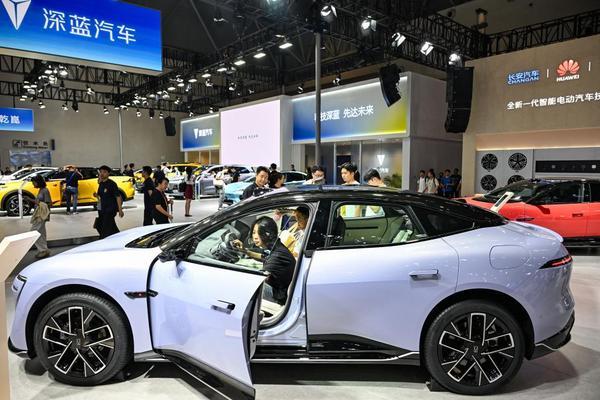
Core Insights - The automotive industry is rapidly evolving with the integration of AI technologies, enhanced safety measures, and cross-industry collaborations showcased at the 2025 World Intelligent Industry Expo in Chongqing [1][2][3] Group 1: AI Empowerment - AI large models are enabling smarter vehicle interactions, allowing cars to respond to user commands for adjusting settings like air conditioning and seat massage [2] - The introduction of multimodal large model technology is giving vehicles emotional perception capabilities, enabling real-time monitoring of driver emotions and automatic adjustments to the car's environment [2] - The penetration rate of L2 and above assisted driving functions in China's new energy passenger vehicles reached 82.6% in the first half of the year [2] Group 2: Safety Enhancements - New battery collision monitoring systems are being developed to provide precise damage assessment and warnings, addressing safety concerns related to battery fires and explosions [5] - The release of mandatory national standards for electric vehicle battery safety has upgraded safety requirements, with innovations from various automakers to enhance battery safety [5][6] - Privacy protection measures are being implemented in vehicles, including local processing of biometric data and user control over data sharing [6] Group 3: Open Ecosystem - The "Human-Car-Home" ecosystem is moving towards large-scale implementation, allowing users to control home devices from their vehicles [3] - The automotive industry is focusing on the deep integration of AI with terminal devices, particularly in smart cockpits [3] - The introduction of innovative technologies like transparent photovoltaic car bodies demonstrates the industry's commitment to breaking traditional barriers and fostering collaborative innovation [9] Group 4: Intelligent Transportation - The integration of smart traffic systems with autonomous vehicles is being piloted in 20 cities, enhancing traffic management and safety [10] - The future vision includes vehicles as integral components of smart cities, contributing to mobile computing and energy storage [10]

财经聚焦丨更聪明 更安全 更开放——从智博会看智能网联新能源汽车新趋势
Xin Hua Wang· 2025-09-06 10:53
Core Insights - The automotive industry is evolving with smarter, safer, and more open technologies showcased at the 2025 World Intelligent Industry Expo in Chongqing [1] Group 1: Smarter Technologies - AI large models are enhancing smart interactions in vehicles, allowing for personalized responses to user commands [3] - The integration of multimodal large model technology enables vehicles to develop "emotional perception" capabilities, adjusting settings based on the driver's emotional state [3] - The penetration rate of L2 and above assisted driving functions in new energy passenger vehicles in China reached 82.6% in the first half of the year [3] Group 2: Safety Enhancements - New battery collision monitoring systems provide real-time damage assessment, addressing safety concerns related to battery fires and explosions [7] - The introduction of mandatory national standards for electric vehicle battery safety has been implemented, enhancing safety requirements [7] - Various automakers are innovating battery technologies to prevent fires and improve safety, such as the "Golden Shield" battery technology from Changan [7][8] Group 3: Open Ecosystem - The development of a "new transparent photovoltaic body" technology allows vehicles to generate energy while driving, showcasing the integration of AI, materials, and energy technologies [9] - The automotive industry is shifting from a focus on individual technologies to a competitive landscape centered around ecosystem collaboration and collective strength [10] - The implementation of vehicle-road-cloud integration is being piloted in 20 cities, enhancing traffic management and safety through real-time data sharing [10][11]