
多模态大模型技术

Search documents
收购并表,格灵深瞳2025年营收同比增长32.59%
Ju Chao Zi Xun· 2026-02-28 02:38
Core Insights - The company reported a total revenue of 155.45 million yuan for the fiscal year 2025, representing a year-on-year growth of 32.59%, driven by increased income in urban management, government services, special sectors, and smart education [2] - The net loss attributable to the parent company was 180.30 million yuan, a reduction in loss of 14.79% compared to the previous year, indicating improved commercial viability alongside increased R&D investment [2] - The company emphasized that 2025 is a critical year for reform, focusing on multi-modal large model technology and diversifying its business across key sectors [2] Revenue and Profitability - The revenue growth was partly due to the acquisition of Shenzhen Guoke Yidao Technology Co., which contributed to the consolidated financial results [2] - The net profit excluding non-recurring items was -193.35 million yuan, also showing a reduction in loss of 14.65% year-on-year [2] Strategic Focus - The company is concentrating on four main sectors: smart finance, urban management, government services, and smart education, while developing industry-level large model products that meet domestic standards [2] - A restructuring of the sales team is underway to enhance commercial viability and optimize the customer base [2] Market Conditions - The smart finance sector has seen budget tightening from clients due to macroeconomic factors, and demand has slowed following the expiration of a framework contract with Agricultural Bank of China in September 2025 [3] - Despite challenges in the smart finance sector, the company has made progress in diversifying its business, effectively compensating for the slowdown [3] Financial Position - As of the end of 2025, the company reported total assets of 2.14 billion yuan and equity attributable to the parent company of 1.86 billion yuan, with a net asset value per share of 7.27 yuan [3] - The company's asset structure remains robust, providing a solid foundation for future business expansion and technological development [3] Future Outlook - The company plans to continue deepening its focus on key industries, exploring multi-scenario demands, and broadening revenue sources to drive high-quality development [3]



有的发新品 有的停项目 AI眼镜赛道为何有进有退
Shang Hai Zheng Quan Bao· 2026-01-23 18:12
Group 1 - The AI glasses industry is experiencing a dichotomy between rapid product launches and project suspensions, reflecting the tension between technological prospects and commercial realities as seen with brands like Xuanjing and Vivo [1] - Major tech companies such as Google and Apple are set to release significant AI glasses products in 2026, while Vivo has reportedly halted its AI glasses project, raising discussions about the industry's future [1] - The industry faces challenges of homogenization and competition barriers, with many products lacking differentiation in performance and pricing, which may have contributed to Vivo's decision to pause its project [1][2] Group 2 - The low entry barriers and high degree of product similarity in the AI glasses market are highlighted, with a significant price range from several thousand yuan for branded AI glasses to a few hundred yuan for unbranded ones [2] - The convergence of supply chains has led to a lack of innovation in product design, resulting in a uniform appearance that fails to excite consumers [2] - To overcome hardware homogenization, a customized supply chain upgrade is necessary, which requires a substantial market volume to support the development of unique components [2] Group 3 - AI technology empowerment is becoming the core competitive advantage in the AI glasses sector, shifting the industry dynamics towards companies with strong AI capabilities like Alibaba and ByteDance [3] - The current players in the market are categorized into three groups: internet and AI model giants, smartphone manufacturers, and startup smart glasses companies, with AI model companies gaining market favor [3] - Startups are showing resilience and innovation, with companies like XREAL and Rokid presenting new products at CES 2026, focusing on niche market segments for differentiation [3] Group 4 - The AI hardware sector is expected to undergo structural changes by 2026, driven by the integration of multimodal large model technologies with hardware, which will enhance content ecosystems and application scenarios [4]
人形机器人的淘汰赛:“一些公司已经不行了”
第一财经· 2026-01-18 09:44
Core Viewpoint - The humanoid robot industry in China is experiencing significant differentiation, with leading companies accumulating more financing and commercial orders, while those lacking commercialization capabilities face potential elimination [3][5][7]. Group 1: Industry Overview - As of now, there are over 100 humanoid robot companies in China, with the market seeing a surge in investment and financing events, totaling 27 billion RMB in 2025 [5]. - The customer base for humanoid robots is shifting from academic institutions to industrial enterprises, indicating a growing acceptance and demand for these robots in practical applications [6][7]. Group 2: Market Dynamics - The first-tier humanoid robot companies, such as Yushun and Zhiyuan, are distinguished by their significant order volumes, with some nearing unicorn status, while second-tier companies face challenges in securing financing and commercial orders [7][9]. - The competition among humanoid robot companies is likened to the "battle of a hundred groups" in the food delivery market, suggesting that many companies may not survive due to high investment requirements and technological barriers [8]. Group 3: Technological Challenges - The primary bottleneck for humanoid robots is the development of their "brain," which is crucial for their functionality and intelligence [12][14]. - Current humanoid robots rely on general AI models that are not specifically designed for their needs, limiting their development potential [13]. Group 4: Future Projections - UBS estimates that global humanoid robot shipments will reach approximately 30,000 units in 2026, with a more conservative outlook compared to other institutions [11]. - The potential market for humanoid robots could reach between 1.4 trillion to 1.7 trillion USD by 2050, encompassing various components and services [11].
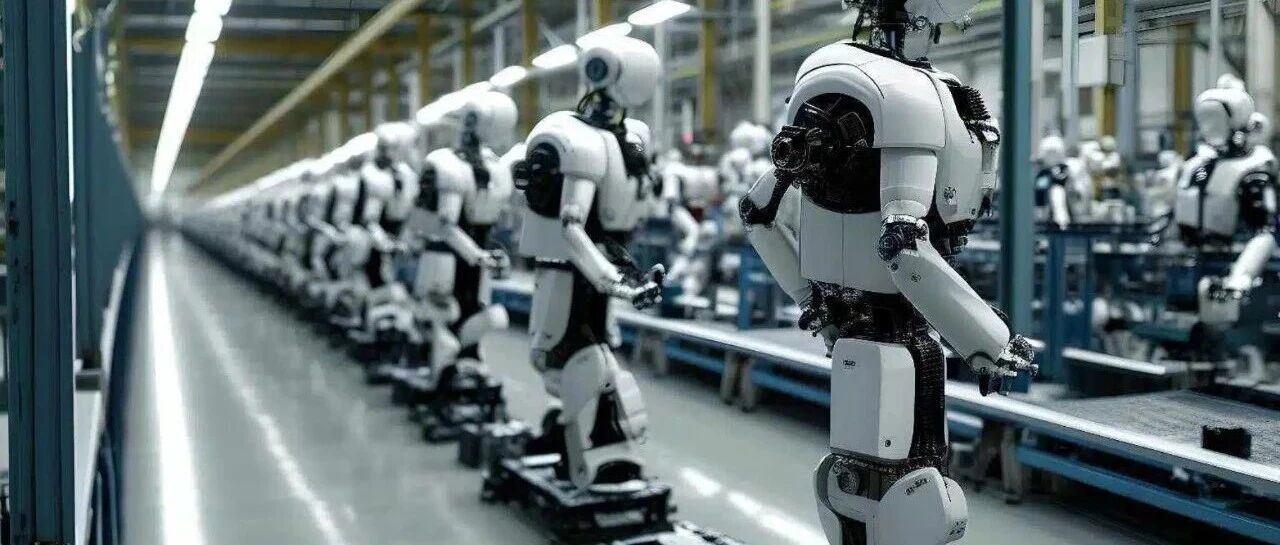
人形机器人的2026:落地和出清会同时到来 | 海斌访谈
Di Yi Cai Jing· 2026-01-18 06:40
Core Insights - The main bottleneck for humanoid robots is their "brain," and breakthroughs in this area are necessary for the industry to reach its "electric vehicle moment" [1][10] - By 2026, it is anticipated that some humanoid robot companies will be eliminated due to a lack of commercialization capabilities and financing [1][5] Industry Overview - China currently has over 100 humanoid robot companies, with significant differentiation emerging among them over the past three years [1][3] - The market for humanoid robots has been buoyed by the enthusiasm for multimodal large model technologies, with a total of 190 financing events and a scale of 27 billion RMB in 2025 [3] - The customer base for humanoid robots is shifting from academic institutions to industrial enterprises, indicating a move from laboratory settings to practical applications [3][4] Market Dynamics - In 2025, the global shipment of humanoid robots is expected to reach approximately 13,000 units, with a conservative estimate of 30,000 units by 2026 [9][8] - The first-tier companies in the humanoid robot sector are seeing significant orders, with some nearing unicorn status, while second-tier companies face more challenges [5][6] - The competition landscape is compared to the "battle of the hundred groups" in the food delivery market, suggesting that only a few companies will survive in the humanoid robot sector [6] Technological Challenges - The development of humanoid robots is hindered by the immaturity of hardware components and the lack of suitable AI large models [10] - The "brain" of humanoid robots requires high-quality data for training, which is currently limited [10] - Companies are focusing on developing the "small brain" for motion control, as they lack the resources to develop large models independently [10] Future Projections - The humanoid robot market is expected to grow significantly, with potential market sizes reaching between 1.4 trillion to 1.7 trillion USD by 2050 [9] - The industry is still in its early stages, and a breakthrough in the "brain" technology is essential for the market to mature [10][11] - By 2035, global shipments of humanoid robots could reach 1 million units, primarily in industrial and service sectors, with challenges remaining for household applications [11]

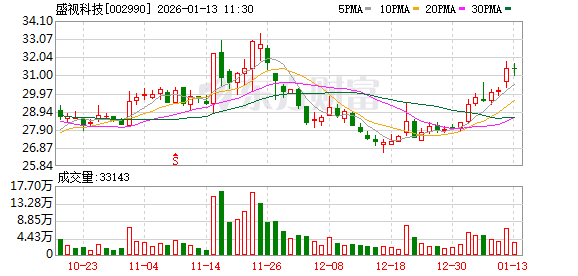
盛视科技:公司建立了自己的机器人产品线
Zheng Quan Ri Bao Wang· 2026-01-13 11:12
Core Viewpoint - The company, Shengshi Technology, positions itself as a leading enterprise in the smart port sector, leveraging the port scenario to create significant opportunities for the application of robotics [1] Group 1: Company Developments - Shengshi Technology has established its own robotics product line, which includes indoor/outdoor inspection robots, collaborative robots, under-vehicle inspection robots, temperature measurement robots, and collaborative transport robots [1] - Several of these robotic products have already been successfully implemented in port scenarios, demonstrating the company's capability in this field [1] Group 2: Investment in Technology - The company is increasing its investment in humanoid robots, integrating core capabilities of humanoid robots with its multi-modal large model technology to enhance the deployment of humanoid robots in port scenarios [1]

盛视科技:公司建立了自己的机器人产品线,包括室内/外巡检机器人、协作机器人等
Mei Ri Jing Ji Xin Wen· 2026-01-13 04:06
Core Viewpoint - The company, Shengshi Technology, emphasizes its leading position in the smart port sector, which provides significant opportunities for the application of robotics in port scenarios [2]. Group 1: Company Advantages - The company has established its own product line of robots, including indoor/outdoor inspection robots, collaborative robots, under-vehicle inspection robots, temperature measurement robots, and collaborative transport robots, with multiple models successfully implemented in port applications [2]. - The company is increasing its investment in humanoid robots, integrating core capabilities of humanoid robots with its multimodal large model technology to promote the deployment of humanoid robots in port scenarios [2].
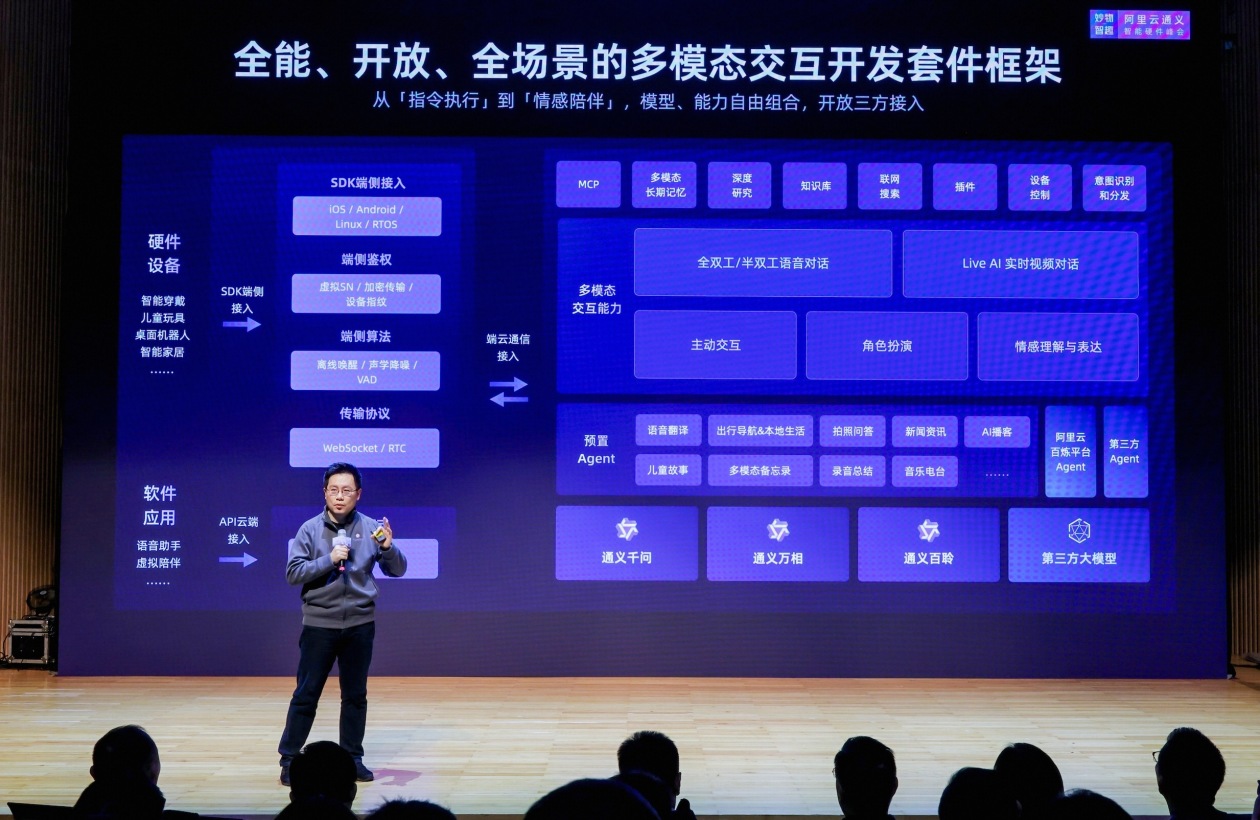
阿里云发布多模态交互开发套件 助力硬件实现“能听、会看、会交互”
Huan Qiu Wang· 2026-01-08 09:41
Core Insights - Alibaba Cloud has launched a multimodal interaction development kit that integrates three foundational models, aiming to enhance the capabilities of various hardware devices such as AI glasses and smart robots [1][3] Group 1: Product Features - The development kit includes pre-set intelligent agents and tools across various domains like leisure and work efficiency, designed to provide stronger perception, understanding, and interaction capabilities for hardware devices [1][3] - The kit is compatible with over 30 mainstream terminal chip platforms, including ARM, RISC-V, and MIPS architectures, addressing the integration needs of most hardware devices [3] - The kit supports various interaction methods, including full-duplex voice, video, and text-image interactions, with end-to-end voice interaction latency reduced to 1 second and video interaction latency not exceeding 1.5 seconds [3] Group 2: Market Position and Recognition - Alibaba Cloud's solutions showcased at the exhibition include integrated functionalities for AI glasses and comprehensive services for home companion robots, such as anomaly monitoring and human-machine dialogue [4] - According to Gartner's report, Alibaba Cloud has been recognized as an "emerging leader" in four dimensions: cloud infrastructure, engineering, models, and knowledge management applications, making it the only vendor in the Asia-Pacific region to achieve this recognition alongside companies like Google and OpenAI [4]

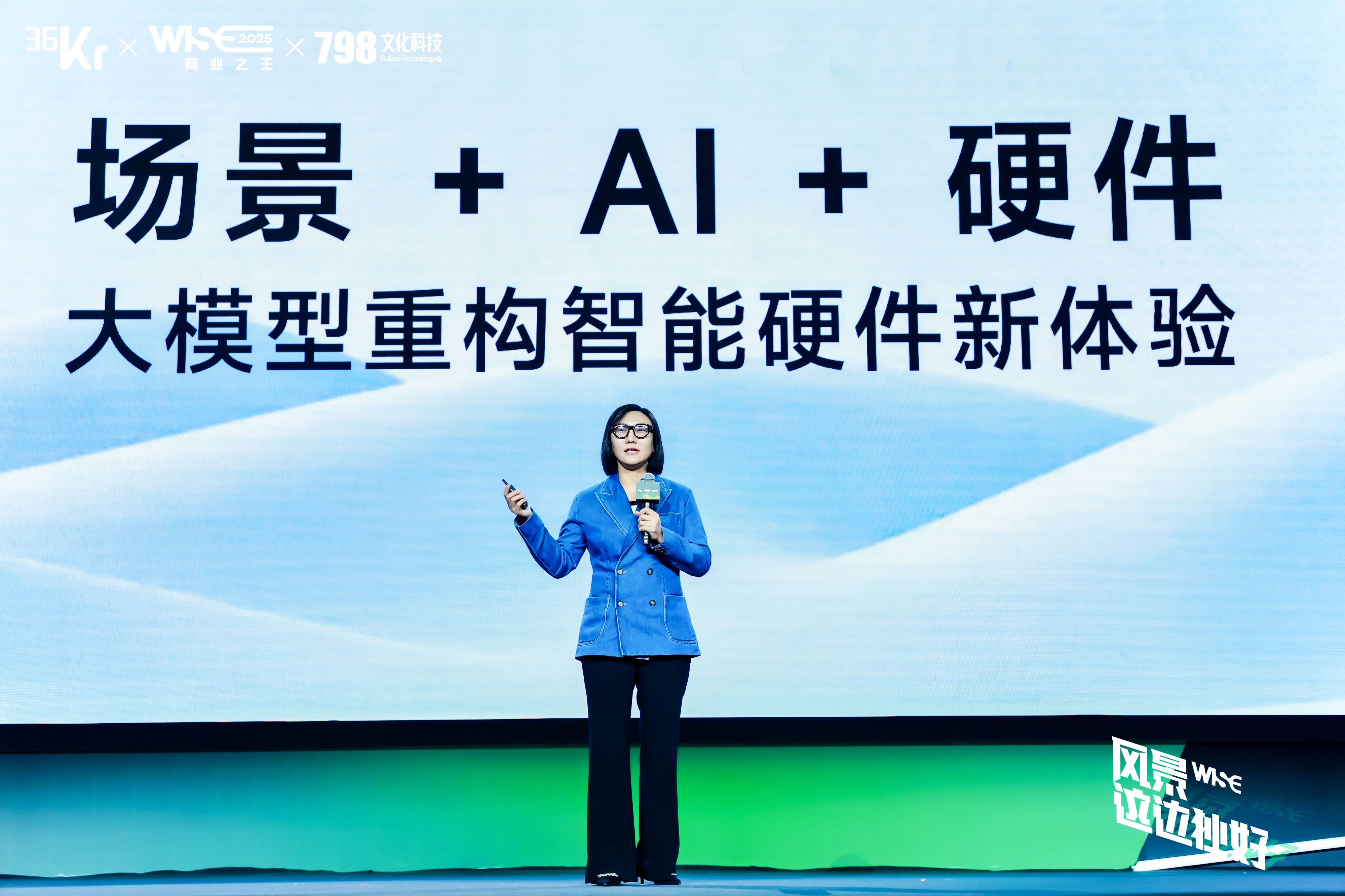
小度科技CEO、百度集团副总裁李莹:用“场景 + AI + 硬件”在同质化竞争中找到属于自己的蓝海|WISE 2025 商业之王
3 6 Ke· 2025-11-27 09:40
Core Insights - The WISE 2025 Business King Conference aims to anchor the future of Chinese business amidst uncertainty, emphasizing the integration of technology and business narratives [1] - The conference features immersive experiences showcasing the latest advancements in AI and smart hardware, highlighting the importance of understanding real-world applications [2] Company Innovations - Baidu's CEO introduced three new products: the Xiaodu AI Glasses Pro, a smart camera, and the Xiaodu Smart Speaker Fun, focusing on the integration of AI, hardware, and real-life scenarios [5][6] - The Xiaodu AI Glasses Pro is designed to assist users in obtaining information and enhancing capabilities without distraction, featuring a stylish design and advanced functionalities [6][10] - The smart camera utilizes multi-modal large model technology to not only capture images but also understand scenes and behaviors, offering proactive notifications and interventions [11][12] Product Features - The Xiaodu AI Glasses Pro includes a 12-megapixel wide-angle camera, AI noise reduction for clear audio, and real-time translation capabilities, achieving near-human translation accuracy [8][9] - The smart camera can recognize specific behaviors and send alerts, as well as interact with other smart home devices to enhance user experience [11][12] - The Xiaodu Smart Speaker Fun supports DIY customization and can pair with another speaker for a shared listening experience, appealing to younger consumers [15] Technological Advancements - The introduction of "Super Xiaodu," an AI-native operating system, allows devices to engage in multi-modal interactions, transforming them from mere tools to proactive partners [14] - The company plans to upgrade existing Xiaodu devices to the Super Xiaodu system at no cost to users, enhancing their functionality and user experience [14]

快手-W(01024.HK)2025Q3业绩点评:盈利能力稳步提升 AI业务商业化提供增量空间
Ge Long Hui· 2025-11-26 04:06
Core Insights - The company reported a strong performance in Q3 2025, with a revenue of 35.554 billion yuan, a year-on-year increase of 14%, and a net profit of 4.488 billion yuan, up 37% year-on-year [1] - The average daily active users (DAU) for the Kuaishou app reached 416 million, reflecting a 2.1% year-on-year growth, while the average monthly active users (MAU) were 731 million, up 2.4% year-on-year [1] - The company is actively commercializing its AI business, launching the Keling 2.5 Turbo model, which topped global rankings in generative video models [1] Financial Performance - In Q3 2025, the company achieved an operating profit of 4.676 billion yuan, a significant increase of 76% year-on-year [1] - Adjusted net profit for the quarter was 4.986 billion yuan, representing a 26% year-on-year growth, with an adjusted net profit margin of 14% [1] - The core commercial revenue, which includes online marketing services and other services primarily focused on e-commerce, grew by 19.2% year-on-year [2] User Engagement and E-commerce - The average revenue per daily active user (ARPDAU) was 48.3 yuan, marking a 12% increase year-on-year [1] - Total e-commerce gross merchandise volume (GMV) reached 385.044 billion yuan, reflecting a 15% year-on-year growth [1] - Online marketing service revenue for Q3 2025 was 20.1 billion yuan, up 14% year-on-year, while live streaming service revenue was 9.6 billion yuan, a 2.5% increase year-on-year [2] AI Business Development - Keling AI generated over 300 million yuan in revenue during Q3 2025, with ongoing optimization of the OneRec end-to-end generative recommendation model [2] - The company introduced the G4RL model for generative reinforcement learning, enhancing advertising budget and ROI optimization throughout the campaign [2] - The implementation of large model technologies like OneRec contributed to a 4%-5% increase in domestic online marketing revenue in Q3 2025 [2] Future Outlook - The company anticipates revenue growth from 143.103 billion yuan in 2025 to 171.33 billion yuan in 2027, with year-on-year growth rates of 12.8%, 10.0%, and 8.8% respectively [2] - The ongoing development and commercialization of generative AI applications are expected to create new growth opportunities for the company [2]

每周股票复盘:东软集团(600718)获42亿元智能座舱域控器订单
Sou Hu Cai Jing· 2025-11-22 20:39
Core Viewpoint - Neusoft Corporation (600718) has received a significant contract from a major domestic automotive manufacturer to supply intelligent cockpit domain controllers, valued at approximately 4.2 billion RMB, which will be applied in multiple models set for mass production between 2026 and 2027 [1][1][1] Company Performance - As of November 21, 2025, Neusoft's stock closed at 10.04 RMB, down 1.67% from the previous week's closing price of 10.21 RMB [1][1] - The stock reached a weekly high of 10.88 RMB and a low of 10.03 RMB during the same period [1][1] - The company's current total market capitalization is 11.971 billion RMB, ranking 34th out of 119 in the IT services sector and 1509th out of 5167 in the A-share market [1][1] Contract Details - The contract for the intelligent cockpit domain controller is expected to have a lifecycle of approximately 6 years, although it is currently in the pre-mass production development stage and will not have a direct impact on the company's performance for the current fiscal year [1][1][1] - The product leverages Qualcomm's platform and integrates AI computing power with multimodal large model technology [1][1]
