新格伦号

Search documents
商业火箭:聚焦技术突破,加速商业落地(附50页PPT)
材料汇· 2026-03-10 16:16
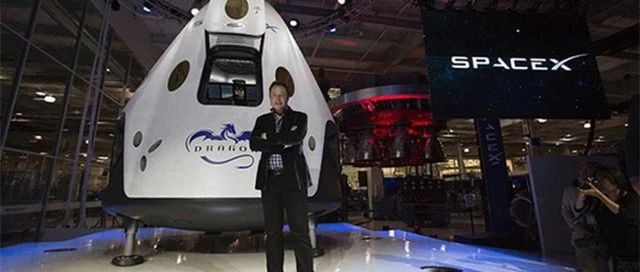
Core Viewpoint - The article discusses the current state and future prospects of the global launch vehicle industry, highlighting the significant advancements in both commercial and national space programs, particularly focusing on the leadership of SpaceX and the rapid growth of domestic private enterprises in China [2][3][4]. Global Landscape - In 2025, there will be a total of 324 space launch missions globally, representing a 25% increase from 2024. The United States leads in launch frequency, while China ranks second, with the gap between major space-faring nations widening [2][34]. - The total payload mass launched globally in 2025 is projected to be 3140.6 tons, with the U.S. accounting for 84.38% and China for 10.36%. The U.S. primarily focuses on commercial payloads [2][41]. Commercial Space Launch Developments - SpaceX has established itself as the dominant player in the commercial space sector, leveraging reusable rocket technology and a comprehensive business model that includes satellite deployment and applications. Its valuation reached approximately $800 billion by December 2025, with plans for an IPO in 2026 [3][48]. - Blue Origin and Rocket Lab are also making strides, with Blue Origin achieving successful recovery of its New Glenn rocket and Rocket Lab focusing on high-frequency launches with small rockets [3][4]. Domestic Progress in China - The domestic commercial rocket sector is characterized by a leading role from state-owned enterprises and rapid growth of private companies. The industry is gradually improving its supply chain and making breakthroughs in reusable rocket technology [4]. - By the end of 2025, several private companies, including Blue Arrow Aerospace and Tianbing Technology, are preparing for IPOs, with Blue Arrow's estimated market capitalization at 748 billion yuan, significantly lower than SpaceX [4]. - In terms of technology validation, both Zhuque-3 and Long March 12A achieved second-stage orbit but failed in first-stage recovery, indicating ongoing technical challenges [4]. Cost Structure of Launch Vehicles - The cost structure of launch vehicles includes rocket costs, launch costs, measurement and control costs, and insurance fees. The rocket cost is the most significant controllable cost, accounting for about 53% of the total launch cost for SpaceX's Falcon 9 [21][27]. - Hardware costs are notably high, with the first stage of rockets representing the largest cost component. Reusability is seen as a critical avenue for cost reduction in commercial launches [27][28]. SpaceX's Technological Innovations - SpaceX has transitioned from parachute recovery to vertical landing for its Falcon 9 rockets, achieving significant milestones in reusability and operational efficiency [49][51]. - The Starship system, which is the largest and most powerful reusable rocket, has undergone multiple flight tests, with plans for its third generation to achieve a payload capacity of over 100 tons by 2026 [66].

火箭回收大战背后,大航天时代已经拉开序幕
Xin Lang Cai Jing· 2026-01-04 11:30
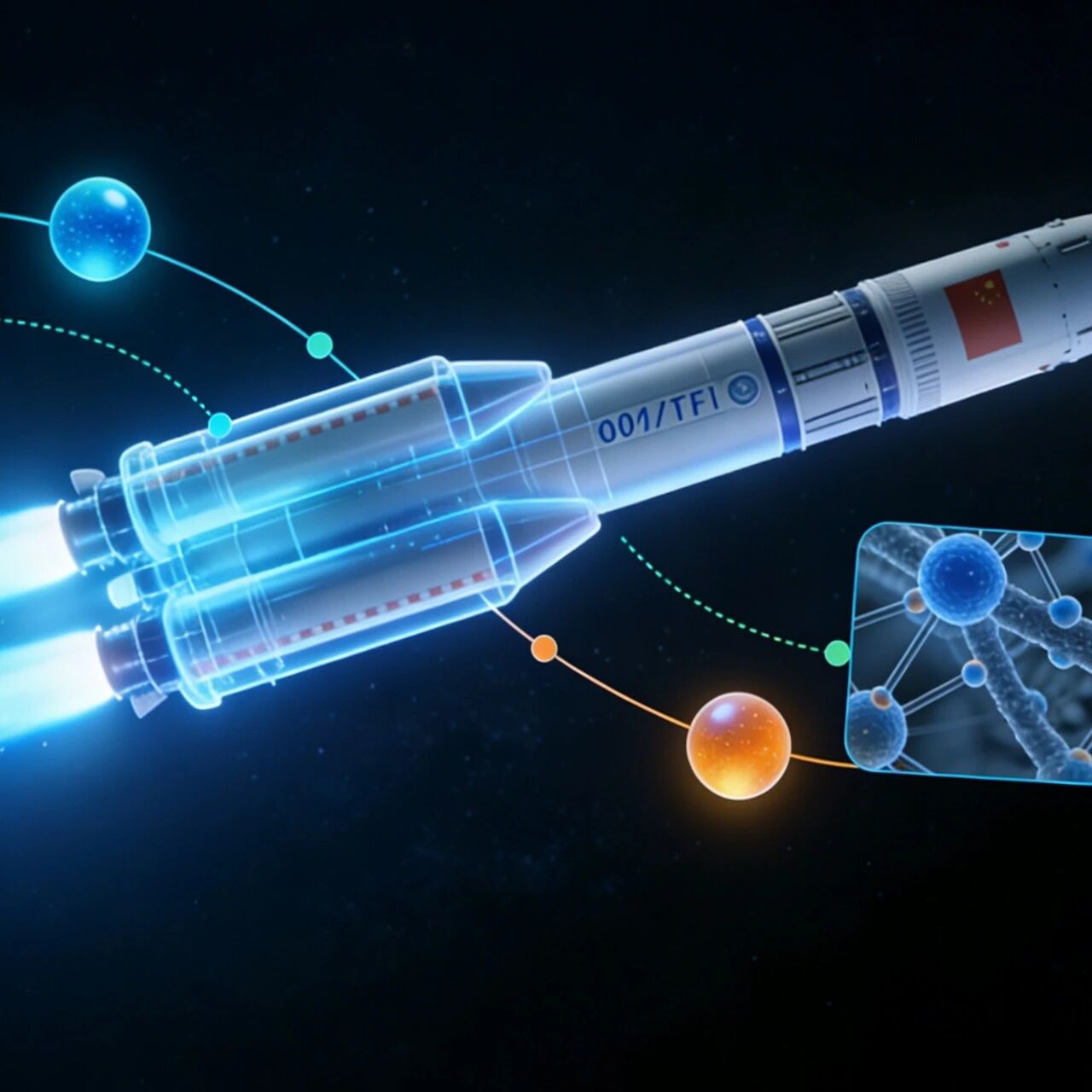
Core Viewpoint - The article highlights the intense competition in the reusable rocket sector, particularly between Chinese companies and SpaceX, with significant advancements in technology and launch capabilities being made by both sides [1][22][41]. Group 1: Chinese Space Achievements - China achieved a record of 88 space launches in 2025, nearing the 100-launch milestone, with notable events including the successful emergency launch of Shenzhou 22 and a record of three launches in one day [1][21]. - The Long March 12甲 rocket successfully launched on December 23, becoming the first methane rocket from China's national team and the fifth globally to achieve this feat, although it did not succeed in its first-stage recovery [4][25]. Group 2: SpaceX Dominance - SpaceX continues to lead the industry with a record of 163 launches in 2025, including a monthly record of 15 launches in October and a successful launch of 29 satellites in one go on December 9 [1][21]. - The Falcon 9 rocket has achieved a record of 32 reuses, showcasing the effectiveness of its recovery technology [1][21]. Group 3: Reusable Rocket Developments - Blue Origin's New Glenn rocket successfully completed its second launch with first-stage recovery, marking it as the third rocket globally to achieve vertical landing after Falcon 9 and Falcon Heavy [2][23]. - The Blue Arrow Zhuque-3 rocket, despite a landing failure, is significant as China's first attempt at orbital rocket landing and the world's second stainless steel rocket [2][23]. Group 4: Market Dynamics and Future Prospects - The emergence of multiple Chinese reusable rockets, including Zhuque-3, Long March 12甲, and Tianlong-3, indicates a strategic move to compete directly with SpaceX's Falcon 9, targeting the high-demand market segment [9][30][31]. - The article emphasizes that the 10-20 ton rocket class is becoming the market's mainstay due to its ability to efficiently deploy multiple satellites and meet the growing demand for low Earth orbit satellite constellations [11][32][34]. Group 5: Strategic Implications - The competition in the reusable rocket sector is seen as a precursor to broader geopolitical and technological rivalries, with the potential for China to surpass the U.S. in space capabilities [20][41]. - The article suggests that the ongoing developments in reusable rockets are not just about technology but also about establishing a sustainable space economy and infrastructure for future advancements [19][40].

“国家队”可复用火箭首飞 虽未能回收但基本成功
Mei Ri Jing Ji Xin Wen· 2025-12-23 06:26
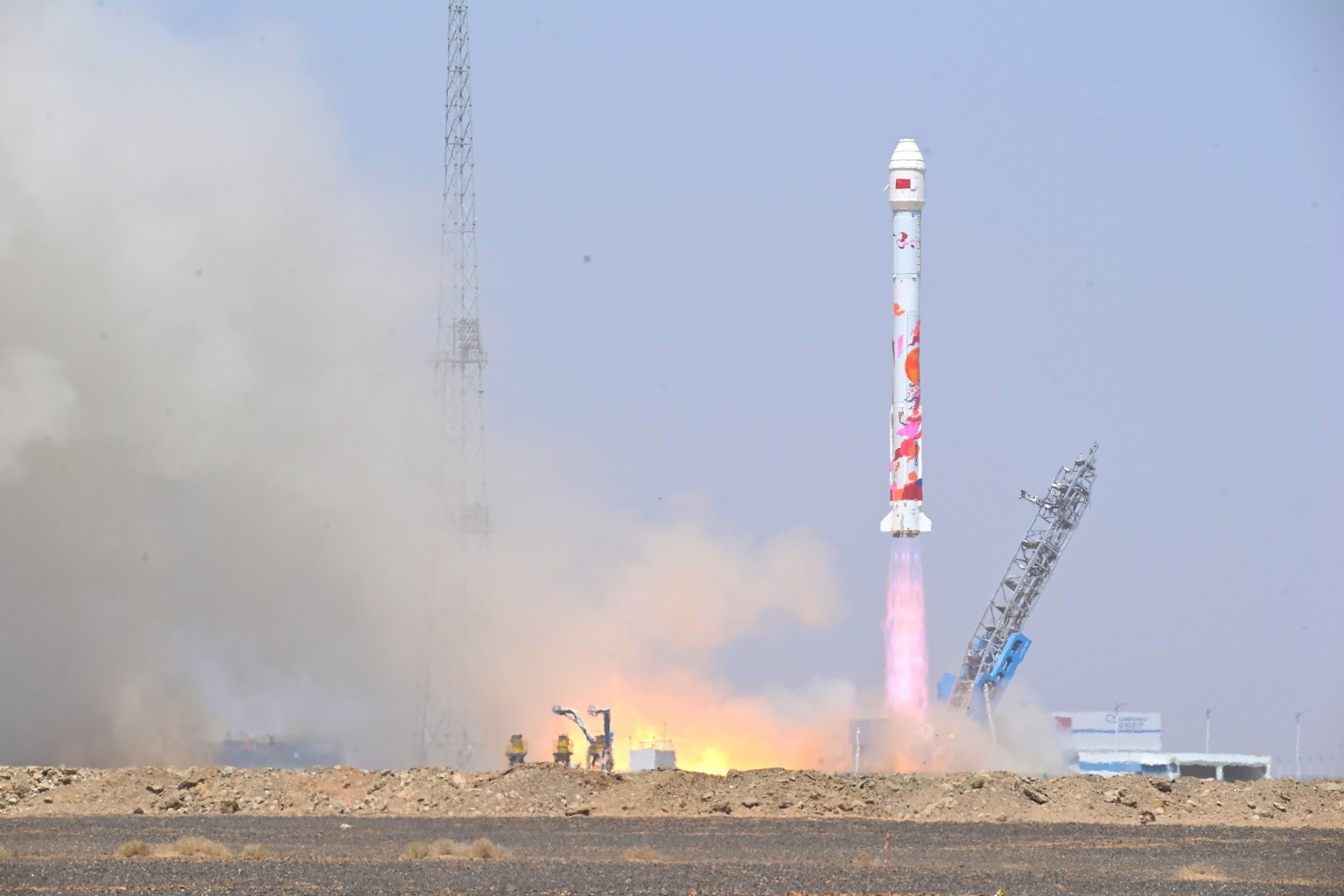
Core Viewpoint - The successful first flight of the Long March 12A rocket marks a significant step in China's commercial space sector, aiming to enhance the capabilities of reusable rockets and address the growing demand for low-cost, high-frequency satellite launches in the trillion-dollar market [2][3][5]. Group 1: Launch and Technology Development - The Long March 12A rocket's maiden flight achieved basic success, with the second stage entering the designated orbit, although the first stage was not successfully recovered [2]. - The launch signifies the entry of state-led reusable rocket technology into the competitive landscape, aiming to facilitate a transition to a low-cost, high-frequency launch era [2][3]. - The industry is witnessing a shift towards optimizing launch and operational costs, with a focus on the development of reusable rockets and satellite mass production [3][9]. Group 2: Market Dynamics and Competition - The competition in the commercial space sector is intensifying, with a focus on not just successful launches but also on the stability of delivery capabilities and reliability of new commercial rockets [6][9]. - Companies are exploring different strategies and technologies, such as the use of various propellants, to enhance the performance and cost-effectiveness of their rockets [7][11]. - The market is expected to evolve towards a comprehensive industrial system, emphasizing cost reduction through continuous technological innovation [9][11]. Group 3: Future Prospects and Challenges - The industry is at a critical juncture, moving from a focus on individual rocket success to a broader competition encompassing technological autonomy, production stability, and economic efficiency [9][12]. - The development of large payload rockets and the establishment of a robust satellite constellation are essential for meeting the demands of the rapidly growing satellite internet market [3][12]. - Regulatory improvements and the establishment of a supportive ecosystem are necessary to facilitate the growth of the commercial space sector and address existing bottlenecks [13].
贝佐斯追赶马斯克:新格伦号二飞能否扳回一局?
3 6 Ke· 2025-11-14 09:41
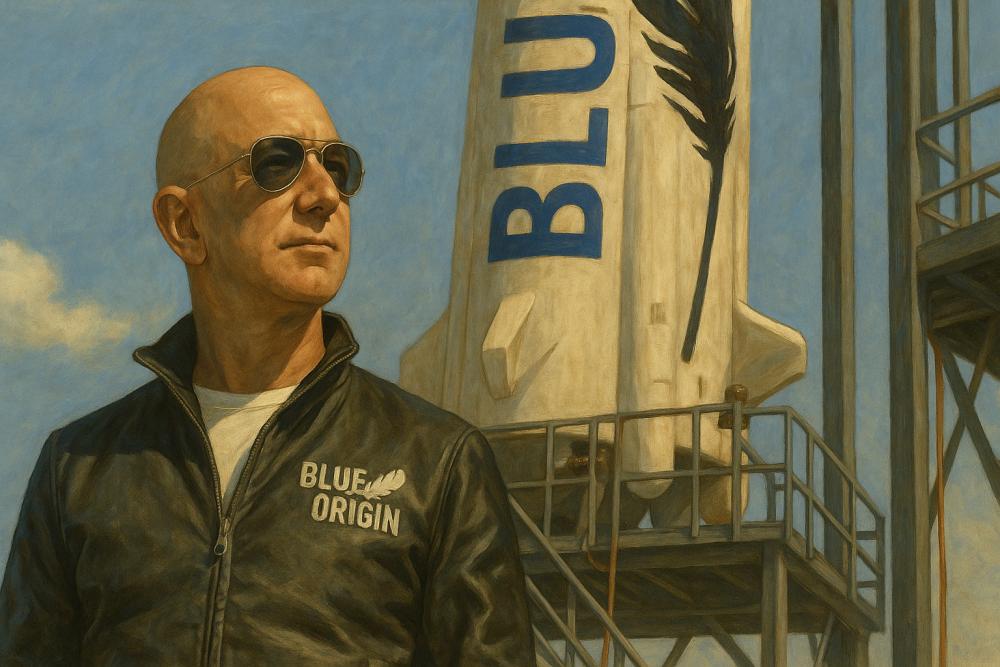
Core Viewpoint - Blue Origin's "New Glenn" heavy rocket successfully completed its second orbital flight mission, marking a significant step in its development and a competitive challenge to SpaceX in the commercial space sector [1][3]. Group 1: Launch Details - The "New Glenn" rocket was launched on November 13, 2023, after multiple delays due to adverse weather conditions, successfully entering space and landing its booster on an unmanned platform in the Atlantic [1][2]. - This mission's primary objective was to deliver NASA's ESCAPADE dual Mars orbiter, representing NASA's first Mars exploration mission in five years [3]. Group 2: Development History - Blue Origin was founded by Jeff Bezos in 2000, while SpaceX was established by Elon Musk in 2002, leading to a competitive landscape where Blue Origin has been perceived as a follower [3][4]. - The development of the "New Glenn" rocket has been a lengthy process, with its core technology, the BE-4 engine, being in development since 2011, and the rocket's design evolving significantly over the years [5][6]. Group 3: Funding and Strategy - Blue Origin's funding model relies on Bezos's continuous investment from Amazon stock sales, allowing the company to focus on long-term goals without external financing pressures [6][8]. - The company has made strategic decisions, such as securing contracts for NASA's Artemis lunar program and Amazon's Kuiper satellite constellation, which provide stable revenue and technical validation opportunities [8]. Group 4: Competitive Landscape - The competition between Blue Origin and SpaceX represents two distinct philosophies in space exploration, with Blue Origin adopting a more cautious, incremental approach compared to SpaceX's aggressive innovation strategy [4][11]. - The "New Glenn" rocket has a low Earth orbit capacity of 45 tons, while SpaceX's Starship can carry over 100 tons, highlighting the differences in their design philosophies and operational capabilities [11][12]. Group 5: Future Missions - Upcoming missions for the "New Glenn" rocket include the "Blue Moon Pathfinder 1" in January 2026, which will test a lunar lander prototype, and the deployment of Amazon's first 49 satellites for the Kuiper project [16][17]. - The rocket is expected to conduct up to eight launches per year, emphasizing a business model focused on timely launches, even if payloads are not ready [17].
SpaceX将超车NASA!
第一财经· 2025-06-05 00:09
Core Viewpoint - SpaceX is experiencing significant revenue growth, with projected earnings of approximately $15.5 billion in 2023, up from $4.6 billion in 2022, indicating a more than twofold increase in three years [1] Revenue and Financial Performance - SpaceX's revenue for 2023 is expected to reach around $15.5 billion, a substantial increase from $4.6 billion in 2022, reflecting a growth rate of over 237% [1] - The company anticipates that its commercial space revenue will exceed NASA's overall budget by $1.1 billion in the coming year [1] Production and Launch Plans - Elon Musk announced a goal for SpaceX to produce 1,000 Starships annually, averaging three per day, with plans for a mega assembly facility [2] - SpaceX aims to break its own record of 134 launches in 2024, targeting 170 launches by the end of the year, averaging a launch every two days [5][6] Technological Developments - The Starship rocket system, which is designed to facilitate human landings on Mars, is currently under testing, with each launch estimated to cost around $100 million, with a goal to reduce this to approximately $10 million [5] - SpaceX has become NASA's core supplier, securing over $15 billion in contracts, and has successfully completed multiple crewed missions to the International Space Station [8] Future Goals and Missions - Musk has outlined ambitious plans for Mars exploration, including a 50% chance of launching Starship to Mars by 2026 and establishing a base on Mars by 2028 [6] - The company plans to construct a lunar base named "Alpha" in the future [6] Competitive Landscape - SpaceX faces competition from Blue Origin, founded by Jeff Bezos, which is developing the New Glenn rocket and aims to deploy a satellite broadband network [12][13] - Blue Origin's New Glenn rocket has completed its first test flight, but it faces challenges in surpassing SpaceX's established market position [12][13] Market Outlook - The commercial space market in China is projected to exceed 2.5 trillion yuan this year, indicating a high-growth period for the industry [10]