日产Sakura

Search documents
日本K-CAR市场还能封闭多久?
3 6 Ke· 2025-11-02 23:40
Core Insights - The article discusses the unique characteristics and cultural significance of Japan's K-CAR market, highlighting its closed nature and the strong consumer loyalty towards domestic brands [4][11][17] - The entry of foreign brands, particularly BYD with its electric K-CAR, is seen as a potential disruptor in this market, but challenges remain due to historical consumer preferences and regulatory barriers [10][15][17] Group 1: K-CAR Market Overview - The K-CAR concept has maintained consumer enthusiasm in Japan for decades, creating a distinct industrial culture that permeates various aspects of society [4][11] - Japanese automakers have established a stronghold in the K-CAR segment, with each brand creating a unique niche through their products [4][6] Group 2: Sales Performance - In 2024, Honda's N-BOX dominated the K-CAR market with sales of 206,272 units, surpassing the best-selling regular car, Toyota Corolla [6] - Suzuki's Spacia and Daihatsu's Tanto also performed well, with sales of 165,679 and 93,759 units respectively, indicating a robust competitive landscape among domestic brands [6] Group 3: Foreign Brand Challenges - Historical attempts by foreign brands like smart and Caterham to enter the K-CAR market have failed due to misalignment with local consumer preferences and regulatory standards [8][11] - The K-CAR market is characterized by a strong emphasis on practicality and affordability, making it difficult for foreign brands to succeed without a product tailored specifically for Japanese consumers [8][11] Group 4: Future Prospects - The introduction of BYD's electric K-CAR, RACCO, at the Tokyo Mobility Show introduces new competition, particularly against Nissan's Sakura, which has become the best-selling EV in Japan [10][15] - Despite the potential for disruption, the article emphasizes that foreign brands face significant hurdles in gaining acceptance in the K-CAR market due to entrenched consumer loyalty to domestic brands [15][17]




携定制K-Car与混动车型亮相东京车展,比亚迪双线布局日本市场
Guo Ji Jin Rong Bao· 2025-10-30 02:05
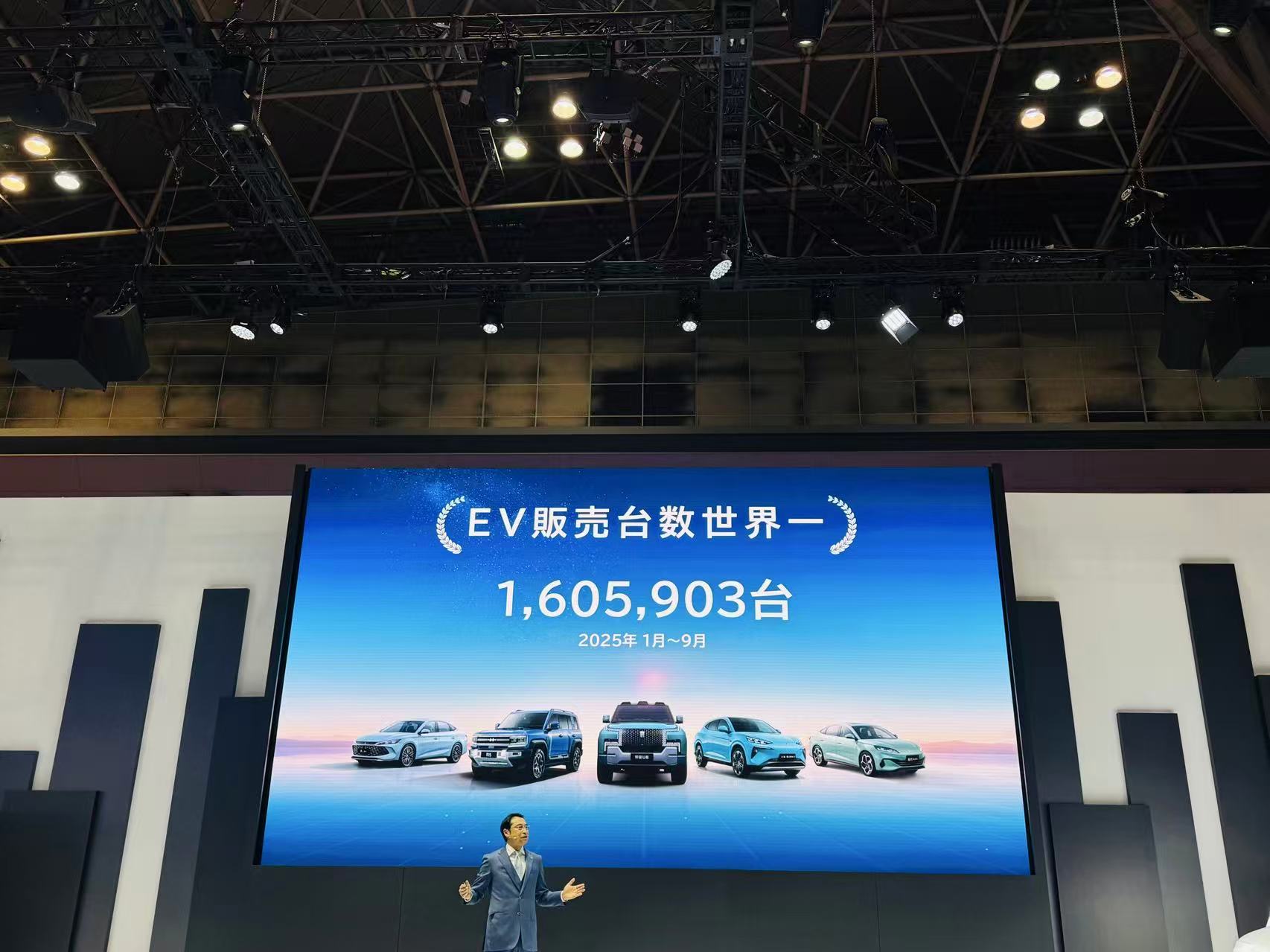
Core Insights - BYD officially launched its dual exhibition strategy for passenger and commercial vehicles at the 2025 Tokyo Motor Show, marking its 20th anniversary in the Japanese market and introducing the K-EV BYD RACCO and the hybrid model Sea Lion 06DM-i [1][5] Group 1: Product Launches - The BYD RACCO is a K-Car specifically designed for the Japanese market, featuring a boxy shape and dual A-pillar design, with dimensions that meet K-Car standards. It is equipped with a 20 kWh battery, offering a WLTC range of 180 km, and supports 100 kW fast charging [3] - The Sea Lion 06DM-i is BYD's first hybrid model launched in Japan, adding to its existing lineup of electric vehicles that includes models like Yuan PLUS, Dolphin, and Seal since entering the market in July 2022 [5] Group 2: Market Strategy - BYD aims to establish a product matrix of 7 to 8 electric and hybrid models in Japan by 2027, having already set up 66 sales points to expand its distribution network [5] - The introduction of K-Cars and hybrid models directly addresses market needs, as K-Cars have annual sales exceeding 2 million units in Japan, with hybrids accounting for 40% of the market [5]
比亚迪开进日本大卖场
第一财经· 2025-10-22 01:25
Core Viewpoint - AEON, a Japanese retail group, plans to establish a sales partnership with BYD in 2025, aiming to sell BYD electric vehicles across approximately 30 commercial facilities and department stores in Japan, with starting prices around 2 million yen (approximately 94,000 RMB) [3][4]. Group 1: Sales Strategy and Pricing - AEON will implement various discount and promotional strategies, allowing consumers to purchase BYD electric vehicles at a starting price of about 2 million yen, with additional subsidies potentially reducing the effective price by up to 1 million yen [3][4]. - The initial model targeted for promotion is the BYD Dolphin, which has a listed price of 2.99 million yen, but with subsidies, the effective price could be around 2 million yen [3]. Group 2: Market Impact and Infrastructure - The collaboration between BYD and AEON may disrupt the traditional Japanese automotive distribution model, which has been dominated by local manufacturers and their dealerships, potentially paving the way for Chinese electric vehicle brands in Japan [4]. - AEON operates 374 stores in Japan, equipped with approximately 2,500 electric vehicle charging stations, which could help alleviate infrastructure limitations for electric vehicles in the region [4]. Group 3: Current Market Landscape - In the first half of the 2025 fiscal year, Japanese domestic sales of pure electric passenger vehicles were approximately 28,500 units, reflecting a year-on-year growth of 3%, but still representing only about 1% of total new car sales [5]. - BYD's sales in Japan reached 802 units in September, marking a year-on-year increase of about three times, capturing around 20% of the import pure electric vehicle market for that month [5]. - Despite the growth of BYD and Tesla, Japanese electric vehicles like Nissan's Sakura and Leaf remain dominant in the market, with local manufacturers also launching new electric models [6].
比亚迪把价格战打到了日本:最高降价50%
Feng Huang Wang· 2025-09-28 23:42
Core Insights - BYD has struggled to gain traction in the Japanese market despite significant efforts, including opening 45 sales outlets and launching multiple electric vehicle models [1][2] - The company has resorted to aggressive price cuts, offering discounts of up to 1 million yen (approximately 47,700 RMB), which can lead to a total price reduction of 50% when combined with government subsidies [1] - The sales figures for BYD in Japan are stark, with only 5,300 vehicles sold from January to June 2023, contrasting sharply with its success in Europe [2][3] Group 1: Market Challenges - Japanese consumers show a strong preference for domestic brands like Toyota and are generally more inclined towards hybrid vehicles rather than pure electric ones [2] - The loyalty to local brands has historically made it difficult for foreign automakers to succeed in Japan, with notable failures from companies like General Motors and Hyundai [2] - BYD's sales in June 2023 were only 512 units, while Nissan's Sakura model sold 1,137 units, highlighting the competitive landscape [3] Group 2: Strategic Implications - The aggressive pricing strategy may backfire in Japan, potentially alienating early buyers and affecting the resale value of vehicles [1] - Despite the current challenges, analysts believe that establishing a presence in Japan is crucial for BYD, as it seeks to build a reputation among discerning consumers [2] - The long-term opportunity in the Japanese market is seen as greater than the short-term obstacles, with expectations of growth in the electric vehicle segment in the coming years [2]
雷军再度发文回应质疑,Win11电脑 C 口大一统,马斯克推出全新XChat,比亚迪计划推出Kcar,这就是今天的其他大新闻!
Sou Hu Cai Jing· 2025-06-02 16:40
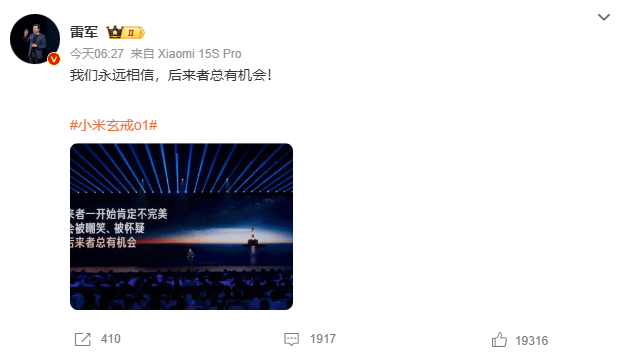
Group 1 - Lei Jun, the president of Xiaomi, reiterated the belief that "latecomers always have opportunities," responding to criticisms and highlighting the delivery of over 28,000 units of the Xiaomi SU7 in May [3] - Xiaomi is preparing for mass production of the Xiaomi YU7, indicating ongoing product development and market strategy [3] Group 2 - Microsoft announced a new regulation under the Windows Hardware Compatibility Program (WHCP) to standardize USB-C ports, ensuring all ports support data, charging, and display functions [5] - This change aims to eliminate confusion for users regarding the functionality of USB-C ports on devices running Windows 11 [5] Group 3 - BYD plans to launch a low-cost micro electric vehicle in Japan next year, targeting the K-car market, which is valued at approximately $18 billion [7] - This move positions BYD as the first overseas automaker to create a micro electric vehicle specifically for the Japanese market, potentially increasing its market appeal [7]


突发!比亚迪,最新宣布!
券商中国· 2025-06-01 23:20
Core Viewpoint - BYD is making significant moves in the electric vehicle market, particularly targeting the Japanese microcar segment and expanding its overseas sales, which have shown substantial growth recently [1][2][4]. Group 1: Expansion into Japan - BYD plans to launch a low-cost micro electric vehicle in Japan next year, aiming to capture a share of the $18 billion microcar market [2]. - The new micro electric vehicle is designed specifically for overseas markets and is not sold in China, potentially enhancing BYD's competitiveness in Japan [2]. - The pricing strategy for the new model is expected to be lower than BYD's existing small electric car, the Dolphin, which is priced at approximately 2.9 million yen (around 145,000 RMB) [2]. Group 2: Sales Performance - In May, BYD's total new energy vehicle sales reached 382,500 units, a year-on-year increase of 15.3%, with cumulative sales from January to May reaching 1.7634 million units, up 38.7% [4]. - Overseas sales of BYD's new energy vehicles in May amounted to 89,047 units, with passenger car and pickup sales abroad increasing by 133.6% year-on-year [4]. Group 3: Competitive Positioning - In April, BYD surpassed Tesla in electric vehicle sales in Europe, selling 7,231 units, a 169% increase year-on-year, while Tesla's sales dropped by 49% [3]. - The European market is becoming increasingly competitive, with BYD's growth occurring despite the upcoming tariffs on Chinese electric vehicles [3]. Group 4: Future Growth Prospects - Analysts predict that BYD's overseas sales will continue to grow rapidly, supported by an expanding product lineup and improved production capabilities [5][6]. - The company is also focusing on local production in countries like Uzbekistan and Thailand, which is expected to enhance its competitiveness in international markets [5]. - BYD's strategic initiatives in smart driving technology and high-end vehicle offerings are anticipated to further boost its profitability and market presence [6].