
星闪传输架构

Search documents
任正非最新1.4万字讲话全文,信息量很大,知识量惊人
Xin Lang Cai Jing· 2025-12-08 06:37
Group 1 - The core idea emphasizes the importance of nurturing homegrown talent in China to become a technological powerhouse, rather than solely relying on imported talent [1][2] - The company highlights the significance of education in fostering innovation and the need for collaboration between academia and industry to address educational challenges [1][3] - The discussion points out that many technological advancements originate from industry rather than academia, indicating a shift in how innovation is perceived [1][2] Group 2 - The company acknowledges the potential for original innovations from young talents, citing examples of groundbreaking models and algorithms developed by young individuals [2][3] - It is noted that the education system should adapt to produce skilled workers capable of contributing to advanced manufacturing and technology sectors [4][5] - The company recognizes the growing number of innovative startups in China, driven by young entrepreneurs who are less envious of foreign successes and more focused on their own achievements [5][6] Group 3 - The conversation addresses the role of artificial intelligence (AI) in various sectors, emphasizing the need for practical applications rather than just theoretical advancements [12][23] - The company discusses the importance of re-education programs to help workers transition into new roles as automation and AI reshape the job market [13][14] - The potential for AI to enhance productivity across industries, such as agriculture and manufacturing, is highlighted as a key area for future development [22][23] Group 4 - The company expresses a commitment to fostering international collaboration and learning from global advancements in technology and education [31][32] - It is mentioned that the integration of AI and advanced technologies into existing systems is crucial for enhancing operational efficiency and competitiveness [12][23] - The company emphasizes the importance of maintaining a balance between remote and in-person interactions to foster innovation and collaboration [26][27]
颠覆认知!22岁新人用新算法让西方闭嘴,任正非:中国创新正在改写游戏规则
Sou Hu Cai Jing· 2025-12-07 14:37
Core Viewpoint - The article emphasizes that age is no longer a barrier to innovation in technology, highlighting the achievements of young talents at Huawei who are redefining traditional notions of expertise and originality in the tech industry [1][13]. Group 1: Age and Innovation - A 22-year-old Russian girl at Huawei has made significant advancements in the field of mathematics with the new remainder algorithm, challenging the conventional belief that breakthroughs require decades of experience [4]. - The average age of teams at Huawei working on various projects is decreasing, with the new remainder algorithm team averaging 22 years old, indicating a shift towards younger innovators in the tech landscape [5]. - Ren Zhengfei, the founder of Huawei, suggests that in the era of computing, curiosity and the willingness to explore the unknown are more critical than age or experience [4][5]. Group 2: Application-Driven Innovation - Huawei's success in developing a world-class weather model illustrates that complex application scenarios can drive foundational research breakthroughs, as seen in their integration of 5G technology and AI into meteorological predictions [7][8]. - The article argues that China's unique application demands can lead to original innovations, similar to how the Apollo program in the U.S. spurred advancements in semiconductor technology [8]. Group 3: Education and Talent Development - Ren Zhengfei emphasizes the need for a new educational approach in the AI era, focusing on nurturing talent capable of tackling real-world problems rather than merely imparting standardized knowledge [10]. - Huawei's talent development model prioritizes practical experience and problem-solving abilities over traditional academic achievements, allowing individuals of all ages to contribute meaningfully [10][12]. Group 4: Competitive Talent Ecosystem - The article discusses the differences in talent ecosystems between the U.S. and China, with the latter relying on enterprise-driven application scenarios to cultivate skilled professionals [11]. - Huawei's approach to talent acquisition and development fosters an environment where age and background are secondary to capability and results, which is essential for addressing technological challenges [12]. Conclusion - The essence of technological competition lies in the ability to create a nurturing talent ecosystem that allows individuals of all ages to thrive, as demonstrated by Huawei's innovative practices [13].

最新发声:任正非如何看待人工智能发展?
虎嗅APP· 2025-12-06 13:36
Core Viewpoint - The discussion led by Ren Zhengfei emphasizes the importance of focusing on the practical applications of artificial intelligence (AI) in various industries over the next three to five years, while also highlighting the role of education in fostering innovation and collaboration among youth [2][8]. Group 1: AI Applications - AI should concentrate on real-world applications in industries such as manufacturing and healthcare, aiming for tangible improvements [2][8]. - Examples include optimizing iron production efficiency by 1% through AI-driven temperature control in blast furnaces and enhancing coal mining safety with remote operation technologies [8][9]. - AI models are being utilized in medical diagnostics, such as pathology analysis and remote eye examinations, to improve healthcare outcomes [9]. Group 2: Education and Youth Development - Education is viewed as a separate entity from business, with a focus on nurturing talent and innovation rather than solely commercial outcomes [12][15]. - The shift from traditional education models to more decentralized, online learning platforms is seen as beneficial for students in remote areas [10][11]. - The importance of teaching practical skills and fostering self-sufficiency in education is emphasized, particularly in underdeveloped regions [10][12]. Group 3: Collaboration Between Academia and Industry - The need for closer collaboration between educational institutions and industries is highlighted, with a focus on practical training and real-world problem-solving [16][19]. - Companies are encouraged to support educational initiatives that help develop local talent and improve programming skills in various regions [9][12]. - The role of competitions like ICPC in bridging the gap between academic knowledge and industry needs is acknowledged [2][19]. Group 4: Future of Work and AI - The impact of AI on job markets is discussed, with a focus on the need for re-education and adaptation as automation increases [26][27]. - The potential for AI to enhance productivity and create new job opportunities is recognized, despite concerns about job displacement [27][29]. - The importance of preparing the workforce for a future where AI plays a significant role in various sectors is emphasized [26][27].

任正非最新发声,算力过剩的时代一定会到来的!现在最紧迫的不是在这个世界争夺算力和大模型的世界领先,而是强调“应用”领先
Sou Hu Cai Jing· 2025-12-06 12:47
Core Viewpoint - The discussion emphasizes the importance of youth in driving innovation and societal progress, particularly in the context of AI applications and entrepreneurship in China [3][4][15]. Group 1: Youth and Innovation - The company believes that the current generation of young people is a beacon of hope and a model for their peers, with diverse paths contributing to society [3][7]. - Encouragement is given to capable youth to pursue high aspirations rather than commercial paths, as they will eventually reach significant truths [3][14]. - The rapid growth of entrepreneurial spirit among Chinese youth is highlighted, with many forming partnerships to create successful companies [3][15]. Group 2: AI Applications - The focus should be on the application of AI rather than mere invention, as practical applications can significantly enhance national capabilities [4][10]. - The company is exploring AI applications in various sectors, including mining, healthcare, and transportation, aiming to solve real-world problems [4][10][17]. - Specific examples include using AI for predictive analytics in steel production and remote diagnostics in healthcare [10][17]. Group 3: Education and Talent Development - The company stresses the need for educational institutions to foster talent that can innovate rather than solely relying on imported expertise [11][20]. - There is a call for collaboration between academia and industry to address educational challenges and enhance talent cultivation [11][20]. - The importance of adapting educational approaches to meet the demands of a rapidly evolving technological landscape is emphasized [11][20]. Group 4: Future of Work and AI - Concerns about job displacement due to AI are acknowledged, with suggestions for re-education programs to help workers transition to new roles [20][21]. - The company anticipates a future where computational power will exceed current needs, allowing for extensive exploration of AI applications across industries [21][22]. - The distinction between scientific research and practical application is made, with the company positioning itself as a technology application firm rather than a scientific research entity [22][23]. Group 5: Global Collaboration and Talent Acquisition - The company recognizes the importance of attracting global talent while also valuing the contributions of returning overseas students [27][28]. - There is an emphasis on the need for openness and learning from global civilizations to enhance domestic innovation and quality [27][28]. - The company aims to create a platform for international collaboration, leveraging technology and mathematics to bridge gaps between different cultures and ideas [28].

任正非ICPC座谈:寄语青年“摸高勿摸低”,AI重在落地,文明贵在交融
Sou Hu Cai Jing· 2025-12-05 10:57
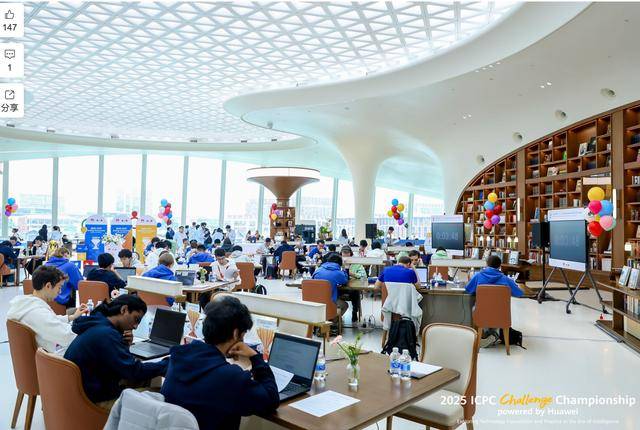
Core Insights - The discussion led by Ren Zhengfei at the ICPC meeting highlighted the importance of youth development, talent cultivation, and the role of education in fostering innovation amidst current geopolitical tensions and the rise of artificial intelligence [1][7]. Group 1: Youth Development - Ren Zhengfei expressed confidence in the younger generation, emphasizing that they are the hope for future societal revitalization and should strive to "reach for the highest" rather than settle for less [3]. - He encouraged youth to embrace challenges and pursue their ambitions, suggesting that true growth comes from aiming high and overcoming obstacles [3]. Group 2: Education and Innovation - The purpose of education is to foster theoretical research and innovation, while businesses focus on commercial objectives; both should not be conflated [4]. - Ren highlighted that theoretical failures in education are acceptable as they contribute to talent development, which is essential for future innovation [4]. - He advised young individuals not to chase high salaries blindly but to ride the wave of the times and stand at the forefront of innovation [4]. Group 3: Artificial Intelligence and Technology - Huawei's focus for the next three to five years is on leveraging large models, big data, and computing power to create real value across various sectors such as industry, agriculture, healthcare, and transportation [5][6]. - Ren pointed out the differences in AI development paths between China and the U.S., with China focusing on practical applications to solve real-world problems [6]. - He emphasized that advanced communication technology remains crucial for AI to generate true value, as isolated AI systems cannot achieve genuine intelligence [6]. Group 4: Globalization and Cultural Exchange - Ren discussed the importance of cultural exchange and collaboration for innovation, asserting that China's strength contributes to global prosperity [7]. - He noted the emergence of numerous innovative entrepreneurs and companies in China, indicating a shift towards a modernized business ecosystem [7]. - Ren acknowledged the need for China to remain open to learning from global civilizations and to absorb global wisdom to enhance its own technological advancements [7][8].
任正非最新讲话!1.4万字全文,信息量很大!
新浪财经· 2025-12-05 10:55
Core Viewpoint - The discussion emphasizes the importance of education and AI in driving future industrial applications, with a focus on collaboration between academia and industry to foster innovation and talent development [2][4][12]. Group 1: AI and Industrial Applications - AI should focus on practical applications in industries such as agriculture and healthcare over the next three to five years, enhancing efficiency and safety [8][9]. - Examples of AI applications include optimizing iron smelting processes, remote coal mining operations, and improving diagnostic capabilities in healthcare through large models [8][9]. Group 2: Education and Talent Development - The need for educational reform is highlighted, advocating for a shift from traditional centralized education to a decentralized model that leverages online resources to improve access for remote areas [10][12]. - The importance of nurturing talent within the country rather than solely relying on imported talent is emphasized, with a call for educational institutions to focus on practical skills and real-world applications [12][26]. Group 3: Collaboration Between Academia and Industry - The dialogue stresses the necessity of collaboration between universities and industries to address the skills gap and enhance the quality of education in technology fields [15][16]. - Companies are encouraged to support educational initiatives that empower students and educators, particularly in underdeveloped regions, to improve their IT capabilities [10][12]. Group 4: Future of Work and AI - The impact of AI on job markets is discussed, with a focus on the need for re-education and skill development for workers displaced by automation [26][27]. - The potential for AI to enhance productivity across various sectors is acknowledged, with a vision for a future where AI applications are ubiquitous in industrial processes [26][27]. Group 5: Global Perspective and Cultural Exchange - The importance of cultural exchange and collaboration with international communities is highlighted, as it fosters innovation and understanding across borders [12][30]. - The role of women in technology and the need to encourage their participation in STEM fields is recognized as vital for future advancements [30].

任正非最新讲话,谈AI、教育话题,信息量很大!
Feng Huang Wang Cai Jing· 2025-12-05 10:08
Group 1 - The event highlighted the importance of connecting academia, industry, and young talent in the context of AI and technology challenges [1][2][3] - Huawei's focus is on applying large models and big data in various industries, including agriculture and mining, to enhance efficiency and safety [3][4] - The company emphasizes the role of AI in improving healthcare diagnostics and remote medical assistance [4][5] Group 2 - The discussion included the need for educational reforms to create a strong talent pool in technology, emphasizing the importance of teaching practical skills rather than just theoretical knowledge [8][10] - Huawei recognizes the significance of online education in democratizing access to quality learning resources, especially for remote areas [6][10] - The company aims to support initiatives that help underdeveloped regions improve their IT capabilities through training and resources [5][10] Group 3 - The future of AI is seen as a driving force for productivity improvements across various sectors, with predictions of significant advancements in the next three to five years [7][23] - The company is aware of the potential job displacement due to automation and emphasizes the need for re-education programs to transition workers into new roles [22][23] - Huawei is committed to fostering innovation and collaboration with educational institutions to bridge the gap between theoretical research and practical applications [12][28] Group 4 - The company acknowledges the rapid development of AI and its implications for various industries, including transportation and logistics, where AI can optimize operations [17][20] - Huawei is exploring the integration of AI in enhancing the safety and efficiency of high-speed rail systems [17][18] - The company is also interested in the potential of quantum computing, recognizing its future importance in various technological advancements [33][34]
1.5万字!华为任正非最新发声,信息量巨大!
Sou Hu Cai Jing· 2025-12-05 07:35
Core Insights - The discussion emphasized the importance of education and the role of youth in driving technological advancements, particularly in AI applications over the next three to five years [1][2][3] - The company aims to leverage AI in various industries, including agriculture and healthcare, to enhance efficiency and safety [7][8] - The dialogue highlighted the need for collaboration between academia and industry to foster talent and innovation in technology [11][12] Group 1: AI and Industry Applications - The company is focusing on practical applications of AI in sectors such as industrial production, healthcare diagnostics, and autonomous operations in mining and logistics [7][8][19] - AI is expected to significantly improve operational efficiency, with examples including optimizing furnace temperatures in steel production and enhancing safety in coal mining through remote monitoring [7][8] - The company is exploring the use of AI in automating processes in ports and railways, aiming to streamline operations and improve safety [19][20] Group 2: Education and Talent Development - The discussion underscored the necessity of enhancing educational frameworks to cultivate homegrown talent in technology, rather than solely relying on imported expertise [11][12] - The company supports initiatives that provide training and resources to underdeveloped regions to elevate their IT capabilities [8][9] - Emphasis was placed on the shift from traditional education models to more decentralized, online learning approaches that can reach remote areas [9][10] Group 3: Future of AI and Technology - The company anticipates a future where AI will play a crucial role in various sectors, with a focus on practical applications rather than theoretical advancements [23][24] - There is a recognition that while AI will automate many tasks, it will also necessitate re-education and reskilling of the workforce to adapt to new roles [24][25] - The company is committed to exploring the potential of quantum computing and its implications for AI, although it acknowledges that this is a long-term endeavor [34][35]

任正非谈AI取代就业:要发展再教育工程,给下岗人员发放学券补贴!AI已经释放了约30%软件工程师的工作量
Sou Hu Cai Jing· 2025-12-05 04:53
Core Viewpoint - The discussion led by Ren Zhengfei emphasizes the differing approaches to artificial intelligence (AI) between the United States and China, highlighting the need for re-education programs to address job displacement caused by automation and the importance of nurturing talent for future technological advancements [1][2][23]. Group 1: AI Development and Impact - The U.S. focuses on exploring general artificial intelligence (AGI) and superintelligence (ASI), while China aims to solve practical problems and create value through AI [1][23]. - Automation in industries is expected to increase productivity, with examples showing that a factory's output can rise from 100 to 120 with automation, necessitating re-education for displaced workers [2][24]. - AI-assisted software programming has already reduced the workload of software engineers by approximately 30%, with potential future reductions reaching 60-70% [2][25]. Group 2: Education and Talent Development - Ren suggests implementing a voucher system for re-education to help displaced workers transition into new roles, emphasizing the need for vocational training [1][24]. - The shift from traditional education to online learning is highlighted, allowing students in remote areas to access quality education from prestigious institutions [8][37]. - The importance of nurturing young talent is stressed, as they are seen as the hope for future societal advancements [3][4]. Group 3: Industry Applications of AI - AI applications in various sectors, such as mining and healthcare, are discussed, showcasing how AI can enhance operational efficiency and safety [6][7][10]. - The use of AI in remote diagnostics and automated systems in industries like transportation and agriculture is emphasized, indicating a trend towards increased automation [10][32]. - The potential for AI to contribute significantly to national wealth through improved productivity is acknowledged, with a focus on how to share this wealth equitably [25][26]. Group 4: Future Outlook and Challenges - The rapid pace of AI development poses challenges in predicting its future impact on society and the economy [9][35]. - The need for collaboration between academia and industry is highlighted to ensure that educational institutions can effectively prepare students for the evolving job market [14][15]. - Concerns about the societal implications of AI, including job displacement and the need for a stable transition to an automated workforce, are raised [24][25].
任正非:国铁正在试验新的5G-R无线调度系统
Xin Lang Cai Jing· 2025-12-05 04:08
Core Viewpoint - Ren Zhengfei, the president of Huawei, emphasizes the importance of innovation and resilience in the face of skepticism, drawing parallels between historical scientific breakthroughs and Huawei's own challenges in technology development, particularly in 5G and AI applications [1][18]. Group 1: Innovation and Challenges - Ren highlights that significant scientific advancements often face initial skepticism, citing examples like Fourier's series and the Higgs boson prediction [1][18]. - Huawei's development of technologies such as 5G Polar codes and Massive MIMO has also encountered doubts, yet the company continues to push forward with innovation [1][18]. Group 2: AI and Future Applications - The company is focusing on the application of AI in various sectors, including transportation and healthcare, to enhance efficiency and safety [7][8]. - AI is seen as a transformative force in industries such as mining and agriculture, with potential applications in remote diagnostics and automated operations [7][8][24]. Group 3: Education and Talent Development - Ren stresses the need for educational reforms to cultivate talent capable of driving technological advancements, advocating for a shift from traditional educational models to more flexible, network-based learning [9][11]. - The company recognizes the importance of nurturing local talent and supporting educational initiatives to bridge the gap in technological expertise across different regions [11][12]. Group 4: Transportation and Infrastructure - The introduction of the 5G-R wireless dispatch system for high-speed trains represents a significant advancement in railway safety and efficiency, capable of managing thousands of trains simultaneously [2][19]. - China's railway network is projected to expand significantly, necessitating advanced mathematical and AI solutions for effective management [20][21]. Group 5: Global Collaboration and Community Engagement - Huawei's collaboration with the ICPC community reflects its commitment to fostering global connections and sharing knowledge across borders [4][28]. - The company aims to support young talents and encourage international cooperation in technology and education [14][28].