
智能体手机

Search documents
中兴通讯(000063):营收重返增长轨道,政企业务领航破局
Changjiang Securities· 2026-03-15 12:37
Investment Rating - The investment rating for the company is "Buy" and is maintained [9] Core Insights - The company is firmly advancing its "Connection + Computing Power" transformation strategy in 2025, with the computing power business (government and enterprise services) experiencing rapid growth, doubling its revenue year-on-year. However, the connection business is under pressure due to industry cycles, leading to short-term fluctuations in gross margin and a phase of adjustment in profitability. Strong R&D investment is expected to gradually restore profitability as self-developed chips and full-stack intelligent computing capabilities continue to strengthen and apply [2][12] Summary by Relevant Sections Revenue and Profitability - In 2025, the company achieved total revenue of 133.9 billion yuan, a year-on-year increase of 10.4%. The net profit attributable to shareholders was 5.6 billion yuan, down 33.3% year-on-year, while the net profit excluding non-recurring items was 3.4 billion yuan, down 45.5% year-on-year. In Q4 alone, the company reported revenue of 33.4 billion yuan, a quarter-on-quarter increase of 15.2%, with a net profit of 300 million yuan, up 11.9% quarter-on-quarter [6][12] Business Segmentation - The company's revenue from different business segments in 2025 was as follows: operator networks 62.9 billion yuan (down 10.6% year-on-year), government and enterprise services 37.2 billion yuan (up 100.5% year-on-year), and consumer business 33.8 billion yuan (up 4.4% year-on-year). The operator network business was primarily affected by the decline in domestic operators' 5G investment, while the government and enterprise services capitalized on opportunities in intelligent computing, leading to significant growth [12][12] Gross Margin and Cost Management - The overall gross margin for the company in 2025 was 30.3%, down 7.7 percentage points year-on-year, mainly due to the rapid growth of lower-margin government and enterprise services. The gross margins for operator networks, government and enterprise services, and consumer business were 48.1%, 11.0%, and 18.3%, respectively. Effective cost management was evident, with R&D, sales, and management expense ratios decreasing to 17.0%, 6.9%, and 3.2%, respectively [12][12] R&D Investment and Future Outlook - The company maintained a high level of R&D investment, totaling 24.5 billion yuan, accounting for approximately 18.3% of revenue. This investment focused on high-potential and strategic projects, enhancing capabilities in both network and computing power sectors. The company expects to see a gradual recovery in profitability as it continues to strengthen its full-stack intelligent computing capabilities [12][12] Profit Forecast - The company forecasts net profits attributable to shareholders for 2026, 2027, and 2028 to be 7.4 billion yuan, 8.5 billion yuan, and 9.5 billion yuan, respectively, with corresponding year-on-year growth rates of 31.8%, 14.5%, and 12.0%. The projected price-to-earnings ratios for these years are 24x, 21x, and 19x, respectively [12][12]

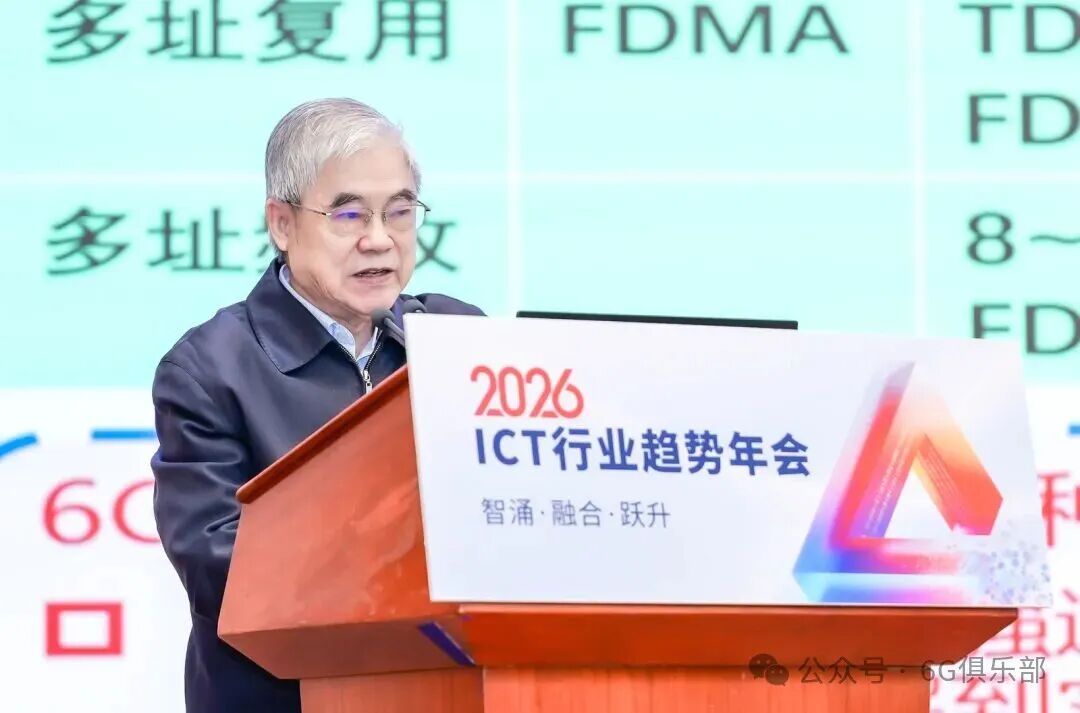
中国工程院邬贺铨院士:2026年ICT发展的七大趋势
Xin Lang Cai Jing· 2026-01-26 01:55
Core Insights - The report by the Chinese Academy of Engineering Academician Wu Hequan presents seven predictions for the development of the ICT industry by 2026, emphasizing the need for innovation and adaptation in the face of evolving technologies [1] Group 1: 6G Standardization and AI Integration - 6G standardization is expected to officially commence in 2026, but it will face more uncertainties compared to previous generations like 3G and 5G, as global operators and equipment suppliers have not yet reached a consensus [3][10] - Key technical directions for 6G include integrated modulation coding, joint source and channel coding, and collaborative resource management, with a focus on AI to unlock potential in wireless communication [3][10] Group 2: AI and Intelligent Terminal Transformation - The deep integration of large models and intelligent agents is transforming communication terminal models, leading to a shift from passive tools to proactive service partners [4][11] - The impact of AI intelligent terminals in 2026 is expected to include the proliferation of dedicated AI acceleration modules, standardization of AI agent frameworks, and a shift in focus from hardware to software and services [4][11] Group 3: New Digital Interaction Paradigms - The traditional app-based interaction model is being replaced by AI-driven systems that allow users to complete tasks through simple voice or text commands, fundamentally reshaping user engagement with digital services [5][12] - The new digital landscape will see intelligent agents as gatekeepers, with operating systems and chip manufacturers gaining significant control over service access and resource allocation [5][12] Group 4: Transition to Semantic Addressing - A shift from traditional DNS to semantic addressing is anticipated, which will decouple content from location and facilitate dynamic service assembly based on user intent [6][13] - This new paradigm will simplify device management and interoperability, allowing for more intuitive interactions in both consumer and business applications [6][13] Group 5: IPv6-Only Future - The transition to an IPv6-only model is deemed essential, as maintaining a dual-stack system incurs high costs and security risks [7][14] - The implementation of technologies like 464XLAT will enable compatibility with IPv4 services without hardware changes, enhancing cost-effectiveness and security [7][14] Group 6: Advancements in 2B Networking - The construction of 2B networks is expected to undergo significant advancements, focusing on specialized networks that leverage multiple technologies for enhanced performance [8][15] - The integration of local and cloud computing will allow small and medium enterprises to access intelligent computing resources at lower costs [8][15] Group 7: Data Element Action Plan - By 2026, the goal is to complete the establishment of 30 trusted data space pilot projects, focusing on building diverse data set systems and ensuring secure data circulation [9][16] - The transition from foundational infrastructure to value realization will empower enterprises to utilize data resources effectively, driving high-quality development in the digital economy [9][16]

中兴通讯董事长方榕:锐意进取,纵深突破,开创高质量发展的数智未来
Xin Lang Cai Jing· 2025-12-31 06:23
Core Viewpoint - The company reflects on its achievements in 2025 and emphasizes its commitment to embracing the new era of artificial intelligence while acknowledging the challenges posed by industry cycles and structural adjustments [1][5]. Group 1: Strategic Initiatives - The new "Connection + Computing Power" strategy has been implemented, leading to a return to revenue growth [5]. - The network business remains a solid profit foundation, while the computing power segment is developing new growth engines by serving key clients [5]. - The terminal business has launched the industry's first intelligent body smartphone, exploring new application avenues [5]. Group 2: Achievements and Recognition - The company received the highest SAIL award and topped the open-source rankings with its Intelligent Computing Super Node and "Co-Sight Super Intelligent Body," showcasing its strong R&D capabilities [2][5]. - The company maintained a top-level A rating in climate change leadership from CDP, reflecting its commitment to green development [2][5]. Group 3: Future Outlook - The company recognizes the complexities of the international environment and the uncertainties that may arise, while also noting the opportunities presented by domestic technological innovations such as AI and 5G-A [2][5]. - The company aims to ensure steady and sustainable growth by adhering to the principles of "Harmony and Prosperity" and "Quality Improvement and Profit Growth" [2][6]. Group 4: Market Strategy - The overseas market presents significant opportunities, and the company plans to deepen its presence in existing markets while capitalizing on the expansion of Chinese enterprises abroad [7]. - The domestic operator market will focus on stabilizing network structures and exploring new demand scenarios to expand growth [7]. - The company will enhance its brand and operational capabilities in the terminal business, particularly in the overseas market, while also advancing AI technology in domestic markets [7].
移动互联网后可能是智能体互联网?通信专家谈6G+AI的想象力
Bei Ke Cai Jing· 2025-12-18 13:03
Core Insights - 6G technology is expected to commercialize around 2030 and is currently in the standardization phase, with AI becoming a key driver for its advancement and application scenarios [1] - The integration of AI with 6G will lead to AI capabilities being ubiquitous in future terminals, although edge computing and cloud collaboration will be necessary due to limitations in processing power at the device level [1] - The demand for network capabilities will increase significantly with the rise of AI applications, and telecom operators must adapt by creating integrated services that combine network capabilities with computing and data services to capture the core value of the AI ecosystem [1] Group 1 - The Fourth 6G Frontier Technology and Trends Forum was held in Beijing, highlighting the importance of AI in the development of 6G technology [2] - Experts emphasize the need for telecom operators to collaborate with ecosystem partners to seize new opportunities presented by AI-driven demand [1] - The transition from PC internet to mobile IoT has been significant, and the capabilities of 6G will meet the AI processing and service needs of various terminals [1] Group 2 - Different AI terminal forms will have varying network requirements, indicating a surge in network-related business due to the explosion of AI terminals [1] - The collaboration between terminal manufacturers and telecom operators is essential for enhancing terminal performance and ensuring mutual benefits [1] - The technical pathways for addressing B2B and B2C demands in the 6G era will be similar, focusing on intelligent frameworks to meet diverse needs [1]
6G正向我们走来!
Ke Ji Ri Bao· 2025-11-14 07:38
Group 1 - The core prediction is that 6G is expected to be commercially available in China, Europe, India, Japan, South Korea, the United States, and Vietnam by 2030, with global connections projected to exceed 5 billion by 2040 [1] - The theme of the conference is "Intelligent Connection of the World, Co-constructing the 6G Technology Innovation Ecosystem," emphasizing the integration of communication, perception, computing, and intelligence technologies [1] Group 2 - 6G is currently in a critical phase of technological innovation and clear industry direction, requiring global collaboration among academia, industry, and users [2] - Terminal innovation is identified as a core aspect of building the 6G ecosystem, with AI smartphones expected to lead the next generation of smartphones, potentially capturing 54% of global smartphone shipments by 2028 [2] - The integration of AI and extended reality (XR) is anticipated to drive 6G development, shifting user experiences from "watching videos" to "entering videos" [2] Group 3 - Spectrum resources are deemed foundational for 6G development, with a significant increase in demand for spectrum in core cities expected over the next five years [3] - The GSMA advocates a "two-step" strategy for 6G, focusing first on maximizing 5G potential before advancing through innovations like AI-native networks and non-terrestrial networks [3] - China has developed over 300 key 6G technologies and established a three-pronged R&D system for technology breakthroughs, testing, and iterative optimization [3] Group 4 - As of November 2025, China is projected to account for 40.3% of global 6G patent applications, with Beijing establishing a collaborative framework to support 6G innovation and commercialization [4]
院士专家谈6G终端:6G与AI交汇使移动终端进入智能体新时代
Xin Jing Bao· 2025-11-14 07:35
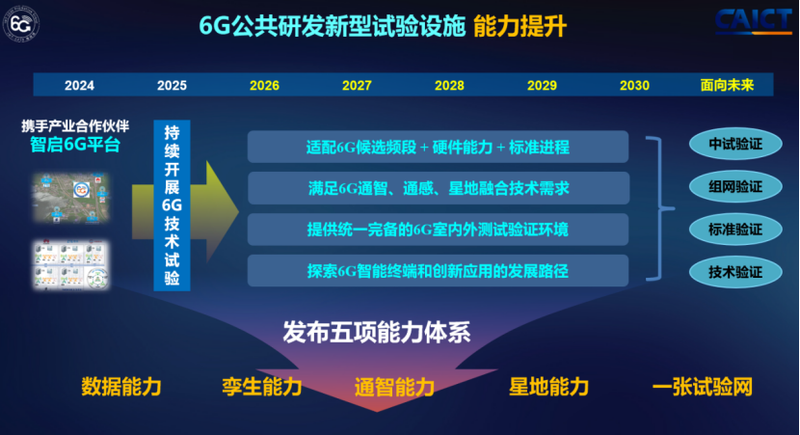
Core Insights - The 2025 6G Development Conference was held in Beijing, focusing on the application needs, key technologies, international standards, and industry research related to 6G [1][3] - Experts emphasized the necessity for new terminals to support 6G development, highlighting the intersection of 6G and AI as a transformative force for mobile terminals [1][4] Industry Developments - The IMT-2030 (6G) Promotion Group announced enhancements to the capabilities of public R&D facilities for 6G, indicating a critical phase of technological breakthroughs and standard research [3][6] - AI smartphones and intelligent devices are projected to be the main development directions for 6G, with AI smartphones expected to replace traditional smartphones [4][5] Market Trends - The global average smartphone replacement cycle is projected to be 51 months in 2024, with China expected to see a cycle of 44 months in 2025, reflecting a nearly 40% increase in duration since 2020 [3][4] - The consumer market is anticipated to remain the dominant business sector for 6G, necessitating new terminals and application services [4][5] Technological Innovations - AI smartphones will integrate large models into their operating systems, enhancing user experience through real-time interaction and personalized services [4][5] - The integration of AI and XR in terminals is expected to enhance interaction and immersion, positioning them as significant drivers for 6G [5][6] Future Applications - Nine potential application scenarios for 6G were identified, including holographic entertainment, personalized shopping, smart home management, immersive cloud office, and remote smart healthcare [5][6] - The development of new operating systems for intelligent terminals is anticipated to create new interaction points in the digital world [5][6]
6G正向我们走来!——2025年6G发展大会描绘全球智联新蓝图
Ke Ji Ri Bao· 2025-11-14 07:24
Group 1 - The core prediction is that 6G is expected to be commercially available in China and several other countries by 2030, with global connections projected to exceed 5 billion by 2040 [1] - The theme of the conference was "Intelligent Connection of the World, Building a 6G Technology Innovation Ecosystem," emphasizing the integration of communication, perception, computing, and intelligence technologies [1] - Experts believe that 6G will expand its service targets from people and machines to intelligent entities, aiming for a vision of "ubiquitous intelligence and digital twins" [1] Group 2 - The year 2023 marks the full launch of 6G standardization research, with a focus on accelerating technological innovation and clear industry direction [2] - Terminal innovation is identified as a core aspect of building the 6G ecosystem, with AI smartphones expected to lead the next generation of smartphones, potentially capturing 54% of global smartphone shipments by 2028 [2] - The integration of AI and extended reality (XR) is anticipated to drive 6G development, shifting user experiences from "watching videos" to "entering videos" [2] Group 3 - Spectrum resources are deemed the foundation for 6G development, with a significant increase in demand for spectrum in core cities expected over the next five years [3] - The GSMA advocates a "two-step" strategy for 6G, focusing first on maximizing 5G potential before leveraging innovations like AI-native networks and non-terrestrial networks [3] - China has established over 300 key 6G technology reserves and is developing a three-pronged R&D system to support technological breakthroughs and testing [3] Group 4 - As of November 2025, China accounts for 40.3% of global 6G patent applications, with Beijing developing a collaborative framework to support 6G innovation and commercial deployment [4] - The conference was co-hosted by the China Academy of Information and Communications Technology and the IMT-2030 (6G) Promotion Group, with support from local government bodies [4]