曲奇

Search documents
视频丨强制标示"一油一糖" 能否引领食品业健康升级?
Yang Shi Xin Wen Ke Hu Duan· 2025-12-23 02:43
Core Viewpoint - The National Health Commission has announced the new "National Food Safety Standard for Prepackaged Food Nutrition Labels," which will be implemented on March 16, 2027. The regulation mandates the labeling of "saturated fat or saturated fatty acids" and "sugar" as core items on nutrition labels, aiming to enhance consumer awareness of these components in food products [1][3]. Industry Changes - Over 80% of products from a food manufacturer in Jiangxi have already begun to comply with the new labeling standards ahead of the official implementation date [3]. - The new standard expands the mandatory labeling from "1+4" (energy, protein, fat, carbohydrates, sodium) to "1+6," adding sugar and saturated fat, which is expected to help consumers make informed dietary choices [6]. Health Implications - Excessive intake of saturated fat is closely linked to cardiovascular diseases, with common sources including animal fats and fried foods [9]. - Nutrition experts emphasize that the new labeling will help consumers better manage their intake of fats and sugars, addressing the challenge of making healthy choices in a market where many products may appear healthy but contain high levels of these components [6][9]. Challenges for Food Manufacturers - Food manufacturers are facing the need to upgrade their product formulations in response to the new labeling requirements, shifting focus from price and taste to health and quality [10]. - Companies are preparing by conducting comprehensive testing of their products to establish accurate nutritional databases and are in the process of designing and replacing packaging to meet the new standards [12][14]. Industry Regulation and Consumer Rights - The new standard is seen as a necessary step towards regulating the food industry and protecting consumer rights by providing clearer nutritional information [15]. - The mandatory labeling is expected to empower consumers to make informed choices based on transparent data, countering misleading marketing practices [15].

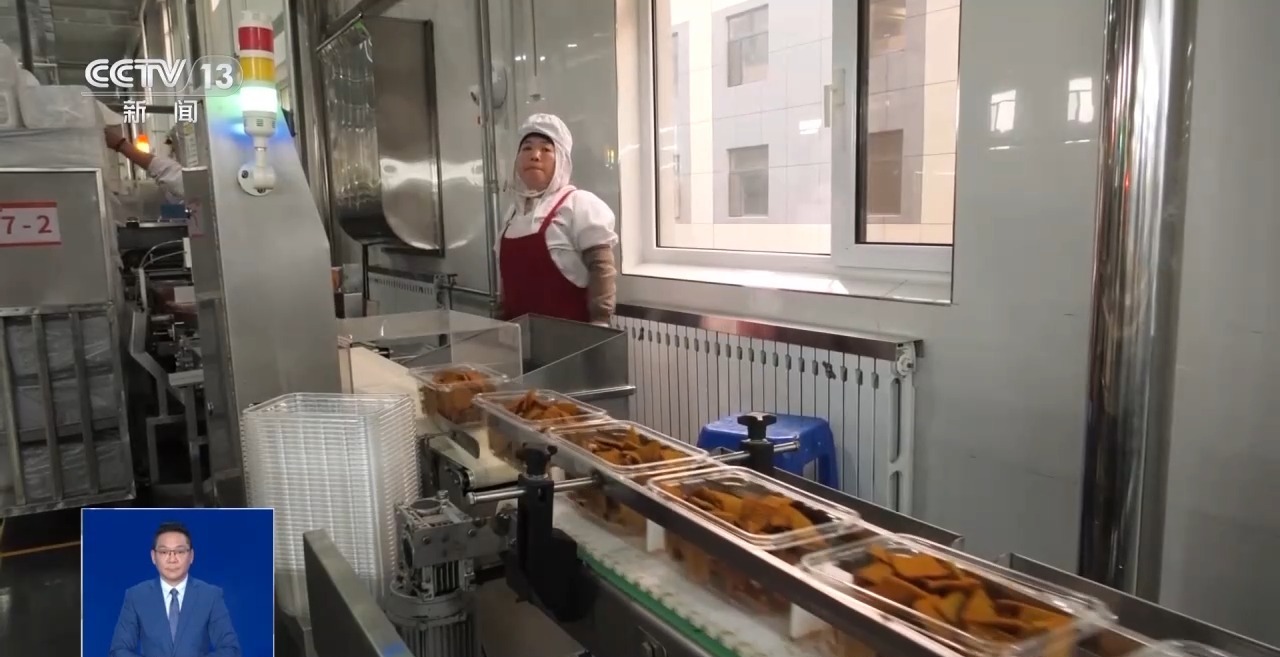
双“国字号”加持,剑指“未来加工”全国标杆
Xin Hua Ri Bao· 2025-12-15 07:14
Group 1 - The China (Taixing) Agricultural Products Future Processing Innovation Research Institute has been officially launched, serving as a collaborative platform between the Chinese Academy of Agricultural Sciences and the Taixing Agricultural Products Processing Park [1] - Taixing Agricultural Products Processing Park aims to become a national benchmark for agricultural product processing, focusing on three major areas: new food industry aggregation, integration of technological and industrial innovation, and food industry cultural tourism [1] - The park currently hosts 88 production enterprises, advancing in four high-potential sectors: prepared dishes, marinated foods, pastries, and fruit beverages [2] Group 2 - The park has signed 43 projects with investments exceeding 100 million yuan, totaling 15.6 billion yuan, with over 80% of these projects related to the new food industry [3] - The newly established innovation research institute will focus on six research directions, including precision nutrition and food new materials, addressing common issues in the agricultural and food industries [3] - The park has developed a full-chain safety control system from farm to table, ensuring product quality and safety, and has launched 15 new products through technological innovation [2][3]
泰兴农产品加工园区创新研究院正式启用双“国字号”加持,剑指“未来加工”全国标杆
Xin Hua Ri Bao· 2025-12-14 23:02
Group 1 - The China (Taixing) Agricultural Products Future Processing Innovation Research Institute has been officially launched, serving as a collaborative platform between the Chinese Academy of Agricultural Sciences and the Taixing Agricultural Products Processing Park [1] - Taixing Agricultural Products Processing Park aims to become a national benchmark for agricultural product processing, focusing on three major areas: new food industry aggregation, integration of technological and industrial innovation, and food industry cultural tourism [1] - Jiangsu Baihui Agricultural Development Co., Ltd. has developed an intelligent filling production workshop, with an annual slaughter volume exceeding one million pigs, and is collaborating with several universities to establish a complete deep processing industrial chain for livestock and poultry products [1] Group 2 - The Taixing Agricultural Products Processing Park hosts 88 production enterprises, advancing in four high-potential sectors: prepared dishes, marinated foods, pastries, and fruit beverages [2] - Shabulei Foods has established the first original automatic forming production line in the baking industry, achieving the highest sales in the Tmall cookie category [2] - The park has introduced new packaging material companies to enhance the preservation and quality of ready-to-eat dishes, transforming local specialties into nationwide popular products [2] Group 3 - The "14th Five-Year Plan" emphasizes the development of technological, green, quality, and brand agriculture, aiming to modernize the agricultural industry [3] - In 2024, the park signed 43 projects with investments exceeding 1 billion yuan, with over 80% of these projects focused on new food industries [3] - The newly launched innovation research institute will focus on six research directions, addressing common issues in agricultural products and food industries, and tackling key core technologies [3]

大侠后宫:"错季网购了一件千元皮草后......" 哈哈哈哈哈哈被网友笑晕过去了!!!
猿大侠· 2025-08-22 04:11
Group 1 - The article discusses the humorous and absurd nature of modern product names, particularly in the context of food and beverages, comparing them to royal titles from ancient times [56][61][64] - It highlights the complexity and creativity in naming conventions, suggesting that names have become overly elaborate and sometimes nonsensical [56][63][64] - The article reflects on how these naming trends can lead to confusion, especially for future generations trying to understand the meanings behind such names [56][62][63] Group 2 - The content includes various humorous anecdotes and observations about everyday life, showcasing the light-hearted and relatable nature of the discussions [27][46][56] - It emphasizes the importance of humor in daily interactions and the shared experiences that resonate with a wide audience [27][46][56] - The article also touches on the quirks of pet behavior, adding a layer of charm and relatability to the overall narrative [27][46]

吃不起的玉米蛋挞,到底谁在买?
虎嗅APP· 2025-05-29 13:20
Core Viewpoint - The article discusses the rising prices of baked goods, particularly the corn tart, which has sparked consumer dissatisfaction and highlighted broader industry issues related to pricing and consumer behavior [3][4][16]. Group 1: Price Discrepancies and Consumer Reactions - The corn tart, priced at 48 yuan, has become a symbol of overpriced baked goods, with consumers expressing outrage over the disparity between the low cost of corn and the high retail price of the tart [3][4][10]. - The emergence of the corn tart has led to a surge in consumer interest, with significant social media engagement, including 7 billion views on Douyin and 67.15 million on Xiaohongshu [7][8]. - Many consumers have reported dissatisfaction with the taste and quality of the corn tart, leading to a wave of negative reviews and discussions about its value [10][11]. Group 2: Market Trends and Consumer Behavior - The article notes a cyclical nature in the popularity of baked goods, with the corn tart currently replacing previous trends like butter rice cakes [6]. - The pricing of baked goods varies significantly among different vendors, with some offering corn tarts for as low as 6 yuan, indicating that high prices are not universal across the market [10][11]. - Consumer behavior is influenced by social media trends, leading to impulsive purchases driven by curiosity and peer pressure, as seen during events like the Guangzhou bread festival [8][10]. Group 3: Industry Insights and Future Outlook - The corn tart phenomenon reflects a broader trend in the baking industry where novelty items can command high prices, but sustainability in the market often requires a return to more reasonable pricing [22]. - Historical examples of once-popular baked goods, such as the "dirty" bread, illustrate that while some items may achieve lasting popularity, many will fade as consumer interest wanes [21][22]. - The article emphasizes that for baked goods to remain in the market long-term, they must balance quality and affordability, moving away from the high-margin strategies that characterize many current trends [22][23].