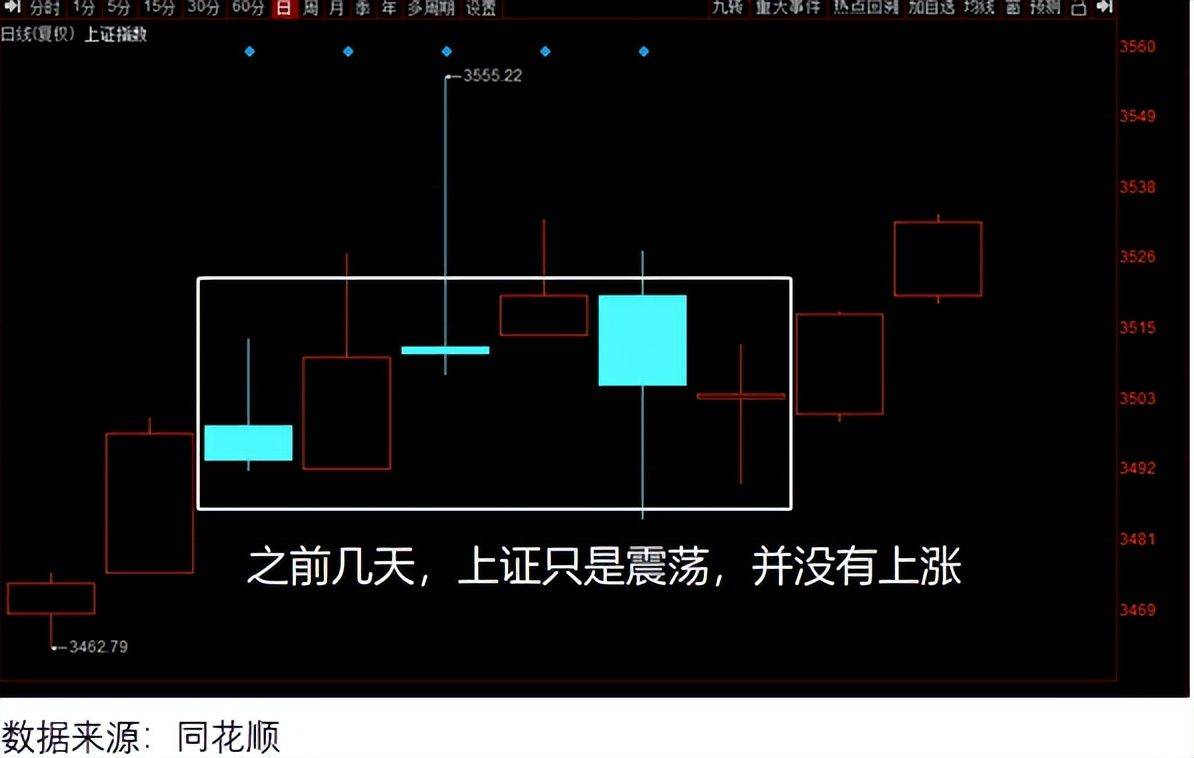
机构库存

Search documents
百亿产业园落地,炒大消费的题材又多了一个
Sou Hu Cai Jing· 2026-02-22 07:40
Group 1 - The leading company in the traditional health supplement sector announced an investment of 1.485 billion yuan to build a health consumer goods industrial park, which is interpreted as a significant transformation in response to the trend of younger and food-oriented consumption [1] - This move is seen as a key action to position itself in the health sector, reflecting a strategic shift towards the growing health market [1] Group 2 - The concept of "speculative capital" is introduced, indicating that quality stocks often attract capital competition before showing significant price movements, which reflects the market's attitude towards future trends [2] - The phenomenon of "speculative capital" is characterized by the simultaneous appearance of "institutional inventory" data and "speculative capital movement" data, suggesting a competitive dynamic among different types of capital [2][3] Group 3 - The analysis highlights that prior to price movements, there are often two rounds of noticeable "speculative capital" activity, followed by a period of adjustment, indicating a battle among different capital participants [5] - The identification of "washing" behavior through quantitative data can help recognize quality stocks that are undergoing adjustments, as institutions may be collecting more shares rather than abandoning the stock [5][8] Group 4 - The analysis emphasizes the importance of a multi-dimensional quantitative approach to market analysis, which helps avoid falling into information traps and allows for a comprehensive understanding of stock value from various perspectives, including capital, behavior, price, and probability [11][13] - Stocks that exhibit repeated "washing" behavior indicate a longer-term investment strategy by participating capital, rather than short-term speculation, making them worthy of continued observation [11][13] Group 5 - The core advantage of quantitative trading is to replace subjective judgment with objective data, allowing for the construction of a probabilistic investment framework [14] - The analysis suggests that instead of making impulsive decisions based on news, it is crucial to observe capital behavior related to news events to assess the true market sentiment and make more rational investment decisions [14]

再融资新政来袭,用数据看清新增量的行动
Sou Hu Cai Jing· 2026-02-18 04:16
Core Viewpoint - The recent introduction of refinancing optimization measures by the Shanghai and Shenzhen Stock Exchanges aims to support high-quality listed companies, particularly in the technology sector, facilitating faster access to funding for research and development [1] Group 1: Understanding "Institutional Inventory" - "Institutional inventory" reflects the active participation of institutional funds in trading, serving as an indicator of market engagement rather than mere holding positions [3][5] - The presence of "institutional inventory" can indicate that institutions are actively involved in a stock, even during periods of price fluctuations, suggesting a strategic accumulation rather than a lack of interest [3][8] Group 2: Avoiding Misconceptions - Having institutional holdings does not guarantee safety; active participation is crucial. A stock may have institutional investors but lack active trading, leading to poor market performance [6][10] - The concept of "false consolidation" can mislead investors; a stock may appear stable while lacking institutional engagement, which can result in disappointing market outcomes [10][12] Group 3: Practical Application of Data - Investors should focus on "institutional inventory" as a key metric to gauge institutional activity, helping to identify potential investment opportunities and avoid pitfalls associated with superficial market trends [12]

北交所IPO提速,数据还原资金逻辑
Sou Hu Cai Jing· 2026-02-14 05:35
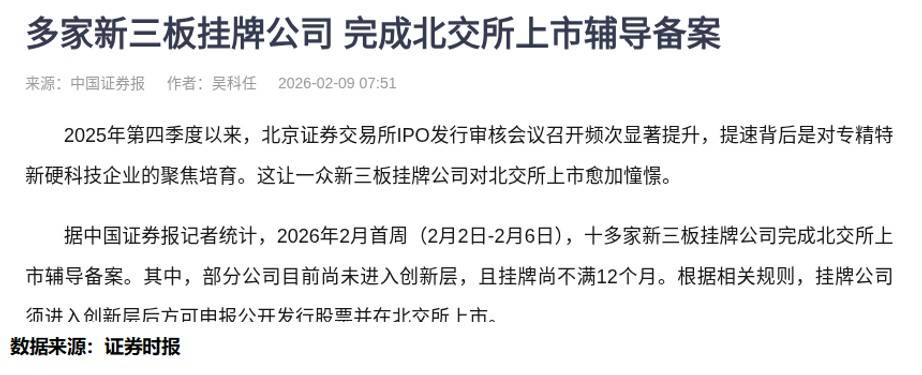
Group 1 - The core viewpoint of the article highlights the increasing frequency of IPO reviews at the Beijing Stock Exchange (BSE), with many specialized and innovative "little giant" companies shifting their listing plans from the Shanghai and Shenzhen stock exchanges to the BSE, indicating a positive cycle of quality enterprise aggregation, liquidity improvement, institutional empowerment, and performance realization [1] - The article emphasizes that for ordinary investors, understanding the underlying dynamics of market movements is crucial, as relying solely on news can lead to impulsive decisions or anxiety about missing opportunities [1] - It suggests that quantitative big data can help investors discern the true trading behaviors of institutional investors, providing an objective analysis that can replace subjective speculation [1] Group 2 - Institutional inventory is a key indicator of the activity level of large funds, reflecting whether institutional investors are actively participating in trading, rather than just the volume of buying or selling [3] - The article illustrates that even during significant price adjustments, the persistence of institutional inventory indicates ongoing participation from large funds, which can lead to subsequent price rebounds [6] - A lack of institutional inventory during a price rebound suggests that the rebound may not be sustainable, as it indicates a lack of ongoing support from institutional investors [9] Group 3 - The article discusses how fluctuations in stock prices can often lead to panic among investors, but the presence of active institutional inventory can signal that these adjustments are merely short-term volatility [9] - It warns that rebounds without institutional support are risky, as they are often driven by short-term sentiment rather than solid backing from large funds [13] - The importance of focusing on the core attitudes of institutional funds rather than being swayed by news is emphasized as a strategy for navigating market adjustments [16]
零食龙头赴港上市,数据看穿A股的协同效应
Sou Hu Cai Jing· 2026-01-29 12:57
Group 1 - The core point of the article highlights the successful listing of Mingming, a leading snack food company in Hong Kong, which has attracted significant institutional investment, including Tencent and Temasek, marking it as the "first stock of bulk snacks" in the Hong Kong market [1] - The article discusses the challenges investors face when making decisions based on stock price movements, emphasizing that price trends often obscure the true trading intentions behind them [3][6] - It introduces the concept of "institutional inventory," which reflects the active participation of institutional investors in trading, providing a clearer picture of market dynamics beyond mere price fluctuations [6][9] Group 2 - The article explains that the disappearance of "institutional inventory" signals a lack of active participation from institutional investors, indicating that the stock may no longer align with their long-term investment strategies [7][9] - It emphasizes the importance of quantitative data in understanding market behavior, as it remains unaffected by emotional biases and accurately reflects trading fundamentals [9][11] - The article advocates for a shift from subjective decision-making based on price trends to a more objective approach driven by data, which can help investors avoid common pitfalls and make more informed decisions [10][11]

机构也踏空,注意三类异动
Sou Hu Cai Jing· 2026-01-13 01:47
Market Overview - The Shanghai Composite Index continues to rise sharply, with trading volume reaching a historical high, indicating a strong market momentum similar to the previous year's performance [1][10] - The A-share market is currently the strongest globally, with over 200 stocks hitting the daily limit, primarily in the media and AI application sectors [3][4] AI Applications - The AI application sector has surged due to a shift from "computing power competition" to "monetizing user engagement," with institutions focusing on a new concept called "GEO" (Generative Engine Optimization) [4][17] - The popularity of AI search assistants like Doubao and DeepSeek has led brands to adapt their marketing strategies to ensure visibility in AI recommendations [4][17] Trading Volume and Market Dynamics - A-share trading volume exceeded 3.6 trillion yuan, setting a new record, driven by a significant increase in margin trading balances and foreign capital inflows [10][11] - The market is characterized by a rotation of funds among hot sectors, with a notable focus on AI applications, commercial aerospace, and e-commerce, indicating a dynamic trading environment [10][11] Institutional Behavior - The number of stocks trading above institutional cost levels has increased, suggesting a growing number of stocks are now above their long-term costs, which may indicate potential market corrections [18][20] - Institutions are actively participating in the market, with a focus on stocks that have shown consistent interest from institutional investors, highlighting the importance of monitoring institutional activity [14][18] Global Economic Influences - Political interventions in the U.S., particularly regarding the Federal Reserve, are raising concerns about the independence of monetary policy, which could influence global asset allocation and potentially redirect funds to A-shares as a safe haven [5][7][11]

基金长期利好出现,场外资金后面还有高潮!
Sou Hu Cai Jing· 2025-09-14 04:11
Core Insights - The recent release of the "Action Plan for Promoting High-Quality Development of Public Funds" by the China Securities Regulatory Commission has caused significant industry impact, with Southern Fund's long-termism being highlighted as a benchmark [1][2] - There is a notable phenomenon in the A-share market where stocks often rally ahead of positive news, leading to price declines once the news is officially announced, indicating a unique "front-running" behavior among institutional investors [3][5] Market Truth Behind the News - Ordinary investors need to understand why institutional investors can often position themselves ahead of the same positive news, which is attributed to the "front-running" phenomenon in the A-share market [3] - Unlike foreign markets that trade based on known information, the A-share market tends to price in news before it is publicly announced, resulting in many retail investors suffering losses due to this information asymmetry [3] Unveiling Institutional Fund Dynamics - The comparison of stock performance reveals that while one stock appears to be rising, it may actually be a false signal, whereas another stock may be declining but has underlying strength [5][10] - The key to understanding market movements lies in tracking institutional fund flows, as their trading behavior is driven by cost considerations, and recognizing changes in these behaviors can help identify potential opportunities and risks [10] Value Discovery Through Quantitative Data - Southern Fund's success in practicing long-termism is largely attributed to the empowerment from digital platforms that enable quantitative analysis of investment behavior, ensuring scientific decision-making [11] - Instead of chasing delayed news, investors are encouraged to focus on real-time trading data, such as "institutional inventory," which can provide deeper insights into market dynamics [11][12] Future Outlook - As regulatory policies improve and market mechanisms mature, the "front-running" phenomenon may diminish, but information asymmetry is expected to remain a prominent feature of the A-share market [12] - This situation emphasizes the importance of valuing quantitative data, as indicators like "institutional inventory" offer a unique perspective for market observation, similar to how Southern Fund leverages digital platforms for research [12]

外资全线加仓,两个板块是逃不掉的!
Sou Hu Cai Jing· 2025-09-01 14:53
Group 1 - Major financial institutions like JPMorgan, Citigroup, and Morgan Stanley have recently increased their holdings in H-shares such as CATL, ZTE, and WuXi AppTec, indicating a growing interest in these stocks [1] - JPMorgan's long position in CATL H-shares rose from 5.98% to 6.06%, while Morgan Stanley's increased from 4.96% to 6.05% [1] - The Hong Kong stock market showed strong performance in August, with the Hang Seng Index rising by 1.23% and the Hang Seng Tech Index increasing by 4.06% [3] Group 2 - There is a concern that retail investors often enter the market after institutions have already made their moves, leading to potential losses for these investors [5] - A notable example of institutional behavior is highlighted, where foreign institutions claimed to avoid thematic stocks but were found heavily invested in restructuring concept stocks after earnings reports were released [6] - The concept of "institutional inventory" is introduced as a key indicator of institutional trading activity, suggesting that active participation by institutions can signal future stock performance [9][11] Group 3 - The article emphasizes the importance of understanding the true flow of funds rather than relying on news, which often lags behind actual market movements [14] - It is suggested that retail investors should focus on analyzing data that reveals institutional actions to avoid being misled by superficial news [14] - The conclusion stresses that those who can access and interpret real data will have a competitive advantage in the market [14]





融资余额八连增,显然很多股正在蓄势!
Sou Hu Cai Jing· 2025-07-18 04:08
Group 1 - The A-share market saw a continuous increase in financing balance from July 7 to July 16, totaling an increase of 44.038 billion yuan, indicating active participation from financing clients in sectors such as non-bank financials, computers, and non-ferrous metals [1] - Despite the overall positive trend, the Shanghai Composite Index remained flat since July 10, suggesting the presence of many volatile stocks and ongoing capital participation, which may lead to future market surges [1] Group 2 - Retail investors often misinterpret market trends, believing that all price movements are positive; however, 80% of price increases typically occur within 20% of the time, leading to potential mis-timings in buying and selling [3] - The "institutional inventory" data indicates active institutional trading; when this data is high, it suggests longer participation from institutional funds, which can be crucial for understanding market dynamics [5][6] Group 3 - In the current regulatory environment, institutions cannot manipulate stock prices as openly as before but can still use "shakeout" strategies to clear out weak hands, as evidenced by a recent innovative drug stock that experienced a significant drop before rebounding [7] - The recent "eight consecutive increases" trend highlights that stocks like Dongshan Precision and Zijin Mining had institutional inflows as early as June, while some speculative stocks showed no institutional interest, emphasizing the importance of data analysis in investment decisions [9]