
某款游戏

Search documents
男孩半年充值游戏超2万余元 未成年人网游过度充值何解
Ren Min Ri Bao· 2026-01-16 02:57
Core Viewpoint - A recent case in Henan highlights the issue of minors making unauthorized in-game purchases, leading to a civil lawsuit where the court ruled that the minor's actions were invalid due to lack of parental consent, but also noted the mother's failure in supervision, resulting in a partial refund of the funds [1][2]. Group 1: Legal Framework and Consumer Rights - According to the Civil Code, minors over eight years old have limited civil capacity, requiring parental consent for significant legal actions, which was not present in this case [2]. - The court determined that the minor's actions were not suitable for his age and intellect, thus invalidating the transactions and mandating the return of funds obtained through these invalid actions [2]. Group 2: Platform Responsibilities - Gaming platforms are urged to take social responsibility by improving complaint handling processes and refund services for parents seeking to recover funds spent by minors without consent [3]. - Platforms should enhance identity verification measures to prevent minors from using adult accounts for gaming and purchases, in compliance with national anti-addiction policies [3]. - There is a need for stricter management of payment processes, including clearer warnings and limits on transaction amounts for accounts suspected to be operated by minors [3]. Group 3: Parental Guidance and Education - Parents are encouraged to monitor and guide minors' internet usage, fostering healthy interests and responsible spending habits [4]. - It is advised that parents securely manage their devices and payment information, and regularly check transaction records to identify any unusual activities [4]. - In cases of unauthorized purchases, parents should collect evidence and communicate with gaming companies to assert their claims, utilizing consumer protection platforms if necessary [5].
合力破解未成年人网游过度充值问题
Ren Min Ri Bao· 2026-01-14 04:18
Core Viewpoint - The case of an 11-year-old boy in Henan who charged over 20,000 yuan to his mother's game account without consent highlights the issue of minors making unauthorized in-game purchases, leading to a civil lawsuit and a court ruling that partially returned the funds due to the mother's lack of supervision [1][2]. Group 1: Legal Framework and Court Ruling - According to the Civil Code, minors over eight years old have limited civil capacity and require parental consent for legal actions, which was not provided in this case [2]. - The court ruled that the boy's actions were invalid due to lack of consent, but also noted the mother's failure in supervision, resulting in a decision to return half of the charged amount [1][2]. Group 2: Industry Response and Recommendations - The China Consumer Association emphasizes the need for gaming platforms to take social responsibility by improving complaint handling, refund processes, and customer service to address unauthorized charges by minors [3]. - Platforms should enhance identity verification and implement stricter measures to prevent minors from using adult accounts for gaming and purchases [3]. - It is recommended that gaming companies manage payment processes more effectively, including setting clear alerts and limits on transactions that appear to be made by minors [3]. Group 3: Parental Guidance and Consumer Education - Parents are advised to monitor and guide their children's online activities and spending habits, fostering a healthy understanding of consumption [4]. - It is crucial for parents to secure their devices and payment information, and to regularly check transaction records for any unusual activity [4]. - In cases of unauthorized charges, parents should collect evidence and communicate with gaming companies to resolve disputes, utilizing consumer protection platforms if necessary [5].
中消协发未成年人网游消费提示
Xin Hua Wang· 2026-01-09 00:17
Group 1 - The core issue involves complaints from consumers regarding a game operated by a Shanghai company, where minors are making large in-game purchases without parental consent, with an average complaint amount of 2551.57 yuan from August 1, 2025, to December 10, 2025 [1] - The China Consumers Association, in collaboration with the China Market Supervision Management Society, has issued consumer alerts to protect minors and promote healthy development in the online gaming industry [1] - There is a call for improved complaint handling mechanisms and refund processes for parents seeking refunds for unauthorized charges made by minors [1] Group 2 - The industry is urged to strengthen technical protective measures to accurately identify minors and prevent them from using adult accounts for gaming and purchases [2] - Online gaming platforms should enhance management of payment processes, including clearer reminders and verification mechanisms during payment, and reasonable limits on recharge amounts [2] - Parents are advised to securely manage their mobile devices and payment information, and to collect evidence if unauthorized charges occur, including transaction records and communication logs [2]
未成年人网游充值需警惕
Xin Lang Cai Jing· 2026-01-06 21:34
Group 1 - The core viewpoint of the article emphasizes the need for protecting minors and consumer rights in the online gaming industry, urging parents and platforms to work together to prevent unauthorized in-game purchases by minors [1][2] - The China Consumer Association reported an average complaint amount of 2551.57 yuan related to unauthorized in-game purchases by minors, highlighting the issue of minors obtaining parents' payment passwords through various means [1] - The association calls for gaming platforms to take social responsibility by improving complaint handling mechanisms and refund processes for unauthorized transactions made by minors [1][2] Group 2 - Online gaming platforms are urged to enhance technical measures to accurately identify minors and prevent them from using adult accounts for gaming and purchases, including implementing stricter payment verification processes [2] - Parents are reminded of their role as primary guardians, encouraging them to monitor their children's gaming habits and secure their payment information to prevent unauthorized transactions [2] - A related case illustrates the legal implications of unauthorized purchases by minors, where a court ruled that a minor's in-game purchases were invalid due to lack of parental consent, yet acknowledged the parent's failure in supervision [3]
未成年人网游充值平均涉诉2551.57元,中消协等提醒家长平台齐护航
Yang Zi Wan Bao Wang· 2026-01-05 14:08
Core Viewpoint - Recent complaints received by the China Consumers Association (CCA) highlight issues regarding minors making large in-game purchases without parental consent, raising concerns about consumer protection and the responsibilities of gaming platforms [5][7]. Group 1: Consumer Complaints and Legal Cases - The CCA has reported that a significant number of minors have accessed their parents' payment information to make unauthorized in-game purchases, with an average complaint amount of 2,551.57 yuan from August 1, 2025, to December 10, 2025 [5]. - An 11-year-old boy in Henan used his mother's WeChat account to recharge over 20,000 yuan for gaming without her consent, leading to a civil lawsuit where the court ruled the transactions invalid but held the mother partially responsible for inadequate supervision [7]. Group 2: Recommendations for Gaming Platforms - The CCA emphasizes that gaming platforms should actively address consumer complaints and enhance their social responsibility [8]. - Platforms are urged to implement stricter identity verification measures to prevent minors from misusing adult accounts and to improve payment management by setting clear reminders and limits on recharge amounts [8]. Group 3: Parental Responsibilities - Parents are reminded to manage their children's gaming time and to secure their payment information to prevent unauthorized access [8]. - In cases of unauthorized large purchases by minors, parents should collect evidence such as transaction records and communication logs to support their claims for refunds [8].

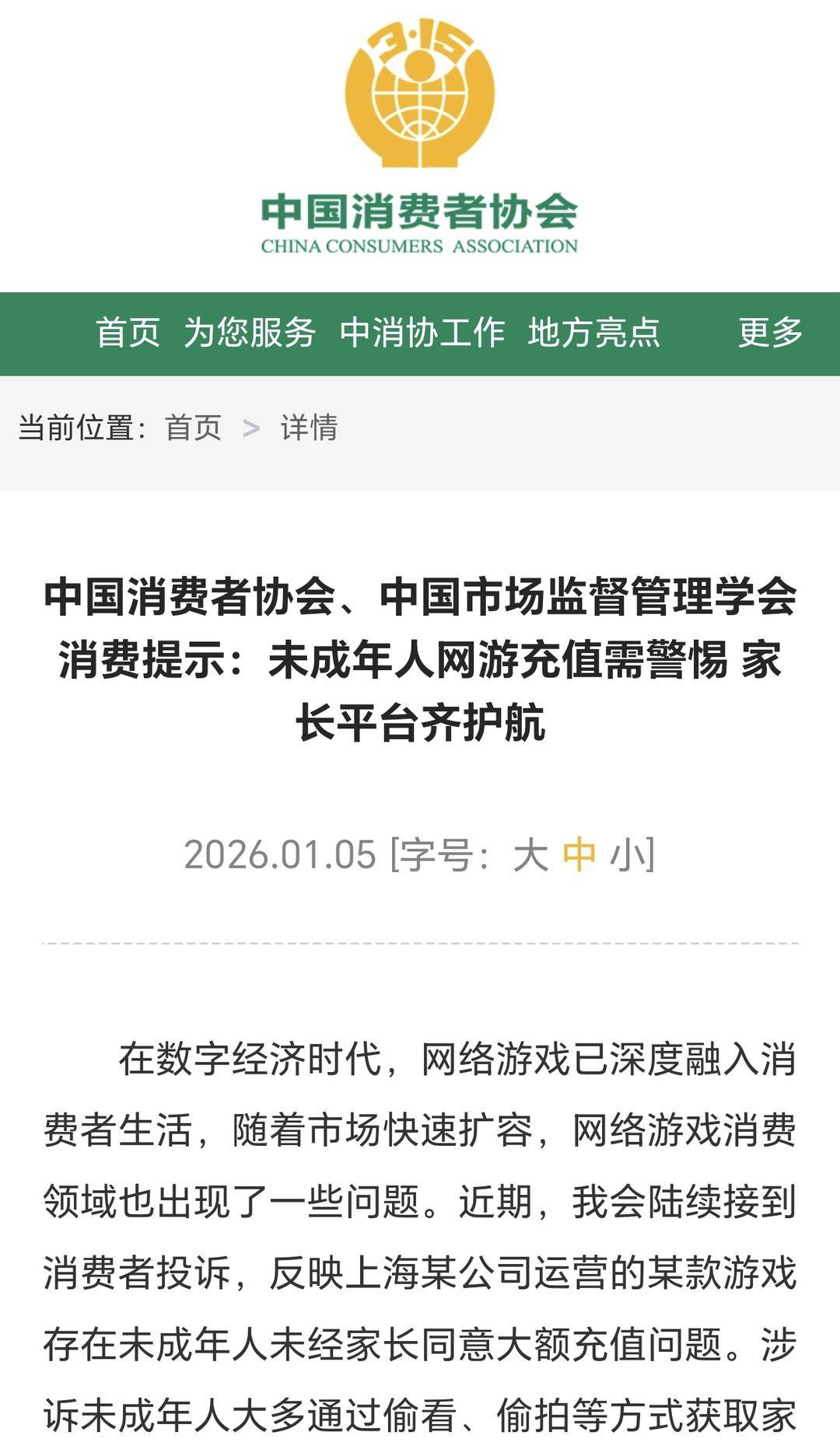
未经家长同意半年充值2万元 中消协提示:未成年人网游充值需警惕
Bei Jing Shang Bao· 2026-01-05 08:14
Core Viewpoint - The article highlights the issue of minors making large in-game purchases without parental consent, leading to consumer complaints and legal actions against gaming companies [1][2]. Group 1: Consumer Complaints - The China Consumer Association reported an increase in complaints regarding a specific game operated by a Shanghai company, where minors made significant in-game purchases without parental approval, averaging 2551.57 yuan per case [1]. - Many minors accessed their parents' payment passwords through unauthorized means, such as spying, and used their parents' or idle family phones to make continuous purchases [1]. Group 2: Legal Proceedings - An 11-year-old boy in Henan charged over 20,000 yuan to a game account registered under his mother's name without her consent, leading to a civil lawsuit where the court ruled the charges invalid due to lack of parental approval, but also noted the mother's inadequate supervision [2]. Group 3: Recommendations for Gaming Companies - The article suggests that gaming platforms should enhance their complaint handling mechanisms, prioritize refund requests from parents, and improve customer service responsiveness [3]. - Companies are urged to implement stricter identity verification measures to prevent minors from using adult accounts for gaming and purchases [3]. - It is recommended that gaming platforms manage in-game purchases more effectively, including setting clear alerts and limits on spending for accounts suspected to belong to minors [3]. Group 4: Parental Responsibilities - Parents are identified as the primary guardians responsible for protecting minors' rights, and they should monitor their children's gaming activities and spending [4]. - Recommendations include securing personal devices and payment information, disabling features like "small amount no-password payment," and regularly reviewing transaction records to catch unauthorized charges [4]. - Parents are advised to gather evidence in case of unauthorized charges and to communicate with gaming companies to resolve issues, with options for escalating complaints if necessary [4].
中消协:未成年人大额充值某款游戏,平均金额超2500元
Xin Lang Cai Jing· 2026-01-05 04:16
Core Viewpoint - The article highlights the issue of minors making large in-game purchases without parental consent, leading to consumer complaints and the need for improved protections and refund processes in the gaming industry [1][2]. Group 1: Consumer Complaints and Issues - The China Consumers Association has received complaints regarding a game operated by a Shanghai company, where minors accessed parents' payment passwords to make unauthorized large purchases, averaging 2551.57 yuan from August 1, 2025, to December 10, 2025 [1]. - Parents reported difficulties in obtaining refunds from the gaming company, with customer service being hard to reach [1]. Group 2: Recommendations for Gaming Platforms - Gaming platforms are urged to take social responsibility by improving complaint handling mechanisms, optimizing refund processes, and enhancing customer service to address refund requests from parents of minors [1]. - Platforms should implement stricter identity verification measures to prevent minors from using adult accounts for gaming and purchases [2]. Group 3: Parental Responsibilities - Parents are identified as the primary guardians responsible for protecting minors' rights and should manage their children's gaming time and content [2]. - It is recommended that parents safeguard their mobile devices and payment information, avoid sharing passwords with minors, and regularly check transaction records to identify any unusual activity [2]. Group 4: Evidence Collection and Reporting - In cases of unauthorized large purchases by minors, it is important to collect and preserve evidence such as transaction records and communication logs to support claims for refunds [3]. - If resolution is not achieved through direct communication with the gaming company, parents can escalate the issue to consumer protection organizations or relevant administrative authorities [3].
未成年人玩网游如何把好“充值关”?中消协发布提示
Yang Shi Xin Wen· 2026-01-05 02:17
Core Viewpoint - The rapid expansion of the digital economy has led to significant issues in the online gaming sector, particularly concerning unauthorized large transactions made by minors without parental consent [1] Group 1: Consumer Complaints and Legal Cases - The China Consumer Association has received complaints regarding a specific game operated by a Shanghai company, where minors have made large in-game purchases without parental consent, averaging 2551.57 yuan per case [1] - A notable case involved an 11-year-old boy who charged over 20,000 yuan to his mother's account without her consent, leading to a court ruling that recognized the charges as invalid but also noted the mother's lack of supervision [2] Group 2: Recommendations for Online Gaming Platforms - Online gaming platforms are urged to take social responsibility by improving complaint handling mechanisms, optimizing refund processes, and enhancing customer service responsiveness to parental refund requests [3] - Platforms should implement stricter identity verification measures to prevent minors from using adult accounts for gaming and purchases, and establish clearer alerts and restrictions on payment methods [3] Group 3: Parental Guidance and Responsibilities - Parents are advised to actively monitor their children's gaming activities, set limits on gaming time, and educate them on responsible consumption [3] - It is recommended that parents safeguard their payment information and regularly check transaction records to identify any unauthorized activities [4] Group 4: Collective Responsibility and Industry Ethics - The China Consumer Association emphasizes that protecting minors is a collective responsibility, urging gaming companies to adhere to ethical standards and legal requirements while also calling on parents to fulfill their supervisory roles [4]
邓林园:未成年人网瘾低龄化 需合力营造健康网络环境
Zhong Guo Jing Ying Bao· 2025-05-28 14:58
Core Viewpoint - The issue of internet addiction among minors has garnered significant social attention, particularly as it shows a trend of increasing prevalence and younger age onset due to the proliferation of smart devices and the internet [1][2]. Group 1: Causes of Internet Addiction - The phenomenon of internet addiction among minors is linked to the developmental stage of the brain, where the prefrontal cortex, responsible for emotional control and advanced cognitive processing, matures only by the age of 25-30, while the limbic system and amygdala, which are associated with emotional processing, develop rapidly during adolescence [1]. - Internet usage fulfills various psychological needs for adolescents, such as social, competence, and autonomy needs, making them more susceptible to addiction when these needs are unmet in real life [2]. Group 2: Strategies for Prevention and Treatment - A multi-faceted approach is necessary to combat internet addiction, involving collaboration among families, schools, society, and internet platform companies to create a healthier online environment for minors [2][3]. - Families should enhance their own digital literacy and serve as responsible role models for their children, engaging in high-quality interactions such as reading, sports, and outings to fulfill children's psychological needs in real life [2]. - Schools can promote offline interactions through arts, sports, and group activities, and implement diverse evaluation mechanisms to provide students with various opportunities to experience a sense of achievement beyond academics [3]. - Society should collectively address the issue of adolescent internet health by offering rich offline activities and social practice opportunities, emphasizing the importance of high-quality relationships among parents, peers, and teachers as protective factors against internet addiction [3]. - Internet platform companies are encouraged to establish industry self-regulation and norms, optimize content for minors, and develop child-friendly algorithms to provide healthier and more beneficial online content [3].