梦幻西游手游

Search documents
网易-S(09999.HK):料Q4平稳过渡 关注股东回报与全球化进展
Ge Long Hui· 2026-01-30 04:49
Core Viewpoint - The company is expected to see a 7% year-on-year revenue increase in Q4 2025, reaching 28.5 billion yuan, while Non-GAAP net profit is projected to decline by 15% to 8.25 billion yuan due to potential investment and foreign exchange losses [1] Group 1: Revenue and Product Performance - The company's flagship products are showing stable performance, with online game service revenue expected to grow by 7% in Q4 2025 [1] - "Dream of the Red Chamber" PC is anticipated to achieve significant growth due to the continued recognition of deferred revenue [1] - "Dream of the Red Chamber" mobile continues to perform well, while "Egg Party" is expected to see increased user activity and revenue due to ongoing holiday and operational events [1] - "Yanyun Sixteen Sounds" maintains steady revenue in the domestic market, and the overseas version is expected to contribute additional revenue after its strong launch [1] - "Marvel Showdown" has been climbing the Steam bestseller list since November 2025, further validating the company's globalization capabilities [1] Group 2: Future Product Pipeline and Shareholder Returns - The product pipeline for 2026 is robust, with key titles like "Forgotten Sea" set for testing in February 2026 and plans for launch [2] - "Starry Sky Friends" has received a license, and the open-world game "Infinite" is generating significant market interest [2] - The company has multiple projects in development, including auto-chess games, which will strengthen its core R&D advantages and support its globalization strategy [2] - The company has maintained a stable shareholder return, with a dividend payout ratio of 30% in the first three quarters of 2025, and is expected to continue generous dividends in Q4 2025 [2] Group 3: Profit Forecast and Valuation - The company's Non-GAAP net profit for 2025 has been revised down by 2% to 38.5 billion yuan, while estimates for 2026 and 2027 remain at 42.6 billion yuan and 45.3 billion yuan respectively [2] - The current stock price corresponds to a Non-GAAP P/E ratio of 14/13 times for 2026/2027, with an expected upside of 33% for both Hong Kong and US stocks [2]

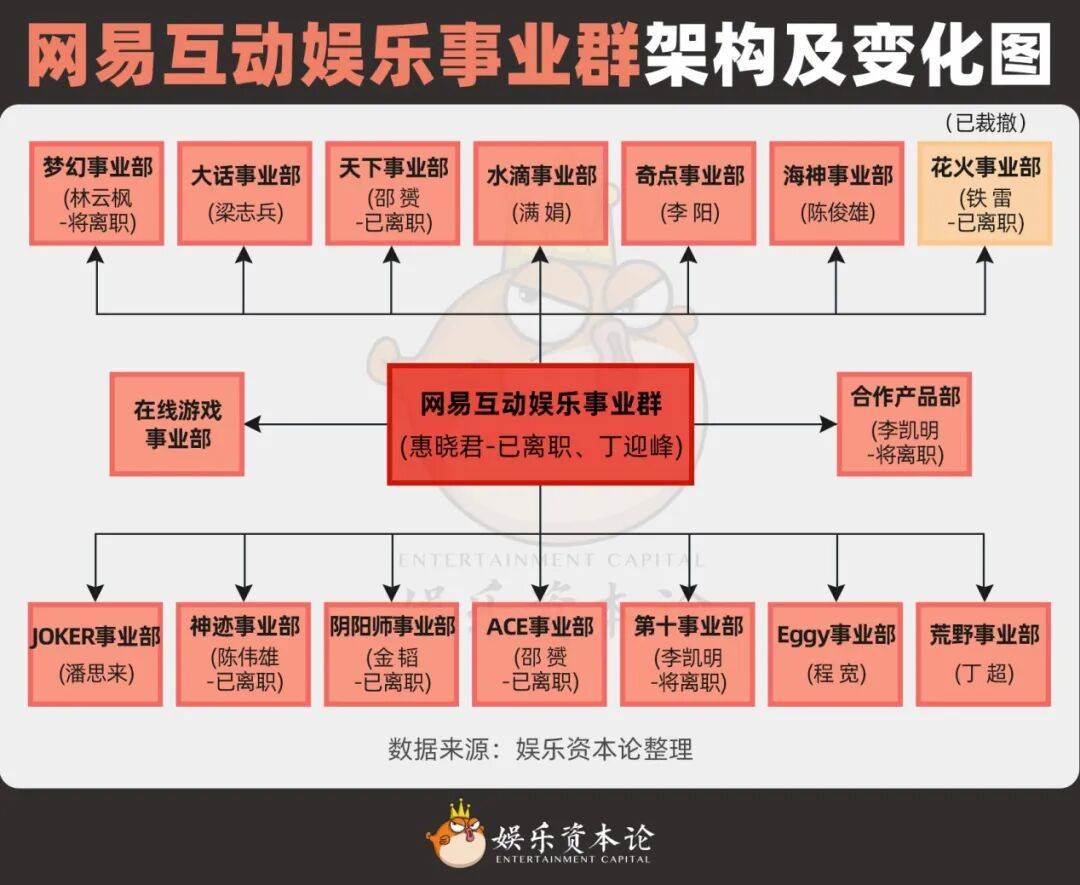
网易互娱连走三人?丁磊对广州藩王的精准切割
Hu Xiu· 2025-10-24 01:11
Core Insights - Recent personnel changes at NetEase's gaming division indicate a significant restructuring, particularly affecting the Guangzhou-based teams, which have historically been crucial to the company's success [1][4][8] Group 1: Personnel Changes - NetEase's gaming division has experienced a series of high-profile departures, including the resignation of key figures such as Lin Yunfeng and Li Kaiming, indicating a potential shift in leadership strategy [2][6][16] - Li Kaiming announced his departure to pursue entrepreneurial ventures, countering rumors of being forced out, and confirmed he had initiated his resignation process earlier [7][11] - The restructuring is seen as part of a broader strategy by CEO Ding Lei to address underperformance in the Guangzhou region, which has seen a lack of successful new titles in recent years [9][28][36] Group 2: Performance and Strategy - The Guangzhou gaming units, particularly the Dream and Tenth divisions, have faced challenges with recent projects, including the underwhelming performance of "射雕" and the cancellation of "万民长歌:三国," leading to a reassessment of their operational effectiveness [29][31][34] - The restructuring aligns with a trend of shifting focus towards younger talent and innovative projects, as evidenced by the success of titles emerging from the Hangzhou-based teams [25][37] - NetEase's strategy appears to be moving away from its historical reliance on veteran teams in Guangzhou, as the company seeks to rejuvenate its game offerings and adapt to changing market demands [36][37] Group 3: Market Position - Despite the upheaval, NetEase continues to maintain a presence in the mobile gaming market, with "梦幻西游手游" and "率土之滨" remaining top performers, showcasing the enduring appeal of its legacy titles [10][34] - The company is actively recruiting in Hangzhou, indicating a strategic shift in its operational focus from Guangzhou to its headquarters, reflecting a broader trend in the gaming industry towards centralization of talent and resources [36]

我无比怀念2015年的游戏行业
3 6 Ke· 2025-10-08 04:38
Core Insights - The article reflects on the evolution of the mobile gaming industry over the past decade, highlighting significant changes in game mechanics, monetization strategies, and market dynamics [1][3][5]. Industry Evolution - The gaming industry has shifted from a focus on "artistic works" to a more formulaic approach driven by monetization strategies such as "red dot packages" and "big factory X sets" [3][5]. - The transformation of classic mobile games into hybrid genres like roguelike + X and SLG + X has become prevalent, indicating a trend towards diversified gameplay [5][11]. Notable Games and Trends - Two notable mobile games from 2015, "Jubao" and "BlazBlue: Chrono Phantasma," exemplified the industry's focus on quality and innovation, though the latter faced challenges leading to team dissolution [5][7]. - "Honor of Kings," initially launched under different names, has become a dominant force in the mobile gaming market, showcasing the unpredictable nature of game success [9][11]. Market Dynamics - The year 2015 marked the end of the "wild era" in the domestic mobile gaming industry, with significant legal actions against games like "Dota Legend" signaling a shift towards valuing intellectual property [9][11]. - The emergence of new game genres and the rise of major players like Tencent and NetEase have solidified a competitive landscape, limiting opportunities for smaller developers [11][12]. Cultural Impact - The article notes the cultural significance of mobile games, with controversies and community dynamics shaping player experiences and industry standards [12][14]. - The nostalgia for the chaotic yet vibrant gaming environment of 2015 is palpable, as it was a time filled with opportunities and impending regulatory changes [14][15].