
椰岛鹿龟酒

Search documents
从“银发专属”到“朋克养生” 养生酒赛道持续升温下的新出口
Bei Jing Shang Bao· 2026-02-05 13:48
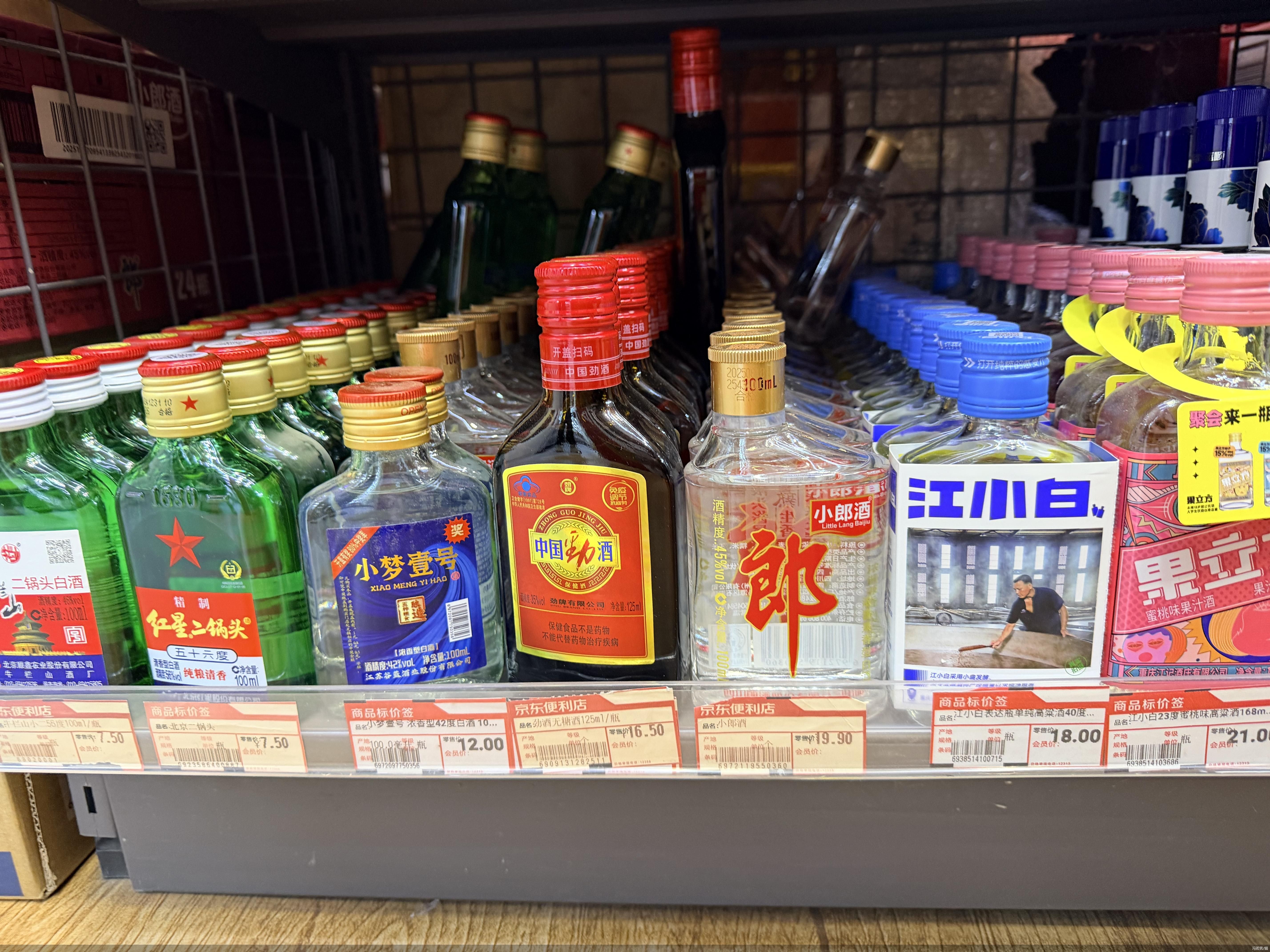
Core Insights - The health wine market is experiencing a surge in popularity, particularly among young consumers embracing the "punk health" trend, with products like Jinjiu becoming market leaders [1][5][9] - Traditional brands such as Yedao and Haiwang are also seeing a revival, while established pharmaceutical companies like Tongrentang and Guangyuyuan are entering the health wine sector [1][8] - The market is projected to continue expanding, with health wine sales increasing by 75.8% year-on-year in the first eight months of 2025, and a forecasted market size of 200 billion yuan by 2030 [9][10] Market Trends - Jinjiu has become a prominent product in health wine shelves, with a 600ml bottle priced at 59 yuan and a 125ml bottle at 15 yuan, indicating strong demand, especially among female consumers [5][6] - The health wine sector is expected to grow at an annual rate of 23%, driven by a shift in consumer preferences towards lower-alcohol and lighter products [9][10] - The health wine market is characterized by a lower price point compared to traditional liquors, making it more accessible to consumers [8][9] Company Performance - Jinjiu's parent company, Jinpai, anticipates a 10.8% growth in overall performance by 2025, reflecting a stable development trend [5][6] - Hainan Yedao reported a revenue of 178 million yuan in the first three quarters of 2025, marking an 8.75% year-on-year increase, with a significant 111.74% growth in the third quarter [6] - Companies like Gujinggongjiu and Luzhou Laojiao are also entering the health wine market, launching various health-oriented projects and products [7][8] Consumer Behavior - Approximately 35% of consumers aged 18-35 prefer health wine over traditional liquor in social settings, indicating a shift in consumption habits [9][10] - The rise of health wine discussions on social media platforms, with over 800 million views on related topics, highlights the growing interest among younger demographics [9][10] Industry Challenges - The health wine market faces significant challenges related to product homogenization, with many brands offering similar concepts and formulations [11][22] - Companies are urged to differentiate their products through quality and technological innovation to avoid being overshadowed by competitors [22] - The market is expected to transition from a "blue ocean" phase to a "refinement" phase by 2026, emphasizing the need for companies to focus on health, youthfulness, and consumer-centric strategies [22]

白酒行业“冬去春来”系列研究2:沉舟侧畔千帆过,露酒先发一缕春
Sou Hu Cai Jing· 2026-01-19 13:13
Group 1 - The core viewpoint of the report is that the liquor industry, particularly the emerging category of "露酒" (liquor with medicinal properties), is experiencing growth despite the overall decline in the traditional white liquor market since 2016, driven by changing consumer preferences and innovative marketing strategies [1][2][10]. - The white liquor industry has faced a downturn since 2016, with total production decreasing from 12.66 million tons to an estimated 3.594 million tons by 2024, alongside high channel inventory and a decline in interest from younger consumers [1][26]. - "露酒" has historically been associated with health and medicinal properties, limiting its appeal to younger demographics who seek trendy and visually appealing products, creating a structural bottleneck for growth [1][2][10]. Group 2 - The strategy of "去药化" (de-medicalization) is crucial for "露酒" to break through its growth bottleneck, focusing on reducing its medicinal attributes and enhancing its appeal as a social beverage [9][40]. - The report highlights the successful transformation of "露酒" from a functional health drink to a social beverage, exemplified by products like "梅见酒," which have innovated in flavor and presentation to attract younger consumers [9][41]. - The market for "露酒" is projected to exceed 200 billion yuan by 2030, indicating significant growth potential as it becomes a core segment of the liquor industry [9][42]. Group 3 - The "露酒" industry has shown a remarkable profit growth of nearly 200% from 2020 to 2024, outperforming the overall liquor industry, driven by health-conscious trends and product innovation [10][44]. - The product range of "露酒" has diversified to include lower alcohol content and smaller packaging sizes, catering to a wider audience and adapting to modern consumption habits [11][46]. - Innovative marketing strategies, particularly through social media platforms, have helped "露酒" reach younger consumers and reshape its image away from traditional health-focused branding [14][49]. Group 4 - The future of the "露酒" industry looks promising, with expectations of a flourishing market driven by its refreshing taste, innovative marketing, and the entry of major liquor companies like Moutai and Wuliangye, which will enhance product diversity and market presence [15][54]. - The report suggests focusing on investment opportunities within the "露酒" sector, particularly brands that have established a strong market presence and those that are innovating in flavor and marketing to capture the growing consumer base [16][56].

*ST椰岛: 中审亚太会计师事务所(特殊普通合伙)《关于海南椰岛(集团)股份有限公司2024年年度报告的信息披露监管工作函》有关问题的回复
Zheng Quan Zhi Xing· 2025-07-03 16:26
Core Viewpoint - The company, Hainan Yedao (Group) Co., Ltd., has a high concentration of major customers and suppliers, which poses potential risks to its business stability and revenue generation [1][9][10]. Customer and Supplier Analysis - The company reported a total revenue of 175 million yuan, with the top five customers contributing 139 million yuan, accounting for 79.17% of total sales [1][9]. - The top five suppliers accounted for 84 million yuan in purchases, representing 83.47% of total procurement [1][9]. - The company has a stable relationship with its major customers, including long-term partnerships with distributors in various regions [10][11]. Business Segment Performance - In the liquor segment, the company has shifted its strategy to focus on direct sales through established distributors, which has resulted in a decrease in the proportion of revenue from white liquor from 56% in 2022 to 20% in 2024 [4][5]. - The beverage segment has transitioned to a sole distributor model, which has helped maintain stable revenue from coconut juice products [8][10]. Recent Developments - The company has been actively expanding its white liquor business, collaborating with new partners to enhance product offerings and market reach [4][6]. - Changes in management and strategic partnerships have influenced the company's sales dynamics, particularly in the white liquor segment [4][5][6]. Supplier Relationships - The company maintains a diverse supplier base for its liquor production, ensuring that it is not overly reliant on any single supplier [11][12]. - Long-term relationships with suppliers have been established to ensure consistent quality and supply of raw materials [11][12]. Internal Control and Governance - The company has identified weaknesses in its internal controls, particularly in distributor management, which could impact financial reporting accuracy [13][14]. - The management structure has raised concerns regarding independence and governance, necessitating improvements to ensure compliance and operational integrity [13][14].

股票“披星戴帽”,海南椰岛保壳战再启
Bei Ke Cai Jing· 2025-05-06 08:12
Core Viewpoint - Hainan Yedao faces significant financial challenges, with negative net profits and revenues below 300 million yuan, leading to a delisting risk warning and a stock name change to "*ST Yedao" [1][8] Financial Performance - In 2024, Hainan Yedao reported total revenue of 175 million yuan, a year-on-year decrease of 21.97%, and a net loss of 136 million yuan, slightly improved from a loss of 149 million yuan in the previous year [4] - The company’s cash flow from operating activities was negative at -18.29 million yuan [4] - The first quarter of 2025 saw a revenue decline of 18.47% year-on-year to 4.4 million yuan, with a net loss of 650,540 yuan [5] Historical Context - Hainan Yedao has previously faced delisting risks, notably in April 2018, when it managed to avert a crisis through asset sales [2][9] - The company has experienced continuous losses from 2021 to 2024, with revenue dropping from 833 million yuan to 175 million yuan [11] Strategic Initiatives - The company plans to focus on core market development, increase market share, and implement budget controls in 2025 to lift the delisting risk warning [3][13] - Hainan Yedao aims to enhance its product structure and market strategy to improve operational performance [13] Product Development - The introduction of new products in the fourth quarter of 2024 did not significantly boost revenue, with only 12 million yuan in sales during that quarter [5] - The company is attempting to diversify its product offerings, including the launch of herbal liquor, but initial sales figures indicate limited market traction [15][16] Legal Challenges - Hainan Yedao is currently facing over 20 lawsuits, with a total involved amount of approximately 28.81 million yuan, complicating its recovery efforts [12] Market Position - The company has struggled with competition in the beverage market, particularly in the health liquor segment, which has contributed to its declining performance [14][16]
肉桂类保健食品行业研究:健康需求驱动下的广阔市场展望
Tou Bao Yan Jiu Yuan· 2025-04-28 12:27
Investment Rating - The report does not explicitly state an investment rating for the cinnamon health food industry Core Insights - The cinnamon health food industry is driven by health demand, with a broad market outlook due to the rich raw material resources and increasing consumer recognition and acceptance [4][11][14] - The industry has experienced stable historical growth, primarily influenced by limited supply increases and the need for greater consumer awareness, with price increases being the main growth driver [4][33] - Future growth is expected to be supported by policy backing and an aging population, which will enhance supply and consumer demand, leading to market expansion [4][35] Industry Definition - Cinnamon health foods are defined as health products primarily made from cinnamon, which is widely used in traditional medicine and has multiple health benefits [5] Industry Classification - The cinnamon health food industry can be classified into various forms, including liquor, capsules, tablets, granules, oral liquids, pills, pastes, and powders [6][10] Industry Characteristics - Rich raw material resources: China leads the world in cinnamon planting area and production, ensuring a stable supply for the industry [11][12] - Clear regulatory boundaries: The industry is subject to specific safety and functionality standards, providing a balanced regulatory environment that encourages innovation [13] - Sustained consumer demand: The dual role of cinnamon as both a traditional medicine and a spice enhances consumer acceptance and demand for cinnamon health foods [14] Development History - The industry has evolved from initial exploration to maturity, with significant growth driven by policy support and market demand [15][16] - The establishment of a dual-channel registration and filing mechanism for health foods has accelerated product innovation and market responsiveness [18] Industry Chain Analysis - The industry chain includes sustainable raw material sourcing, technological innovation in production, and strong downstream market demand for health products [19][20] - Upstream supply is critical, with the planting area and quality of cinnamon directly impacting the industry [20] - Midstream processing requires advanced technology to ensure product quality and market competitiveness [21] Market Size - The market size of the cinnamon health food industry grew from 1.402 billion RMB in 2020 to 1.578 billion RMB in 2024, with a compound annual growth rate of 3.00% [32] - Future projections estimate the market will reach 1.902 billion RMB by 2029, with a compound annual growth rate of 3.99% [32] Price Trends - The average price of cinnamon health foods is expected to rise from 205.01 RMB to 215.03 RMB between 2025 and 2029, driven by increased consumer demand for quality health products [36] Competitive Landscape - The industry is characterized by significant product homogeneity, with leading companies like Weisiya Health and others competing in a relatively small market [41][42] - Smaller companies may find opportunities for growth through differentiated strategies, as the market does not heavily rely on large listed companies [45]


肉桂类保健食品行业研究:健康需求驱动下的广阔市场展望 头豹词条报告系列
Tou Bao Yan Jiu Yuan· 2025-04-28 12:23
Investment Rating - The report does not explicitly state an investment rating for the cinnamon health food industry Core Insights - The cinnamon health food industry is driven by health demand, with a broad market outlook due to the rich raw material resources and increasing consumer recognition and acceptance [4][11] - The industry has experienced stable historical growth, primarily influenced by limited supply increases and the need for greater consumer awareness, with price increases being the main growth driver [4][34] - Future growth is expected to be supported by policy backing and an aging population, which will enhance supply and elevate consumer demand, leading to market expansion [4][35] Industry Definition - Cinnamon health foods are defined as health products primarily made from cinnamon, which is widely recognized for its multiple health benefits [5] Industry Classification - The cinnamon health food industry can be categorized into various forms, including tinctures, capsules, and tablets [6] Industry Characteristics - Rich raw material resources: China leads the world in cinnamon planting area and production, ensuring a stable supply for the industry [11][12] - Clear regulatory boundaries: The industry is subject to specific safety and functionality standards, providing a balanced regulatory environment that encourages innovation [13] - Sustained consumer demand: The dual role of cinnamon as both a traditional medicine and a widely used spice enhances consumer acceptance of cinnamon health foods [14] Development History - The industry has evolved from initial exploration to a mature stage, with significant growth driven by policy support and market demand [15][16] Industry Chain Analysis - The industry chain includes sustainable raw material sourcing, technological innovation in production, and strong downstream market demand for health products [19][20] Market Size - The market size of the cinnamon health food industry grew from 1.402 billion RMB in 2020 to 1.578 billion RMB in 2024, with a compound annual growth rate of 3.00% [32] - Future projections estimate the market will expand from 1.626 billion RMB in 2025 to 1.902 billion RMB in 2029, with a compound annual growth rate of 3.99% [32] Price Trends - The average price of cinnamon health foods is expected to rise from 205.01 RMB to 215.03 RMB between 2025 and 2029, driven by increasing consumer demand for quality health products [36] Competitive Landscape - The industry is characterized by significant product homogeneity, with leading companies like Weisiya Health and others competing in a relatively fragmented market [41][42] - Smaller companies may find opportunities for growth through differentiated strategies, as the market does not heavily rely on large listed companies [45]