榴莲酥

Search documents
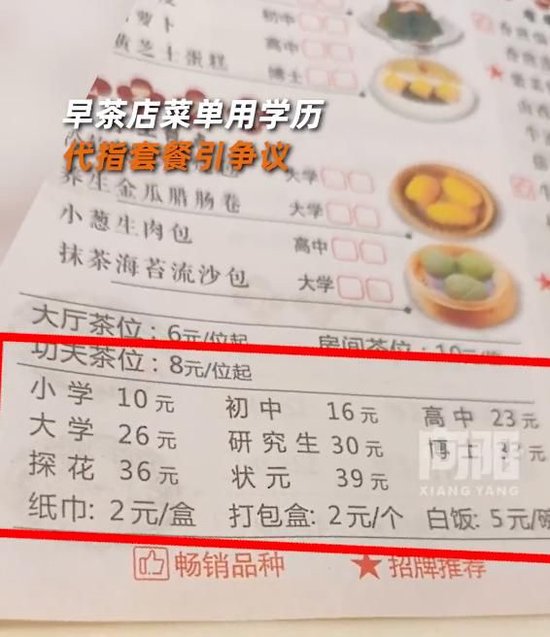
广州一早茶店菜单用学历代指套餐引争议,当地早茶店:“小学”一般是7元,“博士”一般是28元
Xin Lang Cai Jing· 2025-12-31 02:01
Core Viewpoint - A controversy has arisen in Guangzhou, Guangdong, regarding a dim sum restaurant that lists prices based on educational qualifications on its menu, which has sparked public debate about the implications of such pricing practices [1][4]. Group 1 - The menu categorizes dishes by educational levels, with "Elementary" indicating a price of 7 yuan and "Doctorate" indicating a price of 28 yuan [2][5]. - The lower-priced items (7 yuan) are simpler dishes, such as a bowl of congee and a small portion of rice rolls, while the higher-priced items (28 yuan) offer more variety, including options like durian pastry and money belly [2][5].

冷冻烘焙前排交椅:谁都难坐稳,谁也别瞧不起谁!
东京烘焙职业人· 2025-12-26 08:34
Core Insights - The frozen baking industry is experiencing rapid growth and differentiation, with various players entering the market, leading to increased competition and potential market reshuffling due to rising cost pressures and price wars [4][5][26]. Group 1: Industry Overview - The frozen baking market in China is expanding at a compound annual growth rate (CAGR) of over 25%, with projections indicating the market size will reach 23 billion yuan by 2025 [26]. - The industry is characterized by a mix of established players and new entrants, with significant competition emerging from both traditional baking companies and cross-industry players, particularly frozen food companies [24][25]. Group 2: Key Players - Leading companies such as Lihigh Foods and Nanjiao Foods have established strong positions in the frozen baking sector, with Lihigh's frozen baking segment accounting for approximately 55% of its revenue in the first three quarters of the year [8][10]. - Nanjiao Foods has seen its revenue from pre-baked products grow to 380 million yuan in 2024, with production capacity reaching 23,000 tons [10]. - Enxi Village, focusing on high-end frozen baking, has partnered with major retailers and reported a net income contribution of 288 million yuan to its parent company in the first three quarters of the year [12]. Group 3: Competitive Dynamics - The market is witnessing a significant influx of frozen food companies entering the frozen baking space, leveraging their existing supply chains and distribution networks to gain a competitive edge [17][24]. - Companies like Anjixin and Qianwei Central Kitchen have made strategic acquisitions to enhance their product offerings in frozen baking, with Anjixin planning to invest in new baking projects to create a new growth curve [18][20]. Group 4: Financial Performance and Challenges - Despite revenue growth, companies are facing shrinking profit margins due to rising raw material costs and intense competition, as seen in Nanjiao Foods' net profit decline of 80.82% in the first three quarters [29]. - Qianwei Central Kitchen's baking segment has also experienced a decrease in gross margin, dropping to 20.93% in the first half of the year [29]. Group 5: Market Trends and Future Outlook - The frozen baking sector is increasingly facing challenges related to product homogeneity and price wars, necessitating continuous innovation and cost management to maintain market share [30]. - The industry's leading players must balance industrial efficiency with the artisanal quality of baked goods to meet consumer expectations for both convenience and flavor [30][31].



利润跌92%,一线城市的酒店怎么了
吴晓波频道· 2025-08-25 00:29
Core Viewpoint - The hotel industry is experiencing significant turmoil, with varying performance across different regions, highlighting a stark contrast between struggling markets and those witnessing rapid growth [3][11]. Group 1: Industry Performance - In Beijing, the hotel industry is facing severe challenges, with 5,135 legal entities reporting a 3.7% decline in revenue and a staggering 67% drop in total profits [5]. - Specifically, the accommodation sector in Beijing saw a 7.3% decrease in revenue, with profits plummeting by 92.9%, averaging only 37,000 yuan per establishment in the first half of the year [5]. - High-end hotels are adapting by diversifying their offerings, such as selling affordable food items, as seen in several cities where five-star hotels have introduced budget-friendly meals [5][10]. Group 2: Pricing and Competition - The hotel industry is engaged in a "price war," with established brands reducing prices to compete with emerging players, leading to a downward spiral in average daily rates (ADR) [9][23]. - The competition has intensified, with hotels like Hilton and Atour adjusting their pricing strategies to remain competitive, resulting in significant price reductions across the board [9][23]. Group 3: Regional Disparities - Contrasting with Beijing's struggles, regions like Guizhou are experiencing a boom, with hotel prices skyrocketing from 142 yuan to 1,087 yuan in just two months, driven by increased tourist demand [11][13]. - Guizhou's tourism has seen an 8.2% increase in visitor numbers and a 10.6% rise in total spending, indicating a robust recovery in certain markets [13]. Group 4: Future Outlook - Industry experts suggest a cautious approach for the remainder of the year, with many investors opting to maintain the status quo rather than aggressively expanding [30]. - The trend towards smaller, more manageable hotel operations is expected to continue, with a focus on cost-effective, automated services to reduce operational expenses [33]. - The hotel sector is anticipated to undergo a transformation, with a shift towards professional management models and a potential increase in hotel closures and transfers as the market stabilizes [35].

餐饮业的下半年,从五星级酒店摆摊卖菜开始
吴晓波频道· 2025-07-27 15:40
Core Viewpoint - The restaurant industry is experiencing a significant transformation, with high-end hotels and mid-range restaurants adapting to market pressures by offering affordable food options, reflecting a shift from "identity economy" to "value economy" [5][11][46]. Group 1: Market Trends - The overall restaurant revenue in China grew by 4.3% in the first half of 2025, but many street-side restaurants faced a 20% decline in monthly revenue [1][21][46]. - High-end hotels are increasingly selling affordable meals, with examples from various cities showcasing a range of low-priced offerings [2][4]. - The mid-range restaurant sector is also adopting similar strategies, with some establishments selling budget-friendly dishes to attract customers [8][12]. Group 2: Consumer Behavior - Consumers are becoming more cautious with their spending, leading to a decline in high-end dining and a preference for cost-effective options [30][55]. - The demand for affordable dining experiences is rising, with a notable increase in the popularity of low-priced tea drinks and local snacks [52][56]. Group 3: Competitive Landscape - The restaurant industry is facing intense competition, with many businesses struggling to maintain profitability amid rising costs and changing consumer preferences [33][72]. - The market is witnessing a structural divide, where high-end dining is under pressure while community-focused and affordable brands are thriving [50][72]. Group 4: Future Outlook - The future of the restaurant industry is expected to see a trend towards smaller, community-oriented businesses that focus on building trust and loyalty among local customers [70]. - There is a growing emphasis on operational efficiency, with successful brands likely to scale up while smaller players may struggle to survive [68][72].
越来越多餐厅,正在抛弃包间
Hu Xiu· 2025-07-24 14:05
Core Insights - The traditional belief that "scattered tables attract customers, while private rooms generate profits" in the restaurant industry is failing, leading to operational difficulties for many establishments [3][4][13]. Group 1: Declining Business Performance - Many restaurants are experiencing a significant drop in business, with daily revenues plummeting by as much as 90% in some cases [4][6][12]. - A restaurant in Anhui that previously maintained daily revenues between 7,000 to 10,000 yuan has seen its earnings fall to between 800 and 2,000 yuan [6]. - In Chengdu, a restaurant reported a 20% year-on-year decline in overall revenue, with many local establishments experiencing a drop of over 30% [7]. Group 2: Changing Market Dynamics - The demand for private rooms has decreased, influenced by factors such as rising vacancy rates in office buildings and a slowdown in corporate expansion, which has reduced the need for business banquets [17][21]. - Vacancy rates for Grade A office buildings in Guangzhou and Shenzhen have been on the rise since Q3 2021, with Shenzhen's rate expected to reach 27.8% by 2024 [18]. - Consumer behavior is shifting, with many opting for lower-priced menu items, leading to a decrease in high-end seafood orders that were once standard in private room dining [22]. Group 3: Adaptation Strategies - In response to declining business, some restaurants are reducing staff and salaries to cut costs [10][11]. - Many establishments are abandoning the reliance on traditional business receptions and are diversifying their offerings to include events like birthday parties and afternoon teas, which are becoming significant revenue sources [29][30]. - A restaurant in Beijing successfully hosted numerous wedding and birthday events, maintaining stable income despite a decrease in average spending per customer [32][33]. Group 4: Future Outlook - The shift from business-oriented dining to family-oriented consumption is becoming a driving force in the restaurant industry, enhancing customer flow and table turnover rates [35][36]. - Despite a decline in per capita spending in private rooms, the overall revenue and profit from these rooms still exceed that of scattered tables [37].
五星级酒店集体摆摊了,什么情况?
凤凰网财经· 2025-07-05 14:01
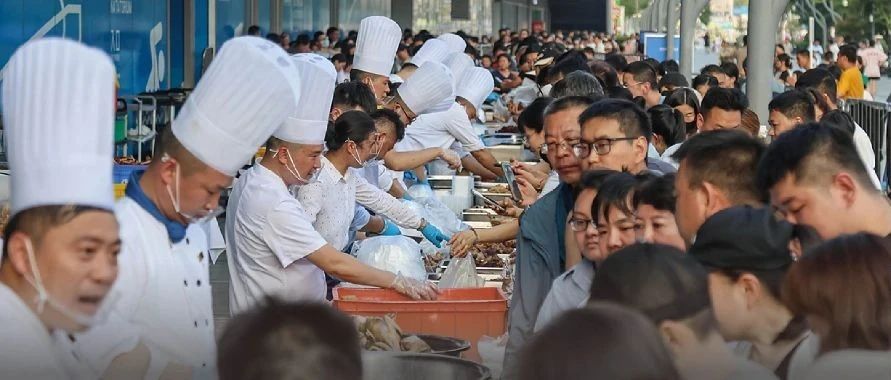
Core Viewpoint - The emergence of luxury hotels setting up street stalls reflects a significant shift in the hospitality industry, aiming to attract a broader customer base with affordable pricing while facing challenges in maintaining their high-end brand image [1][3][19]. Group 1: Hotel Street Stalls - Luxury hotels are offering food at significantly lower prices, with items priced between 10 to 30 yuan, contrasting sharply with their traditional high-end offerings [8][12]. - Examples include the Ritz-Carlton in Tianjin, where a mobile burger cart sells meals for 75 yuan, compared to room rates of 2000 yuan per night [3][5]. - Other hotels, such as the Wenpu Hotel in Changzhou, offer items like durian pastries for 18 yuan and spicy crayfish for 48 yuan, showcasing a shift towards more accessible food options [5][7]. Group 2: Consumer Response - Consumer feedback has been largely positive, with many expressing a newfound interest in trying food from hotels they previously viewed as too expensive [9][12]. - The trust in hotel brands enhances consumer confidence in the hygiene and quality of the food sold at these stalls, leading to increased foot traffic and sales [9][12]. - However, some consumers criticize the offerings as marketing gimmicks, citing concerns over portion sizes and value for money [11]. Group 3: Financial Viability - The financial performance of hotel street stalls varies widely, with daily revenues reported between 1,000 to 30,000 yuan, raising questions about profitability and cost coverage [12][19]. - The high operational costs associated with luxury hotels, including labor and rent, complicate the sustainability of this low-price strategy [12][19]. - The challenge remains for hotels to balance attracting new customers with maintaining their premium brand image, as low-priced offerings may dilute perceived value [13][19]. Group 4: Industry Challenges - The recent implementation of strict alcohol regulations has exacerbated existing pressures on the hotel industry, with some establishments reporting revenue declines of up to 20% [14][15]. - Data indicates a broader trend of declining hotel revenues, with major chains like Jinjiang and Jinling experiencing significant drops in income and profit margins [16][17]. - The shrinking wedding market, a key revenue source for many hotels, further intensifies these challenges, as marriage registrations have decreased significantly [17][19]. Group 5: Strategic Considerations - The shift to street stalls may help hotels attract new customers, but long-term success will depend on effective cost management and product diversification [19][20]. - Hotels must develop strategies that do not compromise their core brand values while exploring new revenue streams and adapting to changing consumer preferences [19][20].

泰国主播品三亚榴莲:“尝到了家乡味”
Zhong Guo Xin Wen Wang· 2025-06-09 07:13
Group 1 - The live broadcast by Thai influencer Yafi showcased the quality of Sanya durians, highlighting their sweet taste and soft texture, similar to Thai durians [1][3] - Sanya has recently achieved large-scale durian production, with the first fruits expected to be harvested in June 2023, and the establishment of the China-ASEAN Durian Technology Innovation Alliance planned for July 2024 [3][4] - The area for durian cultivation in Hainan is projected to reach approximately 40,000 acres by 2025, with over 14,000 acres already planted in 2023 [4][5] Group 2 - Yafi praised the unique processing products made from durians, such as durian mooncakes, which combine traditional Chinese cuisine with durian flavors, enhancing the appeal of Hainan tourism [7] - The company, Youqi Investment, is constructing a durian processing factory in Sanya and plans to develop agritourism projects to optimize and extend the durian industry chain [7]