冷冻烘焙

Search documents
“冻品一哥”转行做面包?
Sou Hu Cai Jing· 2026-01-30 16:18
Core Viewpoint - The pre-prepared food industry, once seen as a "trillion-dollar blue ocean," is now facing significant public skepticism and declining consumer interest, leading companies like Anjijia to shift their strategic focus amid increasing competition and market challenges [3][12][16]. Group 1: Industry Trends - The trend of "refusing pre-prepared food" has gained traction on social media, with consumers preferring freshly cooked meals over convenience, impacting the demand for pre-prepared food [4][13]. - Anjijia's pre-prepared food segment reported revenue of 3.643 billion yuan in the first three quarters of 2025, a 9.19% year-on-year increase, but this growth is significantly slower compared to the 112.41% increase in 2021 [4][16]. - The overall market for pre-prepared food is experiencing a decline, with traditional frozen food categories like frozen prepared foods and frozen noodles showing minimal growth or decline [4][24]. Group 2: Competitive Landscape - The competitive environment for pre-prepared food is intensifying, with over 13,000 new companies entering the market within the past year, leading to price wars and reduced profit margins [16][25]. - Anjijia's average selling price for frozen food products decreased from 20.7 yuan/kg in the first three quarters of 2023 to 17.9 yuan/kg in 2024, indicating a downward pricing trend [27]. - Major restaurant chains are increasingly adopting "freshly cooked" and "non-prepared" strategies to enhance their competitive edge, further challenging the pre-prepared food market [14][23]. Group 3: Company Strategy - Anjijia is diversifying its strategy by entering the frozen baking market, with plans to invest in a new baking project, reflecting a shift in focus from traditional frozen food to new product categories [34][36]. - The frozen baking market is projected to grow at a compound annual growth rate of over 25%, with an expected market size of 23 billion yuan by 2025, presenting new opportunities for Anjijia [36]. - Despite the potential for growth in the frozen baking sector, Anjijia faces challenges related to consumer preferences for taste and freshness, which differ from traditional frozen food expectations [38].


冷冻烘焙前排交椅:谁都难坐稳,谁也别瞧不起谁!
东京烘焙职业人· 2025-12-26 08:34
Core Insights - The frozen baking industry is experiencing rapid growth and differentiation, with various players entering the market, leading to increased competition and potential market reshuffling due to rising cost pressures and price wars [4][5][26]. Group 1: Industry Overview - The frozen baking market in China is expanding at a compound annual growth rate (CAGR) of over 25%, with projections indicating the market size will reach 23 billion yuan by 2025 [26]. - The industry is characterized by a mix of established players and new entrants, with significant competition emerging from both traditional baking companies and cross-industry players, particularly frozen food companies [24][25]. Group 2: Key Players - Leading companies such as Lihigh Foods and Nanjiao Foods have established strong positions in the frozen baking sector, with Lihigh's frozen baking segment accounting for approximately 55% of its revenue in the first three quarters of the year [8][10]. - Nanjiao Foods has seen its revenue from pre-baked products grow to 380 million yuan in 2024, with production capacity reaching 23,000 tons [10]. - Enxi Village, focusing on high-end frozen baking, has partnered with major retailers and reported a net income contribution of 288 million yuan to its parent company in the first three quarters of the year [12]. Group 3: Competitive Dynamics - The market is witnessing a significant influx of frozen food companies entering the frozen baking space, leveraging their existing supply chains and distribution networks to gain a competitive edge [17][24]. - Companies like Anjixin and Qianwei Central Kitchen have made strategic acquisitions to enhance their product offerings in frozen baking, with Anjixin planning to invest in new baking projects to create a new growth curve [18][20]. Group 4: Financial Performance and Challenges - Despite revenue growth, companies are facing shrinking profit margins due to rising raw material costs and intense competition, as seen in Nanjiao Foods' net profit decline of 80.82% in the first three quarters [29]. - Qianwei Central Kitchen's baking segment has also experienced a decrease in gross margin, dropping to 20.93% in the first half of the year [29]. Group 5: Market Trends and Future Outlook - The frozen baking sector is increasingly facing challenges related to product homogeneity and price wars, necessitating continuous innovation and cost management to maintain market share [30]. - The industry's leading players must balance industrial efficiency with the artisanal quality of baked goods to meet consumer expectations for both convenience and flavor [30][31].



冷冻烘焙前排交椅:谁都难坐稳,谁也别瞧不起谁
3 6 Ke· 2025-12-16 03:46
Core Insights - The frozen baking industry is experiencing rapid growth and differentiation, with various players entering the market, leading to increased competition and potential market reshuffling due to rising cost pressures and price wars [1][19]. Company Strategies - Leading companies like Lihigh Foods and Nanjiao Foods have established strong positions in the frozen baking sector by focusing on product quality, channel strength, and capital investment [2][5]. - Lihigh Foods has expanded its business into frozen baking through acquisitions, with its frozen baking segment accounting for approximately 55% of its revenue in the first three quarters of the year [4][5]. - Nanjiao Foods has shifted its focus to pre-baked products, with its pre-baked product revenue reaching 380 million yuan in 2024, reflecting a strategic emphasis on this segment [5][6]. Market Dynamics - The frozen baking market in China is projected to grow at a compound annual growth rate (CAGR) of over 25%, potentially reaching a market size of 23 billion yuan by 2025 [19]. - Despite market growth, companies are facing shrinking profit margins due to rising raw material costs and intense competition, leading to significant profit declines for some players [20][21]. Competitive Landscape - New entrants, particularly from the frozen food sector, are leveraging their existing supply chains and distribution networks to penetrate the frozen baking market, creating a competitive environment [11][17]. - Companies like Anjiyuan and Qianwei Central Kitchen have made significant investments in frozen baking, with Qianwei's baking segment revenue growing from 188 million yuan in 2020 to 355 million yuan in 2023 [13][14]. Challenges Ahead - The industry is facing challenges such as product homogenization and fierce competition for premium retail channels, which may hinder future growth for existing players [21][22]. - Companies must balance industrial efficiency with the artisanal quality of baked goods to meet consumer expectations, as flavor and quality remain critical factors for customer purchasing decisions [21].
立高食品(300973)25Q3点评:收入维持较快增长 利润表现符合预期
Xin Lang Cai Jing· 2025-10-29 00:40
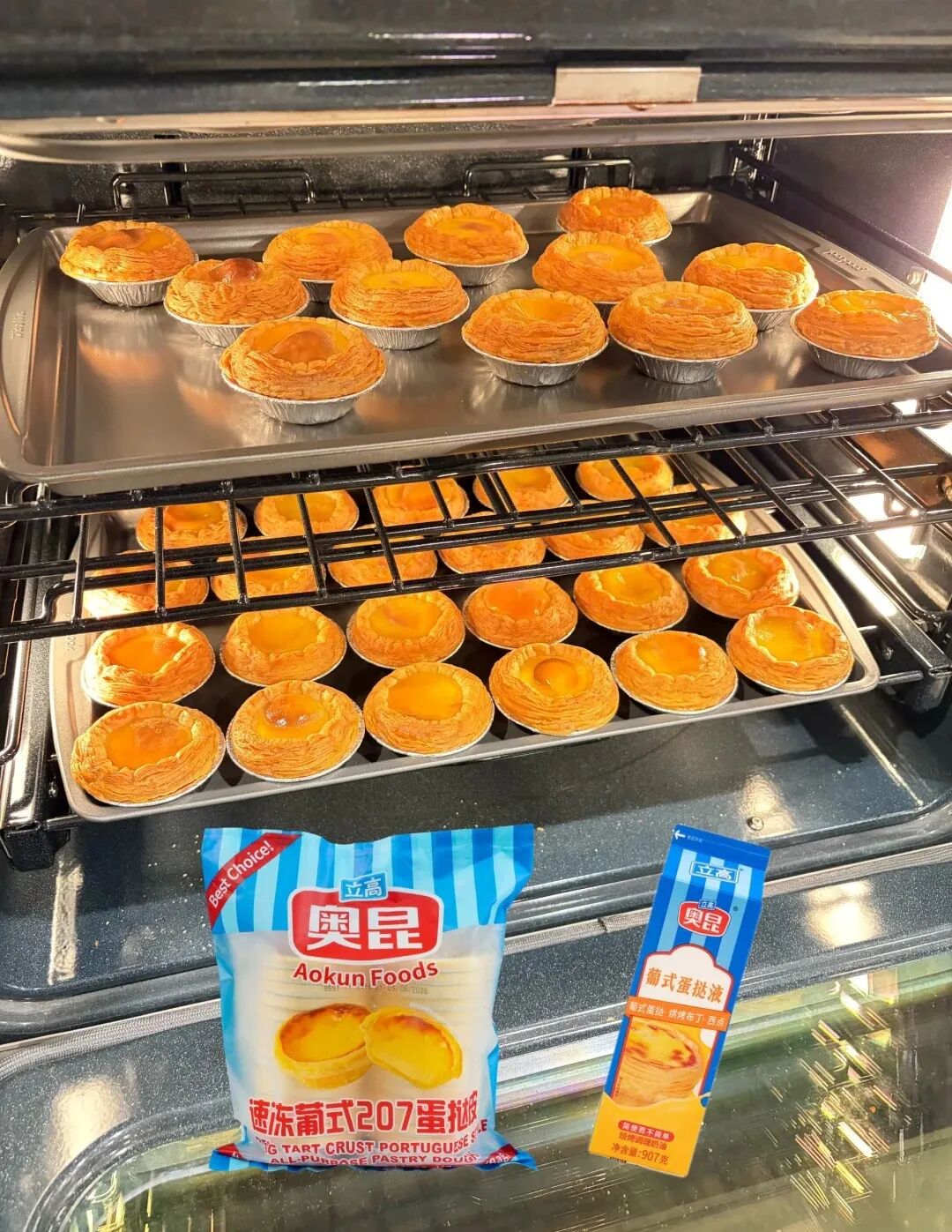
Core Insights - The company reported a strong performance in Q3 2025, with revenue reaching 3.14 billion, a year-on-year increase of 15.7%, and net profit attributable to shareholders at 248 million, up 22% year-on-year [1] - The revenue for Q3 alone was 1.07 billion, reflecting a 14.8% year-on-year growth, while net profit for the quarter was 77 million, a 13.6% increase [1] - The company maintains a positive outlook for the frozen baking industry, which is experiencing rapid growth due to increasing penetration rates [1] Financial Performance - For the first three quarters of 2025, the company achieved a net profit margin of 7.2%, which remained stable year-on-year [3] - The company’s gross margin for Q3 was 28.9%, a decrease of 2.4 percentage points due to rising raw material costs [2] - The company’s sales expense ratio decreased by 1 percentage point to 9.5%, and the management expense ratio fell by 1.5 percentage points to 5.3%, indicating improved cost management [2] Revenue Breakdown - Frozen baked goods accounted for approximately 55% of total revenue in the first three quarters, growing nearly 10% year-on-year, driven by new product launches and growth in restaurant clients [2] - Revenue from baking ingredients, including cream and sauces, made up about 45% of total revenue, with a year-on-year growth of approximately 24% [2] - The company saw a significant increase in revenue from cream products, which grew by about 40% year-on-year, and sauce products, which increased by slightly over 35% [2] Channel Performance - Revenue from circulation channels accounted for about 48% of total revenue, remaining stable year-on-year [2] - Supermarket channel revenue increased by 30% year-on-year, making up about 30% of total revenue [2] - Innovative channels, including restaurants, tea drinks, and new retail, contributed approximately 22% of total revenue, with a combined year-on-year growth rate of about 40% [2] Investment Outlook - The company maintains its profit forecast for 2025-2027, projecting net profits of 333 million, 392 million, and 461 million respectively, with year-on-year growth rates of 24%, 18%, and 18% [1] - The current stock price corresponds to price-to-earnings ratios of 21x, 18x, and 15x for 2025-2027 [1] - The company is expected to benefit from its scale, funding, management, and R&D advantages, as well as its focus on a big product strategy and multi-channel development [1][4]
立高食品(300973):25Q3点评:收入维持较快增长,利润表现符合预期
Shenwan Hongyuan Securities· 2025-10-28 13:41
Investment Rating - The investment rating for the company is "Outperform" (maintained) [2] Core Insights - The company reported a revenue of 3.14 billion yuan for the first three quarters of 2025, representing a year-on-year growth of 15.7%. The net profit attributable to the parent company was 248 million yuan, up 22% year-on-year, with a non-recurring net profit of 242 million yuan, increasing by 26.6% [7] - The company continues to benefit from the rapid growth in the frozen baking industry, with a focus on large product strategies and multi-channel development. The growth in cream products has significantly contributed to revenue [7] - The financial forecast for the company indicates a steady increase in revenue and net profit over the next few years, with expected net profits of 333 million yuan, 392 million yuan, and 461 million yuan for 2025, 2026, and 2027 respectively, reflecting year-on-year growth rates of 24%, 18%, and 18% [6][7] Financial Data Summary - Total revenue for 2025 is projected at 4.20 billion yuan, with a year-on-year growth rate of 9.4%. The gross profit margin is expected to be around 31.6% [6] - The company’s net profit margin for Q3 2025 was 7.2%, remaining stable year-on-year despite a slight decline in gross margin due to rising raw material costs [7] - The company’s earnings per share (EPS) for 2025 is estimated at 1.97 yuan, with a price-to-earnings (PE) ratio of 21x for 2025 [6][7]
叫停四个传统冻品项目,“冻品一哥”3.6亿转投冷冻烘焙,能否打破增长瓶颈?
3 6 Ke· 2025-10-10 11:21
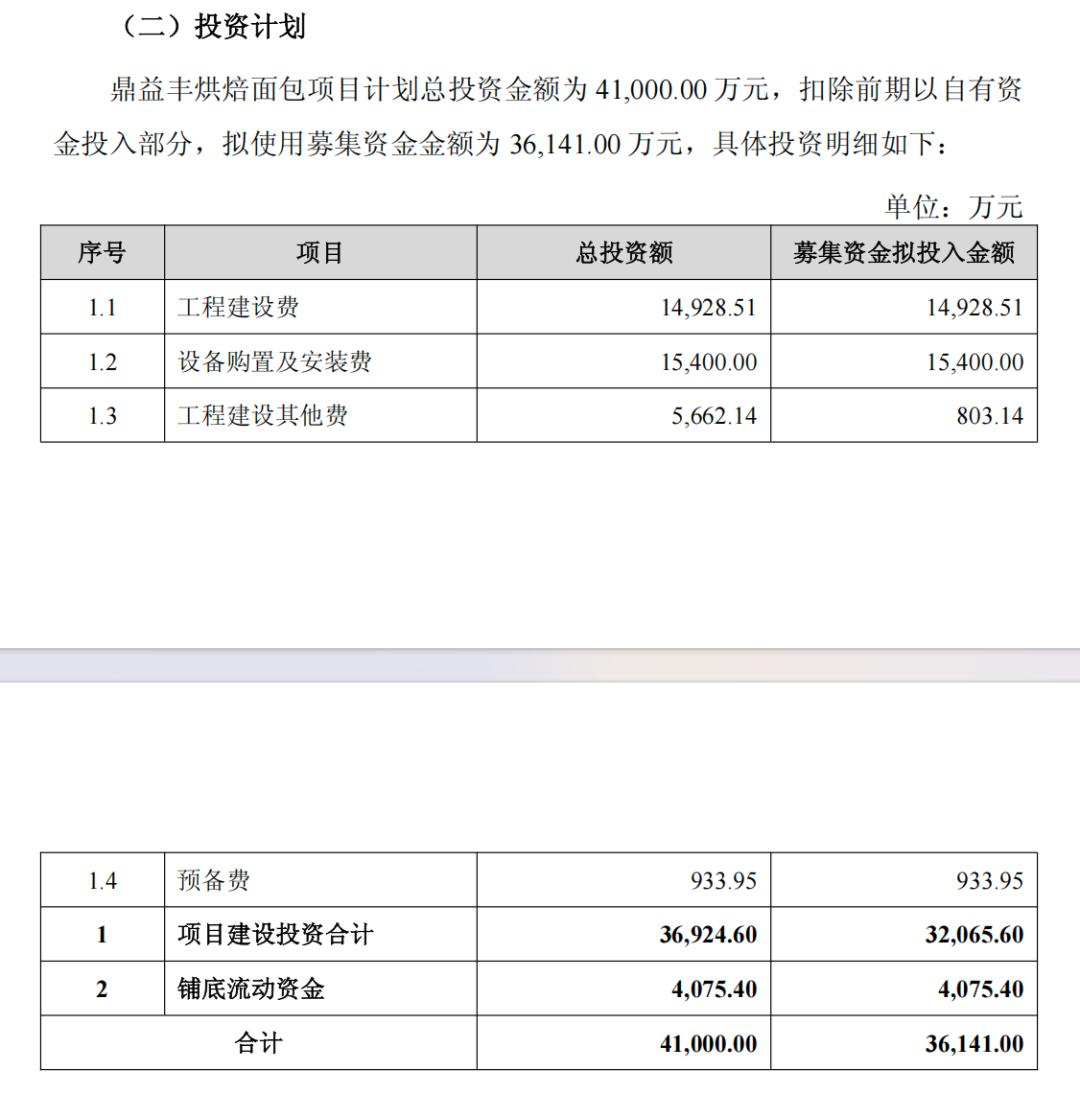
Core Viewpoint - The change in fundraising allocation by Anjii Food reflects the challenges faced by the frozen food industry, indicating a need to explore new growth opportunities, particularly in the frozen baking sector [1][4]. Fundraising Purpose Change - Anjii Food announced a change in the use of funds from a non-public stock issuance, reallocating part of the funds originally intended for four frozen food projects to a new baking project [1][4]. - The four original projects include upgrades in Sichuan, Liaoning, and Taizhou, and an expansion project in Henan, with a total of 361 million yuan being redirected to the Dingyifeng baking project, which has a total investment of 410 million yuan [1][3]. Financial Projections - The Dingyifeng baking project is expected to have a construction period of two years, with projected annual revenue of 613 million yuan and a profit of 67.83 million yuan, yielding an internal rate of return of 10.38% and a payback period of 8.05 years [3][4]. Industry Challenges - Anjii Food's decision to change the fundraising project is attributed to the evolving macroeconomic environment, industry policies, and consumer demand, which have shifted towards healthier and more diverse food options [4][5]. - The traditional frozen food sector, particularly frozen rice and noodle products, is experiencing a contraction, with Anjii's revenue for the first half of the year showing only a slight increase of 0.8% to 7.604 billion yuan, while net profit fell by 15.79% to 676 million yuan [5][7]. Market Trends - The frozen baking sector is viewed as a potential growth area, with the market expected to exceed 23 billion yuan by 2025 and a compound annual growth rate of over 25% in recent years [9][10]. - Competitors in the frozen food industry, such as Qianwei and Hai Xin, are also exploring new product categories, indicating a broader trend of seeking growth beyond traditional frozen food offerings [7][9]. Competitive Landscape - Anjii Food has made strategic acquisitions to enhance its presence in the frozen baking market, including a 70% stake in Jiangsu Dingwei and a 100% stake in Dingyifeng, totaling an investment of 444.5 million yuan [7][9]. - The competitive environment in the frozen baking sector is intensifying, with other companies also launching baking brands and experiencing varying growth rates, highlighting the need for Anjii to leverage its past successes to strengthen its market position [10][11].
速冻食品大王,押宝新赛道
Shen Zhen Shang Bao· 2025-10-01 15:48
Core Viewpoint - Anjiu Food Group Co., Ltd. has announced a change in its fundraising project, reallocating 361 million yuan from its original technology upgrade projects to a new baking project, reflecting a strategic shift in response to market changes [1][2]. Group 1: Fundraising and Project Changes - The company plans to redirect 361 million yuan of its previously raised funds to the Dingyifeng Baking Project, which involves the construction of a new baking facility [1][2]. - The original fundraising amount was approximately 5.67 billion yuan, with a net amount of about 5.63 billion yuan after expenses. As of September 23, 2025, the company has invested 4.34 billion yuan, achieving a progress rate of 76.99% [1][2]. Group 2: New Baking Project Details - The Dingyifeng Baking Project will produce various baked goods, with a designed daily capacity of 67.42 tons. The total investment for the project is 410 million yuan, with 361 million yuan sourced from the fundraising [2][3]. - The project is expected to generate annual revenue of approximately 613.39 million yuan and a profit of about 67.83 million yuan, with an internal rate of return of 10.38% and a payback period of 8.05 years [3]. Group 3: Market Context and Challenges - The frozen food industry is experiencing intense competition, with a significant increase in the number of enterprises in the prepared dish sector, leading to aggressive price wars [4]. - In the first half of 2025, the company reported revenue of 7.60 billion yuan, a slight increase of 0.8%, but a notable decline in net profit by 15.79%, marking the first negative growth in mid-year net profit since its listing [3][4].

安井食品“盯上”冷冻烘焙赛道
Bei Jing Shang Bao· 2025-09-18 13:53
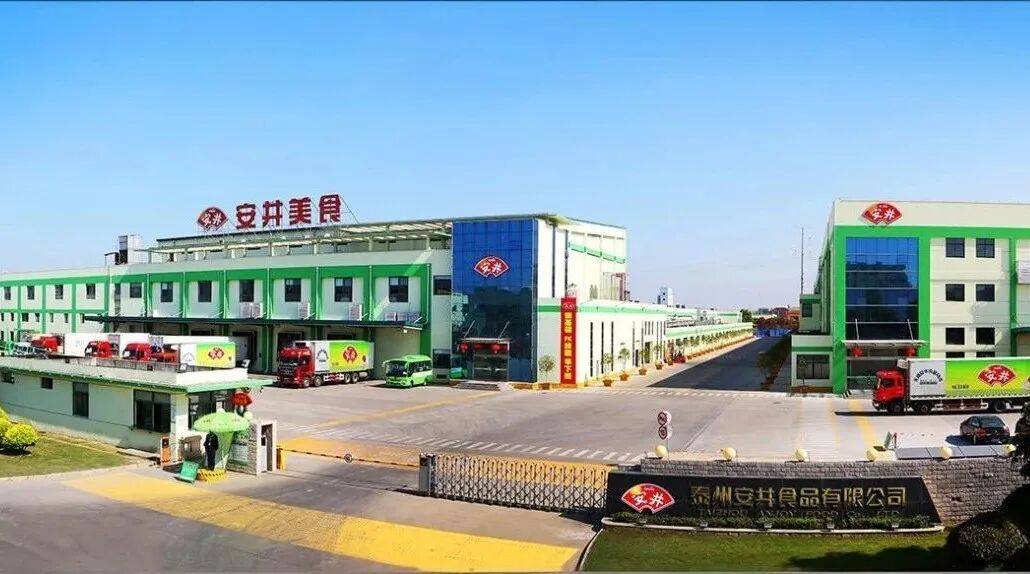
Core Viewpoint - Anjiu Foods is focusing on expanding its frozen baking business as a new growth point, following the acquisition of Jiangsu Dingweitai Food Co., Ltd. and the establishment of a dedicated baking division [1][5][7]. Group 1: Business Performance - Anjiu Foods has experienced a slowdown in growth, with revenue growth of 7.7% in 2024, marking the end of eight consecutive years of double-digit growth [4]. - In the first half of 2025, the company reported revenue of 7.604 billion yuan, a slight increase of 0.8% year-on-year, while net profit decreased by 15.79% to 676 million yuan [4][9]. - The company's frozen dish products have seen a decline in growth rates, with expected growth rates of 29.84% and 10.76% for 2023 and 2024, respectively [3][4]. Group 2: Market Expansion and Strategy - The frozen baking market in China is projected to grow at a compound annual growth rate of over 25%, with an expected market size of 23 billion yuan by 2025 [6]. - Anjiu Foods has completed the acquisition of 70% of Dingweitai and 100% of Dingyifeng Food, enhancing its product offerings in high-end frozen products and filling channel gaps [5][6]. - The company aims to leverage its established supply chain, brand influence, and channel advantages to compete effectively in the increasingly competitive frozen baking sector [1][7]. Group 3: Internationalization Efforts - Anjiu Foods has been pursuing international expansion, having entered the European market through the acquisition of Kung Fu Foods in 2021 and establishing an import-export department in 2023 [9][10]. - The company is focusing on the Japanese and Southeast Asian markets, where it has signed contracts with local distributors to enhance brand recognition and market share [9][10]. - From 2021 to 2025, Anjiu Foods' overseas revenue has shown a gradual increase, reaching 72 million yuan in the first half of 2025, although it still represents less than 1% of total revenue [9].
上市当天174亿,如今只剩81亿,股东趁高减持1.19亿,上次套现13亿的人已离场!
Sou Hu Cai Jing· 2025-09-06 22:27
Core Viewpoint - The significant decline in the market value of Lihigh Food, from a peak of 17.4 billion to 8.1 billion, has prompted shareholders to execute a coordinated sell-off, raising questions about the company's future prospects and the motivations behind these actions [1][2]. Company Performance - Lihigh Food reported a revenue of 2.07 billion in the first half of 2025, reflecting a year-on-year growth of 16.2%, and a net profit of 171 million, which is a 26.24% increase compared to the previous year [2]. - Despite the seemingly strong financial performance, shareholders have chosen to sell off their stakes around the time of these announcements, leading to skepticism about the sustainability of this growth [2][5]. Shareholder Actions - Major shareholders, including Bai Baokun and Chen Hejun, have executed significant sell-offs, with Bai cashing out 119 million and Chen selling 21,700 shares for 11.52 million [1]. - Employee shareholding platforms, which are typically aligned with the company, also participated in the sell-off, indicating a collective retreat from the stock [2]. Market Reactions - The market has shown a divided response, with some analysts maintaining a positive outlook on the baking industry and Lihigh's channel advantages, while shareholders are aggressively liquidating their positions [6]. - The trend of coordinated sell-offs among shareholders is not unique to Lihigh Food, as at least 111 companies in the A-share market have exhibited similar behavior since 2025, citing "personal funding needs" as the reason [3]. Historical Context - Lihigh Food's stock price has experienced significant volatility since its IPO, peaking at 80 and then declining sharply, with each rebound coinciding with large shareholder sell-offs [5]. - The company capitalized on the pandemic-driven demand for frozen baked goods but now faces uncertainty as the market dynamics shift [5]. Investor Implications - Investors who bought shares at the IPO price may have incurred losses exceeding 40%, while those who sold at the peak could have realized gains of up to 180% [7]. - The current market valuation of Lihigh Food stands at 8.1 billion with a price-to-earnings ratio of 30, raising concerns about the sustainability of this valuation given the lack of confidence from shareholders [7].

从好丽友•派下架到“洋名”争议:山姆的国产供应链为何常在“躲猫猫”?
Mei Ri Jing Ji Xin Wen· 2025-07-18 10:29
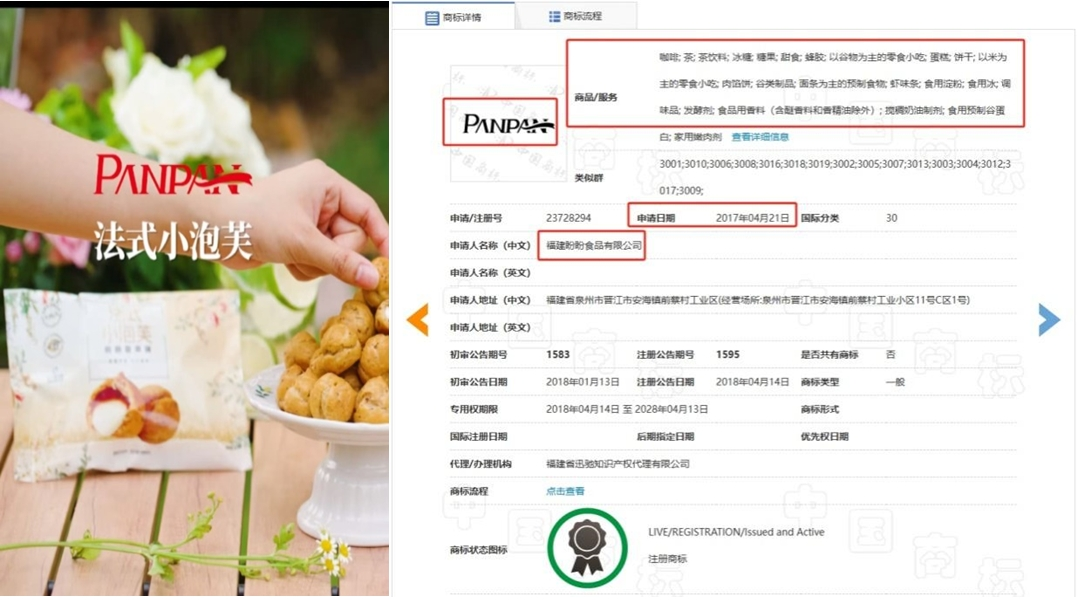
Core Viewpoint - The recent controversy surrounding Sam's Club's product selection adjustments highlights the shift from exclusive brands to more commonly found brands, raising questions about the perceived value of membership privileges [1][2]. Group 1: Product Selection and Branding - Sam's Club has faced criticism for introducing products with unfamiliar English names, such as "PANPAN" French puff, which are actually from well-known domestic brands [2][5]. - The "PANPAN" trademark was registered in 2017, indicating that it was not created specifically for Sam's Club [3][5]. - The "Sweet Hour" brand, associated with the product "益生元岩烧海苔," was registered by Guangdong Xizhilang Group in 2000, long before Sam's Club entered the Chinese market [5][6]. Group 2: Supplier Relationships and Product Quality - Sam's Club maintains high standards for its suppliers, requiring certifications for products, which limits the number of eligible suppliers [10]. - The self-branded products, such as Member's Mark, are primarily produced by well-known Chinese manufacturers, ensuring quality and local sourcing [10][11]. - The company relies heavily on local suppliers for popular items, such as frozen baked goods, which are produced by companies like Lihigh Foods [11]. Group 3: Market Positioning and Consumer Perception - The introduction of products with foreign-sounding names has led to consumer confusion regarding the origin of these products, prompting discussions about transparency in branding [15]. - Industry experts suggest that the quality of products should not be judged solely based on their branding, advocating for a better understanding of the value of domestic manufacturing [15].