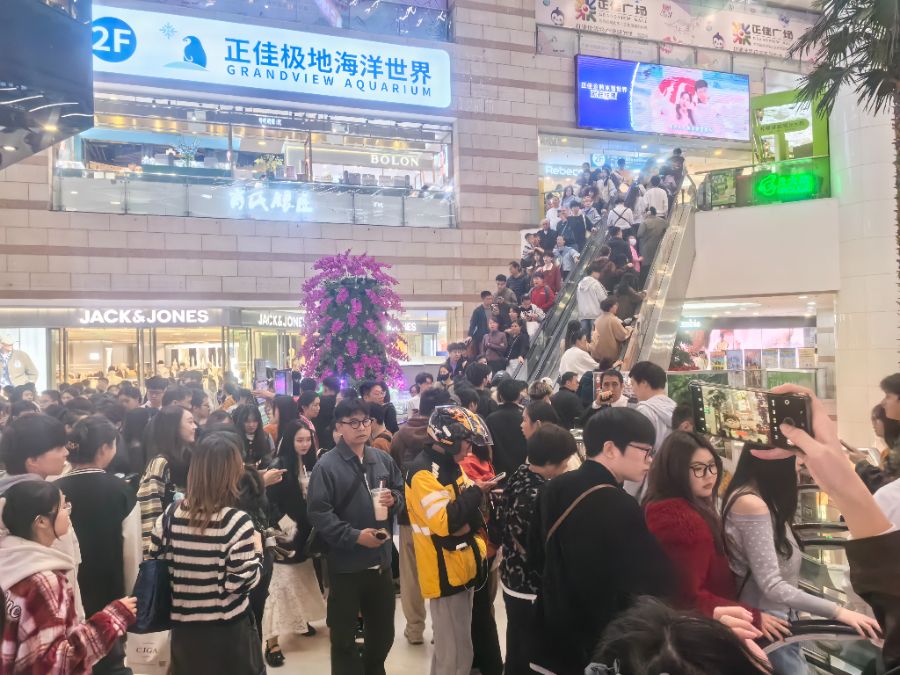
正佳大唐千灯会

Search documents
策“马”花城享年味 广州商圈新春消费场景再焕新
Guang Zhou Ri Bao· 2026-02-20 01:32
Core Viewpoint - The article highlights the vibrant festive atmosphere in Guangzhou during the Spring Festival, showcasing various interactive and artistic installations that enhance consumer engagement and reflect the city's cultural heritage. Group 1: Festival Atmosphere - Guangzhou's Tianhe Road business district is bustling with activity, featuring the fourth "Zhengjia Datang Qian Denghui" event, themed around "Lingnan Grand Temple Fair," which combines Tang Dynasty elegance with local cultural elements [1][4] - The immersive experience created by the event includes a 30-meter "Mountain and Sea Steed" light installation and various performances, contributing to a lively festive atmosphere [4][10] Group 2: New Spring Exhibitions - The "Dragon Horse Spirit" Spring Exhibition at Tianhuan Parc Central integrates traditional Lingnan culture with modern aesthetics, symbolizing vitality and success in the local context [5][6] - The exhibition features a giant "Dragon Horse" installation and various interactive elements, enhancing the celebratory spirit of the New Year [6][7] Group 3: Unique Shopping Experiences - The introduction of several flagship stores in Tianhuan, including high-end brands and popular dining options, aims to stimulate regional consumer activity [7][8] - The "Yue See Lingnan New Spring Garden" exhibition at Guangzhou Tianhe City features interactive cultural experiences and exclusive merchandise, attracting visitors and enhancing the shopping experience [9][11] Group 4: Cultural and Commercial Integration - K11's "Art + Commerce" model is showcased through various cultural activities, including the Mucha Art Exhibition and traditional crafts, creating a unique shopping destination during the Spring Festival [10][13] - The integration of cultural experiences, such as traditional New Year practices and artistic workshops, aims to enhance consumer engagement and promote local economic growth [10][12]

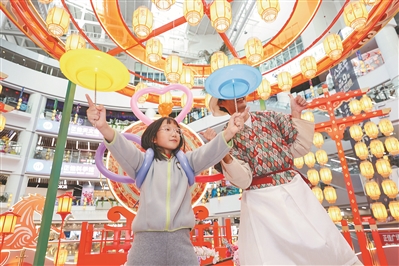
拼挖潜!2026年各地促进服务消费这样干
Xin Hua Wang· 2026-02-07 03:29
Group 1 - The core focus of local government reports is on "service consumption," with various initiatives proposed to accelerate the growth of this sector by 2025 [1] - Significant achievements in service consumption by 2025 include Beijing hosting 2,295 large events (up 25.8%), Shandong seeing over 10% growth in tourist numbers and revenue, and Chongqing receiving over 500 million tourists with inbound tourism increasing by 68.2% [1] - By 2026, local governments plan to enhance service consumption through investments in diverse sectors such as elderly care, health, and cultural services, with specific initiatives like creating convenient living circles and upgrading traditional service sectors [1][2] Group 2 - The integration of culture, sports, and tourism is seen as a fertile ground for expanding service consumption, with various regions reporting successful initiatives [2] - Jiangsu's "football+" initiative and Chongqing's "viewing and touring" plan are examples of how localities are leveraging cultural events to drive consumer traffic [2] - By 2026, regions like Zhejiang and Tianjin aim to innovate in the cultural and tourism sectors to enhance consumer experiences and expand service offerings [2] Group 3 - New business models such as low-altitude tourism and aviation sports are emerging, with suggestions for regulatory reforms to foster these sectors [3] - There is a shift in consumer demand from material satisfaction to experiences that offer cultural and social value [3] Group 4 - Enhancing emotional, experiential, and self-satisfying service offerings is a key strategy for expanding service consumption [4] - Events like the fourth Zhengjia Datang Lantern Festival in Guangzhou are designed to boost interaction and experience for visitors, leading to increased foot traffic and sales [4] - Various regions are focusing on personalized service offerings and expanding event-driven economies to stimulate consumer spending [4] Group 5 - The youth demographic is becoming a significant force in the service consumption market, driving trends through events like drama, anime, and music festivals [5] - Recommendations include collaboration between business and cultural sectors to enhance consumer experiences and introduce new consumption formats [5] Group 6 - The concept of "youth economy" has been officially recognized in government reports, with proposals for targeted electronic consumption vouchers for young people to stimulate engagement in various social and cultural activities [6] Group 7 - Digital technologies and artificial intelligence are reshaping service consumption landscapes, with local governments emphasizing tech-driven enhancements to improve consumer experiences [7] - Initiatives include the development of smart tourism platforms and AI-driven data analysis to optimize consumer interactions and service delivery [7] - The focus is on transitioning consumer behavior from purchasing goods to enjoying services and experiences, which is expected to invigorate the economy [7]
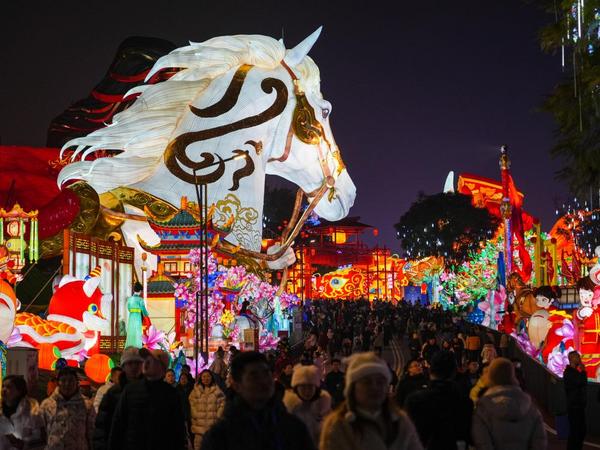
行花街赶潮集,购广货过新年!天河新春促消费活动燃动全城
Nan Fang Du Shi Bao· 2026-02-04 10:06
Core Viewpoint - The "Guangdong Goods Going Global: The Most Guangzhou New Year" series of activities is actively promoting consumer engagement in Tianhe District, showcasing a blend of local culture, fashion, and technological innovation to create a vibrant New Year atmosphere [1] Group 1: Consumer Engagement Activities - Tianhe District has organized over 88 promotional activities in collaboration with more than 30 large commercial complexes to enhance consumer experience during the New Year [1] - The introduction of "first stores" and "first exhibitions" in the Tianhe Road business district continues to attract foot traffic and showcase innovative local products [2][3] - The "Alfons Mucha Masterpieces Century Retrospective" exhibition at Guangzhou K11 Shopping Art Center features over 200 original works, highlighting the peak beauty of the Art Nouveau movement [2] Group 2: Cultural Integration and Innovation - The integration of non-heritage elements into commercial spaces is a key feature of the New Year activities, allowing traditional crafts to be experienced in modern shopping environments [6] - The "Non-Heritage New Year: Taste of Chinese New Year" event successfully combined non-heritage crafts with commercial and tourism elements, featuring over 130 non-heritage projects and 60 inheritors [6] - The "Flower Street" event, a traditional activity for the New Year, returns to Tianhe Sports Center, incorporating cultural interactions and quality stalls to enhance the festive experience [6][8] Group 3: Technological Enhancements - Tianhe District is creating immersive shopping experiences by blending traditional and modern elements, utilizing technology to enhance consumer interaction [9] - The "Hai Xin Sha Technology Island" is Guangzhou's first all-space intelligent experience center, allowing visitors to interact with robots and drones, showcasing cutting-edge technology applications [13] Group 4: Consumer Incentives - The district is implementing a combination of government subsidies, platform discounts, and brand promotions to lower consumer spending barriers and stimulate purchasing power [14] - Various commercial platforms are offering significant discounts and promotional activities, such as the "Code to Spend" campaign at Parc Central, which provides group purchase subsidies for beauty and fashion brands [14]
元旦文旅消费地图:苏粤豫等6地“揽客”超千万
2 1 Shi Ji Jing Ji Bao Dao· 2026-01-04 14:05
Core Insights - The New Year holiday period from January 1 to January 3, 2026, saw a significant surge in consumer activity, with an estimated 590 million people traveling across regions, marking a 19.5% year-on-year increase [1][2] - Domestic tourism during this period reached 142 million trips, with total spending amounting to 84.789 billion yuan [1][2] - The overall tourism market is showing new trends, including a shift towards emotional value and upgraded quality demands in consumer preferences [2][8] Group 1: Visitor Statistics - Jiangsu, Guangdong, and Henan provinces led in tourist numbers, receiving 19.4318 million, 17.875 million, and 17.437 million visitors respectively [4][5] - Six provinces, including Zhejiang, Hunan, and Fujian, surpassed 10 million visitors during the holiday [4] - In Guangdong, the city of Guangzhou received 3.35 million visitors, while Shenzhen followed closely with 3.086 million [5][6] Group 2: Revenue Generation - Zhejiang, Hunan, Shanghai, and Beijing were the top provinces in terms of tourism revenue, each exceeding 10 billion yuan, with revenues of 19.170 billion, 15.480 billion, 12.271 billion, and 10.970 billion yuan respectively [2][9] - Guangdong and Jiangsu also approached the 10 billion yuan mark, generating 9.980 billion and 9.610 billion yuan respectively [9][10] Group 3: Consumer Trends - The tourism market is experiencing a shift from traditional sightseeing to immersive experiences, including micro-vacations, wellness tourism, and cultural heritage experiences [2][8] - Younger travelers are increasingly favoring destinations that offer unique cultural experiences, with a notable rise in demand for themed parks and local attractions [10][12] - The average spending per visitor in Guangdong during the holiday was 558.3 yuan, reflecting a 3.7% year-on-year increase [11] Group 4: Future Outlook - The consumer market is expected to continue its recovery, with various initiatives planned for 2026, including the introduction of new retail and entertainment experiences [13] - The integration of cultural, commercial, and tourism strategies is anticipated to enhance the quality of consumer experiences in the coming year [13]