
武术

Search documents
近代中国如何拥抱现代奥林匹克与国际接轨?|新年书摘
Di Yi Cai Jing· 2026-02-15 01:39
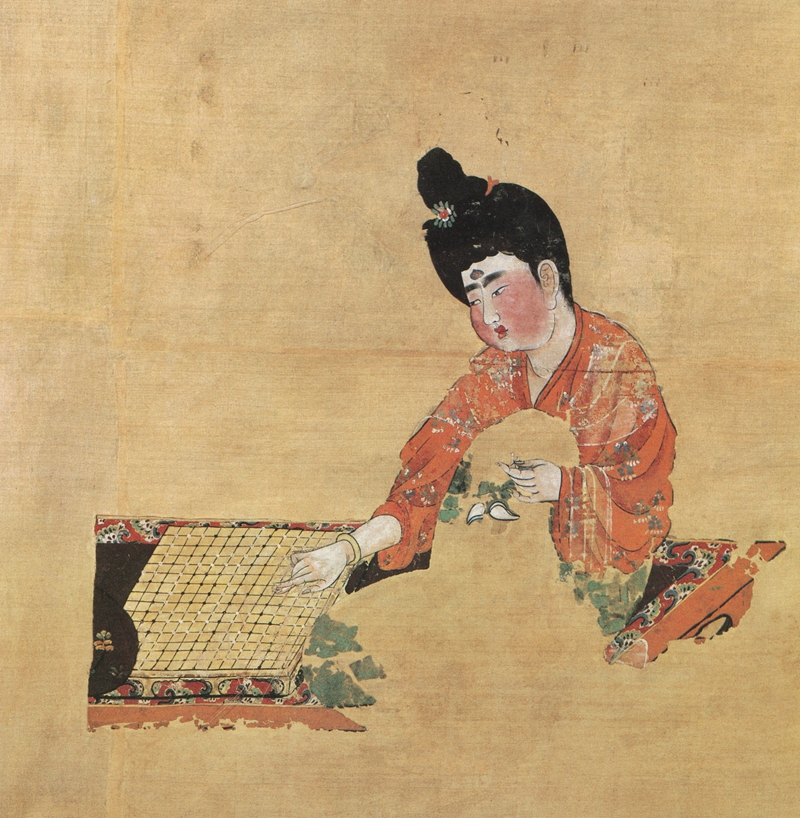
Core Argument - The transition of China from an imperial civilization to a nation-state is significantly hindered by traditional sports, which reflect cultural and civilizational characteristics that are at odds with modernity [1][4][5]. Group 1: Traditional Sports and Cultural Identity - Traditional Chinese sports, such as martial arts and Go, embody cultural and civilizational traits that are integral to the construction of "Chineseness" [3][4]. - The concept of "sports" as understood today was introduced from Japan in the late 19th century, highlighting a cultural paradox where traditional activities reflect Chinese identity yet are labeled as inferior in modern contexts [3][4]. - The emphasis in traditional sports is on moral and intellectual development rather than physical prowess, contrasting sharply with Western competitive sports [5][6]. Group 2: Historical Context and Evolution - The evolution of Chinese sports can be divided into three significant phases: the Spring and Autumn period, the Qin and Han dynasties to the Song, and the Ming and Qing dynasties, with key turning points occurring during the Song dynasty and the late 19th century [6][7][8]. - The Song dynasty marked a decline in the emphasis on physicality and sports due to socio-political pressures and the rise of Confucian ideals, leading to a negative perception of physical activities [7][8]. - By the late 19th century, the humiliation of the Opium Wars prompted a national awakening, leading to a renewed interest in sports as a means of national rejuvenation and identity reconstruction [9][10]. Group 3: Internationalization and Modernization - The introduction of modern Olympic ideals to China was facilitated by the YMCA, which played a crucial role in promoting sports and organizing national competitions [15][16]. - The establishment of the first national sports event in 1910 and the subsequent interest in the Olympics marked a significant shift towards international engagement in sports [16][17]. - The success of Chinese students in American sports during their studies abroad exemplified the potential for international competitiveness, contrasting with the domestic perception of weakness [12][13][14]. Group 4: Contemporary Implications - The hosting of the 2008 Summer Olympics and the 2022 Winter Olympics in Beijing reflects China's growing emphasis on sports as a symbol of international integration and national pride [17][18]. - Sports have also played a pivotal role in diplomatic relations, as seen in the "ping-pong diplomacy" of the 1970s, which opened doors for international engagement [18]. - The increasing societal focus on sports is evident in educational contexts, with sports being integrated into national discourse and even high school examinations [17].

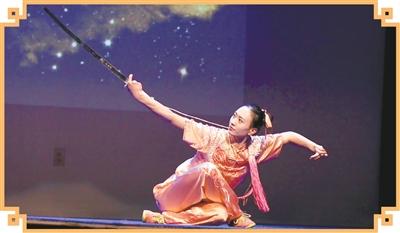
倾注热爱,“武”出精气神(古韵国风 顶流审美)
Ren Min Ri Bao· 2026-01-13 01:34
Core Viewpoint - The article highlights the intersection of traditional Chinese martial arts with modern youth culture and technology, showcasing how young practitioners like Yao Yang and Fan Shisan are innovating and promoting martial arts in contemporary society [4][7]. Group 1: Yao Yang's Achievements - Yao Yang, a post-95 athlete, won gold medals in women's Changquan, sword, and spear events at the 15th National Games, demonstrating the beauty and essence of Chinese martial arts [5]. - She began her martial arts journey at the age of 6 and has dedicated over 20 years to mastering the craft, emphasizing the importance of perseverance and dedication in achieving martial arts excellence [5][6]. - Yao Yang aims to promote Chinese martial arts globally, having performed in various countries and engaging with over 1,700 martial arts enthusiasts during an overseas event [6]. Group 2: Integration of Martial Arts and Technology - Fan Shisan, a post-90s self-media blogger, combines martial arts with technology, creating innovative content that resonates with a modern audience, including over a million followers on social media [7][8]. - His studio in Chengdu focuses on developing realistic representations of martial arts techniques using scientific principles, such as creating "sword energy" and enabling "sword flying" through engineering [8][9]. - The team at Fan Shisan's studio consists of members with diverse skills, including electrical engineering and art, working collaboratively to bring traditional martial arts into the realm of modern technology [9].
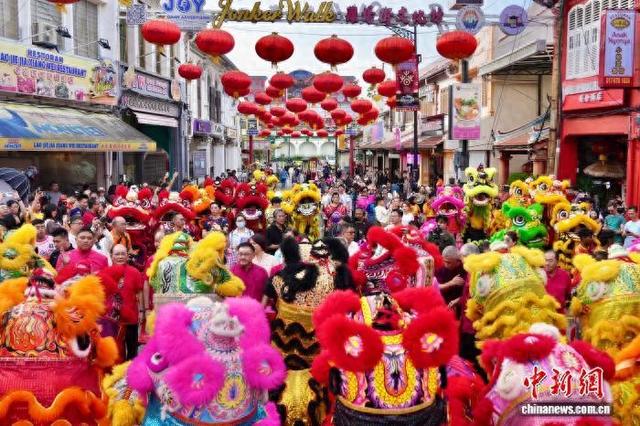
“福建春晚”走进马来西亚马六甲录制
Xin Lang Cai Jing· 2026-01-11 07:55
Group 1 - The "2026 Fujian Spring Festival Gala" Malacca sub-venue was recorded on January 10, showcasing a variety of performances that highlight both traditional Chinese customs and local Malaysian Chinese cultural elements [1][4] - The event attracted not only local residents but also numerous tourists from around the world, indicating its broad appeal and cultural significance [1][5] - The gala serves as an important platform for the transmission of Chinese culture in Malacca, with hopes to attract more visitors to experience the rich Chinese cultural atmosphere [4][6] Group 2 - The Malacca sub-venue is the only overseas location for this year's "Fujian Spring Festival Gala," emphasizing the historical ties between China and Malaysia and the sentiments of the Fujian diaspora [6] - The theme of this year's gala is "integrated development," focusing on the core features of "Taiwan Strait" and "overseas Chinese," aiming to tell stories from Fujian and convey the strength of Fujian culture to the global Chinese community [6]
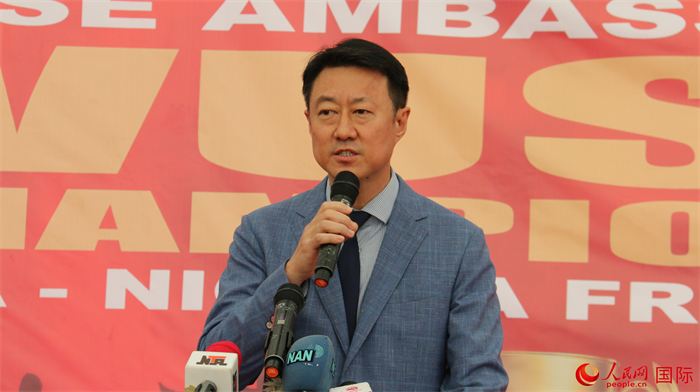
“中国大使杯”尼日利亚武术锦标赛在阿布贾举行
人民网-国际频道 原创稿· 2025-11-02 06:10
Core Viewpoint - The "Chinese Ambassador Cup" Wushu Championship in Nigeria highlights the growing popularity of Chinese martial arts in Nigeria and serves as a platform for cultural exchange between China and Nigeria [1][2]. Group 1: Event Overview - The championship was held on October 31 at the National Stadium in Abuja, co-hosted by the Chinese Embassy in Nigeria and the Nigerian National Sports Commission [1]. - The event was attended by over a thousand participants, including officials from both countries, cultural institutions, and students [1]. Group 2: Cultural Significance - Chinese Ambassador to Nigeria, Yu Dunhai, emphasized that Wushu embodies the spirit of self-discipline, resilience, and mutual respect inherent in Chinese culture [1]. - The event aims to deepen the understanding and friendship between the peoples of China and Nigeria through martial arts [2]. Group 3: Competition Highlights - The competition featured six categories: Tai Chi, routines, men's and women's sanda, creative performances, and team events, showcasing the skills and spirit of the participants [2]. - Participants demonstrated their martial arts skills, receiving applause and cheers from the audience [2]. Group 4: Personal Stories - A notable participant, Eze, who won the men's sanda 75kg category, shared his 30-year journey in martial arts and expressed his commitment to teaching the youth in his hometown [8].
通讯丨舞狮迎中秋 中国文化融入匈牙利寻常百姓家
Xin Hua Wang· 2025-09-26 05:51
Core Viewpoint - The article highlights the integration of Chinese culture into the daily lives of ordinary people in Hungary, particularly through traditional celebrations like the Mid-Autumn Festival, showcasing activities such as lion dancing, martial arts, and tea ceremonies [1]. Group 1: Cultural Events - The fifth Hungarian Zen Martial Alliance family and friends gathering featured lion dancing and other traditional Chinese cultural activities, emphasizing the celebration of Chinese culture [1]. - The event has been held annually before the Mid-Autumn Festival for the past five years, aiming to bridge cultural connections between China and Hungary [1]. Group 2: Community Involvement - The Hungarian Martial Arts Association president stated that the event has become an important moment for Hungarian families and friends to celebrate Chinese culture [1]. - The Hungarian Lion Dance Association introduced a new lion symbolizing joy and prosperity, which was well-received during the recent Mid-Autumn Festival performance in Budapest [1]. Group 3: Personal Experiences - Local participants, including university students and high school girls, expressed their passion for lion dancing, highlighting its blend of athletic skill and cultural significance [1]. - The involvement of younger generations in lion dancing indicates a growing interest in Chinese cultural practices among the local population [1].
第三届传统体育国际交流大赛在江阴开幕
Xin Hua Ri Bao· 2025-09-20 00:07
Core Viewpoint - The third International Traditional Sports Exchange Competition aims to promote the international dissemination of Chinese traditional sports culture through high-level competitive and cultural exchange platforms [1] Group 1: Event Overview - The event was held on September 19 in Jiangyin and is organized by the China National Sports Federation, with support from the General Administration of Sport of China and Jiangsu Provincial Sports Bureau [1] - The theme of the competition is "Civilization Integration, Sports Appointment, Friendship Following" [1] Group 2: Participation and Scale - The competition attracted nearly 800 athletes from 39 countries and regions, marking a significant increase in participation compared to previous editions [1] Group 3: Sports and Cultural Activities - The event features five selected traditional Chinese sports: Wushu, Qigong, Go, Dragon and Lion Dance, and Kites, each with a unique cultural significance [1] - In addition to competitions, a series of cultural exploration activities are arranged to showcase the beauty and contemporary vitality of Chinese culture to the world [1]
北京文化守护人丨吴彬:点评爱徒李连杰和吴京,盼着武术进奥运
Xin Jing Bao· 2025-09-19 14:40
Core Viewpoint - Wu Bin is a prominent figure in Chinese martial arts, known for his contributions to the establishment and success of the Beijing Wushu Team, which has won numerous national championships and produced famous martial arts stars like Jet Li and Wu Jing [3][12][14]. Group 1: Background and Achievements - Wu Bin was born in 1937 in Huzhou, Zhejiang, and graduated from Beijing Sports University, where he studied martial arts [2][6]. - He played a crucial role in founding the Beijing Wushu Team and led it to ten consecutive national championships, earning over 100 gold medals [3][12]. - Wu Bin has been recognized as one of the "World's Top Ten Martial Arts Coaches" and has authored several martial arts textbooks, contributing significantly to the global promotion of Chinese martial arts [3][12]. Group 2: Training and Development - Wu Bin began his teaching career at Shichahai Sports School in 1963, where he developed a rigorous training program for young martial artists [5][10]. - He emphasized the importance of foundational skills, ensuring that students practiced basic techniques for several years before performing publicly [10][12]. - Wu Bin's training methods have produced numerous champions, including Jet Li, who was identified as a talented student early on [8][12]. Group 3: Promotion of Martial Arts - Wu Bin has been instrumental in promoting martial arts as a cultural treasure that embodies national spirit and values [3][12]. - He advocated for the inclusion of martial arts in international competitions, leading to its recognition in events like the 1990 Beijing Asian Games [17][18]. - The upcoming Dakar Youth Olympic Games in 2026 will feature martial arts as an official competition, marking a significant milestone for the sport [18].


第三届传统体育国际交流大赛开赛
Xin Hua She· 2025-09-19 14:39
Core Points - The third International Traditional Sports Exchange Competition opened in Jiangyin, Jiangsu Province, featuring nearly 800 athletes from 39 countries and regions participating in five traditional Chinese sports [1][2] - The event emphasizes the integration of culture and sports, aiming to showcase the cultural heritage and contemporary vitality of traditional Chinese sports [2] Group 1: Event Overview - The competition includes five traditional sports: martial arts, fitness qigong, Go, dragon and lion dance, and kite flying, each rooted in Chinese philosophical wisdom and health concepts [1] - The theme of the event is "Civilization Integration, Sports Appointment, Friendship Following," highlighting the deep cultural significance of the sports involved [2] Group 2: Cultural Exchange and Impact - The event aims to create an immersive experience for participants to appreciate the charm of traditional Chinese culture through competitions, performances, and cultural workshops over three days [1] - The organizer, the General Administration of Sport of China, hopes to enhance the event's brand and establish it as a high-level cultural exchange platform with greater international influence [2]
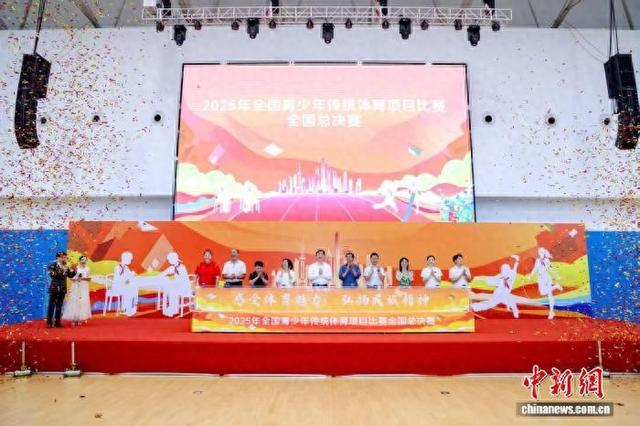
近三千青少年在沪同台竞技传统体育
Zhong Guo Xin Wen Wang· 2025-08-21 13:25
Core Viewpoint - The 2025 National Youth Traditional Sports Competition Finals has commenced in Shanghai, attracting significant participation and showcasing various traditional sports [1][3]. Group 1: Event Overview - The competition runs from August 21 to 24, featuring 24.95 million youth participants from 1,203 schools and 67 youth palaces across 27 provinces [3]. - Events include martial arts, chess, and jump rope, with a total of 2,554 young athletes competing [3]. Group 2: Highlights and Activities - The opening ceremony featured performances by youth in martial arts and street dance, enhancing the event's atmosphere [3]. - Olympic champions shared their inspirational stories, including a notable narrative from 15-year-old Wang Yixuan, a world youth martial arts champion [3]. Group 3: Organizational Support - The event is supported by a dedicated volunteer team with over 10,000 hours of service, ensuring smooth operations and safety [3]. - The competition is recognized as a national event approved by the Ministry of Education, being the only sports event on the ministry's "white list" [4].
中国体育代表团创参加世运会历史最好成绩
Xin Hua She· 2025-08-18 02:26
Core Insights - The 12th World Games concluded in Chengdu, marking the first time the event was held in mainland China, with the Chinese sports delegation achieving a historic performance by winning a total of 64 medals, including 36 gold, 17 silver, and 11 bronze, thus ranking first in both gold and overall medal counts [1][2] Group 1: Performance Highlights - The Chinese sports delegation won gold medals in 18 events, increasing the number of events in which they secured gold from 14 to 23 [1] - Notable achievements included world records set in women's speed relay in rock climbing and women's 4×50 meter relay in underwater swimming, along with five events where Chinese athletes claimed both gold and silver [1] - In the disabled sports category, 10 athletes won 5 gold and 1 silver in events such as free diving, jiu-jitsu, and archery, showcasing the development of sports for disabled individuals in China [1] Group 2: Development and Future Prospects - The athletes representing China came from diverse backgrounds, with many participating in an international multi-sport event for the first time, reflecting the country's efforts in diversifying sports development and talent cultivation [2] - The World Games primarily featured non-Olympic sports, which are crucial for building a strong sports nation and meeting the diverse sports needs of the public, thus promoting balanced development in sports [2] - Participation in the World Games has helped cultivate a group of excellent athletes, coaches, and management talents for the future development of these sports in China [2]