
二代刀片电池

Search documents
国泰海通晨报-20260331
GUOTAI HAITONG SECURITIES· 2026-03-31 02:25
Group 1: Biopharmaceutical Research - WuXi AppTec, as a global CRDMO leader, exceeded its revenue guidance for 2025, with a significant profit margin increase and a strong Tides business, reporting a 28% increase in backlog orders by the end of 2025, and expects a revenue growth of 18-22% in 2026 [1][3][4] - The company achieved a total revenue of RMB 45.46 billion in 2025, a year-on-year increase of 15.8%, and a net profit of RMB 19.15 billion, up 102.7% year-on-year, with adjusted Non-IFRS net profit rising by 41.3% [3][4] Group 2: Military Industry Research - The National Development and Reform Commission and the Ministry of Finance announced an optimization of the radio frequency occupation fee standards, which is expected to significantly reduce satellite internet frequency fees, accelerating the market penetration of satellite terminal applications [2][7][21] - The new fee structure will change the cost burden from end-users to satellite operators, facilitating the proliferation of satellite terminals and potentially lowering costs for high-frequency applications [8][21] Group 3: Home Appliance Research - TCL Electronics reported a strong performance in 2025, with revenue of HKD 114.58 billion, a year-on-year increase of 15.4%, and an adjusted net profit of HKD 2.51 billion, up 56.5% [9][10] - The company is focusing on high-end and global strategies, with a continuous increase in market share and an improved product structure leading to a significant enhancement in TV gross margins [11][12] Group 4: Food and Beverage Research - The demand for probiotics is expanding, driven by new channels like Douyin and emerging needs for weight loss, with a focus on the second-generation probiotic AKK, which is expected to accelerate market education and demand release [13][14] - The market for probiotic health products is projected to grow, with a 6% increase in scale to RMB 16 billion in 2025, and a notable 40% growth in GMV through Douyin [13][14]





比亚迪3月19日全情报分析报告:「比亚迪拟在巴西建研发中心」对股价有积极影响
3 6 Ke· 2026-03-19 14:17
Core Viewpoint - BYD plans to invest 300 million Brazilian Reais in a new electric vehicle R&D center in Rio de Janeiro, expected to be operational by 2028, enhancing its global expansion and R&D capabilities [1][5][6] Group 1: Investment and Expansion - BYD's investment in Brazil signifies its commitment to international expansion and improving its competitive edge in the global market [5] - The new R&D center will include testing tracks and facilities similar to those in Zhengzhou, China, indicating a strategic approach to innovation [1] - BYD has already established a passenger vehicle factory in Camaçari, with an annual production capacity of 150,000 vehicles, demonstrating substantial progress in capacity expansion [5] Group 2: Market Sentiment and Public Perception - As of March 19, the overall sentiment regarding BYD's investment is predominantly positive, with 69% of the 735 total online mentions being favorable [1][3] - The primary platform for this sentiment is Toutiao, which accounted for 17.96% of the mentions [3] - The establishment of the R&D center is expected to enhance BYD's international brand image and attract more global customers and partners [8] Group 3: Impact on Stock Price and Future Prospects - The investment is likely to have a positive short-term impact on BYD's stock price due to market optimism regarding its international expansion and R&D capabilities [6] - Long-term, the operational R&D center is expected to further enhance BYD's global competitiveness and market share, contributing to sustained positive effects on stock price [6] - Supportive government policies for electric vehicles globally may also benefit BYD's expansion efforts, reducing costs and improving profitability [8]


比亚迪3月19日全情报分析报告:「比亚迪拟在巴西建研发中心」对股价有积极影响
36氪· 2026-03-19 13:43
Core Viewpoint - BYD is expanding its international presence by investing in a new electric vehicle research and development center in Rio de Janeiro, Brazil, which is expected to enhance its global competitiveness and market share [7][12]. Group 1: Investment and Expansion - BYD plans to invest 300 million Brazilian Reais to build an electric vehicle R&D center in Brazil, expected to be operational by 2028 [7]. - The company has already established a passenger car factory in Camaçari, Brazil, with an annual production capacity of 150,000 vehicles [7]. Group 2: Market Sentiment and Public Opinion - As of March 19, the event related to BYD's investment has generated a total of 735 pieces of online sentiment information, with 507 positive mentions (69.0%), 14 negative mentions (1.9%), and 214 neutral mentions (29.1%), indicating a significantly positive sentiment [8]. - The primary platform for the dissemination of this information is Toutiao, accounting for 132 mentions (17.96%) [10]. Group 3: Impact on Stock Price - The short-term investment plan in Brazil is likely to positively influence BYD's stock price due to market expectations regarding the company's international expansion and enhanced R&D capabilities [12]. - Long-term, the establishment and operation of the R&D center are expected to further improve BYD's global competitiveness and market share, contributing to sustained positive effects on stock price [12]. Group 4: Strategic Advantages - The investment in Brazil reflects BYD's global market expansion strategy and enhances investor confidence in the company's growth potential [17]. - Establishing the R&D center will strengthen BYD's R&D capabilities in the electric vehicle sector, facilitating the launch of innovative products and improving technological competitiveness [17]. - The expansion of production capacity in Brazil is a significant step towards meeting market demand, which will increase revenue and profits [17]. - Setting up R&D centers and factories overseas will enhance BYD's international brand image, attracting more global customers and partners [17]. - Supportive policies for new energy vehicles globally may provide BYD with local government support and subsidies, reducing costs and improving profitability [17].
比亚迪闪充首个量产车型,方程豹钛3闪充版上市
Bei Jing Ri Bao Ke Hu Duan· 2026-03-19 02:33
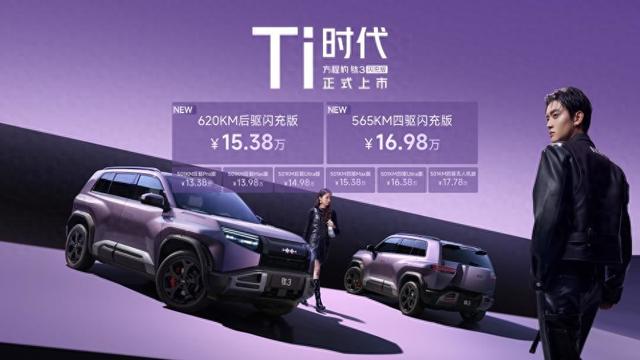
Group 1 - The core product launch is the Fangcheng Leopard Titanium 3 Flash Charge version, which offers two configurations: a rear-wheel drive version with a range of 620 kilometers and an all-wheel drive version with a range of 565 kilometers, priced between 153,800 to 169,800 yuan [1] - The Fangcheng Leopard Titanium series is the first mass-produced model featuring BYD's flash charging technology and will be the first to commence deliveries [1] - The first owners of the Titanium 3 Flash Charge version will enjoy 18 months of free flash charging [1] Group 2 - As of March 12, the number of BYD flash charging stations has rapidly increased to 4,597 [3] - The highly anticipated Titanium 7 EV Flash Charge version has also started pre-orders, with a price range of 220,000 to 250,000 yuan, offering an additional 6 months of free flash charging for early subscribers [3] - The Titanium 3 Flash Charge version features BYD's flash charging technology and second-generation blade battery, allowing it to charge from 10% to 70% in approximately 5 minutes and from 10% to 97% in about 9 minutes, with only a 3-minute increase in charging time at -30 degrees Celsius [3] Group 3 - The Titanium 3 Flash Charge version is built on the intelligent EVO+ platform and incorporates a layered laser-welded silicon carbide module and integrated thermal management for better energy efficiency [5] - It includes the iATS intelligent all-terrain recognition system, energy locks, stuck vehicle assistance, and various driving modes to handle different road conditions [5] - The vehicle features four major intelligent technologies, including BYD's "Tian Shen Eye" driver assistance system, active pre-sensing and cloud damping control system, exclusive AI smart cockpit, and smart ecosystem similar to the Titanium 7 [5] Group 4 - To meet personalized user demands, the Titanium 3 Flash Charge version introduces a new exterior color "Stardust Purple" and a new interior color "Gray-Blue Dual Tone," along with 14 customization options and 16 light customization options [7] - Comfort features include standard front seat ventilation and heating, double-layer soundproof glass, heated steering wheel, and rear privacy glass [7] - The all-wheel drive version is upgraded with additional features such as passenger seat memory and leg support, a compressor refrigerator, and a 14-speaker Dynaudio sound system [7]
电池工厂里的新车发布,隐藏着吉利的“野心”
高工锂电· 2026-03-18 10:25
Core Viewpoint - The article highlights the launch of the Galaxy M7 by Geely, featuring the new Shendun Jin砖 battery, which signifies a shift in Geely's battery strategy from reliance on external suppliers to self-sufficiency and integration of battery technology into its product offerings [2][4][10]. Group 1: Product Launch and Features - Geely officially unveiled the Galaxy M7 on March 13, showcasing its new Shendun Jin砖 hybrid battery, which brings long-range capabilities to its plug-in hybrid models [2][4]. - The Shendun Jin砖 battery boasts impressive specifications, including a pure electric range of 225 km, a charging time of 15 minutes from SOC 30% to 80%, a maximum discharge rate of 21.02C, and over 4500 charge cycles [4][7]. Group 2: Safety and Performance - The Shendun Jin砖 battery is designed with a high safety profile, featuring a comprehensive protection system that exceeds national standards, including 36 extreme tests and 12 unique to Geely [5][7]. - Performance metrics include a high energy density of 192 Wh/kg and a low-temperature retention rate that outperforms competitors by 8.7% [7]. Group 3: Strategic Shift in Battery Production - Geely's previous strategy involved a dual approach of external procurement and joint ventures, but the increasing challenges in the supply chain have prompted a shift towards in-house battery production [8][9]. - The establishment of Geely's battery subsidiary, Jiyao Tongxing Energy Technology, marks a strategic transition from merely securing supply to controlling the core value chain [9][10]. Group 4: Value Creation from In-House Production - The internal battery production strategy is expected to optimize costs, accelerate technological iterations, and enhance supply chain resilience, with plans to achieve a production capacity of 70 GWh by 2027 [10]. - The Shendun Jin砖 battery not only empowers the Galaxy M7 but also aims for cross-brand compatibility within Geely's various brands, enhancing overall platform capabilities [10].


比亚迪(002594):兆瓦闪充技术赋能新品 底部向上周期开启
Xin Lang Cai Jing· 2026-03-17 00:40
Core Insights - BYD's sub-brand Fangchengbao will hold a product launch on March 13, 2026, introducing the Fangchengbao Titanium 3 Flash Charge version with a maximum range of 620 km and the Titanium 7 EV Flash Charge version available for pre-sale priced between 220,000 to 250,000 yuan [1] - The new Fangchengbao models feature significant upgrades in battery and charging technology, enhancing competitiveness in the market [1][2] - The new generation of blade batteries and megawatt flash charging technology significantly reduces charging times, addressing user concerns about charging anxiety [2] Product Launch and Features - The Fangchengbao Titanium 3 Flash Charge version comes in two configurations: a rear-wheel drive version with a range of 620 km priced at 153,800 yuan and a four-wheel drive version with a range of 565 km priced at 169,800 yuan [1] - Key upgrades include a second-generation blade battery, a reduction in charging time from 10-70% to just 5 minutes, and the option for advanced driving features with the Tian Shen Eye B version [1] - The Titanium 7 EV Flash Charge version is positioned as a higher-end SUV, expected to impact the mainstream market segment priced between 200,000 to 300,000 yuan [1] Technological Advancements - The new megawatt flash charging technology allows for charging from 10% to 70% in just 5 minutes and from 20% to 97% in 12 minutes even in extreme cold conditions [2] - The energy density of the new battery has improved by 5%, and the overall capacity retention has increased by 2.5% compared to the first generation [2] - BYD plans to establish 20,000 charging stations by the end of 2026, with 4,239 already built as of March 5 [2] Market Outlook - In February, BYD's export sales reached 101,000 units, accounting for over 50% of total sales, indicating a sustained demand in the export market [2] - The launch of 11 new models on March 5 marks the beginning of a new product cycle for BYD, which is expected to drive industry recovery [2] - Revenue projections for 2025-2027 are estimated at 892.43 billion, 995.31 billion, and 1,106.50 billion yuan, with year-on-year growth rates of 14.8%, 11.5%, and 11.2% respectively [3]
方程豹钛3闪充版上市 为比亚迪闪充首个量产车型
Zheng Quan Ri Bao Wang· 2026-03-16 10:41
Core Insights - BYD has officially launched the Fangchengbao Titanium 3 fast-charging version, with two configurations priced between 153,800 to 169,800 yuan [1] - The Fangchengbao Titanium 7 EV fast-charging version is also available for pre-order, with prices ranging from 220,000 to 250,000 yuan [1] - The Fangchengbao series represents a significant upgrade in fast-charging technology and will be the first mass-produced model to feature this technology [1] Product Features - The Fangchengbao Titanium 3 fast-charging version is equipped with BYD's fast-charging technology and second-generation blade battery [1] - Charging from 10% to 70% takes approximately 5 minutes, and from 10% to 97% takes about 9 minutes, even in low temperatures [1] - Standard features include fast-charging capability, long-range, cloud suspension, advanced driving assistance, AI cockpit, heated and ventilated front seats, double-layer soundproof glass, heated steering wheel, and privacy glass for rear seats [1]
方程豹钛 3 闪充版正式上市 成比亚迪闪充首批量产交付车型
Huan Qiu Wang· 2026-03-14 03:42
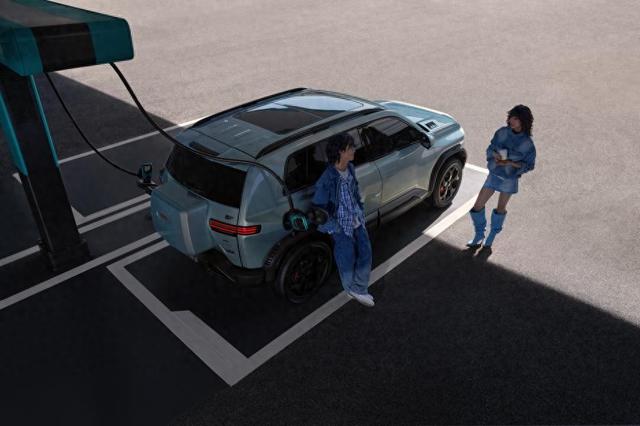
Core Viewpoint - The launch of the Fangcheng Leopard Titanium 3 Flash Charge version marks a significant advancement in electric vehicle technology, featuring rapid charging capabilities and a range of innovative technologies aimed at enhancing user experience and safety [1][2]. Group 1: Product Launch and Specifications - The Fangcheng Leopard Titanium 3 Flash Charge version is available in two configurations: a 620KM rear-wheel drive version priced at 153,800 CNY and a 565KM all-wheel drive version priced at 169,800 CNY [1]. - The Titanium 7 EV Flash Charge version is also available for pre-order, with prices ranging from 220,000 to 250,000 CNY [1]. - The vehicle incorporates BYD's Flash Charge technology and second-generation blade battery, allowing for a charging time of approximately 5 minutes to reach 70% and 9 minutes to reach 97% under normal conditions [2]. Group 2: Technological Innovations - The Titanium 3 Flash Charge version features ten advanced technologies across performance, intelligence, and safety dimensions, including a dual-link MacPherson front suspension and a five-link rear suspension [2]. - It includes a smart all-terrain recognition system and energy management features, enhancing both handling and off-road capabilities [2]. - The vehicle is equipped with four major intelligent technologies, such as the "Tian Shen Zhi Yan" driver assistance system and an AI smart cockpit, providing users with a more enjoyable driving experience [4]. Group 3: Safety Features - The vehicle boasts advanced safety technologies, including a second-generation blade battery that exceeds new national standards and a battery-integrated body structure for enhanced rigidity [4]. - The iTAC intelligent torque control system allows for millisecond-level torque adjustments, while the TSC high-speed tire blowout assistance system ensures stability at speeds of 140 km/h [4]. Group 4: Design and Customization - The Titanium 3 Flash Charge version features a dual upgrade in design, offering a unique "interstellar war vehicle" cockpit with a three-cabin layout to meet diverse user needs [6]. - It introduces new exterior and interior color options, along with 14 customization schemes and 16 lightweight modification options [6]. - Collaborations with fashion media and trend IPs aim to create a unique brand image and enhance user engagement [6]. Group 5: Comfort and Convenience - Standard features include ventilated and heated front seats, double-layer soundproof glass, and heated steering wheels, enhancing overall comfort [8]. - The 620KM rear-wheel drive version focuses on long-range travel, while the 565KM all-wheel drive version offers enhanced performance and additional luxury features [8]. - The vehicles are now available for viewing at Fangcheng Leopard stores, with pre-orders for the Titanium 7 EV Flash Charge version offering additional benefits [10].
方程豹钛系列成为比亚迪闪充首个量产车型,钛3闪充版上市15.38万元起
Xin Lang Cai Jing· 2026-03-13 13:14
Core Viewpoint - The launch of the Fangcheng Leopard Titanium 3 Flash Charge version marks a significant advancement in BYD's flash charging technology, enhancing the charging experience for users and establishing the Titanium series as the first mass-produced model featuring this technology [1][3]. Group 1: Product Launch Details - The Titanium 3 Flash Charge version is available in two configurations: a 620KM rear-wheel drive version priced at 153,800 yuan and a 565KM all-wheel drive version priced at 169,800 yuan [1][3]. - The Titanium 7 EV Flash Charge version is also available for pre-order, with a price range of 220,000 to 250,000 yuan [1][3]. - The first owners of the Titanium 3 Flash Charge version will enjoy 18 months of free flash charging [1][3]. Group 2: Charging Technology and Performance - The Titanium 3 Flash Charge version utilizes BYD's flash charging technology and second-generation blade battery, allowing for a charging time of approximately 5 minutes to reach 10-70% and about 9 minutes to reach 10-97% in normal temperature conditions [1][3]. - The vehicle is equipped with the intelligent EVO+ platform, featuring a front double ball joint MacPherson suspension and a rear five-link suspension, along with a silicon carbide module and integrated thermal management [1][3]. Group 3: Safety Features - The second-generation blade battery of the Titanium 3 Flash Charge version exceeds new national standards for passive safety, utilizing a CTB battery and body integration technology combined with a high-strength steel cage [2][4]. - Active safety features include the iTAC intelligent torque control system, which adjusts torque output intelligently, and the TSC high-speed tire blowout assistance stability control system, which can respond instantly at speeds of 140 km/h [2][4]. Group 4: Interior and Comfort Features - The Titanium 3 Flash Charge version includes a thoughtful front cabin, a comfortable seating area, and a convenient rear cabin, catering to various user scenarios such as daily living, entertainment, and storage needs [2][4]. - Standard features include ventilated and heated front seats, double-layer soundproof glass, heated steering wheel, and privacy glass for the rear [2][4]. - The vehicle also offers personalized options, including a new exterior color "Stardust Purple" and a dual-tone interior color "Gray-Blue," along with 14 customization options and 16 light customization schemes [2][4].
“刀片”再亮剑、闪充再升级:比亚迪能否再造增长神话?
2 1 Shi Ji Jing Ji Bao Dao· 2026-03-09 23:02
Core Insights - BYD has introduced its second-generation blade battery and fast-charging technology, launching 10 new fast-charging vehicles that can charge from 20% to 97% in just 9 minutes, comparable to refueling a traditional vehicle [1][2] - The company plans to build 20,000 fast-charging stations by the end of 2026, significantly outpacing competitors like Li Auto and NIO in terms of charging infrastructure [1][8] - The second-generation blade battery has improved energy density by over 5%, enhancing the range of vehicles, with some models achieving over 1,000 kilometers on a single charge [10][12] Charging Technology - The second-generation blade battery addresses charging speed issues in extreme cold and the last 20% of charging, with real-world tests showing impressive results in low temperatures [2][12] - NIO's battery swap technology remains competitive, with a swap time of 2 minutes and 24 seconds, but the debate continues on the necessity of battery swapping versus fast charging [3][4] - Concerns exist regarding the long-term effects of frequent fast charging on battery health, as highlighted by NIO's CEO [3][4] Infrastructure Development - BYD's fast-charging stations will be built in two categories: 18,000 "station-in-station" models in collaboration with charging network operators and 2,000 self-built stations along highways [8][9] - The integration of energy storage solutions with fast-charging stations addresses grid capacity issues, allowing for rapid deployment in areas with limited power supply [7][8] - BYD's vertical integration in manufacturing charging infrastructure components gives it a competitive edge, making it difficult for rivals to replicate its model [9][10] Market Position and Future Outlook - BYD aims to maintain its leadership in the electric vehicle market, having sold 460,240 units in 2025, surpassing Tesla [10] - The company is also focusing on the growing energy storage market, with significant installations of both power and storage batteries [12] - The competitive landscape is expected to evolve, with various charging solutions coexisting to meet diverse consumer needs [5][6]