比特币交易所交易基金(ETF)

Search documents
扎堆涌入美国比特币基金的对冲基金率先撤离
Xin Lang Cai Jing· 2026-02-23 10:34
Core Viewpoint - Hedge funds that previously fueled the Bitcoin ETF boom are now rapidly withdrawing their investments, with a reported 28% decrease in Bitcoin ETF allocations from large hedge funds between Q3 and Q4 of 2025 [1][5]. Group 1: Market Trends - Bitcoin's price has dropped nearly 50% from its peak of over $126,000 in October of last year, reaching a low of approximately $64,300, marking the lowest level since February 6 [5]. - The decline in Bitcoin prices has been exacerbated by new fears stemming from U.S. regulatory actions, leading to a broader market sell-off [2][5]. - The trend of hedge funds de-risking has been evident over the past two quarters, with a significant sell-off triggered by the peak in October [5]. Group 2: Investment Strategies - The mechanism behind the current withdrawal includes a shift in price momentum, as Bitcoin has been falling in line with macro risks, undermining its perceived role as a hedge against inflation and market pressures [2][5]. - Over the past two years, Bitcoin basis trading became a popular strategy among hedge funds, involving buying spot Bitcoin ETFs while shorting CME futures to capture the premium between futures and spot prices. However, as more funds entered the market, the profitability of this strategy has diminished, with annualized returns dropping to around 4% as of February 9 [3][6]. Group 3: Contrarian Investments - Some investors are increasing their positions despite the downturn, with the Abu Dhabi emirate raising its holdings in the iShares Bitcoin Trust (IBIT) by 46% in Q4 of 2025 [7]. - Investment advisors have consistently increased their IBIT holdings over the past year, with a year-on-year growth of 145%, indicating a shift towards more stable funding sources that are less influenced by short-term market fluctuations [7].
比特币最新爆仓金额超3亿美元
Sou Hu Cai Jing· 2026-02-09 02:58
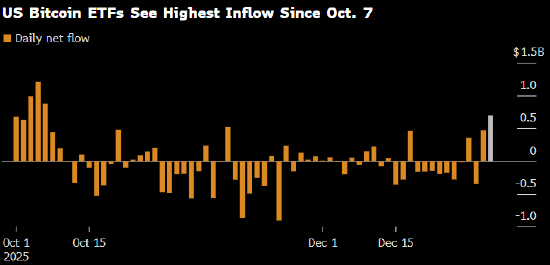
Group 1 - The global cryptocurrency market is experiencing significant volatility, with Bitcoin priced at $70,670.6, up 2% but down 43.91% from last year's peak [2] - Major cryptocurrencies like Ethereum and Tether have also seen varying degrees of increase, while over 89,700 traders faced liquidation in the last 24 hours, totaling over $300 million [2] - Bitcoin exchange-traded funds (ETFs) saw a net inflow of approximately $562 million last week, followed by over $800 million in outflows in the subsequent two trading days, indicating a shift in investor sentiment [2] Group 2 - Concerns are rising among investors regarding cryptocurrency miners, with fears of forced liquidations if prices continue to decline [3] - The recent drop in Bitcoin's price is attributed to hedging activities by traders related to IBIT structured products, which may trigger concentrated hedging at specific points, leading to rapid price fluctuations [3] - Market participants are advised to adjust their strategies in response to changing market mechanisms [3]


比特币单日暴跌12% 今年价格已腰斩至约6.4万美元
Sou Hu Cai Jing· 2026-02-06 00:13
Core Viewpoint - The cryptocurrency market has experienced a sudden downturn, with Bitcoin's price dropping significantly, raising concerns about the future of cryptocurrencies and leading to substantial losses for investors [1][3]. Group 1: Market Performance - Bitcoin's price fell to approximately $63,860.8, with a daily decline of 12.81% [1][4]. - Other major cryptocurrencies, including Ethereum, XRP, SOL, Dogecoin, and BNB, also saw significant declines, with losses exceeding 10% [1][3]. - Since reaching its historical peak last October, Bitcoin's price has plummeted over 48%, with its total market capitalization shrinking from $2.48 trillion to $1.27 trillion [3]. Group 2: Market Dynamics - Over the past 24 hours, more than 430,000 traders were liquidated, resulting in a total liquidation amount of $2.069 billion, approximately 14.4 billion yuan [3]. - Current market sentiment has shifted towards risk aversion, with price movements driven more by balance sheet mechanisms rather than market narratives [3]. - Bitcoin has failed to act as a safe-haven asset recently, reflecting the prevailing bearish sentiment in the market [3]. Group 3: Fund Flows - Following a net inflow of approximately $562 million into Bitcoin ETFs on Monday, over $800 million flowed out in the subsequent two trading days [5]. - U.S. ETFs, which were significant buyers of Bitcoin last year, have now turned into net sellers [5].

比特币收复9万美元关口 上涨行情的基础依然脆弱
Xin Lang Cai Jing· 2026-01-07 20:05
Core Viewpoint - Bitcoin has recovered the $90,000 mark, but the underlying basis for this rally remains fragile as traders maintain a cautious stance [1][3]. Market Sentiment - Despite Bitcoin's rebound this week, there are few clear signs of sustained optimism in the cryptocurrency derivatives market [1][3]. - The recent inflow of funds into Bitcoin exchange-traded funds (ETFs) has not been matched by an overall improvement in market structure, indicating that the price recovery appears more like a pause in the downtrend rather than a true resurgence [1][3]. Derivatives Market Analysis - Most bets in the Bitcoin perpetual and regular contracts are still concentrated on short-term contracts, reflecting a cautious sentiment among traders [1][3]. - Demand for longer-term futures at the Chicago Mercantile Exchange, traditionally seen as a gauge of institutional investor interest, remains low [1][3]. Research Insights - K33 Research's Vetle Lunde noted that while there are signs of improved sentiment, the overall mood remains cautious despite recent upward movements [1][3]. - Key indicators such as spot trading volume, volatility, and derivatives leverage are still close to their lows from December, with 86% of open contracts concentrated in near-month expirations [1][3]. - The funding rate for perpetual contracts, another key measure of risk appetite, is also low, indicating limited bullish positioning [1][3].
12月3日外盘头条:亚马逊推出最新自研芯片 花旗扩充投资级债券交易团队 特朗普拟将禁入令扩大至约30个国家
Xin Lang Cai Jing· 2025-12-02 21:35
Group 1 - The U.S. government plans to expand its travel ban to approximately 30 countries following a shooting incident involving National Guard soldiers in Washington, D.C. [4][6][21] - Currently, the U.S. has a complete travel ban on 12 countries and partial restrictions on 7 others [4][21]. Group 2 - U.S. gasoline prices have dropped to an average of $3 per gallon, the lowest level since 2021, with at least 30 states reporting prices below this threshold [8][24]. - Factors contributing to the decline in gasoline prices include lower crude oil prices and the introduction of winter gasoline formulations [8][24]. Group 3 - Amazon is rapidly launching its latest self-developed artificial intelligence chip, named Trainium3, to compete with products from Nvidia and Google [10][26]. - The chip has already been installed in a few data centers and will be available to customers starting this week, with plans for a large-scale rollout by early next year [11][27]. Group 4 - Citigroup is expanding its investment-grade bond trading team in anticipation of a potential record surge in corporate bond issuance driven by artificial intelligence investments [13][29]. - The bank has hired Chris Schuville from HSBC to lead its high-grade corporate bond trading team, focusing on technology, media, and telecommunications sectors [13][29]. Group 5 - Bank of America suggests that its wealth management clients consider allocating 1%-4% of their portfolios to cryptocurrencies [15][31]. - The bank's investment strategy team will begin covering four Bitcoin exchange-traded funds (ETFs) starting in January [15][32]. Group 6 - Adobe Analytics reports that U.S. online spending during the five-day holiday shopping period reached $44.2 billion, with a 7.7% increase compared to the previous year [17][34]. - The spending during this period was driven by significant sales on Cyber Monday, which alone accounted for $14.25 billion [17][34].

比特币录得3月来最大单日跌幅
第一财经· 2025-12-02 16:13
Core Viewpoint - The cryptocurrency market is experiencing significant downturns, with Bitcoin recording its largest single-day drop since March, leading to concerns of a new crypto winter as nearly $1 billion in leveraged positions were liquidated [3][5][6]. Market Performance - On December 1, Bitcoin fell over 6%, marking a decline of more than 30% from its peak of over $126,000 in early October [5]. - Ethereum and Solana also saw declines of 7.6% and approximately 8%, respectively, with Ethereum down 17% year-to-date [5]. - The MarketVector index, tracking the top 100 cryptocurrencies, has dropped nearly 70% this year [5]. Liquidation and Leverage - The recent downturn is part of a broader sell-off that began in October, which saw approximately $19 billion in leveraged positions liquidated due to market instability [6]. - The estimated outstanding leveraged positions in cryptocurrency futures are around $787 billion, with ETF positions at approximately $135 billion [7]. Industry Sentiment - Industry insiders are warning of a potential crypto winter, with companies like Strategy raising $1.44 billion to ensure they can meet future dividend and debt obligations [9]. - Strategy's CEO indicated that if the company's market value falls below the net asset value of its Bitcoin holdings, they may sell some Bitcoin as a last resort [9]. Economic Factors - Broader macroeconomic concerns, including uncertainty around potential interest rate cuts by the Federal Reserve, are contributing to investor anxiety in the cryptocurrency market [11]. - The liquidity-driven adjustments in various asset classes, including Bitcoin, are expected to continue, particularly as the year-end approaches [11].

比特币录得3月来最大单日跌幅,10亿美元杠杆头寸被迫清仓,加密货币凛冬将至?
Di Yi Cai Jing· 2025-12-02 08:28
Core Viewpoint - The cryptocurrency market is facing significant downturns, with concerns of a new winter emerging as major cryptocurrencies, including Bitcoin, experience substantial price drops and forced liquidations of leveraged positions [1][3][4]. Group 1: Market Performance - On October 1, Bitcoin fell over 6%, marking its largest single-day drop since March, and has decreased more than 30% from its peak of over $126,000 earlier in October [3]. - Ethereum and Solana also saw declines of 7.6% and approximately 8% respectively, with Ethereum down 17% year-to-date [3]. - The MarketVector index, which tracks the top 100 cryptocurrencies, has dropped nearly 70% this year, indicating severe market distress [3]. Group 2: Liquidation and Leverage - The recent sell-off has resulted in nearly $1 billion in leveraged cryptocurrency positions being liquidated on October 1, continuing a trend that began earlier in the month [4]. - Coinglass reported that approximately $19 billion in leveraged positions were liquidated due to market instability, exacerbated by external economic factors [4][5]. - The estimated outstanding leveraged positions in cryptocurrency futures are around $787 billion, with ETF positions at approximately $135 billion, indicating a high level of risk in the market [5]. Group 3: Industry Sentiment - Industry insiders are warning of a potential cryptocurrency winter, with companies like Strategy raising $1.44 billion to ensure they can meet future obligations [6]. - Strategy's CEO indicated that if the company's market value falls below the net asset value of its Bitcoin holdings, they may be forced to sell Bitcoin as a last resort [6]. - The overall sentiment in the market is increasingly pessimistic, with predictions that Bitcoin could drop to $60,000, reflecting a broader trend of risk aversion among investors [7]. Group 4: Economic Influences - Macro-economic concerns, including uncertainty around potential interest rate cuts by the Federal Reserve, are contributing to the pressure on cryptocurrency investments [7][8]. - The liquidity-driven adjustments in the market are particularly affecting Bitcoin and other cryptocurrencies, which are more sensitive to changes in liquidity conditions [8]. - Analysts suggest that as December approaches, attention will shift to global monetary policy, which could further impact cryptocurrency prices [8].

今年一度达30%涨幅“全部抹去”,比特币陷入熊市
华尔街见闻· 2025-11-17 10:43
Core Viewpoint - Bitcoin's price has dropped below $93,714, erasing over 30% of its annual gains earlier this year, following a record high of $126,251 on October 6, triggered by market turmoil after comments from President Trump [1][3]. Group 1: Market Dynamics - The decline in Bitcoin's price is attributed to reduced institutional participation, with over $25 billion flowing into Bitcoin ETFs this year, raising total assets under management to approximately $169 billion [1]. - The exit of large buyers, including ETF allocators and corporate finance departments, has weakened the narrative of Bitcoin as a "hedging asset" [1]. - The overall market is in a risk-off mode, with cryptocurrencies reacting first to macroeconomic changes, as noted by Bitwise Asset Management's CIO [3]. Group 2: Investor Sentiment - There is a prevailing negative sentiment among retail investors in the cryptocurrency market, leading many to exit early to avoid significant losses [5]. - This pessimism is particularly pronounced in the altcoin market, with a MarketVector index tracking the bottom 50 of the top 100 digital assets down approximately 60% this year [6][7]. - The lack of natural bullish catalysts has led to skepticism regarding capital deployment in the market [8].

“巨鲸”加速抛售比特币,但仍称不上恐慌信号?
Sou Hu Cai Jing· 2025-11-17 08:11
Core Insights - Recent selling behavior by "whales" in the cryptocurrency market appears to be driven by profit-taking rather than panic, despite a weakening market capacity to absorb these sales [2][3][8] - Bitcoin has recently fallen below the critical $100,000 mark, with significant selling from long-term holders contributing to this decline [2][3] - The selling patterns of "whales" show a consistent and methodical approach, indicating planned asset allocation rather than fear-driven actions [2][3][7] Market Dynamics - The liquidity in the cryptocurrency market has improved significantly compared to a decade ago, yet concerns remain about the current market sentiment and buying slowdown [3][8] - Data indicates that Bitcoin's price recently approached $19,400, marking its lowest level since May 6, with long-term holders showing signs of profit-taking [3][8] - The selling behavior of "whales" correlates with the psychological threshold of $100,000, a level many early adopters view as a point to realize profits [7] Investment Trends - The market has seen a notable outflow from Bitcoin exchange-traded funds (ETFs), with $311.3 million exiting in the past week, marking the longest consecutive outflow period since March [8] - Cumulatively, Bitcoin ETFs have seen $2.6 billion in outflows over the past five weeks, indicating a significant decline in demand [8] - Despite the selling pressure, one of the largest Bitcoin "whales," Strategy Inc., continues to increase its holdings, owning over 640,000 Bitcoins, which is more than 3% of the total circulating supply [10][11]

今年一度达30%涨幅“全部抹去”,比特币陷入熊市
美股IPO· 2025-11-17 03:38
Core Insights - Bitcoin's price fell below $93,714, erasing all gains since the beginning of the year and entering a technical bear market [1][2] - The decline is attributed to waning optimism regarding the U.S. government's pro-crypto stance, a shift towards risk aversion in the macro market, and the quiet exit of institutional buyers such as ETFs [1][4] Market Dynamics - Bitcoin's price drop occurred after reaching a record high of $126,251 on October 6, with a subsequent decline triggered by unexpected comments from U.S. President Trump regarding tariffs, leading to global market turmoil [2] - Institutional participation has weakened, with over $25 billion flowing into Bitcoin ETFs this year, raising total assets under management to approximately $169 billion, but large buyers are now retreating [2][5] Sentiment and Behavior - The overall market sentiment is negative, with many retail investors choosing to exit early to avoid significant losses, particularly in the more volatile altcoin market [6] - A MarketVector index tracking the bottom 50 of the top 100 digital assets has reportedly dropped about 60% this year, reflecting widespread skepticism about capital deployment and a lack of bullish catalysts [6]