比萨

Search documents
达势股份(01405):——达势股份(1405.HK)2025年年报点评:全国化布局加速,盈利能力持续提升
EBSCN· 2026-03-26 11:07
Investment Rating - The report maintains an "Accumulate" rating for the company [1] Core Insights - The company achieved a revenue of 5.38 billion CNY in 2025, representing a year-on-year growth of 24.8%, with a net profit of 140 million CNY, up 157.1% year-on-year [5] - The company has accelerated its national expansion, with significant growth in non-first-tier cities, generating 3.166 billion CNY in revenue, a 43.4% increase year-on-year, and accounting for 58.8% of total revenue [6] - The company plans to open 350 new stores in 2026, having already opened 140 stores as of March 20, with a focus on both mature and new markets [6][8] - The company’s same-store sales decreased by 1.5% in 2025, but excluding the impact of high-performance stores opened after December 2022, there was positive growth in mature markets [7] - The company’s adjusted net profit margin improved to 3.5% in 2025, up 0.5 percentage points year-on-year, due to enhanced operational efficiency and cost optimization [7][8] Financial Performance and Forecast - The company forecasts net profits of 229 million CNY in 2026 and 323 million CNY in 2027, with an estimated EPS of 1.74 CNY and 2.46 CNY respectively, corresponding to P/E ratios of 32X and 22X [9] - Revenue is projected to grow from 4.314 billion CNY in 2024 to 9.492 billion CNY in 2028, with a compound annual growth rate of approximately 19% [10] - The company’s operating profit is expected to increase from 168 million CNY in 2024 to 691 million CNY in 2028 [11]
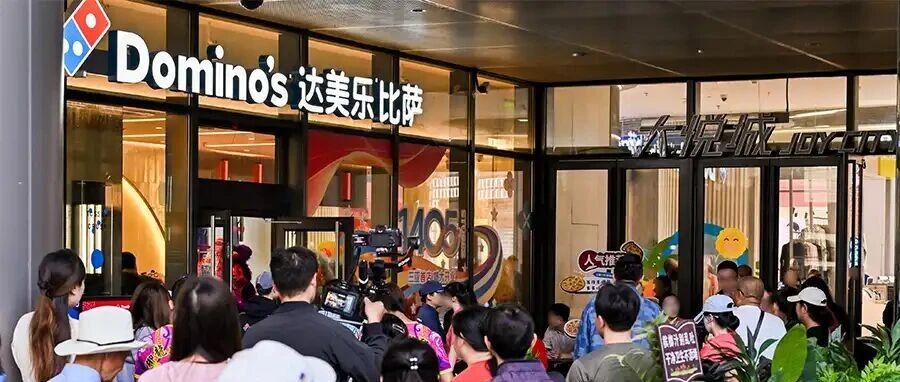
达美乐比萨股价下跌,分析师下调目标价及行业环境疲软成主因
Jing Ji Guan Cha Wang· 2026-02-11 16:51
Core Viewpoint - Domino's Pizza (DPZ.OQ) stock price has declined due to analysts lowering target prices, a weak industry and market environment, technical and funding pressures, as well as performance and valuation challenges [1] Institutional View - Citigroup analyst Jon Tower maintains a "Hold" rating on Domino's Pizza but has reduced the target price from $460 to $420, which may raise concerns about the company's short-term growth expectations [2] Sector Performance - The overall U.S. restaurant sector experienced a decline, with Domino's being affected as a component of the sector. While the Dow Jones index saw a slight increase, the Nasdaq index fell, with technology and consumer stocks under pressure [3] Funding and Technical Aspects - Domino's stock has recently accumulated a decline, indicating a dominant bearish sentiment. Although the trading volume was above the recent average, the stock failed to break through key resistance levels and instead fell below support [4] Performance and Operational Situation - Despite the company recently exceeding revenue and earnings per share expectations, the market may focus on challenges such as rising ingredient costs and adjustments in international operations that could hinder short-term growth [5]
(新春见闻)中外新春市集重庆开市 领事官员推介家乡风物送祝福
Xin Lang Cai Jing· 2026-02-06 15:51
Core Viewpoint - The "Leap Horse Welcoming Spring, Chongqing Meets the World" international spring market aims to enhance cultural exchange and promote international cooperation through food and local products from various countries [1][3]. Group 1: Event Overview - The event is a three-day international spring market held in Chongqing, featuring participation from multiple foreign consulates, showcasing local delicacies and products to celebrate the Chinese New Year [1][3]. - The market includes a variety of international foods such as Australian beef and wine, Uruguayan amethyst crafts, Vietnamese spring rolls and coffee, and Pakistani cuisine and handicrafts, making it accessible for local residents [1][3]. Group 2: Cultural Significance - Italian representatives highlighted pizza as a symbol of sharing and traditional desserts as carriers of good wishes, emphasizing the cultural importance of food in fostering connections [3]. - The Belarusian consul noted the market as a platform for cultural exchange, allowing people to experience different cultures through food and customs [3]. Group 3: Economic and Trade Relations - The Vietnamese consul mentioned that Vietnam is an important trade partner for Chongqing, with ongoing imports of tropical fruits, coffee, and seafood, indicating strong economic ties [3]. - There is an expectation for continued cooperation in agriculture, food, arts innovation, and sustainable development between Chongqing and participating countries [3].


市场不确定性增加 达势股份稳健开局2026
BambooWorks· 2026-01-28 09:30
Core Viewpoint - 达势股份 is balancing aggressive expansion with operational efficiency, aiming for sustainable growth amid a cautious market environment [2][4]. Group 1: Expansion and Growth - 达势股份 opened 307 new stores last year, reaching a total of 1,315 stores by the end of December, achieving its goal of adding 300 new stores [1][4]. - In January, the company opened 90 new stores within 24 days, indicating a strong start to the new year [2]. - The company has shifted its focus to penetrate new cities, expanding its coverage to 60 cities by the end of last year and increasing to 72 cities by January [6]. Group 2: Market Position and Performance - 达势股份 has become the second-largest pizza chain in China, with a market share of approximately 10%, trailing behind industry leader 必胜客 [7]. - The company reported a 27% year-on-year revenue increase to 2.59 billion yuan in the first half of last year [8]. - The membership base grew significantly from 24.5 million at the end of 2024 to 35.6 million by the end of last year, a 45% increase [9]. Group 3: Future Outlook - The Chinese pizza market is expected to grow at a compound annual growth rate of 15.5% from 2022 to 2027, reaching a market size of 77.1 billion yuan by 2027 [7]. - Investors are optimistic about 达势股份, assigning it a forward P/E ratio of 30, which is significantly higher than its competitors [9].
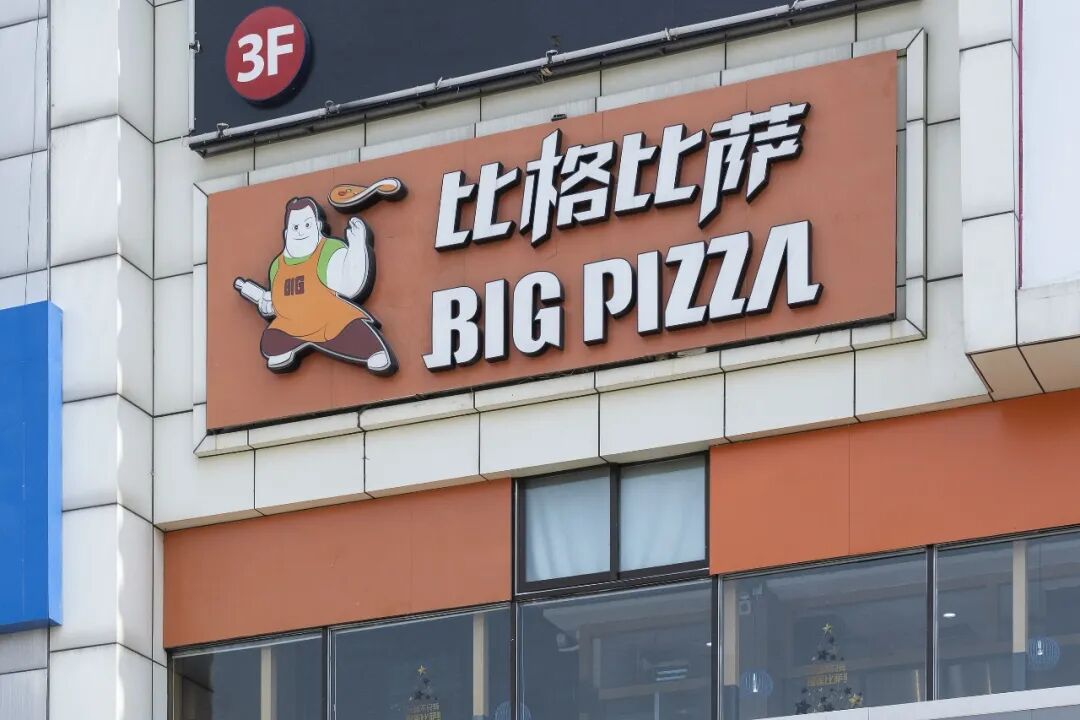
IPO路上,“比格”比萨还想变得更大
Sou Hu Cai Jing· 2026-01-23 06:49
Core Viewpoint - The article highlights the contrasting strategies and performance of two restaurant chains, Big Pizza and Xibei, with Big Pizza accelerating its IPO process while maintaining a low-price strategy that appeals to young consumers [2][5]. Group 1: Company Overview - Big Pizza has officially submitted its prospectus to the Hong Kong Stock Exchange for an IPO [2]. - The company is known for its affordable pricing, with an average customer spending of less than 80 yuan, earning it the nickname "poor man's buffet" [2]. - Big Pizza's revenue for 2023, 2024, and the first three quarters of 2025 is projected to be 944 million yuan, 1.147 billion yuan, and 1.389 billion yuan, respectively, showing a year-on-year increase [4]. Group 2: Financial Performance - Despite revenue growth, Big Pizza's profit margins are declining, with profits of 47.52 million yuan and 41.74 million yuan for 2023 and 2024, respectively, resulting in profit margins of 5% and 3.6% [6]. - The profit for the first three quarters of 2025 is expected to be 51.65 million yuan, with a profit margin of 3.7%, down from 3.9% the previous year [6][7]. - The company's net current liabilities surged by 70.2% to 275.8 million yuan as of September 30, 2025, indicating liquidity pressure [17]. Group 3: Expansion Strategy - Big Pizza's store count increased from 210 to 342 between the end of 2023 and September 2025, a growth rate of 62.9% [9]. - By January 11, 2026, the number of stores reached 387, covering 127 cities across China [10]. - The company primarily focuses on direct-operated stores to maintain service quality, with only 77 franchise stores as of September 30, 2025 [31]. Group 4: Market Challenges - The overall restaurant industry is facing a downturn, with high closure rates among new openings, particularly in the casual dining segment [35]. - Competitors like Pizza Hut and Domino's are increasingly offering low-priced options, challenging Big Pizza's value proposition [36]. - The company faces significant debt pressure, with a debt ratio exceeding 90%, which is above the industry average and regulatory limits [32]. Group 5: Consumer Sentiment and Marketing - Big Pizza's low-price strategy has become a core part of its brand identity, making price increases challenging without risking customer loyalty [19]. - The company has engaged in various promotional activities, such as offering discounted meals for sanitation workers, which sparked public debate about affordability [23][25]. - Big Pizza's marketing strategies include leveraging social media to create engagement and brand awareness, although this approach may not provide long-term stability [37].
比萨自助品牌冲刺港股
Mei Ri Shang Bao· 2026-01-20 22:21
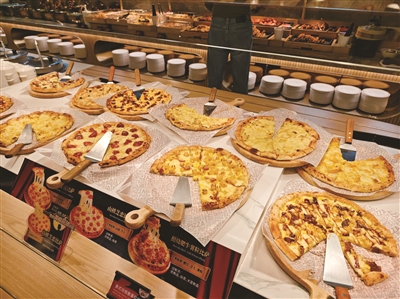
Core Viewpoint - The pizza chain brand Big Pizza has submitted its prospectus to the Hong Kong Stock Exchange, planning to open over 600 new stores in the next three years, aiming to become the first publicly listed "pizza buffet" in China [2] Company Overview - Big Pizza was established in 2002, offering a buffet model priced at 79.99 yuan per adult and 49.99 yuan per child, with a menu featuring 130 to 140 SKUs including pizzas, pasta, and snacks [2] - The brand targets various customer segments, including families, students, solo diners, social media users, and seniors [2] - Big Pizza has developed popular products such as durian pizza, lychee pizza, and strawberry chocolate pizza, while also introducing new snacks to attract younger customers [2] Expansion Plans - Currently, Big Pizza operates 387 stores nationwide and plans to open over 160 new stores by 2025, which is nearly equivalent to the total number of stores opened in the past 23 years [2] - New stores typically achieve breakeven within one month of opening, with an average investment recovery period of about 11 months, supporting rapid expansion [2] Market Presence - The brand's presence is concentrated in northern China, with over 80 restaurants in Beijing, while cities like Shanghai and Guangzhou have only a few locations [2] - The first store in Hangzhou is strategically located in a university area, targeting students with promotional pricing [3] Financial Performance - In the first three quarters of 2025, Big Pizza's revenue approached 1.4 billion yuan, reflecting a year-on-year growth of over 60% [3] - The founder, Zhao Zhiqiang, utilizes a "internet celebrity" strategy on social media platforms to engage with customers and respond to feedback [3] Future Goals - Zhao Zhiqiang has expressed plans to expand Big Pizza to 1,000 stores by 2028, which may be a driving factor behind the decision to pursue an IPO [3] - The company aims to add approximately 610 to 790 new restaurants by 2028, primarily focusing on self-operated locations [3] Competitive Landscape - Despite being a niche product, the pizza market has seen increased competition, with brands like Zunbao Pizza and Saliya expanding rapidly in China [4] - Big Pizza plans to accelerate its expansion into southern regions, focusing on first-tier cities, provincial capitals, and new first-tier cities, while also extending to second-tier and lower cities [4]
黑龙江夫妇开比萨连锁,9个月进账14亿
2 1 Shi Ji Jing Ji Bao Dao· 2026-01-20 03:26
Core Viewpoint - Big Pizza, a restaurant chain founded by a couple from Northeast China, is aiming for an IPO to become the first publicly listed pizza buffet in China, leveraging its leading position in the domestic market [2][3]. Company Overview - Big Pizza ranks first among local pizza restaurants in China and also leads in the buffet and Western casual dining categories, making it a "triple champion" [2]. - The restaurant chain was established in 2001 by Zhao Zhiqiang and his wife Ma Jifang, who initially operated a hamburger business in their hometown before recognizing the potential in the pizza market in Beijing [2][3]. Business Model and Growth - Big Pizza is known for its affordable buffet model, with a per capita consumption of approximately 60-70 RMB, significantly lower than competitors like Pizza Hut [2][3]. - As of January this year, Big Pizza operates 387 stores across 127 cities, with over 265 being self-operated, primarily concentrated in Northern China [3]. - The company has adopted a strategy of localizing popular menu items and maintaining high cost-performance, with an average customer spending capped at 79.99 RMB for over 100 dishes [3][4]. Financial Performance - In the first nine months of 2025, Big Pizza's revenue reached 1.389 billion RMB, surpassing the total revenue for 2024, although net profit remains limited at 51.65 million RMB [7]. - The average transaction value has decreased by over 8 RMB over the past three years, reflecting competitive pressures in the industry [7]. - The company has a high debt-to-asset ratio exceeding 90%, and the funds raised from the IPO are intended to improve its financial structure and support expansion plans [7]. Market Outlook - The Western casual dining sector is projected to grow at a compound annual growth rate of 10.8% over the next five years, reaching approximately 321.8 billion RMB, which presents a favorable environment for Big Pizza's growth [8]. - However, the company faces significant competition from other budget-friendly dining options, and it remains to be seen if Zhao's competitive advantages can be sustained [8].
新浪财经资讯AI速递:昨夜今晨财经热点一览 丨2026年1月19日
Xin Lang Cai Jing· 2026-01-18 23:47
Group 1 - Bosch CEO confirmed that the company's sales for 2025 are expected to be around €91 billion, failing to meet targets, with actual revenue declining after excluding acquisition impacts [1] - The company's profit margin is significantly below 2%, far from the long-term target of 7%, attributed to tariffs and restructuring costs, with profitability goals expected to be achieved only after 2027 [1] Group 2 - Ten major brokerages have differing views on the A-share spring market outlook, but most believe there is still upward potential after short-term fluctuations [2] - The focus will shift to fundamental verification during the earnings disclosure period starting in late January, with attention on technology (AI hardware, applications, semiconductors) and cyclical sectors (non-ferrous metals, chemicals) [2] Group 3 - MSC continues its expansion strategy by acquiring at least 8 second-hand container ships in December, including a premium purchase from a Chinese shipowner [3] - This highlights MSC's strategy of exchanging capital for delivery certainty, while sellers successfully lock in substantial profit margins amid a tight second-hand ship market [3] Group 4 - The price of lithium carbonate has experienced significant volatility, yet upstream lithium battery companies remain confident in production expansion due to resource security and circular economy strategies [4][19] - Companies are optimistic about the future growth potential in energy storage and solid-state batteries, anticipating a balance in supply and demand by 2026 [19] Group 5 - The domestic pizza brand, Bige Catering, is pushing for an IPO with nearly ¥1.4 billion in revenue over the first three quarters of 2025, showing significant year-on-year growth [18] - The company, controlled by the founding couple, aims to open hundreds of new stores within three years to reach a target of 1,000 locations, although it faces challenges in southern market penetration [18] Group 6 - The National Energy Administration reported that China's total electricity consumption surpassed 10 trillion kilowatt-hours for the first time in 2025, reflecting a 5% year-on-year growth [21] - This growth is primarily driven by the tertiary industry and residential electricity use, indicating a robust economic performance and a shift towards high-tech and green low-carbon industries [21] Group 7 - SAIC Motor Corporation's profit forecast for 2025 indicates a staggering 438% to 558% increase in net profit attributable to shareholders, yet the stock price remains stagnant, highlighting a mismatch between market value and performance [22] - The company faces challenges in market perception and must enhance its core business profitability to improve its market valuation [22] Group 8 - The State Grid's investment plan of ¥4 trillion during the 14th Five-Year Plan focuses on building a smart green power system, expected to drive significant growth in the power equipment industry [24] - This initiative is anticipated to benefit leading companies in transformers, power automation, and energy storage, aligning with global energy transition trends [24]


东北夫妇做比萨 三个季度收入近14亿元 比格餐饮闯关IPO:家族控股约86% “北强南弱”能否支撑千店野心?
Mei Ri Jing Ji Xin Wen· 2026-01-18 14:42
Core Viewpoint - The article discusses the recent IPO filing of Big Pizza International Holdings Limited, a prominent player in the casual dining sector in China, highlighting its rapid growth and ambitious expansion plans in the competitive pizza market [1][9]. Financial Performance - Big Pizza's revenue surged to 1.389 billion RMB in the first three quarters of 2025, surpassing the total revenue of 1.147 billion RMB for the entire year of 2024, marking a year-on-year increase of 66.6% [1][8]. - The company reported revenues of 944.5 million RMB and 1.147 billion RMB for 2023 and 2024, respectively, with a year-on-year growth of 21.5% [8]. - Profit figures for 2023 and 2024 were 47.52 million RMB and 41.74 million RMB, with profit margins of 5.0% and 3.6% [8]. Market Position and Expansion Plans - As of January 11, 2026, Big Pizza operates 387 restaurants across 127 cities in China, ranking first in the domestic pizza restaurant market based on GMV for the first three quarters of 2025 [5][9]. - The company aims to open 610 to 790 new stores from 2026 to 2028, with a focus on expanding into southern markets where it currently has limited presence [9][11]. Ownership Structure - The founding family controls approximately 86% of the voting rights, with Zhao Zhiqiang holding 52.2% and his wife, Ma Jifang, holding 21.8% [3][11]. Competitive Landscape - Big Pizza's unique selling proposition lies in its "self-service" model, which targets the mass market with affordable pricing, contrasting with higher-end competitors like Pizza Hut [5][10]. - The company faces challenges in penetrating the southern market, where competition is fierce and consumer preferences may differ [10][11]. Brand Strategy and Social Media Engagement - Zhao Zhiqiang actively engages with consumers on social media platforms, enhancing brand loyalty and customer interaction through a strategy termed "listening to advice" [11][12]. - The brand's recent promotional activities have sparked controversy, indicating the delicate balance between marketing strategies and public perception [12].
东北夫妇卖披萨,要IPO了
3 6 Ke· 2026-01-17 08:41
Core Viewpoint - Big Pizza, a local pizza buffet brand founded by a couple from Northeast China, is preparing for an IPO on the Hong Kong Stock Exchange, with CCB International as the sole sponsor [1][4]. Company Overview - Big Pizza was established in 2002 by Zhao Zhiqiang and his wife after they moved from Heilongjiang to Beijing, where they opened their first pizza store near the Beijing Zoo [4]. - The brand focuses on affordable pricing, offering a single buffet meal for around 39 yuan, significantly lower than competitors like Pizza Hut [4][5]. - As of September 2025, Big Pizza operates 342 stores, with 265 being self-operated and a membership base of approximately 9.3 million [9]. Financial Performance - Big Pizza's revenue for 2023, 2024, and the first nine months of 2025 was 944.5 million yuan, 1.147 billion yuan, and 1.389 billion yuan, respectively, with net profits of 47.52 million yuan, 41.74 million yuan, and 51.65 million yuan [9][10]. - The company maintains a gross profit margin of around 80% and has a net profit margin of approximately 5% to 3.7% over the same period [9]. Market Position - Big Pizza is ranked first among local pizza restaurants in China and third overall in the pizza market, holding a market share of 1.2% [9]. - The brand is often compared to "China's version of Salia," appealing to younger consumers with innovative menu items and a family-friendly atmosphere [5][9]. Expansion Plans - The company aims to open over 160 new stores in 2025, nearly matching its total openings over the past 22 years, and plans to reach 1,000 stores by 2028 [5][11]. - Big Pizza is set to enter the competitive Shanghai market, which poses challenges due to higher operational costs and established competitors [11]. Product Strategy - Big Pizza offers a diverse menu with around 130 to 140 SKUs, including unique items like durian pizza and mini pizzas priced at 19.9 yuan [7][9]. - The company follows a product innovation strategy, introducing new items every four months and replacing the least popular ones to achieve a 30% SKU turnover annually [7].