氧化镓(Ga₂O₃)

Search documents
跌落神坛的日本功率半导体
半导体行业观察· 2026-03-17 02:27
Core Viewpoint - The Japanese power semiconductor industry is facing significant challenges due to structural contradictions and external competition, highlighted by recent major events such as Mitsubishi Electric's discussions with Toshiba for business restructuring and DENSO's proposed acquisition of ROHM for up to 1.3 trillion yen (approximately 8.3 billion USD) [2][21]. Historical Context - Twenty years ago, Japan's power semiconductor industry was at its peak, with major companies like Mitsubishi Electric, Fuji Electric, Toshiba, Renesas, and ROHM holding over 20% of the global market share [5][6]. - The Japanese government aims to increase the global market share of its semiconductor companies from about 20% to 40% by 2030, positioning power semiconductors as a new growth driver for Japanese manufacturing [5][6]. Impact of China - The Japanese power semiconductor industry has been impacted by China through both the loss of domestic market share and the rapid advancement of Chinese chip manufacturers [7][10]. - Japan's electric vehicle penetration is below 10%, significantly lagging behind China's over 60%, which has affected the demand for power semiconductors [7][8]. - Chinese companies have rapidly gained market share in IGBT and MOSFET segments, with firms like BYD Semiconductor and CR Microelectronics becoming key players [10][11]. Supply Chain Challenges - Japanese companies have been slow to expand production capacity in response to the booming electric vehicle and photovoltaic inverter markets, leading to a loss of market share to Chinese firms [10][11]. - The cost of SiC substrates is significantly lower in China, with domestic production costs approximately 60% lower than those in Japan, creating a competitive disadvantage for Japanese manufacturers [13]. Internal Fragmentation - The Japanese power semiconductor industry is characterized by fragmentation, with major players like Mitsubishi Electric, Fuji Electric, Toshiba, ROHM, and DENSO competing against each other rather than collaborating [16][19]. - Trust issues and a lack of a leading company hinder the potential for effective collaboration and integration within the industry [17][19]. DENSO's Acquisition of ROHM - DENSO's acquisition proposal for ROHM is seen as a strategic move to transform into a semiconductor and systems solution provider, aiming to control the semiconductor supply chain [21][22]. - However, market reactions have been mixed, with concerns about ROHM's financial health and potential customer loss if integrated into DENSO [23]. Third and Fourth Generation Semiconductors - The competition in third-generation semiconductors, particularly SiC and GaN, is intensifying, with Chinese companies making significant advancements [25][26]. - Japan is also exploring fourth-generation semiconductors, such as gallium oxide and diamond, which could provide new opportunities for growth despite current challenges [30][31]. Conclusion - The Japanese power semiconductor industry is at a critical juncture, facing both external pressures and internal fragmentation. Successful mergers and acquisitions could provide a path forward, but time is running out for the industry to adapt and consolidate [36][37].

氧化镓,爆发前夜
半导体行业观察· 2026-03-05 01:13
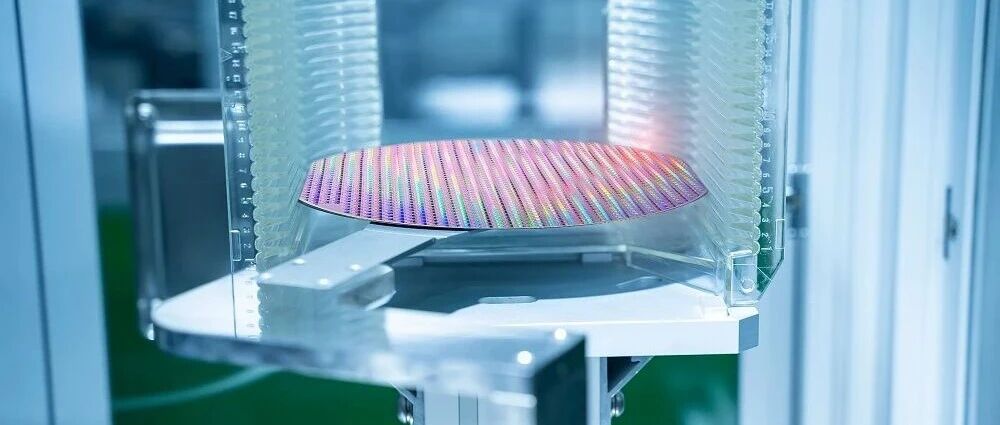
Core Viewpoint - Novel Crystal Technology (NCT) has begun delivering 150mm (6-inch) β-Ga₂O₃ wafer samples, marking a significant step towards the mass production of gallium oxide as a next-generation power semiconductor material [2][9] Group 1: Industry Development - Gallium oxide (Ga₂O₃) is recognized as the fourth generation of wide bandgap semiconductor materials, following silicon (Si), silicon carbide (SiC), and gallium nitride (GaN) [3] - The bandgap of gallium oxide is 4.9 eV, significantly higher than that of silicon (1.1 eV), silicon carbide (3.2 eV), and gallium nitride (3.39 eV), making it suitable for high-power electronic applications [3][4] - Gallium oxide exhibits a theoretical breakdown field strength of up to 8 MV/cm, more than double that of silicon carbide and gallium nitride, allowing for smaller device sizes and higher power density [6] Group 2: NCT's Technological Advancements - NCT has developed a method to produce 150mm β-Ga₂O₃ wafers using the EFG method, which allows for faster crystal growth and higher production efficiency [9] - The company plans to deliver 150mm β-Ga₂O₃ epitaxial wafer samples by 2027, achieve full-scale production by 2029, and develop 200mm (8-inch) wafers by 2035 [2][11] - NCT's recent advancements include the development of a new crystal growth technique, Drop-fed Growth (DG), which significantly reduces manufacturing costs [11] Group 3: Global Competition - The global gallium oxide industry is intensifying, with companies and research institutions from Japan, the USA, Germany, the UK, South Korea, and China actively participating [12][22] - Japan's FLOSFIA is focusing on α-Ga₂O₃ technology, achieving breakthroughs in key device structures [13] - In the USA, Gallox is leading the commercialization of gallium oxide devices, targeting high-power applications in data centers and electric vehicles [16] Group 4: China's Position in the Market - Chinese companies are making significant strides in gallium oxide, achieving breakthroughs in large-size crystal growth and establishing a comprehensive industry chain [23][24] - Hangzhou Gaoren Semiconductor has successfully produced the world's first 8-inch gallium oxide single crystal, setting a global record [24] - Chinese firms are also advancing in equipment development, with significant innovations in crystal growth technology [26] Group 5: Future Prospects - With the delivery of 6-inch wafers and the implementation of low-cost DG methods, gallium oxide is expected to revolutionize applications in electric vehicles, fast charging stations, and aerospace [12][46] - The ongoing global investment and collaboration in gallium oxide technology are paving the way for its engineering applications, contributing to the advancement of fourth-generation semiconductor technologies [46]
超越SiC?功率器件市场,跑出一匹黑马
3 6 Ke· 2025-11-14 03:45
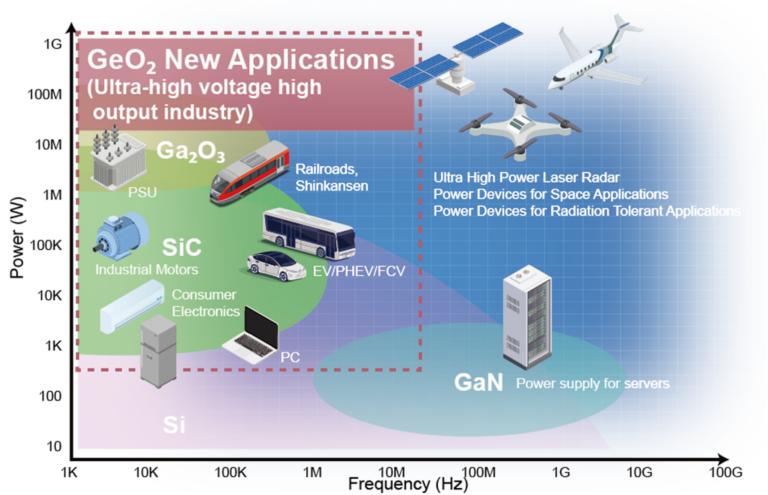
Core Insights - The semiconductor industry is witnessing a shift from traditional silicon (Si) to advanced materials like silicon carbide (SiC) and gallium nitride (GaN), with a new contender, r-GeO2, emerging as a potential game-changer in the ultra-wide bandgap (UWBG) semiconductor space [1][2][24] - Patentix Corporation has successfully grown the first bulk crystal of r-GeO2 using the FZ method, achieving a size of 5 mm and a bandgap of 4.68 eV, which surpasses both SiC and GaN [1][5] - The commercialization of UWBG semiconductors is highly anticipated due to increasing demands from electric vehicles (EVs), AI data centers, and energy efficiency needs [1][24] Group 1: r-GeO2 Breakthrough - Patentix has developed r-GeO2, which has a theoretical capability for both p-type and n-type doping, making it suitable for next-generation high-performance MOSFETs [4][10] - The company aims to produce high-quality bulk substrates with minimal crystal defects to maximize the potential of r-GeO2 [4][10] - The successful growth of r-GeO2 crystals marks a significant advancement in UWBG materials, positioning it as a strong competitor in the power semiconductor market [1][2][24] Group 2: Ga2O3 Developments - Ga2O3 is recognized for its superior properties, including a bandgap of approximately 4.8 eV and a breakdown electric field of 8 MV/cm, making it a promising candidate for high-voltage power devices [11][12] - Japan has a strong foundation in Ga2O3 research, with companies like Novel Crystal Technology (NCT) achieving significant milestones in developing high-performance Ga2O3 MOSFETs [15][17] - Chinese companies are also making strides in Ga2O3, with Hangzhou Garen Semiconductor announcing the world's first 8-inch Ga2O3 single crystal, marking a significant advancement in substrate technology [18][19][20] Group 3: Industry Competition and Future Outlook - The competition in the UWBG semiconductor market is intensifying, with Japan leading in technology accumulation while China is rapidly advancing in industrialization [24] - The potential for Ga2O3 to replace existing materials in high-voltage applications is strong, despite challenges such as thermal conductivity and cost [24] - The industry is moving towards a new era of materials, with both r-GeO2 and Ga2O3 poised to play crucial roles in the future of power semiconductors [24]