沉浸式体验馆

Search documents
以文塑旅 以旅彰文 推动文化和旅游融合发展
Yang Shi Wang· 2026-02-04 00:07
Core Viewpoint - The integration of culture and tourism is being actively promoted to enhance economic and social development, with various regions strengthening policy support and resource integration to accelerate the growth of China's cultural tourism industry [1]. Group 1: Cultural Tourism Development - The cultural tourism market is thriving, with traditional Chinese aesthetics becoming increasingly popular among young people, blending ancient and modern elements [2]. - Major cultural events, such as the Qinhuai Lantern Festival in Nanjing, showcase a combination of history, folklore, and technology, attracting significant attention as the Spring Festival approaches [2]. - The "New Rhythm Chongqing" drone light show offers a novel viewing experience, boosting city traffic and contributing to urban renewal [3]. Group 2: Regional Initiatives - Beijing's Huairou District plans to launch 43 seasonal cultural tourism activities throughout the year, aiming to create a comprehensive cultural tourism feast [5]. - Fujian Province has initiated a theme year for cultural tourism consumption, introducing 14 measures to establish a new ecosystem with cultural identity and immersive experiences [6]. - In Shanxi, the animated film "Wangwang Mountain Little Monster" has led to increased visitor traffic at its filming locations, enhancing the overall tourism experience [7]. Group 3: Economic Impact - The integration of culture and tourism not only stimulates consumer activity but also enriches the spiritual and cultural lives of millions, contributing to social progress [7]. - The current phase of cultural tourism integration is shifting from market cultivation to rapid growth, laying a solid foundation for the construction of a culturally strong nation during the 14th Five-Year Plan period [7].
民宿平均入住率近九成!央视《新闻联播》提及普洱景迈山
Xin Lang Cai Jing· 2026-02-01 16:12
Core Viewpoint - The integration of culture and tourism is emphasized as a key strategy for high-quality development in China's economy, with a focus on enhancing consumer markets and enriching people's cultural lives [1][4]. Group 1: Cultural and Tourism Integration - The Chinese government aims to promote the cultural tourism industry as a pillar of the economy and a means to improve people's quality of life, as highlighted by President Xi Jinping [1]. - The "14th Five-Year Plan" year marks a significant push for policy support and resource integration in the cultural tourism sector, leading to accelerated development [1][4]. - The cultural tourism market is thriving, with a blend of traditional and modern elements appealing to younger audiences, showcasing the vibrancy of Chinese culture [1]. Group 2: Regional Developments and Initiatives - In Nanjing, the Qinhuai Lantern Festival, a national intangible cultural heritage, features nearly 400 light displays that incorporate historical and cultural themes, enhancing the festive atmosphere as the Spring Festival approaches [2]. - Various regions, including Chongqing and Yunnan, are leveraging technology and cultural heritage to attract tourists, with significant increases in visitor numbers and local economic activity [2][3]. - Beijing and Fujian are launching numerous cultural tourism activities and measures to create immersive experiences and new consumption patterns in the cultural tourism landscape [3]. Group 3: Economic Impact and Future Prospects - The integration of culture and tourism is not only revitalizing consumer activity but also enriching the spiritual and cultural lives of millions, contributing to social progress [4]. - The shift from market cultivation to rapid growth in the cultural tourism sector is expected to lay a solid foundation for building a culturally strong nation during the "14th Five-Year Plan" period [4].
住宿业步入高质量发展的关键阶段
Xin Lang Cai Jing· 2026-01-07 23:23
Core Viewpoint - The hotel accommodation industry in China is transitioning from "quantitative growth" to "qualitative breakthroughs," driven by a joint initiative from nine government departments to promote high-quality development in the sector by 2025 [3][4]. Group 1: Industry Transformation - The accommodation sector is evolving from basic lodging to becoming a key component of a high-quality lifestyle and cultural expression, meeting the increasing demands of consumers [3][4]. - The focus on revitalizing existing assets is crucial for high-quality development, with hotel groups innovating through brand, product, engineering, and financial enhancements to transform old hotels into cultural theme hotels [3][4]. Group 2: Investment Trends - New investments are primarily directed towards mid-to-high-end, specialty, lifestyle, and theme hotels, which integrate various business models to create new consumer experiences [4][5]. - Hotels are increasingly becoming lifestyle service providers, with offerings that include immersive experiences and new retail spaces, catering to the preferences of the younger generation [4][5]. Group 3: Modernization Features - The accommodation industry is advancing towards smart, integrated, and internationalized operations, with AI being utilized to enhance customer experiences and operational efficiency [6][7]. - Cultural elements are being incorporated into hotel experiences, such as themed environments and local cultural integration, to create immersive stays [6][7]. Group 4: Mergers and Acquisitions - There is an increasing trend of resource integration through mergers and acquisitions, with large tourism groups acquiring hotel brands to expand their market presence and enhance operational standards [8][9]. - Local tourism groups are also consolidating hotel assets within their regions to create specialized brands, addressing market fragmentation and competition [8][9]. Group 5: Future Outlook - The hotel industry is expected to see a rise in asset securitization, supported by national policies that encourage IPOs for service-oriented enterprises, providing new financing avenues for innovative projects [9]. - Investment in human resources is becoming a priority, recognizing the irreplaceable value of skilled employees in delivering superior service [9].


海南描绘“十五五”旅游新蓝图:发力海洋、航天、生态三大方向
Zhong Guo Xin Wen Wang· 2025-11-21 16:53
Core Viewpoint - During the "14th Five-Year Plan" period, Hainan aims to enhance its attractiveness as a leading international tourism destination by focusing on marine tourism, aerospace tourism, and ecological tourism [1][2] Group 1: Marine Tourism - Hainan will establish a new benchmark for marine tourism, focusing on three types of projects: high-end consumption, deep experience, and innovative integration [1] - High-end projects will include attracting international cruise companies to set up regional headquarters and operate high-end routes under the "Belt and Road" initiative [1] - Deep experience projects will involve specialized operations for deep-sea diving, offshore sightseeing, and fishing competitions [1] - Innovative integration projects will feature marine technology experience centers and smart ocean ranches [1] Group 2: Aerospace Tourism - Hainan plans to leverage the Wenchang Space Launch Site to develop itself into a "Aerospace Tourism Capital," attracting social capital for construction [2] - Key developments will include a large aerospace theme park, immersive experience centers, and supporting facilities like aerospace-themed hotels and educational bases [2] - The initiative will also extend to aerospace cultural creativity and digital experience products [2] Group 3: Ecological Tourism - Hainan will focus on two major "green necklaces": the Ring Island Tourism Road and the Tropical Rainforest National Park Tourism Road [2] - Development plans include high-quality resort hotels, camping sites, and leisure stations along these routes [2] - Experience products will be developed around rainforest exploration, rural homestays, and wellness vacations, complemented by smart tourism platforms and professional self-driving services [2] Group 4: Future Opportunities - Hainan's tourism industry is entering a golden opportunity period, inviting global investors to share in the benefits of the free trade port and co-create the future of tourism [2]
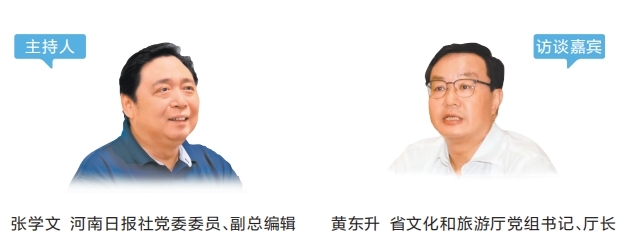
总编有约·“两高四着力”大家谈丨加快构建现代文旅产业体系
He Nan Ri Bao· 2025-07-29 23:23
Core Insights - The article discusses the comprehensive deployment of the spirit of Xi Jinping's important speech during his inspection in Henan, focusing on promoting cultural prosperity and building a strong cultural tourism province [2] Group 1: Industry Development - The cultural tourism industry in Henan achieved a milestone last year, receiving over 1 billion visitors and generating over 1 trillion yuan in tourism revenue, but still faces challenges such as lagging urban tourism compared to cities like Changsha, Xi'an, and Chengdu [2] - To become a pillar industry, Henan's cultural tourism must focus on cultural transformation, industry capability, international communication, and operational entities [2] - The province aims to enhance its cultural tourism capabilities by creating a modern cultural tourism system and implementing projects like "cultural empowerment" and "street renewal" to revitalize historical cultural districts [2] Group 2: IP Development and Marketing - Henan has seen the emergence of popular cultural tourism IPs like Wansui Mountain Wuxia City, and to sustain this momentum, the province plans to create an IP matrix and strengthen its main brand "Walking Henan, Understanding China" [3] - The strategy includes integrating IP with technology to develop immersive experiences and promoting IP elements across the entire tourism value chain [3] - Innovative marketing strategies will be employed, utilizing new media to create buzz around IPs through events and collaborations with influencers [4] Group 3: Future Directions - The article emphasizes the need for regional collaboration to create a unified cultural tourism development community, leveraging the historical significance of the Yellow River ancient capital group [4] - It advocates for breaking industry boundaries to promote integration across culture, tourism, and technology, and expanding into various tourism sectors such as educational tourism and wellness tourism [4] - The focus will be on nurturing specialized enterprises in key areas like digital cultural tourism, cultural creativity, and tourism performance to drive structural adjustments and industry chain reshaping [4]