
沐浴油

Search documents
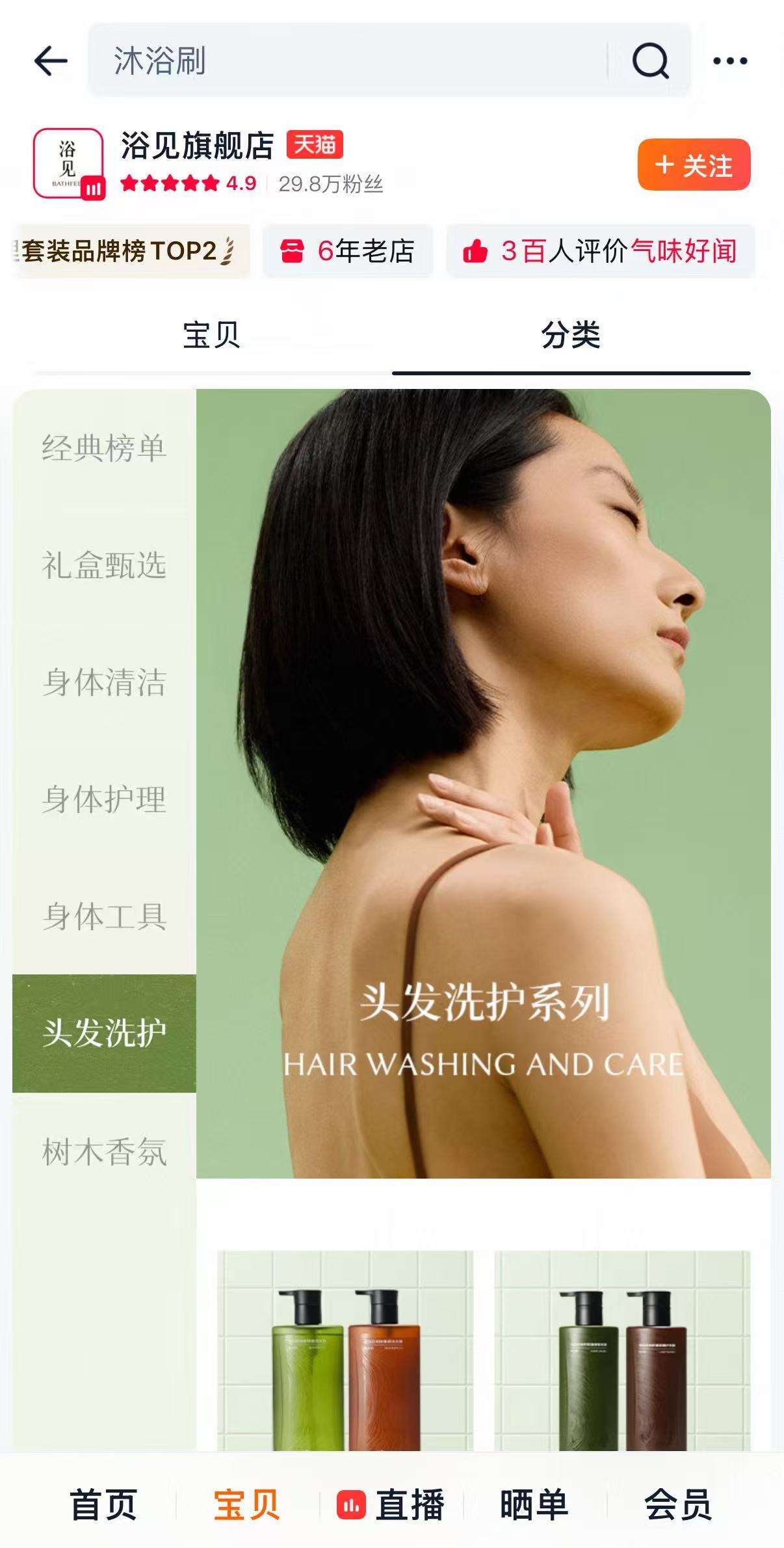
从200元浴刷到情绪价值放大器,浴见如何征服资本“靠山”
Guan Cha Zhe Wang· 2025-11-20 09:04
Core Insights - Bathfeel, a domestic body care brand, opened its first offline store in Shanghai, marking a significant move for its parent company, Betaini, to seek new growth avenues amid slowing main business growth [1][9] - The brand philosophy of Bathfeel is rooted in the idea that "the body is self, the body is freedom," which reflects a shift in consumer sentiment towards emotional value in body care products [2][4] Brand Development - Bathfeel started with a nearly 200 yuan pig bristle bath brush, successfully capturing the market and selling over 400,000 units by June this year [3][7] - The brand's focus shifted from functional products to emotional value, with user research indicating that emotional healing needs account for 53% of consumer demand in bathing scenarios [4][7] - Bathfeel has expanded its product line to include various body oils and creams, transitioning from a tool-focused brand to a comprehensive body care brand [4][7] Market Positioning - Bathfeel's main products are priced around 200 yuan, positioning itself in the high-end market segment and achieving consecutive sales growth over the past three years [7][12] - The brand has successfully captured a consumer base of 70% from new first-tier cities, with a significant portion being women aged 25-34, indicating a strong appeal to affluent urban consumers [7][12] Retail Strategy - The offline store design emphasizes brand experience over traditional retail logic, creating a comfortable environment for customers to engage with the brand [8][15] - Bathfeel's store features narrative sections that enhance emotional connections, moving away from conventional product displays [8][15] Investment and Growth Strategy - Betaini's investment in Bathfeel, acquiring a 20% stake, aims to explore product innovation and channel collaboration, addressing growth pressures faced by its main brand, Winona [9][12] - Betaini has made multiple investments across various sectors, indicating a strategic shift to diversify its brand portfolio and reduce reliance on a single brand [12][13] - The ultimate goal for Betaini is to build a comprehensive "skin health ecosystem" that covers different skin types, age groups, and price ranges, maximizing consumer reach [12][15]

2025个人洗护&家清行业趋势洞察-魔镜洞察
Sou Hu Cai Jing· 2025-11-03 09:36
Core Insights - The personal care and home cleaning industry is experiencing a simultaneous recovery and demand upgrade, with significant changes in consumer demographics and market dynamics by 2025 [1][2]. Group 1: Market Overview - The online personal care market is strongly recovering, with sales on major e-commerce platforms increasing by 22.8% year-on-year for MAT2025 [1][13]. - The average price in the industry has decreased due to the rise of domestic brands and frequent e-commerce promotions [1][13]. - Body care and hair care dominate the market, holding 56% and 44% market shares respectively, with body care leading at a 27.0% year-on-year growth rate [1][17]. Group 2: Consumer Demographics - The primary consumer group consists of women aged 21-35, accounting for over 85% of the market, with a notable increase in interest from those under 30 [1][12]. - The focus on personal care is rising among younger demographics, driven by concerns such as hair loss and back acne, reflecting broader lifestyle issues [12][19]. Group 3: Product Trends - The body care market is witnessing multiple upgrade trends, with functional ingredients from facial care extending into body care, such as niacinamide and peptides [2][24]. - Scent has become a primary consideration for consumers, with sales of fragrance-based products increasing by 61.8% year-on-year [2][39]. - The product landscape is diversifying, with offerings expanding from home use to gifting and travel scenarios, leading to a 51.4% increase in high-end gift box sales during key holidays [2][40]. Group 4: Channel Dynamics - Interest e-commerce is gradually capturing market share from traditional e-commerce platforms, becoming a significant growth engine for body and hair care markets [3][17]. - Innovative product forms are emerging, such as breast sprays and nail repair creams, while multifunctional and eco-friendly products like shower oils and shampoo bars are gaining popularity [3][19]. Group 5: Cleaning Products - The online clothing cleaning market continues to grow, with sales reaching 19.06 billion yuan from January to July 2025, marking a 15.0% year-on-year increase [2][19]. - Fragrance laundry detergents are particularly performing well, with sales of 4.4 billion yuan, up 44.9% year-on-year, capturing 44% of the laundry detergent market [2][19].

电商运营:2025年身体清洁护理精洗报告
Sou Hu Cai Jing· 2025-09-01 14:02
Market Overview - The online market size for body cleansing and care reached 15.3 billion yuan in the first half of 2025, representing a year-on-year growth of 14%, and is expected to exceed 17 billion yuan in the first half of 2026 [6][7][8] - Body cleansing sales grew by 7% year-on-year, while body care sales increased by 19% in terms of revenue, with a 21% rise in volume [8][9] - The sales focus is shifting towards content e-commerce, with body cleansing sales on a specific content platform increasing from 32% to 41%, a year-on-year growth of 36% [10][11] Category Analysis - In the body cleansing category, shower gel accounts for nearly 70% of the market, with shower oil showing significant growth at 67% year-on-year [18][21] - The demand for nourishing and soothing products peaks in the autumn and winter seasons, indicating seasonal sales trends [14] - In body care, body lotion/cream exceeded 4 billion yuan in sales, growing by 22%, while hair removal cream and neck care saw growth rates of 36% and 34%, respectively [21][22] Brand and Pricing Dynamics - The brand landscape is characterized by a dominance of mass-market brands, with domestic brands in body cleansing increasing their market share from 49% to 76% and in body care from 52% to 65% [12][13] - There is a noticeable price differentiation, with high-price segments gaining traction in shelf e-commerce, while low-price segments are rapidly growing in content e-commerce [25][27] E-commerce Platform Trends - The report highlights a significant shift in sales channels, with content e-commerce gaining a larger share of the market, particularly in the body cleansing segment [10][11] - The average price of shower oil has decreased, indicating a competitive pricing strategy in the market [27][28] Data Quality Challenges - The industry faces challenges related to data cleaning due to inconsistent platform categories and SKU mixing, necessitating the establishment of a dedicated data cleaning library to enhance data quality for product innovation and strategy formulation [21]

2025年天猫身体护理白皮书
天猫新品创新中心&天猫国际· 2025-05-20 23:10
Investment Rating - The report indicates a positive investment outlook for the body care industry, highlighting a recovery phase with a projected sales growth of 7% year-on-year on the Tmall platform in 2024 [7][21]. Core Insights - The Chinese body care market is experiencing a rebound starting in 2023, driven by increased consumer demand for high-quality and cost-effective domestic products [5][7]. - The market is characterized by a shift towards functional and experience-oriented products, with a notable rise in demand for body oils and soaps due to health and environmental concerns [12][19]. - Domestic brands are gaining market share, leveraging supply chain advantages and refined pricing strategies to stimulate consumer demand [21][16]. Industry Analysis - The body care market in China is recovering, with a significant increase in the number of buyers and purchase frequency, while overall prices are declining due to the rise of cost-effective domestic products [7][21]. - The market is projected to grow steadily, with core categories such as body lotion and hand cream forming the backbone of industry growth, while body oils and high-end products show strong market potential [21][16]. - The competitive landscape is evolving, with domestic brands outperforming foreign brands in growth rates, particularly in specialized efficacy and scenario innovation [16][21]. Consumption Trends - There is a notable increase in demand for specialized functions such as anti-aging and soothing, with basic moisturizing needs remaining stable [23][26]. - The price distribution of body care products shows a concentration under 100 yuan, while high-end products (above 150 yuan) are seeing increased demand [26][23]. - The trend towards gifting body care products is growing, particularly during holidays, with hand creams being a popular choice [38][59]. Consumer Insights - The primary consumer demographic for body care products consists of women aged 25-34, with younger consumers (18-24) showing a strong preference for body lotions and shower gels [42][63]. - Consumers prioritize scent and efficacy in their purchasing decisions, with a significant focus on the emotional value provided by fragrances [46][44]. - The interest in body care products is heightened during festive occasions, with consumers increasingly choosing these products as gifts [38][59]. Future Outlook - The body care market is expected to continue its recovery, with domestic brands capitalizing on functional ingredients and innovative scenarios [67]. - Product upgrades will focus on specialized functions for problem skin, with an emphasis on developing customized solutions for various skin concerns [68]. - Sustainability and digital experiences are anticipated to play a crucial role in shaping future consumer preferences and market strategies [68].