沧海

Search documents
元宝自己也承认,它确实存在差距!!
Xin Lang Cai Jing· 2026-02-05 09:58
Group 1: Overall Strategy and Competitive Landscape - The core viewpoint is that the true winners in AI will be companies that deeply integrate technology with their core business, rather than those that merely focus on model performance [2][3] - Tencent's AI strategy emphasizes practical application over merely achieving top rankings in model evaluations, leveraging its extensive ecosystem of services like WeChat, QQ, and gaming [2][3] - Tencent's significant investment in AI is not just to catch up with leading models but to solidify and expand its ecosystem advantages, ensuring its vast user base operates on a self-controlled and efficient technological foundation [4][5] Group 2: Core Advantages and Specific Capabilities - Tencent's unique advantages lie in its vast ecosystem, which includes over 1.4 billion combined monthly active accounts across WeChat and QQ, providing an unparalleled testing ground for AI applications [8][9] - The company's pragmatic approach focuses on enhancing user experience and business efficiency through AI, ensuring that technology serves measurable commercial value [8][9] - Tencent's strong cash flow from established businesses allows for substantial long-term investments in AI without compromising overall financial health [9][10] Group 3: Future Outlook and Key Decisions - The necessity for strategic autonomy in AI development is highlighted, as reliance on external models could jeopardize Tencent's core business profits and influence [14][15] - Tencent's path in AI involves a focus on specialized chips that cater to its specific business needs, which is seen as a long-term competitive strategy [12][13] - The competition in AI is characterized as a marathon, requiring a balance of strategic patience and rapid iteration in application ecosystems [6][7]

速递 | 阿里分拆芯片部门平头哥上市!AI芯片格局要变天
未可知人工智能研究院· 2026-01-23 02:18
Core Viewpoint - Alibaba plans to spin off its chip division, Pingtouge, for an independent IPO, which is strategically timed amidst a wave of AI chip listings in China, potentially reshaping the industry landscape [1][6][20]. Summary by Sections News Source and Market Reaction - The news about Alibaba's decision to pursue an independent listing for Pingtouge was reported by reputable financial media, Bloomberg and Reuters, ensuring its credibility [5]. - Following the announcement, Alibaba's stock surged by 5%, indicating strong market confidence in the move [7]. Pingtouge's Strengths - Pingtouge holds significant technological advantages with its key products: - The Yitian 710 processor, used in Alibaba Cloud, boasts a 5nm process and 128 cores, outperforming Intel's Xeon with over 30% cost-performance improvement and 60% energy efficiency [11]. - The Hanguang 800 AI inference chip, launched in 2019, was once considered the world's strongest, with performance 46 times that of NVIDIA's P4 [11]. - The PPU chip, reported to have performance on par with NVIDIA's H20, is crucial for Pingtouge's competitive edge [11]. Comparison with Competitors - Pingtouge differentiates itself from the "Four Little Dragons" of domestic GPUs (Moore Threads, Muxi, Birran, and Suiruan) by offering a comprehensive "end-to-cloud" solution, covering the entire computing ecosystem [15]. - Pingtouge's chips are already commercially deployed in Alibaba Cloud, providing a solid revenue stream, while competitors are still facing challenges in mass production and commercialization [15]. Reasons for Spin-off - The spin-off is driven by several strategic motives: - **Valuation Arbitrage**: Pingtouge's value is currently obscured within Alibaba's broader valuation, but a standalone listing could significantly increase its market valuation, potentially doubling or tripling it [21]. - **Independent Financing**: As a standalone entity, Pingtouge can secure its own funding without relying on Alibaba's budget, allowing for more agile decision-making and investment in R&D [22]. - **Employee Incentives**: An independent listing allows Pingtouge to offer stock options to employees, enhancing talent retention and attraction in a competitive market [23]. - **Strategic Positioning**: The timing aligns with favorable market conditions for tech IPOs in China, signaling Alibaba's commitment to the hard tech sector and enhancing its market perception [24]. Industry Impact - The spin-off is expected to trigger a trend among other major tech firms to pursue similar strategies, potentially leading to a wave of chip-related IPOs in the coming years [37]. - The listing of Pingtouge, along with other domestic AI chip companies, could reshape the competitive landscape, fostering a "6+N" structure in the AI chip market, which may accelerate technological advancements but also intensify competition [38]. - The availability of more affordable domestic chips could significantly reduce the cost of AI model training, enabling a broader range of startups and developers to engage in AI applications [39]. Opportunities for Stakeholders - Investors should monitor the developments surrounding Pingtouge and Kunlun's IPOs, as well as companies providing supporting services in the chip industry [43]. - AI professionals may find increased job opportunities as the chip sector expands, with companies actively hiring for various roles [44]. - Entrepreneurs can explore new business opportunities in AI applications, particularly those leveraging domestic chips, as the cost of entry into the AI market decreases [46].


中泰证券:首予腾讯控股“买入”评级 中国互联网龙头定义未来十年
Xin Lang Cai Jing· 2026-01-07 02:13
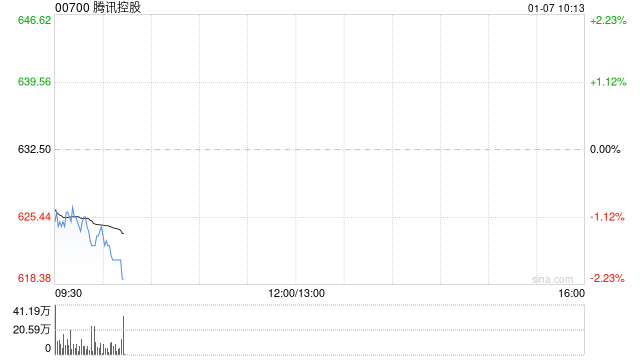
Core Viewpoint - Zhongtai Securities initiates coverage on Tencent Holdings (00700) with a "Buy" rating, highlighting the potential of AI technology and the era of computational equality, anticipating Tencent to define the next decade for China's internet sector [1][10]. Group 1: Overview of Tencent's Position - Tencent is recognized as a leader in the Chinese internet space, having evolved from instant messaging tools to a social media giant, driven by a commitment to an open world [2][11]. - Historical performance shows that the last round of mobile internet beta dividends provided significant growth opportunities, with a 4.28% contribution to shareholder returns over 24 years, establishing a high-quality growth paradigm where EPS growth outpaces net profit, gross profit, and revenue growth [2][11]. Group 2: Current Business Strategy - The "connection" strategy is central to understanding Tencent's business logic, with its current structure based on communication and social networking, while advertising has emerged as a new growth engine [2][11]. - The user base (MAU) is expected to remain stable, with value-added services creating a strong competitive moat, and ARPU is projected to increase steadily with economic growth [3][12]. Group 3: Market Opportunities - In the consumer segment (2C), growth is anticipated through enhancing user value and international expansion, leveraging a self-iterative mechanism based on massive traffic and operational capabilities [3][12]. - In the business segment (2B), advertising is expected to grow through new video features, while financial technology and cloud services are positioned for significant improvements in profitability and market penetration [3][12]. Group 4: Investment and Asset Management - Tencent's asset scale is stable with concentrated holdings, providing good liquidity and opportunities for business synergy and value enhancement [4][13]. Group 5: AI as a Growth Driver - Tencent's AI strategy focuses on integrating resources to build an ecosystem, emphasizing open interfaces and collaboration with partners to create application scenarios [5][14]. - The contribution of AI is expected to be more significant in B2B scenarios, enhancing existing business operations rather than just providing consumer value [5][14].

股价催化剂!科技巨头挺进AI“芯”战场,从“拼模型”到“拼算力”
Zheng Quan Shi Bao· 2025-09-15 00:26
Core Viewpoint - The competition for AI capabilities has shifted from being optional to essential, with companies like Baidu and Alibaba investing heavily in self-developed chips for AI model training [1][3]. Group 1: Company Developments - Baidu and Alibaba's stock prices surged by 8.08% and 5.44% respectively, following news of their self-developed chip initiatives [1]. - Alibaba is developing a new AI chip aimed at broader AI inference tasks, which is currently in the testing phase [3]. - Tencent and ByteDance are also increasing their self-developed chip efforts, with Tencent making significant progress on three chips focused on AI inference and video transcoding [3]. Group 2: Investment Strategies - In addition to self-development, major tech companies are investing in chip firms to enhance their AI capabilities, with Alibaba investing in companies like Cambricon and Deep Vision [4]. - This dual approach of self-development and investment reflects a need for core technology control and a pragmatic balance between risk and efficiency in the high-stakes chip industry [4]. Group 3: Motivations for Chip Development - The drive for self-developed chips is fueled by three main considerations: cost, performance, and ecosystem control [6]. - The exponential demand for AI computing power necessitates a restructuring of underlying architectures, as general-purpose GPUs are becoming insufficient for training large models [6][7]. - Self-developed AI chips can significantly reduce procurement costs and enhance supply chain resilience, addressing the current imbalance in global computing power supply and demand [6][7]. Group 4: Technical Considerations - AI chips can be categorized into general-purpose chips (like CPUs and GPUs) and specialized chips (like ASICs and FPGAs), with the latter being easier to develop and more suited for specific applications [7]. - The current trend in chip development focuses on achieving optimal performance and efficiency through a closed-loop of algorithms, chips, and applications [8]. Group 5: Challenges Ahead - Despite the advantages of large tech companies in chip development, challenges such as rapid technological iteration and ecological barriers remain significant [10]. - The risk of technological obsolescence is high, as AI chip development can take 3-5 years, while AI technology evolves rapidly [10][11]. - Building a robust ecosystem around self-developed chips is crucial, as existing software stacks and developer tools may not be as mature as those of established international firms [10].
股价催化剂!科技巨头挺进AI“芯”战场,从“拼模型”到“拼算力”
证券时报· 2025-09-15 00:02
Core Viewpoint - The competition in AI has shifted from optional computing power to a necessity, with major tech companies investing heavily in self-developed chips to train AI models, indicating a strategic battle for cost control, performance enhancement, supply chain security, and ecosystem dominance [1][2]. Group 1: Company Developments - Baidu and Alibaba's stock prices surged by 8.08% and 5.44% respectively, following news of their self-developed chips being used for AI model training [1]. - Alibaba's new AI chip is in testing and aims to address a broader range of AI inference tasks, while Tencent and ByteDance are also increasing their self-developed chip efforts [3][4]. - Alibaba's semiconductor subsidiary, Pingtouge, launched its first RISC-V processor and AI chip in 2019, marking its early entry into the chip battle [3]. Group 2: Investment Strategies - Major tech companies are pursuing a dual strategy of self-development and investment in chip companies, reflecting a need for core technology autonomy and a pragmatic approach to balance efficiency and safety in the high-risk chip industry [4]. - Alibaba has invested in several chip firms, while Tencent and ByteDance have also made strategic investments in various semiconductor companies [4]. Group 3: Motivations for Chip Development - The exponential demand for computing power driven by generative AI is prompting companies to restructure their underlying architectures, as general-purpose GPUs are becoming insufficient for training large models [6]. - Self-developed AI chips can significantly reduce procurement costs and enhance supply chain resilience, addressing the rising costs and instability of external chip procurement [6][7]. - Companies are focusing on specialized chips that are easier to develop and better suited for their specific cloud computing and AI needs [7]. Group 4: Ecosystem and Competitive Landscape - The deeper motivation behind chip development is to seize ecosystem dominance, with companies aiming to create a complete software and hardware ecosystem to break existing monopolies [8]. - The combination of self-developed chips and open-source ecosystems is seen as a viable strategy to establish a self-controlled technology stack [8]. Group 5: Challenges and Risks - Despite their advantages, tech giants face significant challenges in chip development, including the risk of technological obsolescence due to rapid AI advancements and geopolitical factors affecting supply chains [11]. - The need for ecosystem collaboration is emphasized, as companies are encouraged to build platforms that foster open-source collaboration to drive technological innovation [12].

从“拼模型”到“拼算力” 科技巨头挺进AI“芯”战场
Zheng Quan Shi Bao· 2025-09-14 17:59
Group 1 - Baidu and Alibaba's stock prices surged by 8.08% and 5.44% respectively, driven by news of their self-developed chips for AI model training [1] - The global capital market reacts strongly to any developments in AI computing power, as seen with Tesla's Elon Musk and OpenAI's announcements [1] - The competition in AI chip development is not just about technology but also involves cost control, performance enhancement, supply chain security, and ecosystem dominance [1] Group 2 - Alibaba is developing a new AI chip that has entered the testing phase, aimed at broader AI inference tasks [2] - Domestic tech giants like Tencent and ByteDance are also increasing their self-developed chip efforts, with Tencent making significant progress on three AI chips [2] - The establishment of Pingtouge by Alibaba in 2018 marked the beginning of a focused effort on semiconductor technology [2] Group 3 - Investment in chip companies is a common strategy among tech giants, with Alibaba investing in several semiconductor firms [3] - The dual approach of self-development and investment reflects the urgent need for core technology control and a pragmatic balance between efficiency and risk [3] - Self-developed chips can optimize algorithms and hardware, while investments allow quick access to cutting-edge technologies [3] Group 4 - The drive for self-developed chips is influenced by three main factors: cost, performance, and ecosystem [4] - The exponential demand for computing power from generative AI is pushing companies to restructure their underlying architectures [4] - Self-developed AI chips can significantly reduce procurement costs and enhance supply chain resilience [5] Group 5 - AI chips can be categorized into general-purpose and specialized chips, with the latter being easier to develop and more suited for specific applications [5] - Companies like Tencent have developed specialized chips that show significant performance improvements over industry standards [5] - The current trend in AI chip development focuses on achieving optimal performance and efficiency through specialized designs [6] Group 6 - The current wave of AI chip development emphasizes a closed-loop system of algorithms, chips, and applications, aiming for extreme efficiency [6] - Different companies have varying core drivers for chip optimization based on their business foundations [6] - The ultimate goal is to gain ecosystem dominance, similar to NVIDIA's success with its CUDA software ecosystem [6] Group 7 - Internet giants have unique advantages in chip development, including large-scale operations and access to vast amounts of data [7] - Despite these advantages, the chip development journey is fraught with challenges, including long R&D cycles and technological risks [7] - The geopolitical landscape can also impact production capabilities and supply chain stability [7] Group 8 - To mitigate technological risks, companies are encouraged to adopt modular designs and focus on lightweight applications initially [8] - Building collaborative platforms for software and hardware ecosystems is essential for overcoming ecological barriers [8] - The future of technological innovation may rely on open-source collaboration to attract developers and accelerate technology iteration [8]
腾讯投资了一家芯片公司
半导体芯闻· 2025-03-06 09:59
Core Viewpoint - Recent changes in the shareholder structure of Jiyiwei Semiconductor (Shanghai) Co., Ltd. indicate a strategic shift with the exit of previous investors and the entry of new ones, including Tencent and a media investment fund, reflecting Tencent's increasing involvement in the semiconductor industry [1][2]. Group 1: Company Overview - Jiyiwei Semiconductor was established in August 2019, focusing on integrated circuit chip sales, design, and electronic product sales [2]. - The registered capital of Jiyiwei Semiconductor increased from approximately 14.87 million RMB to about 15.19 million RMB [1]. Group 2: Shareholder Changes - The company saw the exit of original shareholders such as Suzhou Xuchuang Technology Co., Ltd. and Tongling Qianrong Haoyun Venture Capital Partnership [1]. - New shareholders include Guangxi Tencent Venture Capital Co., Ltd. and CCTV Media Industry Investment Fund, indicating a significant shift in ownership [1]. Group 3: Tencent's Semiconductor Strategy - Tencent has been actively expanding its presence in the semiconductor sector, having unveiled three self-developed chips at its 2021 Digital Ecosystem Conference, showcasing significant performance improvements over industry standards [5][6]. - The chips include the AI inference chip "Zixiao," which has successfully entered trial production, achieving a 100% performance increase compared to competitors [5]. - Tencent Cloud has established partnerships with over 50 semiconductor companies, indicating a robust collaborative approach to enhance its semiconductor ecosystem [6].