
沾化冬枣

Search documents
【开局“十五五” 奋斗正当时·干事创业 担当尽责】沾化“新春第一会”擂响实干战鼓 以奋进之姿建设“文明沾化·渤海名城”
Xin Lang Cai Jing· 2026-02-27 16:26
Core Viewpoint - The article emphasizes the commitment of the Zhanhua District to accelerate the construction of "Civilized Zhanhua · Bohai City" through a collaborative and action-oriented approach, aiming for high-quality development in the upcoming years [1][4]. Group 1: Economic Development and Achievements - In 2025, Zhanhua aims to deliver significant improvements, with seven key economic indicators ranking in the top two citywide, and eleven indicators exceeding the city average [1]. - The district has successfully established a national civilized city and completed an 800,000-ton aluminum oxide base, achieving world-class product quality in the aluminum materials industry [1][2]. Group 2: Strategic Initiatives and Projects - Zhanhua has outlined a development path focusing on the construction of six key cities, including a high-quality winter jujube industry city and a leading aluminum materials city, with plans for a green near-zero carbon aluminum production line [3]. - The district is set to ensure the early commencement of key projects, with a wind and solar installed capacity exceeding 5 million kilowatts [3]. Group 3: Action Plans and Support Systems - The district will implement three major campaigns and actions to build a comprehensive development support system, managing 62 key projects with a total investment of 54.59 billion yuan [4]. - Efforts will be made to stabilize industrial economic growth and enhance market vitality, while optimizing the business, ecological, and social environments to foster a supportive atmosphere for enterprises [4].

激活基层文化一池春水 绘就冬枣之乡和美画卷——沾化区文艺助推特色产业高质量发展工作实践综述
Xin Lang Cai Jing· 2026-02-05 14:04
Group 1 - The core idea of the article emphasizes the integration of cultural development with local industries in Zhanhua District, focusing on enhancing cultural soft power to support economic growth and rural revitalization [1][6] Group 2 - Zhanhua District has identified local cultural symbols and integrated them into the branding of its unique agricultural products, such as Zhanhua winter jujube and salt field shrimp, leading to a winter jujube industry output value exceeding 7 billion yuan and a 12.6% increase in the total output value of salt field shrimp [2] - The district has utilized various artistic forms, including literature and drama, to create a matrix of cultural symbols that promote local industries, enhancing product recognition and cultural appeal [2] Group 3 - In 2023, Zhanhua District launched a plan to promote "cultural rural construction," providing institutional support for artistic initiatives and talent development, while integrating culture with industry [3] - The district has established cultural centers and experiential venues, such as the Zhanhua winter jujube ecological picking park, which attracts over 300,000 visitors annually, combining cultural experiences with agricultural tourism [3] Group 4 - Zhanhua District employs a tailored approach for each town based on local cultural resources and industrial characteristics, promoting "cultural + industry" integration to enhance local economies [4] - The district has successfully developed a thriving industry around traditional crafts, such as net processing, generating over 300 million yuan in annual sales and creating employment for over 30,000 people [4] Group 5 - To address limited cultural resources and enhance industrial development, Zhanhua District has integrated local cultural institutions and engaged external resources, fostering a collaborative environment for artistic and industrial growth [5] - The district has hosted numerous cultural exchange events, attracting over 20,000 participants and promoting local cultural brands on a national and international stage [5]
“好运山东”体育消费创新场景案例巡礼·滨州
Xin Lang Cai Jing· 2026-02-03 09:31
Core Insights - The "Zhanhua District Xiaowa Town 'Jujube Town Fishing Rhythm Sports Tourism Route'" integrates sports, agriculture, ecology, and cultural tourism, leveraging the Zhanhua winter jujube industry as its foundation [1][2] - The project aims to create a sustainable sports consumption ecosystem that drives employment and revenue growth through collaborative operations among government, scenic areas, and local communities [1][2][3] Group 1: Project Overview - The project is based on a model of "sports + agriculture + ecology + cultural tourism," focusing on fishing, outdoor running, and community sports [1] - It aims to establish a closed-loop operational mechanism that attracts visitors through sports events, enhancing the unique image of "the hometown of winter jujubes" [1][3] Group 2: Economic Impact - By 2025, the project is expected to drive the sale of over 5.5 million pounds of winter jujubes, increasing the average income of surrounding farmers by approximately 55,000 yuan [3] - The project has generated over 8 million yuan in related industry consumption, significantly boosting local businesses such as agritourism and sports equipment rentals [3] Group 3: Sustainable Development Model - The project employs a "government platform, market operation, community co-creation" model, ensuring long-term health and sustainability of the closed-loop mechanism [2] - It integrates first, second, and third industry values, enhancing the brand value of agricultural products and promoting sports tourism [2] Group 4: Additional Projects - The "Xuehuashan Pickleball Sports Center" focuses on integrating new sports with local resources, creating a comprehensive pickleball base that promotes regional development [4][5] - The "Yangxin Sunshine Rural Town" combines sports, rural revitalization, and ecological tourism, featuring diverse seasonal activities and a well-rounded service chain [7][8] Group 5: Employment and Community Benefits - The projects have created over 100 jobs and increased income for more than 700 local households through agricultural sales and hospitality services [9] - They promote equal access to sports facilities in rural areas, establishing a replicable model for cultivating rural sports consumption [9]
冬闲变“冬忙”,齐鲁田野跃动新生机
Xin Lang Cai Jing· 2025-12-21 10:24
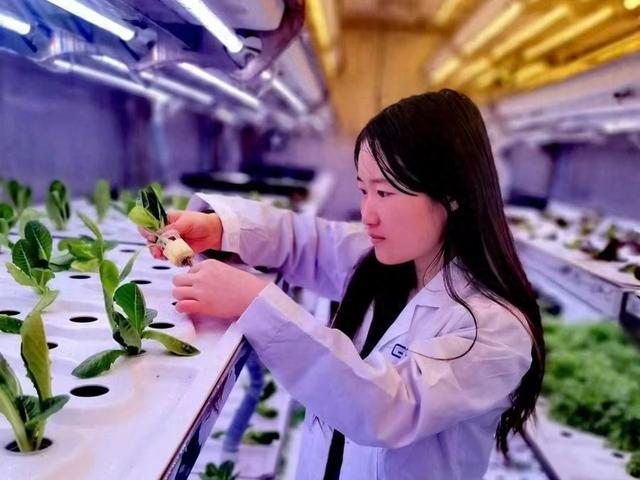
Core Viewpoint - The article highlights the innovative agricultural practices in Shandong Province, particularly focusing on the use of container-based plant factories that significantly enhance vegetable production efficiency and quality [1][3]. Group 1: Container Plant Factory - The container plant factory in Shouguang City utilizes a controlled environment to grow vegetables, achieving a production capacity five times greater than traditional farming methods within a 30-square-meter space [3]. - This system has become a key export product for Shouguang's vegetable technology, reaching countries like the UAE, Canada, and the Netherlands, and is capable of withstanding extreme temperatures [3]. Group 2: Local Agricultural Practices - In Jiaozhou, the local cabbage, known as "Jiaobai," has a stable planting area of 65,000 acres and an annual production exceeding 350,000 tons, supported by a standardized production system involving over 80 certified bases [5]. - The region's unique soil and water conditions contribute to the exceptional taste and quality of Jiaobai, which is characterized by its tight leaves and high moisture content [5]. Group 3: Seasonal Agricultural Activity - Despite winter being traditionally seen as a downtime for agriculture, Shandong's winter production showcases a variety of crops, including scallions, winter jujubes, oysters, and crabs, indicating a shift towards facility-based agriculture and market demand [5].

谁说冬天是淡季?看“鲁大壮”的冬日丰收图鉴!
Xin Hua Wang· 2025-12-21 09:23
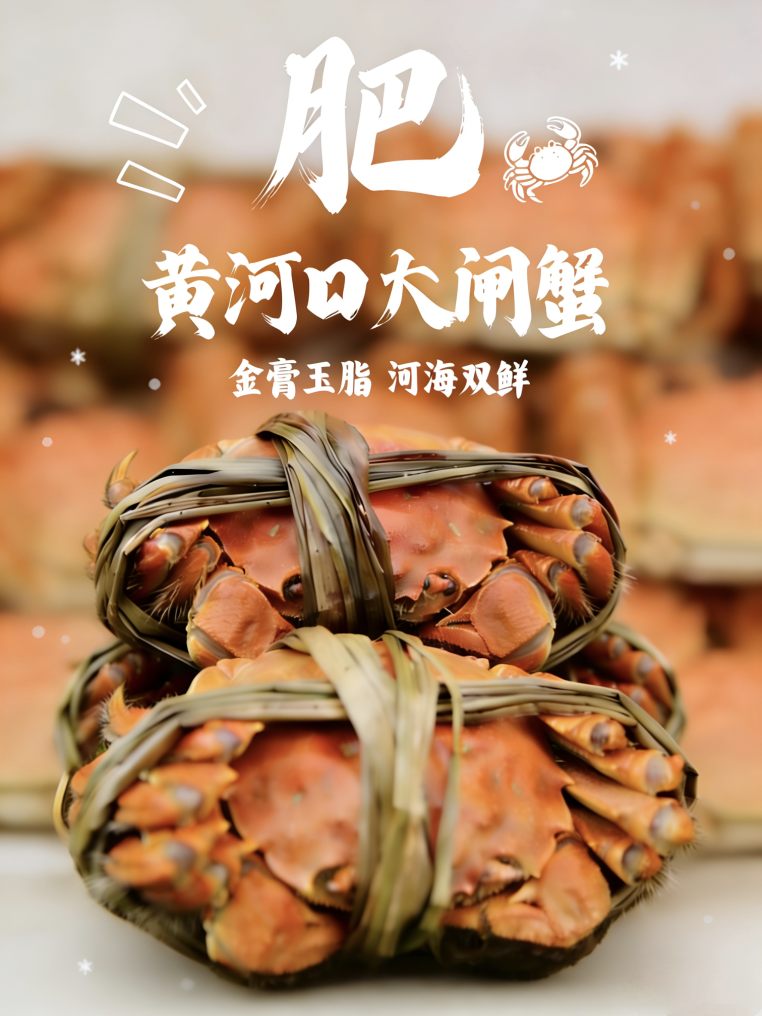
Core Viewpoint - The article highlights the resilience and continuous production of agricultural products in Shandong, China, even during the winter season, showcasing the region's ability to supply fresh produce year-round. Group 1: Agricultural Production - Shandong is recognized as a major agricultural province responsible for the national "vegetable basket" supply, maintaining a continuous supply chain throughout the year [1] - The winter season does not hinder the production capabilities of Shandong, as evidenced by thriving greenhouse operations and marine ranches [1] Group 2: Unique Agricultural Products - The article describes various unique products from Shandong, such as oysters with 30% higher amino acid content compared to other regions, highlighting the natural advantages of the local ecosystem [7] - The region's vegetables, including a record-breaking scallion measuring 2.68 meters, demonstrate exceptional growth and flavor characteristics [9][10] - The article emphasizes the quality of local produce, such as the crispness of radishes and the sweetness of winter jujubes, which are attributed to the region's favorable growing conditions [12][20] Group 3: Production Scale and Reach - Shandong produces over 450 million tons of vegetables annually, with a trading volume of approximately 9 million tons, covering over 20 provinces and extending to Southeast Asia, Japan, South Korea, and Russia [22][23]
中国破解盐碱地治理难题 “不毛之地”变丰产田
Ren Min Ri Bao· 2025-11-20 01:08
Core Insights - The "14th Five-Year Plan" emphasizes high-quality construction of high-standard farmland, protection of black soil, and comprehensive utilization of saline-alkali land, aiming to enhance soil quality [1] Group 1: Saline-Alkali Land Utilization - The 2025 Saline-Alkali Land Comprehensive Utilization Technology Innovation Conference highlighted the gradual formation of a regional governance model and the collaborative development of characteristic agriculture in saline-alkali areas [1][2] - The report outlines over 40 innovative achievements in biological breeding, productivity enhancement, and ecological utilization of saline-alkali land [2] - Various technical models have been established, such as the "dry sowing and wet harvesting" in the Northwest Oasis area and integrated grass-livestock systems in the Ningxia Hetao Plain [2] Group 2: Agricultural Practices and Innovations - In Jiangsu's coastal saline-alkali areas, a water-drought rotation annual planting model has been developed, achieving a 20% increase in soil organic matter and maintaining soil salinity below 2‰ [2] - The report stresses the importance of preventing secondary salinization of farmland and establishing efficient drainage systems [3] - The focus is on selecting drought-resistant and salt-alkali tolerant crops to promote the development of characteristic agriculture in saline-alkali regions [4] Group 3: Development of Characteristic Agriculture - The report advocates for differentiated management of saline-alkali land usage, promoting various agricultural practices based on land conditions [4] - Successful cultivation of varieties such as Huanghua dry alkali wheat and Zhanhua winter jujube has been reported, along with the exploration of unique aquaculture models [4] - The development of the Yellow River Estuary wetland sheep industry is highlighted, emphasizing the need for standardization and branding to enhance product quality and recognition [5] Group 4: Breeding Innovation System - The establishment of a breeding innovation system for saline-alkali land is underway, with 68 new varieties of salt-alkali resistant crops developed and promoted across 26.32 million acres [7] - The National Saline-Alkali Land Comprehensive Utilization Technology Innovation Center is working on enhancing breeding efficiency and levels through collaboration and innovation networks [7]
综合利用,盐碱地变丰产田
Ren Min Ri Bao· 2025-11-18 12:38
Core Insights - The article emphasizes the importance of high-quality agricultural land construction and the comprehensive utilization of saline-alkali land in China, highlighting the establishment of a breeding innovation system for saline-alkali land [1] Group 1: Saline-Alkali Land Utilization - The report outlines over 40 innovative achievements in biological breeding, productivity enhancement, and ecological utilization of saline-alkali land in China [2] - Various regional governance models and technical modes have been created, such as the "dry sowing and wet harvesting" in the Northwest oasis area and integrated grass and livestock systems in the Ningxia Hetao Plain [2] - In Jiangsu's coastal saline-alkali areas, annual rainfall supports a rotation planting model, achieving a 20% increase in soil organic matter and maintaining soil salinity below 2‰ [2] Group 2: Challenges and Solutions - The comprehensive utilization of saline-alkali land faces challenges such as water resource shortages and mismatched salt control technologies [3] - The report stresses the need for effective drainage systems and a dynamic monitoring network for soil salinity to implement differentiated irrigation and drainage standards [3] Group 3: Agricultural Development - The report advocates for a combination of "suitable crops for the land" and "suitable land for crops" to maximize the potential of saline-alkali land [4] - It highlights the high functional component content and biological activity of many saline-alkali agricultural products, urging the development of a data-sharing platform for salt-tolerant plant resources [4] Group 4: Breeding Innovation - Successful varieties such as the Huanghua drought-resistant wheat and saline-alkali goji berry have been developed, enhancing the value of saline-alkali agricultural products [5] - The National Saline-Alkali Land Comprehensive Utilization Technology Innovation Center has established a breeding innovation system, with 68 new salt-tolerant crop varieties developed and promoted across 26.32 million acres [6]
我国积极探索区域盐碱耕地治理模式 综合利用,盐碱地变丰产田
Ren Min Ri Bao· 2025-11-17 23:41
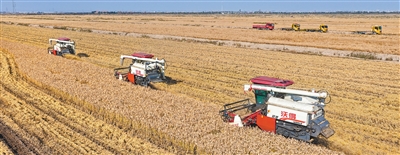
Core Viewpoint - China is actively exploring regional governance models for saline-alkali land management, aiming to enhance agricultural productivity and ecological sustainability through innovative techniques and practices [1][2]. Group 1: Saline-Alkali Land Utilization - The "14th Five-Year Plan" emphasizes high-quality construction of farmland and comprehensive utilization of saline-alkali land to improve soil quality [1]. - A recent report highlights over 40 innovative achievements in biological breeding, productivity enhancement, and ecological utilization of saline-alkali land [2]. - Various technical models have been developed, such as the "dry sowing and wet harvesting" method for cotton in the Northwest Oasis region, promoting efficient use of resources [2]. Group 2: Agricultural Practices and Crop Management - In Jiangsu's coastal saline-alkali areas, a rotation planting model has been implemented, achieving a 20% increase in soil organic matter and maintaining soil salinity below 2‰ [2]. - The report advocates for a differentiated approach to land use, promoting specific crops based on the salinity level of the land [4]. - Successful cultivation of saline-alkali resistant crops has been reported, including varieties like "Jiyang 12" with a yield of 317.9 kg per mu [5]. Group 3: Challenges and Solutions - Current challenges include issues with irrigation practices, freshwater resource shortages, and mismatched salt control technologies [3]. - The report stresses the importance of establishing efficient drainage systems and a dynamic monitoring network for soil salinity [3]. Group 4: Development of Specialty Agriculture - The development of specialty agriculture in saline-alkali areas is encouraged, focusing on high-value products and brand recognition [5]. - The report indicates that unique functional components in saline-alkali products can enhance their market value [4]. - A variety of specialty products have been developed, including deep-processed items from saline-alkali crops, significantly increasing industry value [4].
综合利用,盐碱地变丰产田(美丽中国)
Ren Min Ri Bao· 2025-11-17 22:40
Core Insights - The article emphasizes the importance of high-quality agricultural land construction and the comprehensive utilization of saline-alkali land as part of China's "14th Five-Year Plan" [1] Group 1: Saline-Alkali Land Utilization - China is gradually forming a regional governance model and a collaborative development pattern for saline-alkali land and characteristic agriculture [2] - The report highlights over 40 innovative achievements in the fields of biological breeding, productivity enhancement, and ecological utilization of saline-alkali land [2] - The annual organic matter content in soil has increased by 20%, with soil salinity levels maintained below 2‰ and pH levels below 7.8 in certain regions [2] Group 2: Agricultural Development Strategies - The report advocates for a combination of "suitable crops for the land" and "suitable land for crops" to maximize the potential of saline-alkali land [3] - It suggests differentiated management of saline-alkali land usage to promote diverse agricultural outputs based on land conditions [3] - The development of characteristic agricultural products from saline-alkali land has been highlighted, with successful cultivation of varieties such as Huanghua drought-resistant wheat and Zhanhua winter jujube [4] Group 3: Breeding Innovation - The establishment of a breeding innovation system for saline-alkali land is underway, with the introduction of new salt-tolerant varieties like "Jiyang Gu 12" achieving a yield of 317.9 kg per mu [5] - A total of 68 new salt-tolerant crop varieties have been cultivated, with 26.32 million acres of new varieties and technologies promoted nationwide [5]
我国积极探索区域盐碱耕地治理模式 综合利用,盐碱地变丰产田(美丽中国)
Ren Min Ri Bao· 2025-11-17 22:01
Core Insights - The "14th Five-Year Plan" emphasizes high-quality development of high-standard farmland, focusing on black soil protection and comprehensive utilization of saline-alkali land, aiming to enhance arable land quality [1] Group 1: Saline-Alkali Land Utilization - The 2025 Saline-Alkali Land Comprehensive Utilization Technology Innovation Conference highlighted the establishment of a regional governance model and the collaborative development of characteristic agriculture in saline-alkali areas [1] - The report outlines over 40 innovative achievements in biological breeding, productivity enhancement, and ecological utilization of saline-alkali land [1] - Effective management practices such as crop configuration, precise water and fertilizer management, and integrated farming are being implemented to improve resource utilization and ecological sustainability in saline-alkali regions [1] Group 2: Agricultural Practices and Innovations - In Jiangsu's coastal saline-alkali areas, a water-drought rotation annual planting model has been developed, achieving a 20% increase in soil organic matter and maintaining soil salinity below 2‰ [2] - The report stresses the importance of preventing secondary salinization of arable land and suggests building efficient drainage systems and a dynamic monitoring network for water and salt [2] - The report advocates for a differentiated approach to saline-alkali land usage, promoting various agricultural practices based on land conditions [3] Group 3: Specialty Agricultural Development - The development of saline-alkali land specialty agriculture is encouraged through standardization and branding, enhancing product quality and recognition [4] - Successful cultivation of varieties such as Huanghua drought-resistant wheat and saline-alkali goji berries has been reported, along with the exploration of unique aquaculture practices [3] Group 4: Breeding Innovation - The establishment of a breeding innovation system for saline-alkali land is underway, with 68 new varieties of salt-tolerant crops developed and promoted across 26.32 million acres [6] - The National Saline-Alkali Land Comprehensive Utilization Technology Innovation Center is focusing on enhancing breeding efficiency and resource management [6]