
章丘大葱

Search documents
让泉城“菜篮子”装得满又拎得好
Feng Huang Wang Cai Jing· 2026-02-13 07:13
Core Viewpoint - The "vegetable basket" initiative is crucial for ensuring food security and promoting agricultural modernization, as highlighted in the 2026 Central Document No. 1, which emphasizes the importance of enhancing the quality and efficiency of this initiative for the benefit of people's livelihoods and development [1]. Group 1: Stability and Supply - Ensuring stable production and supply is the core principle of the "vegetable basket" project, which is essential for maintaining public confidence and market stability [3]. - Jinan has established 385 large-scale vegetable production bases of over 50 acres and more than 1,000 large-scale livestock farms, ensuring a sufficient supply of key agricultural products like vegetables, meat, and dairy [3]. Group 2: Technological Empowerment - Technological modernization is key to agricultural advancement, with Jinan implementing a digital management platform called "Qiancheng Liangtian" to enhance agricultural practices and shift from traditional methods to smart management [3]. Group 3: Brand Quality Enhancement - The demand for "vegetable basket" products has evolved from merely filling stomachs to seeking quality and uniqueness, making brand development essential for competitiveness [5]. - Jinan has established a public brand matrix called "Qianshui Renjia" and currently has 60 nationally recognized high-quality agricultural products, with a quality safety monitoring compliance rate of over 98% [5]. Group 4: Industry Integration - A comprehensive approach to the "vegetable basket" initiative is necessary, promoting integration across production, processing, sales, and tourism to enhance value and share benefits with farmers [5]. - Jinan plans to implement 10 key industrial chain projects this year to foster high-quality integration of the "vegetable basket" industry [5]. Group 5: Public Sentiment - The variety, price stability, and quality of the "vegetable basket" directly impact the happiness of the citizens, necessitating ongoing efforts in production stability, technological empowerment, brand building, and industry integration to improve the quality of life [6].

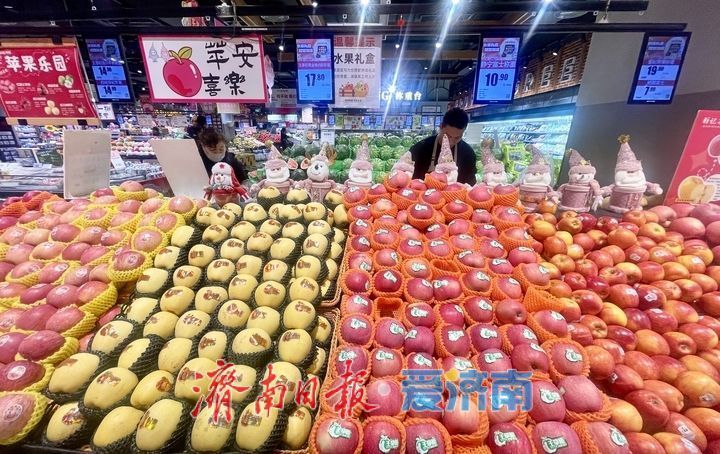
网商银行与支付宝推出助农理财年货节,助销30余县市农产品,推出农户专属理财产品
Sou Hu Cai Jing· 2026-01-27 07:18
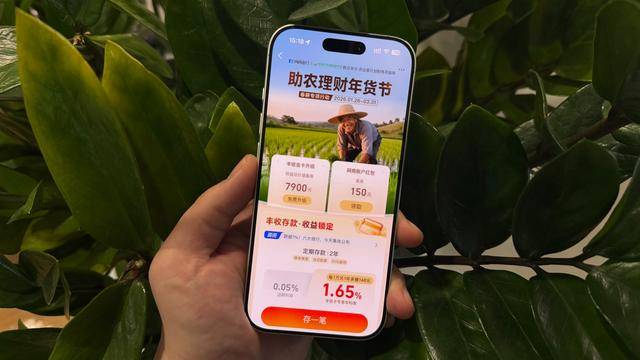
Group 1 - The core initiative is the launch of the "Agricultural Financial New Year Festival" by Wangshang Bank and Alipay, aimed at assisting farmers in selling specialty agricultural products and providing exclusive financial products for farmers [1][3] - The festival features nearly 10,000 high-quality agricultural products from over 30 counties, including geographical indication products like Gan Nan navel oranges and Wuchang rice, accessible through various Alipay platforms [1] - The "Harvest Card" financial service offers farmers exclusive fixed deposit products with an annual interest rate of 1.65% for 2 and 3-year terms, and a flexible wealth management product with an annualized yield of approximately 1.9% [3] Group 2 - The initiative is part of the "Spring Plowing Special Action" guided by the Ministry of Agriculture and Rural Affairs, with plans for more tailored financial products and credit services for farmers in the future [3] - Wangshang Bank aims to develop the first AI agricultural assistant for farmers in collaboration with the Ministry of Agriculture and Rural Affairs Information Center, providing 24/7 online agricultural consulting and services [3]

于烟火中现活力 在开放中向未来
Xin Lang Cai Jing· 2026-01-18 17:24
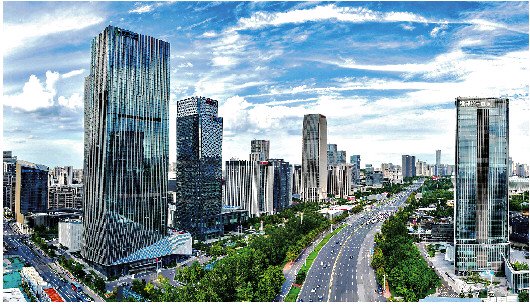
Core Insights - Jinan's consumption market is thriving, with a significant increase in import and export value, reaching 258.1 billion yuan in January-November 2025, a year-on-year growth of 24.9%, leading both the province and other sub-provincial cities [2][10] - The city has implemented a dual approach of "policy + activities" to stimulate consumption, issuing nearly 6 billion yuan in consumer vouchers and subsidies over five years, directly boosting consumption by over 50 billion yuan [3][4] - Jinan's retail sales of consumer goods are expected to exceed 550 billion yuan in 2025, marking a significant increase compared to the end of the 13th Five-Year Plan [4] Consumption Potential - The expansion of the "old for new" subsidy program from 8 to 12 categories has significantly boosted consumer spending [2] - The "泉城购" consumption brand has been innovatively developed, with over 3,000 promotional events held in the past five years [3] - New retail landmarks and commercial complexes have emerged, enhancing the shopping experience and diversifying consumer choices [5] Trade and Logistics - Jinan has built a modern commercial circulation system, establishing 21 county-level logistics distribution centers and 56 township commercial service centers, ensuring comprehensive coverage [6] - The city has been recognized as a national pilot for modern commercial circulation systems and has developed a robust recycling network [6] E-commerce and Exhibition - Jinan has established a thriving e-commerce ecosystem, with approximately 24,000 e-commerce companies and over 250,000 online stores, maintaining double-digit growth in online retail for three consecutive years [8] - The city has hosted over 600 exhibitions in five years, enhancing its reputation as a competitive exhibition city [8] Foreign Trade Growth - Jinan's foreign trade has shown resilience, with a projected total import and export value exceeding 280 billion yuan for the year, doubling from the end of the 13th Five-Year Plan [10] - The city has developed a comprehensive support system for foreign trade, including a directory of quality foreign trade service companies and the establishment of overseas warehouses [9][10] Future Outlook - The Jinan Municipal Bureau of Commerce aims to enhance domestic and international circulation, focusing on consumption, trade innovation, and high-quality development in the upcoming 15th Five-Year Plan [11]
冬闲变“冬忙”,齐鲁田野跃动新生机
Xin Lang Cai Jing· 2025-12-21 10:24
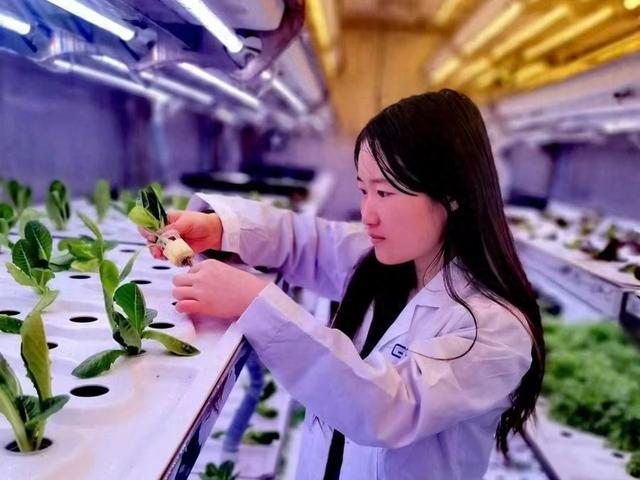
Core Viewpoint - The article highlights the innovative agricultural practices in Shandong Province, particularly focusing on the use of container-based plant factories that significantly enhance vegetable production efficiency and quality [1][3]. Group 1: Container Plant Factory - The container plant factory in Shouguang City utilizes a controlled environment to grow vegetables, achieving a production capacity five times greater than traditional farming methods within a 30-square-meter space [3]. - This system has become a key export product for Shouguang's vegetable technology, reaching countries like the UAE, Canada, and the Netherlands, and is capable of withstanding extreme temperatures [3]. Group 2: Local Agricultural Practices - In Jiaozhou, the local cabbage, known as "Jiaobai," has a stable planting area of 65,000 acres and an annual production exceeding 350,000 tons, supported by a standardized production system involving over 80 certified bases [5]. - The region's unique soil and water conditions contribute to the exceptional taste and quality of Jiaobai, which is characterized by its tight leaves and high moisture content [5]. Group 3: Seasonal Agricultural Activity - Despite winter being traditionally seen as a downtime for agriculture, Shandong's winter production showcases a variety of crops, including scallions, winter jujubes, oysters, and crabs, indicating a shift towards facility-based agriculture and market demand [5].
谁说冬天是淡季?看“鲁大壮”的冬日丰收图鉴!
Xin Hua Wang· 2025-12-21 09:23
Core Viewpoint - The article highlights the resilience and continuous production of agricultural products in Shandong, China, even during the winter season, showcasing the region's ability to supply fresh produce year-round. Group 1: Agricultural Production - Shandong is recognized as a major agricultural province responsible for the national "vegetable basket" supply, maintaining a continuous supply chain throughout the year [1] - The winter season does not hinder the production capabilities of Shandong, as evidenced by thriving greenhouse operations and marine ranches [1] Group 2: Unique Agricultural Products - The article describes various unique products from Shandong, such as oysters with 30% higher amino acid content compared to other regions, highlighting the natural advantages of the local ecosystem [7] - The region's vegetables, including a record-breaking scallion measuring 2.68 meters, demonstrate exceptional growth and flavor characteristics [9][10] - The article emphasizes the quality of local produce, such as the crispness of radishes and the sweetness of winter jujubes, which are attributed to the region's favorable growing conditions [12][20] Group 3: Production Scale and Reach - Shandong produces over 450 million tons of vegetables annually, with a trading volume of approximately 9 million tons, covering over 20 provinces and extending to Southeast Asia, Japan, South Korea, and Russia [22][23]
片区化推进乡村振兴,打造乡村振兴齐鲁样板的创新实践
Feng Huang Wang Cai Jing· 2025-11-20 05:43
Core Viewpoint - The article emphasizes the importance of "regionalization" in promoting rural revitalization in Shandong, aligning local practices with national strategies to create a robust model for rural development [1][3]. Group 1: Regionalization Strategy - Shandong's approach to rural revitalization focuses on "regionalization," which involves grouping villages based on geographical, social, and industrial connections to foster collaborative growth [2][3]. - The provincial government has initiated a series of strategic plans since 2019 to establish demonstration areas for rural revitalization, emphasizing systematic and prioritized development [3][4]. Group 2: Diverse Regional Development - Different regions in Shandong are leveraging their unique advantages: coastal areas like Qingdao and Yantai are developing marine economies, while central regions focus on urban and smart agriculture [5][6]. - The province plans to construct around 300 new regional development areas annually, with 70 designated as provincial-level, ensuring tailored development plans that consider local conditions [7]. Group 3: Tailored Development Approaches - The article highlights the necessity of avoiding a "one-size-fits-all" approach, advocating for precise strategies that cater to the specific needs and resources of each village [8]. - Successful case studies illustrate how localized industries, such as the cultivation of North American holly and garlic, have significantly boosted local economies and employment [9]. Group 4: Ecological and Cultural Integration - The integration of ecological resources into development plans has proven beneficial, with projects like the "Dragon Lake Moonlight" area attracting over 700,000 visitors and generating substantial revenue [10]. - Cultural initiatives, such as sports events and local art, are enhancing community engagement and contributing to the overall soft power of rural areas [12]. Group 5: Organizational Collaboration - The establishment of cooperative organizations among villages is crucial for resource sharing and collective growth, as demonstrated by successful partnerships that have improved local incomes and employment opportunities [13][14]. - Political leadership and effective governance are essential for fostering collaboration and ensuring that rural revitalization efforts are sustainable and impactful [16][17]. Group 6: Resource Activation and Financial Support - The article discusses how regionalization has enabled the activation of dormant resources and the mobilization of financial support, transforming previously underutilized assets into productive capital [19][20]. - The shift from external financial aid to internal resource mobilization marks a significant evolution in the approach to rural revitalization, promoting self-sufficiency and sustainable growth [20].
山东的东西,为什么都长得这么高?
Hu Xiu· 2025-10-09 13:45
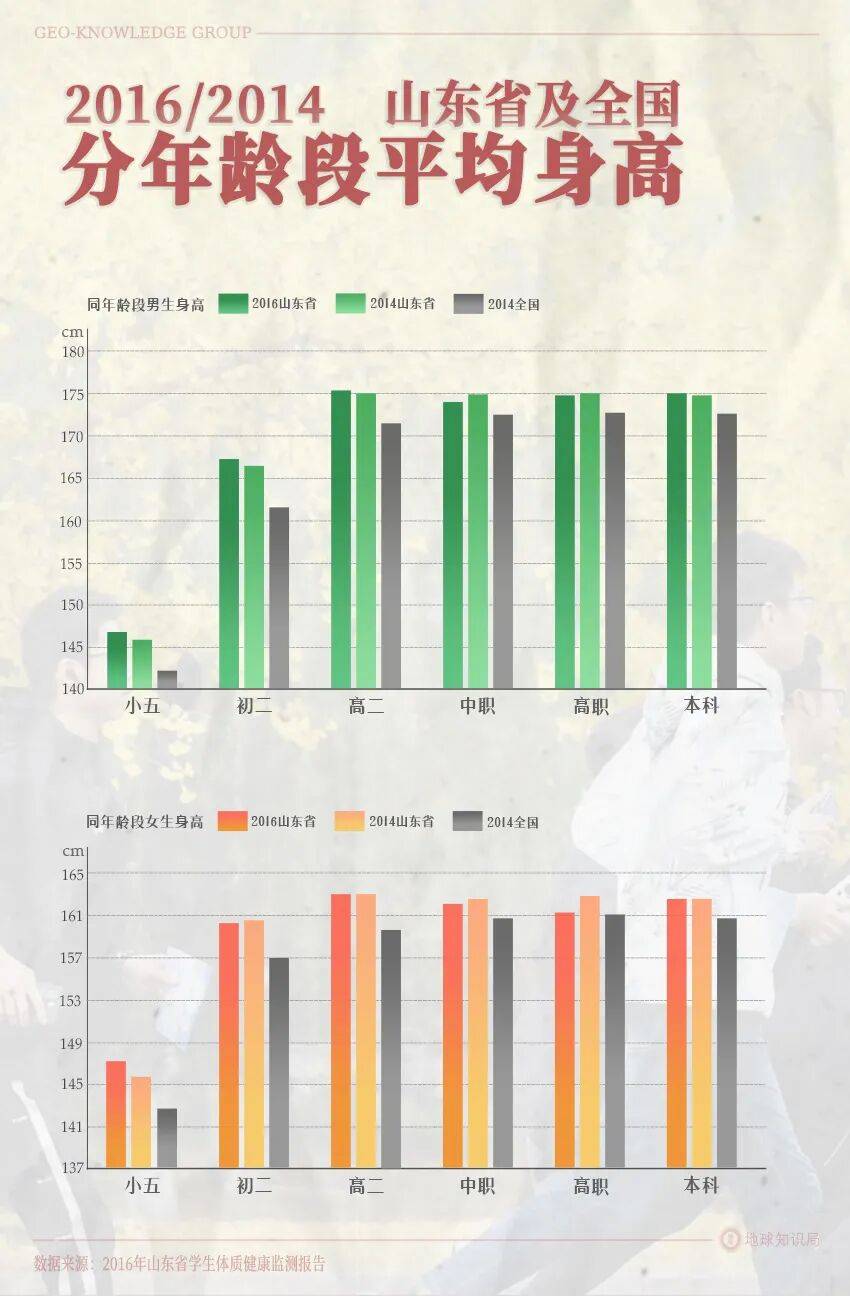
Core Viewpoint - The article discusses the phenomenon of oversized agricultural products in Shandong Province, attributing it to a combination of agricultural technology, geographical advantages, and cultural factors. Group 1: Agricultural Products Size - Shandong's agricultural products, such as the 2.532-meter tall Zhangqiu scallion, are significantly larger than those from other regions, showcasing the province's agricultural prowess [7][9][11] - The average height of male and female college students in Shandong is 175 cm and 162 cm respectively, indicating a trend of larger physical stature in the region [1] - The province's agricultural technology has led to the development of oversized varieties, such as the 3-pound Shan Nong Su pear and giant pumpkins weighing over 500 pounds [9][10][12] Group 2: Agricultural Technology and Research - Shandong has a leading agricultural research system, with a technology contribution rate of 67%, surpassing the national average by nearly 4 percentage points [13][28] - The province actively develops new agricultural varieties, with 70% of fruit and vegetable varieties being self-developed, compared to the national average of 55% [28] - Advanced greenhouse technologies in Shandong allow for significant increases in the size of common vegetables, achieving 30% to 50% larger sizes compared to conventional varieties [33] Group 3: Geographical and Climatic Advantages - Shandong's geographical location and climate, including an average annual rainfall of 859.6 mm, create favorable conditions for both northern and southern crop varieties [21][22] - The province's extensive transportation network, including the largest port cluster in northern China, facilitates rapid distribution of agricultural products across the country and to international markets [25][26] Group 4: Cultural Factors - The preference for large food portions in Shandong reflects local dining culture, where generous servings symbolize hospitality and abundance [39][40] - Traditional agricultural practices in the region emphasize the importance of large quantities of food, which is rooted in historical agricultural society values [42][45] - The cultural inclination towards large food items has implications for modern dietary habits, suggesting a need for a shift towards healthier eating practices [50]
济南今年谋划实施粮食、蔬菜、畜禽等重点产业项目309个
Qi Lu Wan Bao Wang· 2025-07-02 05:31
Group 1 - The Jinan municipal government is actively promoting agricultural and rural consumption through various initiatives, including the "Action to Promote Agricultural and Rural Consumption" [1] - Jinan has planned and implemented 309 key agricultural projects with an annual investment of 13.86 billion yuan, focusing on stabilizing the production of staple food and enhancing supply capacity [1] - In the first quarter, the total output value of agriculture, forestry, animal husbandry, and fishery in Jinan reached 9.13 billion yuan, a year-on-year increase of 4.3% [1] Group 2 - Jinan is enhancing its agricultural brand system, creating a "1+15+N" agricultural brand matrix, and has authorized 140 enterprises and 420 products under the "Spring Water Family" public brand [2] - The city has organized 29 sales matching activities, involving over 530 agricultural operators, to facilitate local consumers' access to quality agricultural products [2] - Jinan is expanding its rural consumption scenarios by developing new rural tourism routes and organizing various cultural and agricultural events [2]
鑫闻界|运满满城市货运数观:济南收发货TOP5品类超级一致
Qi Lu Wan Bao· 2025-06-12 03:07
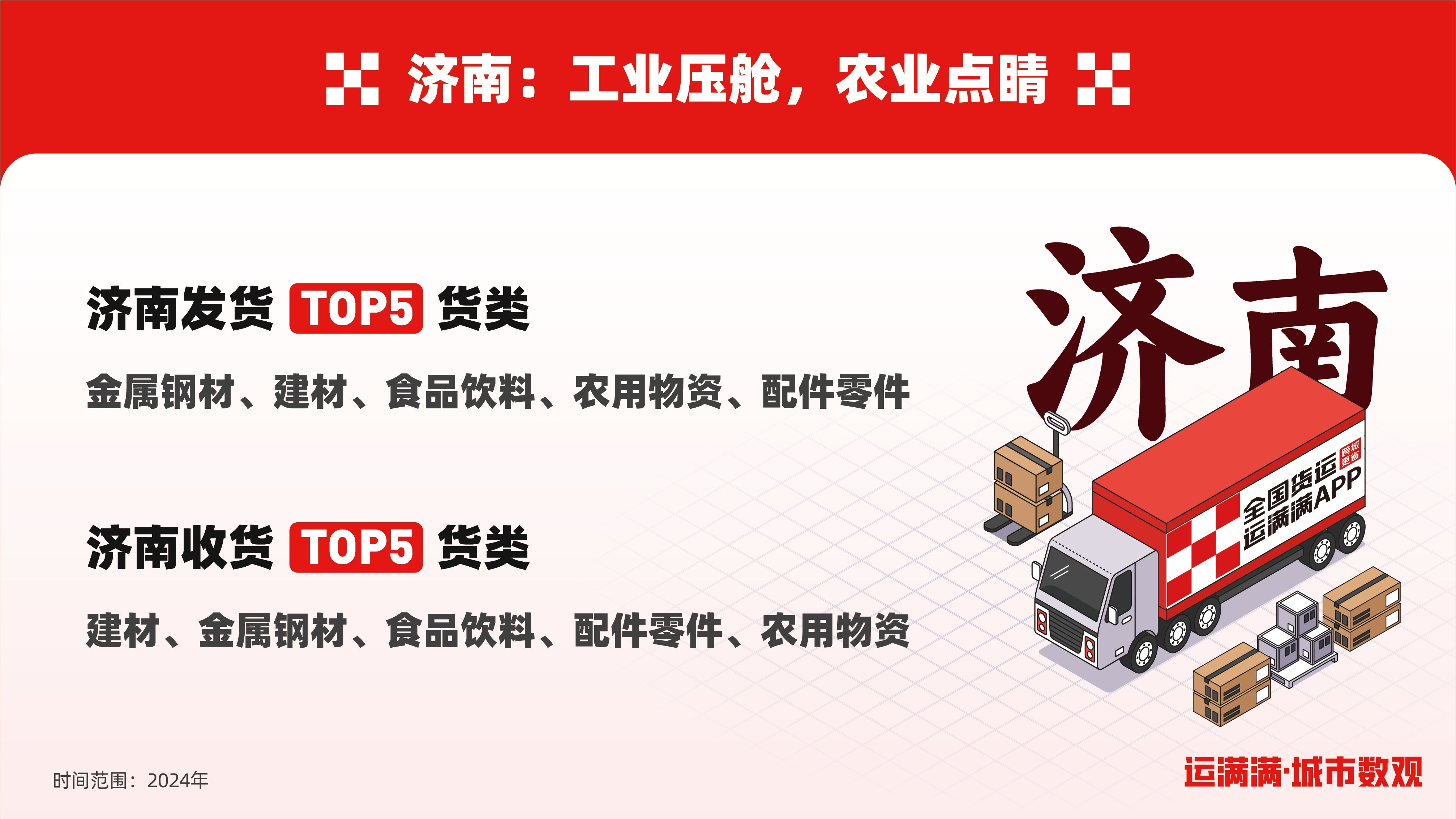
Core Insights - Logistics serves as the lifeblood of economic operations, with the types and quantities of goods transported reflecting the economic vitality and development trends of a region [1] - The "Jinan City Data Overview" released by Yunmanman provides insights into Jinan's economic structure and industrial layout through the analysis of freight data for 2024-2025 [1] Economic Structure - The top five categories of goods shipped and received in Jinan for 2024 are building materials, metal steel, food and beverages, parts and components, and agricultural materials, indicating a strong industrial and agricultural economic foundation [4] - Jinan's robust industrial base is highlighted by the prominence of metal steel and building materials in both shipping and receiving categories, positioning the city as a regional supply chain hub [4] Agricultural and Food Sector - The local water resources, such as the famous spring, support the development of the food and beverage industry, leading to the emergence of local brands like Taohu Spring Beer and Pulis Mineral Water [4] - The significant circulation of agricultural materials not only supports local agricultural development but also reflects Jinan's role as a "vegetable basket" and "granary" for surrounding areas [4] Seasonal Trends - The peak months for shipping from Jinan in 2024 are April, May, and September, with May seeing a rise in express and moving goods likely linked to e-commerce promotions [11] - The highest months for receiving goods are August, September, and October, with building materials consistently ranking first, indicating a busy construction season [11] Specialty Products - Jinan's logistics outline the distribution of local specialties, with the largest shipping city for Zhangqiu scallions being Beijing, showcasing the product's high demand [14] - Other notable products include Ming Shui fragrant rice and Laiwu ginger, both recognized as national geographical indication products, indicating strong regional economic ties [14] Fruit Market Dynamics - Jinan's fruit sales are dominated by local specialties, with high demand for melons, watermelons, cherries, and cherry tomatoes during the peak season in May [16] - The banana supply in May 2023 saw over a 100% increase compared to the previous year, indicating a growing consumer preference for this fruit [18] District Economic Characteristics - Among Jinan's districts, Zhangqiu has the highest shipping volume in 2024, while the urban areas of Licheng, Tianqiao, Huaiyin, Shizhong, and Lixia show a strong presence of express and moving goods, reflecting their e-commerce and consumer industry characteristics [20] - The Steel District, named after its steel industry, ranks metal steel as the top shipping category, highlighting the area's industrial background [20]
清风为伴产业兴丨葱香溢满致富路
Zhong Yang Ji Wei Guo Jia Jian Wei Wang Zhan· 2025-05-24 00:17
Core Viewpoint - The article highlights the importance of the onion industry in Zhangqiu District, Shandong Province, emphasizing its role in rural revitalization and income generation for local farmers [1][2]. Group 1: Industry Overview - Zhangqiu onion has a cultivation history of over 2,600 years, with an area of approximately 110,000 acres and more than 100,000 people involved in the industry [1]. - The onion industry is described as a green industry that significantly contributes to the local economy and serves as a unique identifier for Zhangqiu [1]. Group 2: Policy Implementation and Oversight - The local disciplinary inspection and supervision commission focuses on the implementation of rural revitalization and poverty alleviation policies, ensuring that relevant departments fulfill their responsibilities [1][2]. - A case of subsidy fraud was identified, where a farmer falsely reported the area of onion cultivation, leading to an overpayment of subsidies [2]. - The inspection commission took corrective actions, emphasizing the need for transparency in subsidy distribution and the importance of early detection of issues to ensure that benefits reach the intended recipients [2]. Group 3: Future Actions - The district's disciplinary commission plans to continue supervising the implementation of policies, fund allocation, and the development of characteristic industries to support the healthy growth of the onion industry [2].