
注射用头孢唑肟钠

Search documents
2026年中国仿制药一致性评价行业政策、产业链、发展现状、重点企业及趋势研判:仿制药一致性评价工作逐步推进,过评/视同过评的产品数量达2998个[图]
Chan Ye Xin Xi Wang· 2026-01-30 01:59
Core Insights - The Chinese generic drug industry is undergoing significant changes due to policy factors, including the implementation of the drug marketing authorization holder system and early resolution mechanisms for patent disputes, which are reshaping the competitive landscape [1][11]. Industry Overview - The number of generic drug products that have passed or are deemed to have passed evaluations in China reached 2,998 in 2024, an increase of 1,008 from 2023, representing a year-on-year growth of 50.65% [1][11]. - The proportion of contract manufacturing among these evaluated generic drug products reached 33% in 2024, up from 12% in 2020, indicating a trend towards deeper industry collaboration and resource allocation [1][11]. Generic Drug Consistency Evaluation - The consistency evaluation of generic drugs ensures that they meet the same quality and efficacy standards as original drugs, which is crucial for patient safety and effective treatment [2][3]. - The evaluation process includes determining reference formulations, conducting pharmaceutical research, and ongoing monitoring to ensure compliance with quality and safety standards [2][3]. Industry Policies - Recent policies have been introduced to enhance the quality of generic drugs and promote their market acceptance, including the 2025 guidelines for deepening drug regulation reforms [5][6]. - The establishment of a reference formulation directory is essential for conducting consistency evaluations, with 87 batches published by the National Medical Products Administration by the end of 2024 [9]. Market Dynamics - The market for chemical generic drugs in China is projected to be 868.3 billion yuan in 2024, showing a decline of 3% year-on-year, with the market share of chemical generics in the overall drug market decreasing from 60% in 2018 to 50% in 2024 [7][8]. - The competitive landscape is becoming increasingly polarized, with leading pharmaceutical companies gaining significant market share while smaller firms face challenges due to funding and research limitations [11]. Key Companies - Notable companies in the generic drug consistency evaluation sector include Tigermed Pharmaceutical Technology Co., Ltd., Huahai Pharmaceutical Co., Ltd., and Hengrui Medicine Co., Ltd., among others [1][11]. - Tigermed reported a revenue of 1.71 billion yuan in clinical trial services for the first half of 2025, reflecting a 3.07% increase year-on-year, while Hengrui Medicine achieved a revenue of 13.693 billion yuan, up 12.85% [12][14]. Future Trends - The focus of generic drug evaluations is expected to shift towards high-tech barrier products, such as controlled-release formulations and complex injectables, requiring enhanced reverse engineering and pharmaceutical research capabilities [15][16]. - The production model is transitioning from batch production to continuous manufacturing, which aims to ensure consistent quality and compliance with evaluation standards [15][16]. - Companies are encouraged to adopt a full lifecycle management approach for their products, emphasizing ongoing research and optimization post-evaluation to maintain market leadership [16].


第十二批集采8个品种备战!千亿市场大跌,复方注射剂飙涨219%,这家南京药企起飞
Xin Lang Cai Jing· 2026-01-08 11:37
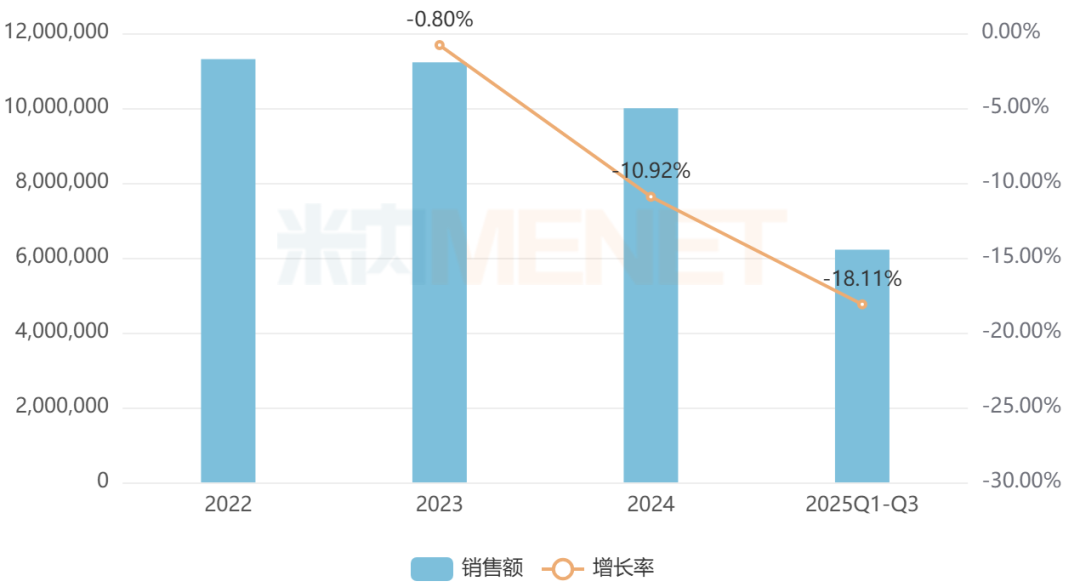
Core Viewpoint - The antibacterial drug market in China is under pressure, with sales expected to drop below 100 billion yuan in 2024 and continue declining by approximately 18% in the first three quarters of 2025, reaching over 60 billion yuan [1][14]. Market Performance - The total sales of systemic antibacterial drugs in public medical institutions in China have been declining, with a significant drop in sales from 2024 to 2025 [1][14]. - The market for systemic antibacterial drugs includes 12 major therapeutic categories, with cephalosporins leading but experiencing four consecutive years of sales decline from 2022 to the first three quarters of 2025 [3][16]. Company Rankings - In the ranking of major companies, Pfizer, China National Pharmaceutical Group, and North China Pharmaceutical Group hold the top three positions, with sales exceeding 6.2 billion yuan, 2.1 billion yuan, and 1.9 billion yuan respectively in the first three quarters of 2025 [5][18]. - Nanjing Youke Biological, ranked fifteenth, showed remarkable growth with a year-on-year increase of 137.17%, marking its first entry into the top 20 groups [5][18]. Product Performance - The top 20 systemic antibacterial drugs accounted for over 50% of the market share, with the leading product, injectable cefoperazone/sulbactam (2:1), achieving sales of over 4.5 billion yuan [21][22]. - Notably, the compound injection of cefoperazone/sulbactam saw a dramatic increase of 219.32%, marking a significant rise in its market presence [21][23]. National Procurement Impact - Among the top 20 products, 15 have been included in the national procurement program, with 13 experiencing double-digit declines in sales [21][23]. - The tenth batch of national procurement saw injectable piperacillin/tazobactam drop by 55.61%, while the eleventh batch saw injectable cefoperazone/sulbactam decline by 47.56% [21][23]. New Drug Development - Currently, there are no domestic class 1 new drugs among the top 20 systemic antibacterial products, although five class 1 new antibacterial drugs have been approved since 2021 [25][26]. - Eight products meet the criteria for national procurement inclusion, with seven being injectable forms and one oral formulation [25][26].


董事长炒自家股票亏损739万被罚150万
Sou Hu Cai Jing· 2025-12-17 00:32
Group 1: Company Performance - Jin Cheng Pharmaceutical reported a significant decline in operating performance, with total revenue of 1.932 billion yuan in the first three quarters of 2025, a year-on-year decrease of 23.19% [6] - The net profit attributable to the parent company was 31.58 million yuan, down 79.1% year-on-year, while the net profit after deducting non-recurring gains and losses was 21.91 million yuan, a decrease of 84.17% [6] - The third quarter performance was particularly poor, with revenue of 572 million yuan, a year-on-year decline of 24.44%, and a net loss of 11.81 million yuan, marking a 157.7% year-on-year decline [7] Group 2: Reasons for Performance Decline - The decline in performance is attributed to two main factors: the impact of centralized procurement on traditional antibiotic business, leading to significant price reductions, and increased production costs due to rising raw material prices and decreased production efficiency [7][9] - The gross margin decreased from approximately 45.96% in the same period of 2024 to 36.23% in the first three quarters of 2025, a significant drop of 9.73 percentage points [10] - The net margin fell from about 5.58% in 2024 to 1.74% in the first three quarters of 2025, a year-on-year decline of 73.02%, indicating ineffective cost control amid declining revenues [10] Group 3: Core Business and Market Challenges - Jin Cheng Pharmaceutical's core business is antibiotic raw materials, which are characterized by low profit margins, necessitating a shift towards high-end transformation for performance improvement [14] - The revenue from the antibiotic business decreased by approximately 30% year-on-year, primarily due to the ongoing tightening of centralized procurement policies, which significantly reduced the prices of core products [16] - The company is also facing increased environmental costs due to stricter regulations in the pharmaceutical industry, further compressing profit margins [18] Group 4: New Business Initiatives - In response to the decline in traditional business, Jin Cheng Pharmaceutical is expanding into the women's health sector, aiming to commercialize overseas innovative drugs in China [19] - The company has achieved a breakthrough with Progestin Cream in the South Korean market, receiving an import license from the Korean Ministry of Food and Drug Safety [19] - A strategic partnership with Theramex was established to commercialize Bbijuva, a hormone replacement therapy capsule, in China, which is the first and only FDA-approved combination therapy of its kind [20] Group 5: Financial Risks - The company faces significant financial risks, including a high accounts receivable ratio of 213.38%, indicating poor collection efficiency [13] - The cash flow from operating activities was 184 million yuan, down 8.57% year-on-year, reflecting tightening cash flow conditions [13] - The ratio of cash and cash equivalents to current liabilities is 98.49%, nearing the 100% warning line, indicating pressure on short-term debt repayment capabilities [22]

亚太药业“易主”最新进展 协议转让已获深交所合规性确认
Quan Jing Wang· 2025-12-08 13:05
Core Viewpoint - Zhejiang Apac Pharmaceutical Co., Ltd. has made significant progress in the transfer of control, with the Shenzhen Stock Exchange confirming the share transfer agreement, indicating a successful transition of control to Xinghao Holdings and its actual controller, Mr. Qiu Zhongxun [1][2] Group 1: Control Transfer Details - The share transfer involves a 14.61% stake at a price of 8.26 yuan per share, totaling 900 million yuan, marking a significant change in the company's control [1] - The new actual controller, Mr. Qiu Zhongxun, has over 20 years of experience in the pharmaceutical industry and is the chairman of Yaodou Technology, a leading digital pharmaceutical platform [2] Group 2: Financial and Strategic Implications - The control transfer includes a plan for a private placement of up to 700 million yuan, aimed at funding new drug research and development projects [2] - The confidence shown by the new controller through the private placement is expected to ensure the long-term stability and sustainable development of the company [2] Group 3: Future Development and Innovation - Apac Pharmaceutical is committed to transforming into an innovative drug company, focusing on a combination of generic and innovative drug development [4] - The company has 114 approved drug formulations, with 19 products having passed consistency evaluations, and is expected to benefit from the national drug centralized procurement [4][5] - The collaboration with Yaodou Technology is anticipated to enhance the commercialization of innovative products, improving the efficiency of research outcomes and providing a competitive edge in the market [5]

中国仿制药行业市场竞争加剧
Di Yi Cai Jing Zi Xun· 2025-11-24 04:15
Core Insights - The article discusses the impact of the "volume-based procurement" policy on the Chinese generic drug industry, highlighting increased competition and challenges such as product homogeneity and cost-cutting in production [2][3][11] Market Overview - The Chinese generic drug market has maintained a scale of approximately 900 billion yuan, with an increase in the number of companies and products intensifying market competition [2] - As of 2024, the number of generic drugs that have passed consistency evaluations or are considered equivalent has increased by over two-thirds compared to three years prior, primarily driven by a few companies and previously approved products [2][7] Regulatory Environment - The Chinese government has emphasized improving the quality of generic drugs as a key reform goal since 2015, with consistency evaluations becoming a prerequisite for participation in centralized procurement [4][5] - Despite the increase in evaluated products, a significant proportion of generic drugs have yet to meet the evaluation standards, indicating a low market concentration [5][7] Product Trends - In 2024, the number of evaluated or equivalent generic drug varieties reached 914, a significant increase from 543 in 2021, with 70% of these concentrated in 33% of companies [7] - The report indicates that the market for biosimilars is also experiencing similar trends, with over 50% of the 87 approved biosimilars being antibody biosimilars [11] Production Dynamics - The report notes a significant increase in the participation of contract manufacturing in centralized procurement, with 31% of selected products in the tenth round being produced by contract manufacturers, up from 3% in the second round [13][15] - The need for effective quality management and regulatory oversight in contract manufacturing has become increasingly critical as the industry faces pressures from policy changes and market competition [15][16]

中国仿制药行业市场竞争加剧
第一财经· 2025-11-24 04:06
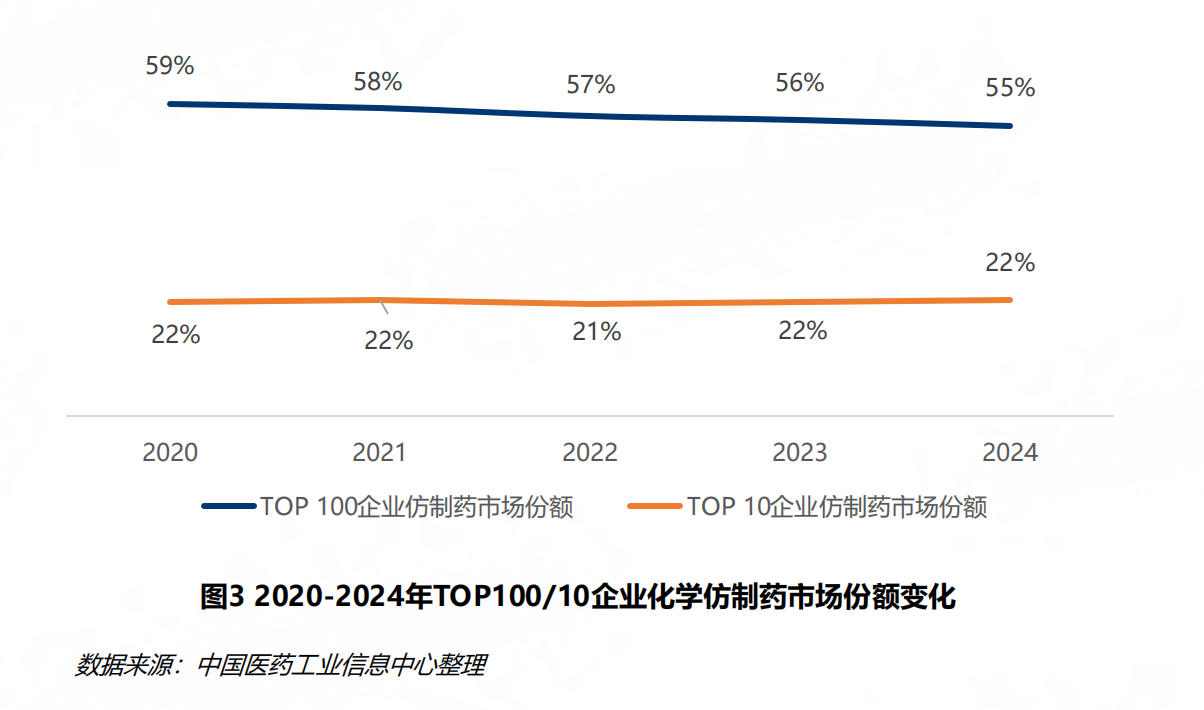
Core Viewpoint - The article discusses the accelerated clinical access and economic substitution of high-quality generic drugs in China due to the "volume-based procurement" policy, alongside the increasing proportion of biological drugs in national negotiations, which facilitates the listing and promotion of biosimilars in hospitals [3][4]. Group 1: Market Overview - The Chinese generic drug market has maintained a scale of approximately 900 billion yuan, with an increase in the number of companies and varieties intensifying market competition [3]. - As of 2024, the number of generic drugs that have passed consistency evaluation or are deemed equivalent has increased by over two-thirds compared to three years ago, primarily driven by a few companies and previously approved varieties [4][9]. - In the chemical generic drug sector, the top 10 companies hold a stable market share of around 22%, indicating a relatively low market concentration [7][9]. Group 2: Drug Evaluation and Approval - The number of approved generic drugs reached 914 in 2024, a significant increase from 543 in 2021, with 70% of these approvals concentrated among 33% of companies [9]. - The phenomenon of "homogenization of varieties" is becoming a defining characteristic of competition in the generic drug market, with a notable increase in the number of similar products [12][13]. Group 3: Biosimilars Market - By 2024, 87 biosimilars have been approved in China, with over 50% being antibody biosimilars, indicating a concentrated market in specific therapeutic areas [13]. - The application for biosimilars has reached a historical high, particularly in the metabolic field, with one drug alone accounting for nearly 40% of applications [13]. Group 4: Contract Manufacturing Trends - The participation of contract manufacturers in national drug procurement has significantly increased, with 31% of selected products in the tenth round of procurement being produced by contract manufacturers, up from 3% in the second round [16][19]. - The article highlights the challenges of ensuring quality control and regulatory compliance in contract manufacturing, especially as the number of B certificate enterprises increases [19][20].
仿制药发展2.0阶段:“过评”数量大增,同质化加剧
Di Yi Cai Jing· 2025-11-23 13:26
Core Insights - The Chinese generic drug market is experiencing intensified competition due to increased homogeneity of products and cost-cutting production strategies driven by the "volume-based procurement" policy [1][2][3] Market Overview - The Chinese generic drug market has maintained a scale of approximately 900 billion yuan, with an increase in the number of companies and products intensifying competition [1] - As of 2024, the number of generic drugs that have passed consistency evaluation or are deemed equivalent has increased by over two-thirds compared to three years ago, primarily driven by a few companies and previously approved products [1][3] Product Evaluation and Approval - By 2024, the number of approved or equivalent generic drug varieties reached 914, a significant increase from 543 in 2021, with 70% of these concentrated in 33% of companies [5][8] - The concentration of approved products remains low, with the top 10 companies holding about 22% of the market share in the chemical generic drug sector [3][5] Biological Similarity Drugs - As of 2024, 87 biological similar drugs have been approved in China, with over 50% being antibody similar drugs [8] - The application for metabolic drugs, particularly semaglutide, has surged, indicating a trend towards increased competition in this segment [8] Regulatory Environment - The National Medical Products Administration (NMPA) has released 93 batches of reference preparation directories since 2017, covering 2,787 varieties, but the coverage of domestic innovative drugs remains low [9] - The NMPA is implementing a dynamic adjustment mechanism for the reference preparation directory to better meet public medication needs [9] Contract Manufacturing Trends - The participation of contract manufacturers in national drug procurement has significantly increased, with 31% of selected products in the tenth batch being produced by contract enterprises, up from 3% in the second batch [10][13] - The regulatory focus is shifting towards ensuring quality in contract manufacturing, with increased scrutiny on compliance and quality management systems [13][14]
亚太药业:关注创新药业务下的新兴产业发展机遇
Quan Jing Wang· 2025-11-12 06:44
Core Viewpoint - Zhejiang Yatai Pharmaceutical Co., Ltd. is undergoing a strategic transformation from generic drugs to innovative drug development, supported by new leadership and funding for research projects [1][2][4]. Group 1: Company Overview - Yatai Pharmaceutical is a well-established pharmaceutical company in China with a complete pharmaceutical business chain, offering a wide range of products including anti-infectives, antiviral, digestive system, and cardiovascular drugs [1]. - As of September 2025, the company holds 114 approved drug formulations, with 19 products passing consistency evaluations and 3 products entering national centralized procurement [1]. Group 2: Financial Performance - In the first three quarters, Yatai Pharmaceutical achieved revenue of approximately 228 million yuan and a net profit of about 97.2 million yuan, marking a significant year-on-year increase of 2,909.49% [1]. Group 3: Strategic Changes - The company plans to change its actual controller to Mr. Qiu Zhongxun, the chairman and founder of Yaodou Technology, and will raise 700 million yuan through a private placement to fund new drug research projects [1][3]. - This transition signifies a shift towards innovative drug development, moving away from a focus on generic drugs [2][6]. Group 4: Innovation and R&D Focus - Yatai Pharmaceutical's innovation strategy includes developing oncolytic virus drug platforms and long-acting complex formulations, targeting a market expected to reach 160 billion yuan by 2025 in China and the U.S. [2]. - The company adopts a balanced approach to R&D, focusing on specific disease areas while ensuring sustainable new drug development and efficient use of funds [2]. Group 5: Market and Policy Environment - The new leadership and strategic focus align with favorable national policies promoting biomanufacturing and innovative drug development as key economic growth areas [4][5]. - The recent launch of the national drug research major project is expected to enhance the drug innovation ecosystem in China, benefiting companies like Yatai Pharmaceutical [5]. Group 6: Market Performance - Yatai Pharmaceutical's stock has seen a significant increase, with a year-to-date rise of over 178%, reflecting investor confidence in the company's innovative transformation [3][6]. - Analysts predict that the successful implementation of the new funding projects will lead to a revaluation of the company, transitioning it from a traditional generic drug firm to an innovative drug platform company [6].
老树新枝:亚太药业如何用“产业+创新”双引擎叩响创新药未来
Quan Jing Wang· 2025-11-07 10:23
Core Viewpoint - After resuming trading on October 14, Asia-Pacific Pharmaceutical (002370.SZ) experienced a significant stock price increase of 52.38% by November 6, driven primarily by the change in its controlling shareholder to Qiu Zhongxun, chairman of the pharmaceutical internet platform Yaodou Technology, which opens new growth opportunities for the company [1] Group 1: Traditional Business and Cash Flow - Asia-Pacific Pharmaceutical's injection of cefazolin sodium is expected to generate sales revenue of 13.6965 million yuan in 2024, accounting for 3.38% of the company's total revenue [2] - The collaboration with Yaodou Technology is anticipated to enhance sales channels and market penetration, thereby increasing market share and brand influence [2] - The company holds 114 approved drug formulations, providing a solid foundation for maintaining traditional business stability while transitioning to innovation-driven operations [2] Group 2: Innovation Drug Transformation - The company plans to raise 700 million yuan through a private placement, which will be fully allocated to new drug research and development, focusing on oncolytic virus drug platforms and long-acting complex formulations [4] - A project research committee has been established to monitor cutting-edge medical technology trends and clinical value, enhancing the company's R&D capabilities and core competitiveness [4] - The new controlling shareholder has signed a research cooperation intention letter with relevant CRO companies, aiming to integrate industrial capabilities and research resources to promote the commercialization of innovative drugs [4] Group 3: Industry Environment and Future Outlook - The national "14th Five-Year Plan" suggests promoting innovative drug industries as a core component of future economic growth, benefiting from substantial capital support [5] - From 2015 to 2024, the cumulative financing scale in China's innovative drug sector has exceeded 1.23 trillion yuan, injecting strong capital support for growth [6] - The Chinese pharmaceutical market is undergoing a historic shift from generics to innovation, with Asia-Pacific Pharmaceutical leveraging a dual strategy of "capital and innovation" to navigate this transition [6]
鲁抗医药:部分药品中选本次集中采购
Mei Ri Jing Ji Xin Wen· 2025-11-07 09:01
Group 1 - The core point of the article is that Shandong Lukang Pharmaceutical Co., Ltd. has been selected for the national centralized drug procurement, which includes products like injectable cefoperazone sodium [1] - For the year 2024, the revenue composition of Lukang Pharmaceutical is as follows: human antibiotics account for 54.29%, veterinary antibiotics account for 39.72%, other products account for 4.89%, and other businesses account for 1.1% [1] - As of the report date, the market capitalization of Lukang Pharmaceutical is 9.3 billion yuan [1]
