
达格列净片

Search documents
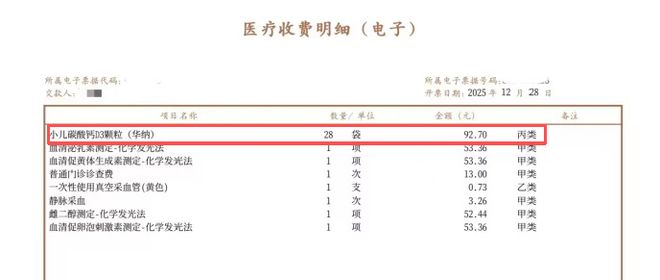
医院卖34.93元药店19元 同款药为何不同价?
2 1 Shi Ji Jing Ji Bao Dao· 2026-01-16 00:22
Core Viewpoint - The significant price discrepancies between hospital and retail pharmacy prices for the same medication raise concerns about the effectiveness of centralized procurement policies and the trust in public healthcare systems [2][3]. Price Discrepancies - A specific example highlights that the price of pediatric calcium carbonate D3 granules is 34.93 yuan in a hospital, while the same product is priced at approximately 19 yuan in pharmacies and e-commerce platforms, resulting in a price difference of 15.93 yuan [2]. - The price of the same medication can vary significantly across different sales channels, with instances of hospital prices being higher than retail prices and vice versa [3]. Centralized Procurement Issues - The pediatric calcium carbonate D3 granules were included in centralized procurement in 2022, with a winning bid price of 3.795 yuan per bag, which was further reduced to 2.495 yuan per bag in subsequent procurement rounds [3][4]. - Despite the centralized procurement prices, hospitals are reportedly selling the medication at prices that exceed these rates, indicating a disconnect between procurement prices and actual supply costs [4][6]. Factors Contributing to Price Differences - The pricing discrepancies are attributed to several factors, including the dynamic nature of market conditions, hidden service costs in hospitals, and the competitive pricing strategies of retail pharmacies and e-commerce platforms [6][7]. - Regulatory gaps and insufficient monitoring of real-time prices across different sales channels contribute to the lack of price uniformity [8]. Regulatory Responses - The National Medical Insurance Administration has initiated measures to address price discrepancies, including monitoring and comparing prices across various platforms to ensure compliance with procurement guidelines [10][11]. - Local governments are also implementing stricter regulations to align hospital prices with those of retail pharmacies and e-commerce platforms, emphasizing the need for transparency and fairness in drug pricing [11][12]. Future Directions - Experts suggest that a more transparent pricing mechanism is necessary, potentially resembling e-commerce platforms, to allow for direct price comparisons and foster competition among pharmaceutical companies [12].


价差80%!电商平台卖19元,医院卖34.93元,又一乱象曝光
2 1 Shi Ji Jing Ji Bao Dao· 2026-01-15 15:01
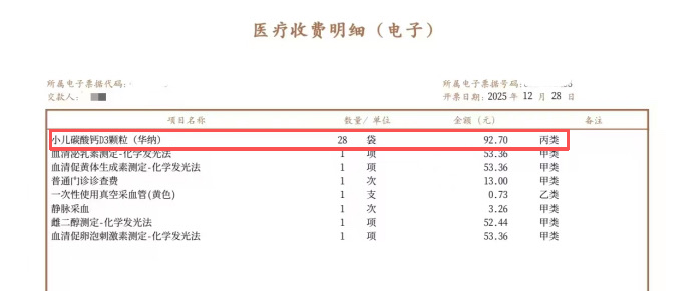
Core Viewpoint - The significant price discrepancies between hospital and retail/e-commerce prices for pediatric calcium D3 granules raise concerns about the effectiveness of centralized procurement policies and public trust in healthcare pricing [1][3][7]. Group 1: Price Discrepancies - Pediatric calcium D3 granules from Hunan Warner Pharmaceutical are priced at 34.93 yuan in a pediatric hospital, while the same product is available for approximately 19 yuan in pharmacies and e-commerce platforms, indicating a price difference of over 80% [1]. - A similar case was reported where a consumer found a vitamin D product priced at 47.4 yuan in a hospital, while the same product was 63 yuan in a retail pharmacy and only 29.8 yuan online [2]. - The price of pediatric calcium D3 granules in hospitals is reportedly higher than the centralized procurement price of 2.495 yuan per bag, which raises questions about the adherence to procurement policies [3][4]. Group 2: Causes of Price Differences - The price discrepancies are attributed to several factors, including the dynamic nature of market conditions, raw material costs, and the potential disconnect between procurement prices and actual supply costs [7][10]. - Public hospitals are expected to follow a zero-markup policy, but actual selling prices may reflect higher supply costs, leading to price deviations from the centralized procurement prices [7][10]. - The lack of timely updates to the listed prices on procurement platforms compared to the competitive pricing in retail and e-commerce markets contributes to these discrepancies [10][11]. Group 3: Regulatory Responses - The National Medical Insurance Administration has initiated actions to compare prices across different sales channels and address any significant discrepancies [14]. - Local governments, such as in Guangdong and Anhui, have implemented rules to ensure that listed prices align with local retail prices and to prompt adjustments when prices exceed a certain threshold [15][16]. - Experts suggest establishing a transparent pricing mechanism that allows for real-time price comparisons across channels to enhance market competition and reduce reliance on administrative controls [17].
价差80%!电商平台卖19元,医院卖34.93元,又一乱象曝光
21世纪经济报道· 2026-01-15 14:56
Core Viewpoint - The article highlights significant price discrepancies between hospital and retail prices for pediatric calcium D3 granules, raising concerns about the effectiveness of centralized procurement policies and the trust in public healthcare systems [1][2][3]. Price Discrepancies - A notable price difference of 80% was reported for pediatric calcium D3 granules, with hospital prices reaching 34.93 yuan compared to 19 yuan in pharmacies and e-commerce platforms [1]. - Similar instances of price variation exist, such as a consumer purchasing a vitamin D product for 47.4 yuan in a hospital, while the same product was priced at 63 yuan in a retail pharmacy and only 29.8 yuan online [2]. Centralized Procurement Issues - Pediatric calcium D3 granules were included in centralized procurement in 2022, with the winning bid price set at 3.795 yuan per bag, which was later reduced to 2.495 yuan per bag in 2025 [3]. - Despite the procurement price, the hospital price for the same product was found to be 3.31 yuan per bag, indicating a discrepancy between procurement prices and actual hospital pricing [3]. Factors Contributing to Price Differences - Experts suggest that the price differences stem from various factors, including the dynamic nature of market conditions, raw material costs, and the potential disconnect between procurement prices and actual supply costs [6]. - Public hospitals are expected to adhere to a zero-markup policy, but the actual supply prices may lead to higher hospital prices if they exceed the procurement prices [6]. Regulatory Responses - The National Medical Insurance Administration has initiated measures to address price discrepancies, including monitoring and adjusting prices to align with market conditions [15][16]. - Local governments have also implemented regulations to ensure that procurement prices remain comparable to retail prices, with specific thresholds for price adjustments [16]. Future Directions - Experts advocate for a transparent pricing mechanism that allows for real-time price comparisons across different sales channels, aiming to reduce reliance on administrative controls and enhance market competition [18].

九典制药(300705) - 300705九典制药投资者关系管理信息20260113
2026-01-13 12:48
Group 1: Company Strategy and Market Focus - In 2026, the company will focus on stabilizing its existing business and driving innovation through a dual approach, emphasizing both hospital and external markets [2][3] - Key products in the external market include Loxoprofen Sodium Gel Patch, Ketoprofen Gel Patch, and other newly acquired exclusive varieties [4] - The company aims to enhance brand recognition and terminal coverage through the new "JiuDian Pain Relief" brand image [2] Group 2: Innovation and Product Development - The company will continue to adopt a strategy of "independent research and project introduction" for innovative drugs, actively seeking competitive projects [5] - Plans to enrich the product pipeline through collaborative research and development, as well as industry-academia transformation [5] Group 3: Financial Outlook and Shareholder Returns - The company will develop a scientific and sustainable shareholder return plan over the next 2-3 years based on operational performance and market conditions [8] - There is a potential for further acquisitions to enhance the product line and business layout as needed [8] Group 4: Market Challenges and Pricing Impact - The implementation of centralized procurement for Loxoprofen Sodium Gel Patch may lead to a temporary decrease in gross margin due to price adjustments [7] - The company will maintain a stable overseas business primarily focused on the export of raw materials and pharmaceutical excipients [6]
财信证券晨会纪要-20260108
Caixin Securities· 2026-01-07 23:30
Market Strategy - The market is experiencing fluctuations, with the Shanghai Composite Index slightly rising, achieving a fourteen-day consecutive increase [7] - The overall A-share market saw a 0.19% increase, closing at 6654.1 points, while the Shanghai Composite Index rose by 0.05% to 4085.77 points [7] - The hard technology sector is performing well, with the Sci-Tech 50 Index increasing by 0.99% [7] Industry Dynamics - In 2025, the number of new A-share accounts reached 27.44 million, a 10% increase compared to 2024 [27] - The market for on-site food production in supermarkets in China has surpassed 100 billion yuan, with major supermarket chains achieving a sales share of 10%-20% [29] - A subsidiary of China Communications Construction Company, along with CRRC and MTR, secured over 7 billion Australian dollars in contracts for the Sydney Metro project [31][33] Company Tracking - GF Securities plans to raise capital for its overseas subsidiary through a combination of private placement and convertible bonds, aiming to raise approximately 6.11 billion Hong Kong dollars [34] - Xianle Health obtained 9 invention patents and 2 health food registration certificates in Q4 2025, enhancing its product pipeline [36] - Qianjin Pharmaceutical received drug registration certificates for several products, which will contribute to the company's sustainable development [38]


去年我国药品抽检合格率超99%;百花医药终止筹划控制权变更
2 1 Shi Ji Jing Ji Bao Dao· 2026-01-07 00:05
Policy Developments - The National Medical Products Administration (NMPA) aims for a drug inspection pass rate of over 99% by 2025, with 19,700 batches to be inspected, ensuring overall drug safety stability in the country [1] Drug and Device Approvals - Qianjin Pharmaceutical announced that it and its subsidiary received drug registration certificates for Dydrogesterone tablets, Baricitinib tablets (4mg, 2mg), and Dapagliflozin tablets (5mg, 10mg), enhancing its product pipeline for sustainable development [2] - Haizhi Pharmaceutical's subsidiary received acceptance for the listing application of HSK39297 tablets, intended for treating adults with paroxysmal nocturnal hemoglobinuria (PNH) who have not previously received complement inhibitors [3] - Xuantai Pharmaceutical obtained a drug registration certificate for injectable Isavuconazole, which is used to treat invasive aspergillosis and mucormycosis in adults [4] Capital Market Insights - Xiangyu Medical reported that as of the end of 2025, its brain-computer interface products have not achieved large-scale sales, with revenue contribution remaining minimal due to delays in bidding and sales processes [5] - Sanbo Brain Science clarified that it does not engage in the research, production, or sales of brain-computer interface products, and the revenue from neuro-regulation technology is negligible [6] - Weisi Medical stated that its new products in the brain-computer interface field are still in the early market cultivation stage, with limited revenue contribution [7] - Qiangna Technology, a "unicorn" in the brain-computer interface sector, completed approximately 2 billion RMB in financing, marking the second-largest financing in the field after Neuralink [8] - Baihua Pharmaceutical announced the termination of its control change plan due to a lack of consensus with the controlling shareholder, with stock resuming trading on January 7, 2026 [9] Industry Developments - Puluo Pharmaceutical signed a strategic cooperation framework agreement with Xi'an Xintong Pharmaceutical Research Co., Ltd. to collaborate on innovative drug research and outsourced production projects [10] - Yong'an Pharmaceutical plans to absorb and merge its wholly-owned subsidiary Hubei Ling'an Technology Co., Ltd., with recent financial data showing total assets of 180 million RMB and a net profit of -1.12 million RMB for the subsidiary [11] - Baiyang Pharmaceutical established a collaborative innovation laboratory with Capital Medical University Xuanwu Hospital to focus on cutting-edge medical research in neuroscience and thoracic surgery [12] - Insilico Medicine announced an $888 million collaboration with Servier for the development of anti-tumor drugs, with potential upfront payments and milestone payments involved [13] Public Sentiment Alerts - WuXi AppTec disclosed that shareholders controlled by the actual controller have cumulatively reduced their holdings by 59.6751 million shares, accounting for 2% of the total share capital, with the reduction completed on January 5, 2026 [14]

千金药业:“地屈孕酮片”等产品取得注册证
Mei Ri Jing Ji Xin Wen· 2026-01-06 09:36
Group 1 - The core point of the article is that Qianjin Pharmaceutical has received drug registration certificates for three products from the National Medical Products Administration, indicating a significant regulatory approval milestone for the company [1] Group 2 - Qianjin Pharmaceutical and its subsidiary, Hunan Qianjin Xiangjiang Pharmaceutical, received approval for Dydrogesterone tablets, Baricitinib tablets, and Dapagliflozin tablets [1] - The approval of these drugs may enhance the company's product portfolio and market competitiveness in the pharmaceutical industry [1]
千金药业(600479.SH)及子公司获得药品注册证书
Ge Long Hui A P P· 2026-01-06 09:32
Core Viewpoint - Qianjin Pharmaceutical (600479.SH) and its subsidiary Hunan Qianjin Xiangjiang Pharmaceutical Co., Ltd. have received drug registration certificates from the National Medical Products Administration for Dydrogesterone tablets, Baricitinib tablets (4mg, 2mg), and Dapagliflozin tablets (5mg, 10mg) [1] Group 1: Drug Approvals - The company has obtained approval for Dydrogesterone, a synthetic progestogen used for treating diseases caused by endogenous progesterone deficiency and for luteal support in assisted reproductive technology [1] - Baricitinib is a Janus kinase (JAK) inhibitor that blocks the activity of one or more members of the JAK kinase family, thereby inhibiting pathways that activate inflammation, developed in collaboration with Eli Lilly and Incyte [1] - Dapagliflozin is indicated for the treatment of type 2 diabetes [1]
千金药业:三款产品获得药品注册证书
Zheng Quan Shi Bao Wang· 2026-01-06 09:26
Core Viewpoint - Qianjin Pharmaceutical (600479) has received approval from the National Medical Products Administration for the registration of three new drugs, indicating a significant advancement in its product portfolio and potential market opportunities [1] Group 1: Drug Approvals - Qianjin Pharmaceutical and its subsidiary, Hunan Qianjin Xiangjiang Pharmaceutical Co., Ltd., have received drug registration certificates for Dydrogesterone tablets, Baricitinib tablets (4mg, 2mg), and Dapagliflozin tablets (5mg, 10mg) [1] - Dydrogesterone tablets are indicated for the treatment of diseases caused by endogenous progesterone deficiency and for luteal support in assisted reproductive technology [1] - Baricitinib tablets are a Janus kinase (JAK) inhibitor that can block the activity of one or more members of the JAK kinase family, thereby inhibiting pathways that activate inflammation [1] - Dapagliflozin tablets are used for the treatment of type 2 diabetes [1]
千金药业:公司及子公司获得药品注册证书
Xin Lang Cai Jing· 2026-01-06 09:20
Core Viewpoint - Qianjin Pharmaceutical (600479.SH) has received approval from the National Medical Products Administration for the registration of Dydrogesterone tablets, Baricitinib tablets (4mg, 2mg), and Dapagliflozin tablets (5mg, 10mg), which will enhance the company's product pipeline and support sustainable development [1] Group 1 - The approval of these drugs will enrich the company's product offerings [1] - The new products are expected to contribute positively to the company's growth and sustainability [1] - There are uncertainties related to drug production and sales due to policy and market environment factors [1]