
泰坦合金

Search documents
人工智能辅助设计新材料效率倍增
Sou Hu Cai Jing· 2025-12-16 04:19
Core Insights - The integration of artificial intelligence (AI) into materials science is revolutionizing the development of new materials, significantly enhancing design efficiency and reducing the time required for research and development [2][4]. Group 1: Traditional vs. AI-Enhanced Material Development - Traditional material development is a lengthy and uncertain process, often taking years or even decades to create a new material due to extensive trial and error [2]. - AI accelerates this process by analyzing vast amounts of material data, establishing complex relationships between material structures and properties, and making precise predictions [4]. Group 2: Case Studies of AI in Material Science - Researchers at the University of Liverpool used AI to autonomously design chemical reaction pathways, completing 688 experiments in 8 days, a task that would take months if done manually [4]. - A professor from Osaka University utilized a database of 1,200 photovoltaic materials to identify valuable compound structures in just 1 minute, compared to the traditional 5-6 years [4]. Group 3: Domestic Innovations in AI and New Materials - The Shanghai Institute of Ceramics, Chinese Academy of Sciences, developed a materials intelligence creation system that achieved a 99.6% efficiency increase, finding optimal material compositions in just 40 automated experiments [5]. - Deep Force Technology in Beijing reduced the R&D cycle for electrolyte products used in new energy batteries from 18 months to approximately 12 months, achieving a one-third acceleration [5]. - Xiaomi's team employed an AI simulation system to quickly identify optimal alloy compositions for their "Titanium Alloy" material, enhancing vehicle structure stability and reducing weight [5]. Group 4: Future Implications - The use of AI in material design not only shortens development cycles and reduces costs but also opens up new possibilities for exploring unknown chemical spaces, driving breakthrough innovations in materials science [5].


硬核创新集群崛起 锚定北京科创风向标
Bei Jing Qing Nian Bao· 2025-05-11 17:23
Group 1: AI and Intelligent Robotics - The integration of AI large models and embodied intelligence is emerging as a focal point for Beijing's technological innovation, with advancements in L3 assisted driving and humanoid robots beginning to take shape in the Beijing-Tianjin-Hebei region [2] - Embodied intelligence is recognized as a significant pathway to achieving general artificial intelligence, becoming a new competitive landscape and economic growth engine, with a focus on multi-modal perception technology and key components by 2027 [3][4] - The goal is to cultivate a hundred key technologies and produce at least ten world-leading hardware and software products by the end of 2027 [3] Group 2: New Materials and AI Integration - The demonstration of new materials, such as HVIP aerogel, showcases significant improvements in thermal insulation performance, achieving an 8-fold enhancement over traditional materials [5] - AI is transforming the research and development processes in materials science, with Beijing leveraging its advantages in talent and infrastructure to foster innovation in this field [5] - By 2027, Beijing aims to significantly enhance its capabilities in "AI + new materials" innovation, establishing itself as a global leader in this sector [5] Group 3: Healthcare and Medical Technology - The medical technology sector is highlighted by innovations such as the ROPA surgical robot, which utilizes AI for precision in orthopedic surgeries, addressing the imbalance in healthcare supply and demand [6][7] - Beijing's healthcare industry is projected to reach a scale of 1.06 trillion yuan in 2024, marking an 8.7% year-on-year growth, making it the first city in China to surpass the trillion yuan mark in this sector [7] - The city has implemented various policies to enhance its pharmaceutical and medical device industries, aiming to build an international medical innovation park by 2030 [7] Group 4: New Energy Vehicles - The new energy vehicle sector is a major highlight, with significant advancements in electric vehicle technology and production capabilities, including the launch of the "Extreme Fox Alpha S5" electric sedan [8][9] - Beijing has established three major research and production bases for new energy vehicles, with a target production exceeding 300,000 units by 2025 [9] - The city is recognized for its strong technological innovation capabilities in the new energy vehicle sector, supported by a robust talent pool and modern service industries [8] Group 5: Green Energy Development - Hydrogen energy is a key focus, with innovations in hydrogen storage and integrated energy systems that enhance the efficiency of renewable energy utilization [10][11] - Beijing aims to become an international benchmark city for green economy by 2035, with initiatives to develop a new power system and promote low-carbon industries [11] - The city has introduced various pioneering projects and standards in the green energy sector, positioning itself as a leader in sustainable development [11]
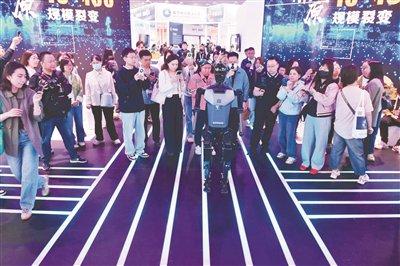
聚焦前沿科技 共探未来发展——记2025中关村论坛年会
Zhong Guo Qi Che Bao Wang· 2025-04-03 01:08
Group 1: Technological Innovation and Development - The 2025 Zhongguancun Forum highlights China's commitment to innovation-driven development, with R&D expenditure reaching 3.6 trillion yuan in 2024 and an R&D intensity of 2.68% [1] - China has established technology cooperation with over 160 countries and regions, signing 118 intergovernmental agreements, positioning Beijing as a strategic hub for technological innovation [2] - The forum showcased humanoid robots as a key focus, with applications in the automotive sector, emphasizing the importance of reducing data costs for large-scale industrialization [3][4] Group 2: Advancements in Electric Vehicles - The forum announced significant technological achievements, including the "AI + New Materials" initiative, with Xiaomi's automotive project utilizing advanced materials for enhanced vehicle performance [5] - Li Auto introduced its self-developed operating system, Li Xiang Star Ring OS, aimed at reducing BOM costs by billions annually, marking a significant step in automotive intelligence [6] - Beijing's efforts in promoting technology transfer have led to a thriving ecosystem with nearly 30,000 national high-tech enterprises and significant growth in strategic emerging industries like AI and electric vehicles [7] Group 3: Showcase of Smart New Energy Vehicles - The forum featured a dedicated exhibition area for smart connected new energy vehicles, with Xiaomi showcasing its SU7 models and various in-car products [8] - Innovative technologies such as the rubber-wheeled guided transit vehicle were highlighted, demonstrating advancements in public transport automation and energy efficiency [8][9] - The event underscored the automotive sector's role as a representative of new productive forces, showcasing China's rapid development in this field [9]


北京再放大招!2025中关村论坛释放哪些信号?
Zhong Guo Qi Che Bao Wang· 2025-03-28 01:40
Group 1 - The 2025 Zhongguancun Forum in Beijing gathered global tech elites and innovators to discuss cutting-edge technology and promote new productivity development [2] - China is implementing an innovation-driven development strategy, with R&D expenditure reaching 3.6 trillion yuan in 2024 and an R&D intensity of 2.68% [3] - Beijing is enhancing its role as a strategic hub for technology innovation, with over 160 international tech cooperation agreements signed [3] Group 2 - Beijing has established 20 large scientific facilities and maintains an R&D intensity of over 6%, leading the nation in technology progress awards [4] - The city is developing a world-leading tech park in Zhongguancun and has set up a 100 billion yuan industrial guidance fund [6] - Beijing's technology contract transaction volume exceeded 900 billion yuan last year, forming three trillion-level industrial clusters [6] Group 3 - The forum highlighted significant technological advancements, including the "AI + new materials" application in Xiaomi's automotive sector [8] - Li Xiang, CEO of Ideal Auto, announced the open-sourcing of their in-house operating system, significantly reducing chip adaptation verification time [8] - Human-shaped robots are being developed for various applications, showcasing their potential in improving productivity and reducing labor costs [9] Group 4 - Quantum computing is emerging as a research hotspot, with applications in cryptography, materials science, and drug development [9] - Challenges in quantum computing include qubit stability and programming complexity, with global research teams exploring new solutions [9]

北京引领“AI+新材料”风口
Zhong Guo Jing Ji Wang· 2025-03-20 01:22
Core Insights - Artificial intelligence is revolutionizing traditional industries, particularly in the field of new materials, with Beijing leading the way by hosting nearly one-third of the country's "AI + new materials" innovative enterprises [1][11]. Group 1: AI's Impact on Material Science - AI is redefining the research paradigm in material science, significantly enhancing research efficiency [2][3]. - Traditional material research, which often takes 20 to 30 years from discovery to application, is now being accelerated through AI technologies [1][4]. - For instance, a company was able to reduce the research and development cycle for a new electrolyte for electric vehicle batteries from 18 months to approximately 12 months, achieving a one-third reduction in time [3][4]. Group 2: Innovations in Smart Laboratories - Smart laboratories are transforming traditional research environments by automating processes such as material mixing, reaction monitoring, and data analysis, allowing for continuous operation without human intervention [4][5]. - These smart labs can conduct hundreds of automated experiments daily, significantly increasing research output compared to traditional methods [5][6]. - Tasks that previously took 10 to 20 days can now be completed in just 1 to 2 days due to automation and AI integration [6]. Group 3: Successful Applications and Developments - The integration of AI in new materials has led to notable achievements, such as Xiaomi's use of "Titanium Alloy" in their vehicles, which improved structural stability and reduced weight [7][8]. - Other significant developments include the creation of the world's strongest hydrogen-resistant thick plate material by China Steel Research and the design of a new generation of OLED materials without precious metals by the Beijing Academy of Science [8][9]. Group 4: Future Prospects and Strategic Plans - Beijing's strategic plan aims to enhance its "AI + new materials" innovation capabilities by 2027, targeting the development of 15 benchmark new materials products empowered by AI [11]. - The city is positioned as a hub for "AI for Science," leveraging its talent pool, application scenarios, and innovative ecosystem to drive advancements in material science [10][11].