
活水洗地机器人

Search documents
自断主营业务、营收砍半,一家老牌OEM扫地机器人公司的转型豪赌|Insight全球
36氪· 2026-02-04 09:39
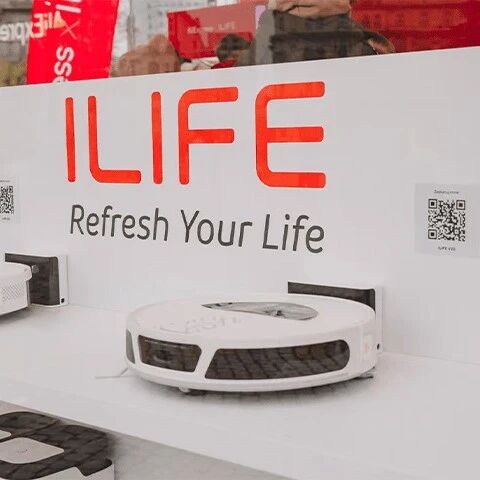
Core Viewpoint - ILIFE has transitioned from being an OEM manufacturer to focusing entirely on its own brand, showcasing the evolution of Chinese manufacturing from export-oriented to brand-oriented strategies. The company's sales on AliExpress increased by over 300% in 2025, with significant success in the Polish market, where it became a leading cleaning brand [4][5][18]. Group 1: Company Transformation - ILIFE was previously a typical OEM factory, producing over 2 million units annually for various brands, including Ecovacs and Lukas [7][13]. - In 2024, ILIFE made a decisive choice to stop OEM operations and concentrate on its own brand, despite a short-term revenue decline from over 1 billion yuan to below 500 million yuan [17]. - The shift allowed ILIFE to gain direct market feedback, enhancing product development and responsiveness to consumer needs [17][18]. Group 2: Market Strategy - ILIFE chose to avoid the trend of adding excessive features to its products, instead focusing on the core cleaning function and cost-effectiveness [21][23]. - The company targets the mid to lower market segments, offering competitive pricing by integrating advanced features typically found in higher-end models into more affordable products [23][25]. - ILIFE's cost control measures, including in-house production and logistics, enable it to offer products that are generally 10-20 USD cheaper than competitors [24][25]. Group 3: Consumer Engagement - ILIFE utilizes direct communication with consumers through platforms like AliExpress, allowing for rapid product iteration based on real-time feedback [17][25]. - The company has successfully addressed specific consumer needs, such as the demand for "live water washing" technology, by being proactive in product development [25]. - This approach has positioned ILIFE as a significant player in the overseas market, demonstrating the potential for Chinese brands to thrive internationally [25].

自断主营业务、营收砍半,一家老牌OEM扫地机器人公司的转型豪赌|Insight全球
3 6 Ke· 2026-02-04 01:25
Core Insights - ILIFE, once an OEM factory with an annual output of over 2 million units, has decided to completely cease its OEM business and focus on its own brand starting in 2024 [3][12] - In 2025, ILIFE's sales on AliExpress grew by over 300% year-on-year, with sales in Poland exceeding $10 million, indicating a significant shift in brand strategy [2][13] - The transition from OEM to a consumer-focused brand reflects a broader evolution in Chinese manufacturing from "exporting" to "brand exporting" [5][12] Company Strategy - ILIFE's decision to stop OEM production was driven by the need to shift from a client-order dependency to a user-centric approach, allowing for direct consumer feedback and product development [11][12] - The company has adopted a strategy of focusing on the essential cleaning functions of its products rather than adding excessive features, targeting the mid to lower market segments [15][16] - Cost control measures have been implemented across all stages of production, resulting in competitive pricing that is typically $10-20 cheaper than similar products [16][18] Market Position - ILIFE has positioned itself as a "national-level" cleaning brand in Poland, achieving significant market penetration with one in ten households using its products [2][13] - The brand's growth is supported by a strong performance on e-commerce platforms, where it has outperformed competitors like Amazon during key sales events [2][13] - The company has effectively utilized real-time consumer feedback to iterate on product design, enhancing features based on direct user input [12][18]


东海证券晨会纪要-20251113
Donghai Securities· 2025-11-13 02:27
Group 1: Non-automobile Insurance Industry - The implementation of "reporting and operation integration" for non-automobile insurance aims to guide insurance companies towards reasonable pricing and healthy competition, addressing long-standing issues of irrational competition and high costs [5][6][7] - The new regulations require a phased approach to re-filing, with specific deadlines for different non-automobile insurance products, ensuring a smooth transition to the new policy [6] - The regulations set differentiated rate caps for large and small companies, with larger firms facing stricter constraints, which reflects a commitment to rigorous regulatory oversight [7][8] Group 2: Household Appliances Industry - The domestic sales of robotic vacuum cleaners show a significant impact from the high base last year, with a notable decline in sales volume and revenue in October, prompting some companies to offer short-term discounts [11][12] - Innovative products like the active water washing technology are leading the market, with companies like Ecovacs gaining a competitive edge through early adoption and product upgrades [12][13] - The Southeast Asian market is emerging as a new growth area for robotic vacuum cleaners, with significant sales growth reported, particularly in Vietnam [14][15] Group 3: Yifeng Pharmacy (603939) - Yifeng Pharmacy reported steady profit growth with a revenue of 17.286 billion yuan in the first three quarters of 2025, reflecting a year-on-year increase of 0.39%, and a net profit of 1.225 billion yuan, up 10.27% [17][18] - The company is focusing on high-quality development by slowing down store expansion and optimizing its operational structure, which has led to improved same-store sales [19] - The new retail business continues to grow rapidly, with significant contributions from B2C sales, indicating successful adjustments in online strategies [18][19]
东海证券晨会纪要-20251112
Donghai Securities· 2025-11-12 05:12
Group 1: U.S. Employment Situation - The U.S. non-farm data may be overestimated, with concerns about the credibility of employment data rising since Q3 2025 [6][7] - The labor market is experiencing a "local replacement" effect, with a net increase of 1.861 million local workers since March 2025, but this trend may not be sustainable due to demographic challenges [7] - Cyclical industries like leisure, construction, and manufacturing are showing signs of slowdown, while non-cyclical sectors like education and healthcare are facing ongoing employment pressures [8][9] Group 2: Pharmaceutical and Biotech Industry - The pharmaceutical and biotech sector is under pressure, with a slight improvement in Q3 2025; total revenue for 452 listed companies was 1.85 trillion yuan, down 1.9% year-on-year [11][12] - Sub-sectors such as innovative drugs and CXO services are performing well, with revenue growth rates of 23.34% and 12.36% respectively, while overall profitability remains low [12] - Investment opportunities are suggested in innovative drug chains, medical devices, and healthcare services as the industry slowly recovers [12][13] Group 3: Yifeng Pharmacy (603939) - Yifeng Pharmacy reported a revenue of 17.286 billion yuan in the first three quarters of 2025, a year-on-year increase of 0.39%, with a net profit of 1.225 billion yuan, up 10.27% [14][15] - The company is focusing on optimizing its store operations and has seen significant growth in its new retail business, particularly in B2C sales [16][17] - The company plans to continue its cautious expansion strategy, emphasizing mergers and acquisitions to enhance market presence [17] Group 4: Anjieshi (688581) - Anjieshi's revenue for the first three quarters of 2025 was 459 million yuan, a year-on-year increase of 7.51%, but net profit decreased by 10.35% [18][19] - The company is facing challenges from domestic procurement policies and geopolitical factors, but is actively expanding its overseas market presence [20][21] - R&D investment is increasing, focusing on innovative products like surgical robots and energy platforms, indicating a commitment to long-term growth [21] Group 5: Non-Insurance Financial Sector - The non-insurance financial index fell by 0.2%, with a notable divergence in performance between brokerage and insurance indices [23][24] - Recent regulatory changes in non-insurance sectors are expected to create investment opportunities, particularly in health and non-auto insurance [26][27] - The market is anticipated to shift towards blue-chip stocks as investor sentiment stabilizes [25][27] Group 6: Home Appliance Industry - Sales of robotic vacuum cleaners showed a year-on-year increase of 14% in the first 44 weeks of 2025, but a significant decline in October due to high base effects from previous subsidies [28][29] - Innovations in cleaning technology, such as active water washing, are leading to competitive advantages for companies like Ecovacs [29][30] - Southeast Asia is emerging as a new growth market for robotic vacuums, with significant sales growth reported [31]